
Shrimp Saganaki with Chickpeas and Spinach
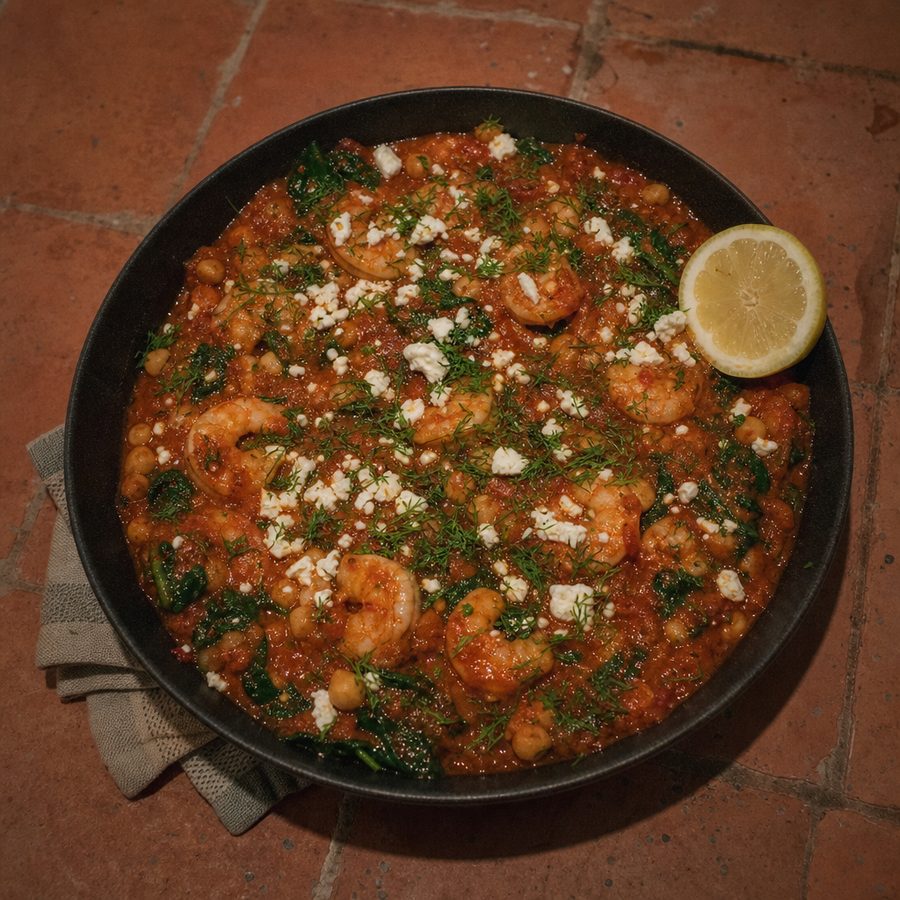
Shrimp poached in a thick tomato and fennel sauce with chickpeas and spinach, finished with crumbled feta, a great deal of dill, and lemon squeezed over the top.
Why You'll Love This Recipe
Garides saganaki is the dish every taverna within sight of the water makes, and it is usually shrimp, tomato, and feta and nothing else, eaten with bread and a long lunch in front of you. I make it a little heavier so it stands on its own at midday, which means a cup of chickpeas going into the sauce and a great heap of spinach folded in at the end. It takes about forty five minutes start to finish, most of that the sauce cooking down quietly while I chop herbs. What comes out is a skillet you carry to the table and spoon straight from, which is how I think it wants to be eaten.
Build it in the right order and the rest takes care of itself. Onion and fennel go in first and cook slowly until they are soft and sweet, because that base is what keeps the tomato from tasting sharp later. Garlic and chile follow for a minute, then the tomatoes go in and cook hard enough to thicken, until a spoon dragged across the pan leaves a track that holds for a second. Only then do the shrimp go in, and they need three or four minutes and no more. Shrimp cooked past that point squeak against your teeth, and the whole pleasure of this dish is shrimp that are still tender inside a sauce that clings.
It eats bright and savory, warm from the chile rather than hot, with the dill going in raucously at the end and the lemon cutting a line through the tomato. The feta is the part people remember. It sits in soft salty pockets rather than melting away, so every few bites you get one, and it turns a simple pan of tomato into something with a real edge to it. I make this for lunch when I want to sit down properly for twenty minutes, and I make a double batch on purpose, because it is one of the few shrimp dishes that is genuinely good cold the next day.
Ingredients
- 3 tbsp extra-virgin olive oil
- 1 small yellow onion, finely chopped
- 1 small fennel bulb (about 7 oz), cored and diced small, fronds reserved
- 5 garlic cloves, thinly sliced
- 1/4 tsp cayenne, or a crumbled dried red chile
- 1 1/2 cups crushed tomatoes, from a 28 oz can
- 1 cup canned chickpeas, drained and rinsed
- 1 1/4 lb large shrimp, peeled and deveined, tails left on if you like
- 8 packed cups spinach (about 9 oz), thick stems pulled off
- 2 oz feta made with pasteurized milk, crumbled into rough pieces
- 1/2 cup chopped dill, plus the reserved fennel fronds
- 1/2 cup chopped flat-leaf parsley
- 2 tbsp lemon juice, from 1 lemon, plus wedges for the table
- 1 tsp dried Greek oregano, crumbled between your palms
- 3/4 tsp coarsely ground black pepper
Instructions
- Soften the onion and fennel: Warm the olive oil in a twelve-inch skillet over medium heat. Add the onion and diced fennel with a pinch of the pepper and cook for eight to ten minutes, stirring now and then, until both are soft and translucent and the fennel has lost its crunch. Do not rush this stage or hurry it with higher heat. You want them sweet, not browned.
- Bloom the garlic and chile: Push the vegetables to one side, add the sliced garlic and the cayenne to the bare patch of oil, and cook for about a minute, until the garlic smells sweet and is just turning pale gold at the edges. Stir it through the onion and fennel. If the garlic starts to color faster than that, pull the pan off the heat for a few seconds.
- Cook the tomatoes down: Add the crushed tomatoes, the oregano, and the chickpeas, and bring everything to a steady simmer. Cook for ten to twelve minutes, stirring occasionally and scraping the bottom, until the sauce has darkened from bright red to brick and thickened enough that a spoon dragged across the pan leaves a track that holds for a second before filling in.
- Wilt the spinach in: Add the spinach in two or three handfuls, stirring each one down into the hot sauce before the next goes in. It looks like far too much and takes about two minutes to become the right amount. The sauce will loosen as the spinach releases its water, so let it bubble for another minute to tighten back up.
- Poach the shrimp: Nestle the shrimp into the sauce in a single layer, spooning a little over each one, and cover the pan. Cook for three to four minutes, turning them once halfway, until they have curled into loose Cs and turned opaque coral all the way through. A shrimp curled into a tight O has gone a minute too far, so start checking early.
- Finish with feta, herbs, and lemon: Take the pan off the heat, scatter the feta over the top, and cover it for one minute so the cheese softens at the edges. Add the lemon juice, the dill, the parsley, the fennel fronds, and the rest of the black pepper. Bring the skillet to the table and serve it in shallow bowls with lemon wedges.
Variations
- Baked in the oven: Move the sauce to a baking dish, tuck the shrimp in, scatter the feta over, and bake at 425°F for eight to ten minutes for a browner, bubblier top.
- Mussels in place of shrimp: Steam two pounds of mussels open in the sauce with the lid on, five to seven minutes, and discard any that stay shut.
- Greens swap: Swiss chard or collard greens cut into ribbons stand in well for the spinach, though give them five minutes in the sauce rather than two.
- Extra fire: Double the cayenne and add a second sliced chile with the garlic for a version that leans properly hot.
- Herb finish: Mint chopped in with the dill takes the whole skillet in a fresher, cooler direction that suits hot weather.
Storage & Leftovers
This keeps three days in a sealed container in the refrigerator and is one of the rare shrimp dishes that holds up. The sauce goes on thickening as it sits and the chickpeas drink some of it in, so day two tastes rounder and more concentrated than day one. Store the lemon wedges separately and cut fresh ones when you serve it again.
Reheat it gently in a covered skillet over low heat for four or five minutes, with a splash of water stirred in to loosen the sauce. Low and slow matters here, because a hard reheat is what turns tender shrimp rubbery. Add a fresh scatter of dill at the end, since the first lot will have gone dull overnight.
It is also very good straight from the refrigerator, cold, eaten standing at the counter with a fork. I would not freeze it. Shrimp thaw watery and stringy after a spell in the freezer, and the spinach loses what little structure it has left, so this one is worth eating up within the week.
Notes & Tips
- Cook the tomatoes longer than feels necessary: The difference between a thin sauce and one that clings to shrimp is about four extra minutes of simmering, and you can see it happen when the color turns from red to brick.
- Dry the shrimp properly: Shrimp carry a surprising amount of water, and every bit of it goes into your sauce. Blot them well and the sauce stays where you left it.
- Slice the garlic rather than mincing it: Slices hold their shape in a long simmer and turn sweet and soft. Minced garlic disappears into the tomato in the first two minutes.
- Crumble the oregano in your palm: Rubbing dried oregano between your hands as it goes in breaks up the leaves and releases the oils, which is the difference between tasting it and not.
- Add the feta off the heat: Left on the burner it slumps and disappears into the sauce. Off the heat and covered for a minute, it softens at the edges and stays in pieces.
- Chop the dill at the last minute: Dill goes limp and loses its smell within about ten minutes of meeting a knife, so cut it while the shrimp are poaching.
Nutrition & Mindful Eating
- The shrimp, the chickpeas, and the spinach are three different kinds of substance in one pan. The shrimp carry the protein and cook in minutes, the chickpeas give the sauce something to hold onto and bring the fiber, and the spinach turns a skillet of tomato into a plate with real volume behind it.
- Shrimp are sweet, firm, and quick, and they bring a good amount of protein for how little time they need in a pan. They also carry selenium and iodine, which is one of the quiet advantages of eating things that come out of the sea.
- Chickpeas simmered in tomato go creamy at the center while keeping their skins intact, and a measured cup of them across the pan brings soluble fiber that thickens the sauce as much as it feeds you.
- Spinach collapses to a fraction of its volume and folds straight into the sauce, carrying folate and vitamin K along with the iron that leafy greens are known for, which the lemon squeezed over at the end helps you absorb.
- Dill, oregano, and lemon are what keep this from tasting like any other pan of tomatoes. The oregano goes in early and turns savory in the heat, the dill goes in cold at the end and stays green and grassy, and the lemon lifts the whole skillet.
- As you eat, notice how the feta arrives in salty pockets rather than all at once and how the sauce changes each time you hit one, and let the pan sit in front of you long enough to know when you have had enough.
Frequently Asked Questions
Can I use frozen shrimp?
Yes, and I usually do. Thaw them overnight in the refrigerator, or in a bowl of cold water for fifteen minutes if you forgot, then drain them well and pat them thoroughly dry. Wet shrimp will water down a sauce you just spent ten minutes thickening, so the drying step is worth the paper towel.
My shrimp came out tough. What went wrong?
Almost always time rather than heat. Shrimp go from translucent to done in about three minutes and keep cooking in a hot sauce after the burner is off, so pull them the moment they turn opaque. The other culprit is small shrimp in a big pan, which cook through before you have finished turning them.
Can I make it ahead for a work lunch?
It is built for that. Make the sauce through the spinach stage, cool it, and refrigerate for up to three days, then reheat it and poach the shrimp fresh in four minutes. If you would rather cook the whole thing at once, that works too, and it packs well in jars with the feta and dill added cold on top.
What can I use in place of fennel?
Two celery stalks, diced fine, give you the same aromatic backbone and a similar crunch to cook out. You will lose the faint anise note, which you can put back with a pinch of crushed fennel seed dropped in with the garlic. Diced red bell pepper works too and pushes the whole pan sweeter.