
Sichuan Sesame Soba with Shredded Cabbage and Smashed Cucumber
Cold soba tossed with thin ribbons of cabbage and bruised cucumber in a loose tahini, black vinegar, and chile oil dressing, with garlic, ginger, and ground Sichuan pepper.
Why You'll Love This Recipe
I started making this the summer I could not face turning the oven on, and it has been in the rotation ever since. It takes the dressing from Sichuan cold noodles, which is nutty from sesame paste, sour from black vinegar, and numbing from ground Sichuan pepper, and puts it on soba, which has a firmer bite and a faintly grassy flavor that stands up to all of it. Shredded cabbage goes in by the bowlful and behaves like a second noodle, staying crisp right through the meal while the soba goes soft and slippery around it. A single head stretches across two or three lunches without ever tasting like leftovers.
The two techniques worth learning here take about a minute between them. Blooming the chile flakes in hot oil is the first: the oil should be just shy of smoking, and the flakes go from dull brick to bright red almost immediately, so have everything else ready before you pour. Smashing the cucumber is the second. Hit it with the flat of a knife until it splits, then tear it into pieces rather than slicing, because a torn face is rough and ragged and holds far more dressing than a smooth cut one. Neither step takes any skill, and together they are most of what separates this from a bowl of noodles with sauce on it.
Made on a Sunday, it gets eaten out of the container until Wednesday, and it improves for the first day as the cabbage softens slightly and the dressing works its way into the noodles. It travels well, it needs no reheating, and it is one of the few cold lunches I know that still feels like a proper meal in the middle of winter, because the chile and the peppercorns keep it warm from the inside. If you have never cooked with Sichuan peppercorns, this is a gentle place to start, since the tahini softens their edge and the vinegar keeps them from taking over the bowl entirely.
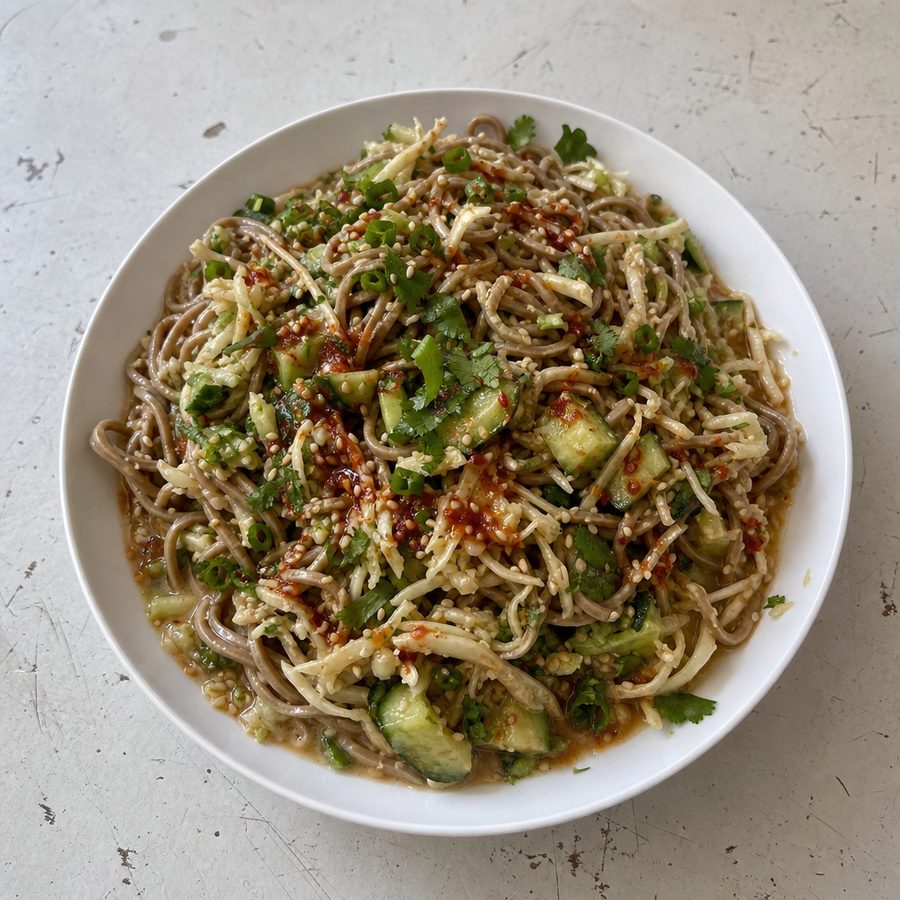
Ingredients
- 8 oz dried soba noodles
- 4 cups green cabbage, shredded as thin as you can manage
- 1 large English cucumber, smashed with the flat of a knife and torn into rough pieces
- 4 scallions, sliced thin on a long angle
- 1 packed cup cilantro leaves and tender stems, roughly chopped
- 4 tbsp tahini, well stirred
- 1 tbsp soy sauce
- 5 tsp Chinkiang black vinegar, or cider vinegar
- 1 1/2 tsp maple syrup
- 4 garlic cloves, grated to a paste
- 1 tbsp finely grated fresh ginger
- 1 tsp coarse Sichuan chile flakes, or more to taste
- 1 tsp Sichuan peppercorns, toasted and ground to a powder
- 2 tsp toasted sesame oil
- 1 tbsp avocado oil
- 2 1/2 tbsp sesame seeds, toasted in a dry pan
Instructions
- Boil the soba: Bring a large pot of unsalted water to a rolling boil and add the soba. Cook for four to six minutes, following the box but starting to taste a minute early, until the strands are tender with a slight resistance at the center. Drain and rinse under cold running water for a full minute, rubbing the noodles with your hands until the water runs clear and they feel cool and slippery.
- Smash the cucumber and shred the cabbage: Lay the cucumber on a board and press down hard with the flat of a wide knife until it splits along its length, then tear it into bite-size craggy pieces. Shred the cabbage as thin as you can, slicing across the leaves, and pull the shreds apart with your fingers so they do not sit in clumps.
- Bloom the chile oil: Combine the chile flakes and the ground Sichuan peppercorns in a small heatproof bowl. Heat the avocado oil in a small pan over medium-high until it shimmers and a single flake dropped in fizzes at once, then pour it over the spices. It will foam and turn bright red within a few seconds and smell toasty rather than acrid. Stir in the sesame oil.
- Loosen the tahini: Whisk the tahini in a bowl with the black vinegar, soy sauce, maple syrup, grated garlic, and ginger. It will seize and go stiff, which is normal. Add cold water a tablespoon at a time, whisking hard, until it loosens into a pourable dressing about the thickness of heavy cream, then whisk in the chile oil.
- Toss and serve: Put the drained soba, cabbage, and cucumber in your widest bowl and pour the dressing over. Toss with tongs from the bottom up for a good half minute, until every strand is coated and the cabbage has separated through the noodles. Scatter the scallions, cilantro, and toasted sesame seeds over the top and serve cold.
Variations
- Napa and celery: Swap half the green cabbage for shredded napa and add two sliced celery ribs for a crunchier, more watery bowl.
- Seared tofu: Brown a half block of firm tofu cut into fingers and lay it over the top, which turns this into a heavier plate.
- Charred cabbage: Blister half the cabbage in a dry hot pan before it goes in, so the bowl gains a smoky edge under the vinegar.
- Extra numbing: Double the Sichuan peppercorns and add a pinch of the ground powder over each bowl at the table.
- Herb heavy: Add a packed cup of torn mint or Thai basil with the cilantro for a fresher, greener version.
Storage & Leftovers
Dressed, this keeps three days in a sealed container in the refrigerator and is one of the few noodle dishes that gets better on day two. The cabbage softens a little, the cucumber gives up some water, and the dressing sinks into the soba rather than sitting on it. Give it a hard toss before eating, since the tahini settles.
The dressing thickens as it chills and can seize into a paste at the bottom of the container. A tablespoon of cold water and a vigorous stir brings it straight back to a pourable consistency. Do this before you add anything else, because trying to loosen it once it is on the noodles just tears them.
Made ahead in parts, it holds a week. The chile oil keeps for a month in a jar at room temperature and is worth making in triple quantity. Boiled and rinsed soba keeps three days, and the shredded cabbage keeps four, so a five minute assembly on a weekday morning is entirely realistic.
Notes & Tips
- Boil soba in unsalted water: Soba is already seasoned in the dough and the dressing carries plenty of savor. Salted water makes the finished bowl taste flat and heavy no matter what you do to the sauce.
- Rinse until the water runs clear: Buckwheat noodles shed a lot of starch, and any of it left on the strands turns the dressing pasty. A full minute under cold running water, rubbing with your hands, is the whole trick.
- Have the spices waiting before you heat the oil: Blooming happens in four or five seconds. If you are still measuring chile flakes when the oil is ready, it will go past toasty and turn bitter.
- Add water to the tahini slowly: A big splash at once gives you a lumpy, separated dressing. A tablespoon at a time with hard whisking gives you something glossy and pourable every time.
- Tear the cucumber, do not slice it: Smashed and torn pieces have rough, open faces that grip the sesame dressing. Neat rounds shed it into the bottom of the bowl.
- Shred the cabbage against the grain: Slicing across the leaves gives you short, tender ribbons that tangle into the noodles. Long strips run parallel to the soba and end up in one clump on the fork.
Nutrition & Mindful Eating
- Soba, shredded cabbage, and a sesame dressing are the three things holding this bowl together. The noodles give it substance, the cabbage keeps a crunch running through every forkful, and the tahini turns a cold salad into something rich enough to be lunch.
- Soba is made from buckwheat, which despite the name is a seed rather than a wheat, and it brings a firm bite, a faintly grassy flavor, and a good amount of fiber along with it.
- Tahini is ground sesame and very little else, which is why a few spoonfuls give the dressing its body and its slight bitterness, and it happens to be one of the better plant sources of calcium.
- Cabbage sliced thin and left uncooked stays sweet and snappy under the dressing, and it carries vitamin C and a fiber that holds its texture rather than collapsing into the sauce.
- Ground Sichuan peppercorn and bloomed chile flakes are what make this bowl memorable, one buzzing and citrusy on the lips, the other warm and slow, and together they keep a cold lunch from feeling cold.
- As you eat, pay attention to the tingle that builds on your lips a few bites in and the way the cabbage keeps snapping when the noodles have gone soft, and let that buzzing pace you rather than rushing the bowl.
Frequently Asked Questions
What if I cannot find Sichuan peppercorns?
Use half a teaspoon of coarsely cracked black pepper and accept that you are making a different, still very good bowl. The peppercorns are what create the tingling numbness that defines the style, and there is no true replacement, but the sesame, the vinegar, and the chile carry the dish perfectly well on their own.
My tahini turned into cement. Did I ruin it?
Not at all, and it happens every single time. Sesame paste seizes when it first meets an acid or a small amount of liquid. Keep whisking and keep adding cold water a spoonful at a time, and it will suddenly loosen into a smooth, glossy dressing. Warm water makes it seize harder.
Can I use regular wheat noodles?
Yes, and that is closer to how these noodles are eaten in Chengdu. Any thin wheat noodle works, cooked and rinsed the same way. Soba brings a firmer bite and a nuttier flavor that I like against the sesame, which is why it is what I reach for.
Is this good for packed lunches?
It is the best cold noodle bowl I know for a lunch box, because unlike most dressed salads it wants a day in the refrigerator. Pack it fully assembled and keep a small jar of chile oil at your desk to wake it up before eating.