
Sicilian Baked Eggplant and Lentils with Tomato, Basil, and Mozzarella
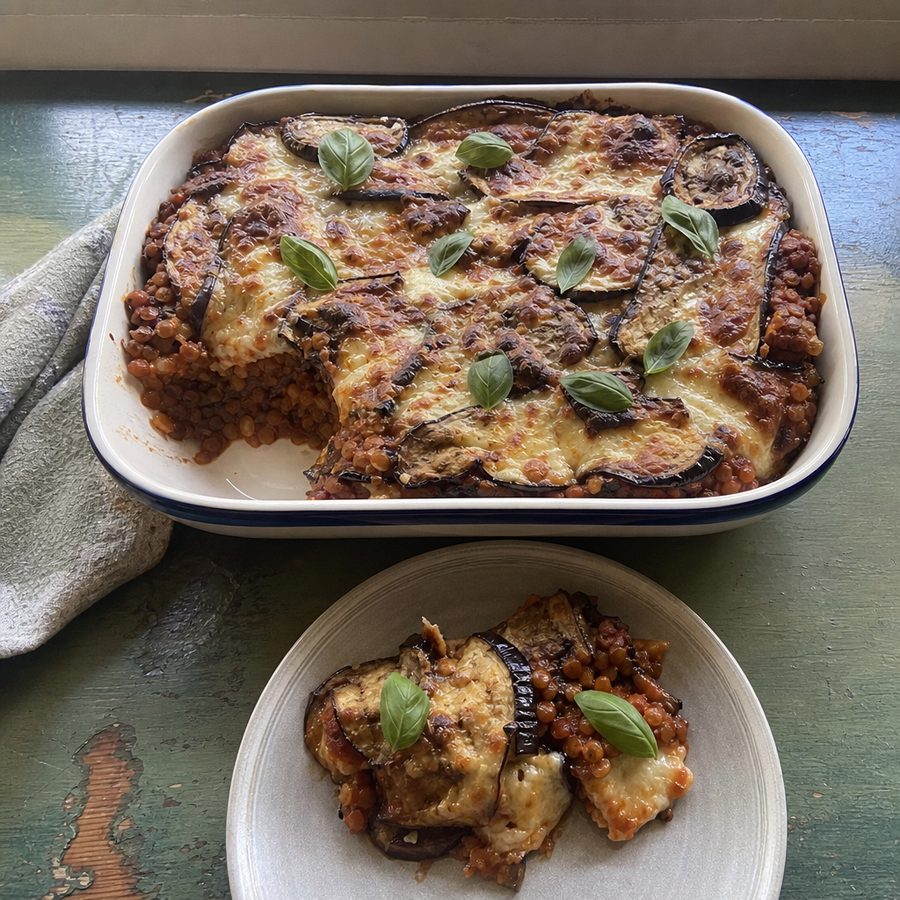
Slabs of eggplant roasted until collapsing, layered with lentils simmered in garlicky tomato, torn mozzarella, and a great deal of basil, then baked until the top blisters.
Why You'll Love This Recipe
Sicilians have been coaxing sweetness out of eggplant for a thousand years, and the single most useful thing I have learned about the vegetable is that it needs more heat and more time than people give it. Roasted at 425°F until the slabs are deeply bronzed and slumping, eggplant loses its spongy squeak and turns almost creamy. Undercooked, it stays bitter and squeaky and no amount of tomato will fix it. So the eggplant here roasts on its own first, and everything else is built around it while the oven does that work.
The lentils are the part people do not expect. They cook down in the tomato with sliced garlic, chile flakes, and oregano until the whole thing is thick enough to hold a shape on a spoon, and they give the dish the body that a meatless bake usually lacks. I use brown or green lentils rather than red, because they keep their skins and stay distinct rather than dissolving. The mozzarella is a modest amount torn over the top rather than a blanket, so it blisters and browns in places and lets everything underneath stay the main event.
Late summer, when eggplants are cheap and enormous, is one time for this, and February with a box of tomatoes is the other, when I want something that eats like a warm, slow evening. It comes together in about an hour and a quarter, most of it hands off, and it feeds four with real generosity. It also travels well to other people's houses, which is more than most baked dishes can claim.
Ingredients
- 2 medium eggplants (about 1 1/2 lb total), cut lengthwise into 1/2-inch slabs
- 4 tbsp extra-virgin olive oil, divided
- 1 small yellow onion, diced small
- 5 garlic cloves, thinly sliced
- 1/2 tsp crushed red chile flakes
- 1 tsp dried oregano, crumbled between your palms
- 1 1/2 cups no-salt-added crushed tomatoes
- 3 cups cooked brown or green lentils (from about 1 cup dry, simmered in unsalted water and drained)
- 1 tsp coarsely ground black pepper, divided
- 1/4 tsp fine sea salt, divided
- 3 1/2 oz low-moisture mozzarella, torn into rough pieces
- 1/2 cup basil leaves, divided
Instructions
- Roast the eggplant hard: Heat the oven to 425°F. Brush the eggplant slabs on both sides with 3 tbsp of the olive oil, lay them out on two sheet pans without overlapping, and season with half the pepper. Roast for twenty-five to thirty minutes, turning once, until the slabs are deeply bronzed on both sides and slumped enough that a slab drapes over the spatula when you lift it. Pale and firm means they need more time.
- Start the lentil sauce: While the eggplant roasts, warm the last tablespoon of oil in a wide skillet over medium heat. Cook the onion for five to six minutes until soft and translucent, then add the sliced garlic, the chile flakes, and the oregano and cook one minute more, until the garlic smells sweet and has taken on no color.
- Cook it down: Add the crushed tomatoes with the salt and the rest of the pepper and simmer for eight minutes, until the sauce darkens and thickens. Stir in the lentils and cook another five to seven minutes, pressing some of them against the side of the pan so they thicken the sauce. It should mound on a spoon rather than run off it.
- Layer the dish: Spread half the lentils in the bottom of a 9-by-13-inch baking dish. Lay half the eggplant slabs over them in an overlapping shingle, scatter half the basil leaves, then repeat with the rest of the lentils and the rest of the eggplant. Tear the mozzarella over the top in rough pieces, leaving gaps so the layer underneath still shows.
- Bake until the top blisters: Bake for eighteen to twenty minutes, until the cheese has melted into pale pools with brown blisters at the edges and the lentils bubble slowly around the sides of the dish. If the top is still pale at twenty minutes, run it under the broiler for two, watching it the whole time.
- Rest, then finish with basil: Let the dish sit for ten minutes out of the oven. It will be soup if you cut into it straight away and will hold clean edges after a rest. Scatter the rest of the basil over the hot surface so the leaves wilt and go glossy, and serve it in wide squares with a thread of olive oil over each.
Variations
- Zucchini and eggplant: Swap half the eggplant for zucchini cut into long planks and roasted the same way, which lightens the dish and adds a second texture.
- Almond crumb: Scatter a handful of chopped almonds over the cheese before baking for a toasted, crunchy top that is very Sicilian.
- Caper and olive: Stir a spoonful of rinsed capers or chopped green olives into the lentils for a sharper, brinier version.
- Chickpeas: Use drained chickpeas in place of the lentils for a firmer, nuttier layer that stays in distinct pieces.
- Mint at the end: Finish with torn mint alongside the basil, which is how the eggplant dishes of the Sicilian interior often taste.
Storage & Leftovers
It keeps four days covered in the refrigerator and firms up considerably as it chills, which makes it easier to cut and easier to pack. The eggplant goes on softening and the lentils take on more of the tomato, so the second day tastes rounder and a little sweeter than the first.
Reheat individual squares covered in a 350°F oven for fifteen minutes, or in a covered pan on the stovetop with a spoonful of water. The microwave works and is what I usually do on a weeknight, though the cheese loses its blistered edges. A few fresh basil leaves torn over the top afterward brings it most of the way back.
It freezes for up to three months, either whole in the dish or in portions. Thaw overnight in the refrigerator before reheating, since going straight from frozen to hot oven leaves the middle cold while the edges dry out. Eggplant releases a little water as it thaws, so uncover it for the last five minutes to let that cook off.
Notes & Tips
- Use two pans for the eggplant: Crowded slabs steam and stay pale. Give each piece its own patch of metal and they bronze instead.
- Brush the oil, do not pour it: Eggplant drinks oil the second it touches it, and the first slab will take the whole bottle if you let it. A brush spreads a tablespoon over a whole pan.
- Press some of the lentils: Crushing a few against the pan releases their starch and is what turns a loose tomato sauce into a layer that holds its shape under the eggplant.
- Tear the cheese, do not slice it: Torn pieces melt into uneven pools with brown edges. Neat slices melt into a smooth sheet that seals the top and steams what is underneath.
- Let it rest before cutting: Ten minutes is the difference between clean squares and a plate of delicious rubble. Use the time to tear the basil.
- Add basil off the heat: Basil baked into the top goes black and tastes of nothing. Scattered over the hot surface at the end it wilts, stays green, and smells like the whole dish.
Nutrition & Mindful Eating
- The eggplant, the lentils, and the small amount of cheese each carry a different part of this dish. The lentils bring the protein and the substance, the eggplant brings the sweetness and most of the volume, and the mozzarella browning on top brings the savory pull that makes a vegetable bake taste like dinner.
- Lentils hold their skins through a long simmer and go creamy inside, which is why they thicken the tomato so well. They bring plant protein, a large amount of fiber, and iron, and cooking them in something acidic like tomato keeps them distinct rather than collapsing into mush.
- Eggplant roasted at high heat turns sweet and silky rather than spongy, and its skin is where the deep purple color and its anthocyanins sit, which is reason enough to leave it on. It also brings fiber in a form that eats like something much richer.
- Mozzarella is here in a modest amount and doing a specific job, browning in patches and pulling in strands. Cheese is one of the more concentrated sources of calcium there is, so a handful torn over the top contributes more than its size suggests.
- Garlic, chile flakes, oregano, and basil are the flavor of this dish, and the order matters. The dried oregano goes in with the hot oil where its resin dissolves, and the fresh basil goes on after the oven so it stays green and floral against everything sweet underneath.
- As you eat, notice how completely the eggplant has given way and how the basil smells different on the first bite than on the last, and let the ten minutes it rested be a signal to slow down yourself.
Frequently Asked Questions
Do I need to salt the eggplant first?
Not with the eggplants sold now. Salting was for older, seedier varieties that carried real bitterness, and modern ones simply do not. What matters far more is the roasting: hot oven, enough oil, and long enough that the slabs collapse.
Can I use canned lentils?
Yes, and it turns this into a much faster dinner. Use two cans, drained and rinsed well, and simmer them in the tomato for five minutes rather than seven. They come out softer than lentils you cooked yourself, so press fewer of them against the pan.
What can I use in place of mozzarella?
Torn fresh mozzarella works if you pat it dry first, and grated provolone or a firm ricotta salata crumbled over the top is closer to what you would find in Sicily. Whichever you use, keep the amount modest so it browns in patches rather than sealing the top.
Can I make it ahead?
This is one of the better make-ahead dishes I know. Assemble it completely, refrigerate for up to two days, and bake it from cold with an extra ten minutes on the clock. The layers actually set better for having sat overnight.