
Sicilian Cod Stemperata with Celery, Olives, and Mint
Cod fillets poached in a sweet and sour pan of celery, fennel, and olives with cannellini beans, finished with cider vinegar and a shower of torn mint.
Why You'll Love This Recipe
Stemperata comes out of Ragusa, in the southeast corner of Sicily, and it is one of those sauces that sounds like an odd collection until you taste it. Celery, olives, vinegar, and mint, cooked hot and fast, land somewhere between a relish and a braise. Sicilians make it with rabbit or with swordfish, and cod suits it just as well because the fish is mild enough to let all that sharpness read clearly. I keep the celery cut thick and on an angle so it holds its snap, since a soft celery is a sad thing and the crunch is half of why this works.
The trick is the order of operations. The vegetables get real heat first and pick up a little color, the vinegar goes in and hisses down to nothing, and only then does the fish arrive. Cod cooked over the vegetables in a covered pan is nearly impossible to ruin, and it takes on the smell of the pan while it goes opaque. White beans slide in at the same moment and warm through in the sauce, which gives the plate weight and means dinner is finished in one pan rather than three. Cod is forgiving in a covered pan, though it is not endlessly forgiving, so I set a timer at eight minutes and start checking with a fork.
This is a summer dinner in my house, eaten warm rather than hot, often at the kitchen table with the windows open. Mint is what makes it feel that way. It goes on off the heat, so it stays cool and green against the vinegar and the olives, and it is the flavor people cannot place when they ask what is in it. Leftovers are good cold the next day, flaked into the beans with another squeeze of lemon. It belongs on a weeknight in July, when the counter is hot and nobody wants the oven on, and it is just as welcome in February, when the vinegar and the mint are the brightest thing you can get out of a pan.
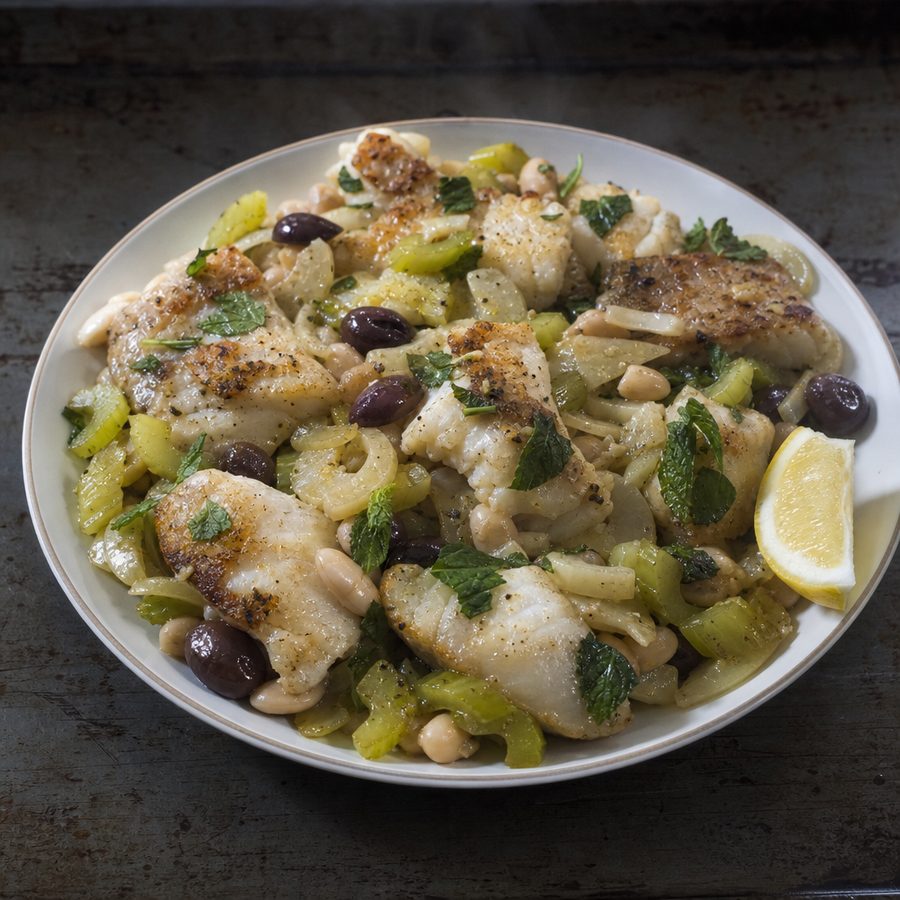
Ingredients
- 1 1/2 lb skinless cod loin, cut into 4 thick pieces
- 5 celery stalks (about 9 oz), sliced 1/4 inch thick on a sharp angle, pale leaves reserved
- 1 small fennel bulb (about 6 oz), quartered, cored, and sliced thin
- 1 cup canned cannellini beans (from a 15 oz can), drained and rinsed well
- 1 small red onion, halved and sliced thin
- 1/3 cup pitted green Sicilian or kalamata olives, torn in half
- 2 tbsp extra virgin olive oil
- 5 tsp cider vinegar
- 1 1/2 tbsp lemon juice, plus wedges for the table
- 4 garlic cloves, sliced thin
- 1/3 cup fresh mint leaves, torn at the last minute
- 1/4 cup flat-leaf parsley, roughly chopped
- 1/2 tsp dried oregano
- 1/2 tsp freshly ground black pepper
- 1/4 tsp fine sea salt
Instructions
- Get the vegetables ready: Slice the celery on a sharp angle about a quarter inch thick and keep the pale inner leaves for the finish. Quarter, core, and thinly slice the fennel, slice the onion thin, and slice the garlic. Tear the olives in half with your fingers rather than chopping them, which keeps them in ragged pieces that hold onto the sauce.
- Start the pan hot: Heat the olive oil in a wide skillet over medium-high until it ripples. Add the celery, fennel, and onion with a pinch of the salt and cook for six to seven minutes, stirring only every minute or so, until the edges have taken on gold color but the celery still gives you resistance when you press it. Add the garlic, olives, and oregano and cook one minute more, until the garlic smells sweet.
- Add the vinegar: Pour in 1 tbsp of the cider vinegar and let it bubble hard for thirty seconds, scraping the bottom of the pan as it goes. The sharp smell will soften as it cooks off. Stir in the beans and a quarter cup of water and bring it to a gentle simmer.
- Poach the cod through: Season the cod with the remaining salt and the pepper and set the pieces down into the vegetables, spooning some of them over the top. Cover, turn the heat to medium-low, and cook for eight to ten minutes depending on thickness, until the fish is opaque all the way through, separates into large flakes at the touch of a fork, and an instant-read thermometer reads 145°F at the center of the thickest piece.
- Finish off the heat: Take the pan off the burner and add the remaining vinegar, the lemon juice, the parsley, the reserved celery leaves, and the mint, scattering the herbs over the surface rather than stirring them in. Let it sit for two minutes so the mint softens, then serve straight from the pan with lemon wedges.
Variations
- With capers: Add a tablespoon of rinsed capers along with the olives for the salty, floral note a Sicilian cook would consider essential.
- Chicken stemperata: Use four boneless chicken thighs in place of the cod, browned first and simmered in the vegetables for twenty five minutes to 175°F.
- Warm and sweet: Stir a tablespoon of golden raisins in with the beans, which pushes the pan toward the older sweet and sour style of the sauce.
- Almond crunch: Scatter a handful of toasted sliced almonds over each plate at the table for a crisp edge against the soft fish.
Storage & Leftovers
This keeps three days in the refrigerator in a sealed container. Cod firms up as it chills and the vegetables soak up more of the vinegar overnight, so day two tastes sharper and the fish holds together well enough to flake into a bowl with a fork.
Reheat it gently, covered, in a skillet over low heat for four or five minutes with a spoonful of water, or eat it at room temperature, which is how a Sicilian kitchen would most likely hand it to you. High heat is the one thing to avoid, since reheated cod goes from tender to cottony quickly.
I do not freeze this one. Cod that has been frozen after cooking turns watery and loses the flakes, and celery cut this thick goes limp on thawing. It comes together fast enough that it is worth cooking fresh.
Notes & Tips
- Cut the celery on the bias: A steep angle gives you long, elegant pieces with more surface for color and keeps the middle of each slice crisp through the cooking.
- Rinse the beans properly: Tip them into a sieve and run cold water over them until it stops foaming, about half a minute. The starchy canning liquid clouds the sauce and dulls the vinegar.
- Buy cod loin rather than tail: Loin pieces are thick and even, so all four cook at the same rate. Thin tail ends overcook in the time the loin needs and fall apart in the pan.
- Split the vinegar: Half goes in early and cooks down into the vegetables, half goes in at the end and stays bright. That is what makes the pan taste sweet and sour rather than simply sour.
- Tear the mint, do not chop it: A knife bruises the leaves and turns the edges black within a minute. Torn leaves stay green and give off more of their smell as they warm.
- Check the fish with a thermometer: Cod goes from just done to dry in about a minute. Pull the pan at 145°F at the thickest point and let it rest covered for two minutes.
Nutrition & Mindful Eating
- Cod, white beans, and a pan of celery and fennel make this a full plate rather than a piece of fish with something beside it. The cod brings the protein, the beans bring softness and most of the fiber, and the vegetables keep everything crisp and sharp.
- Cod is a firm, close-grained white fish that flakes into big pieces when it is cooked right, and a fillet this size carries a lot of protein along with the selenium and B12 that white fish is a reliable source of.
- Cannellini beans hold their shape in a hot pan and drink up the vinegar and olive oil around them. Their soluble fiber is the kind that makes a meal sit gently, and they bring plant protein and potassium with them.
- Fennel and celery cooked briefly keep their structure and their faint anise sweetness, and both are mostly water and fiber, which is what lets a generous pile of them sit under the fish without weighing the plate down.
- Mint, parsley, and cider vinegar all go in after the burner is off. Nothing about that is decorative: the acid and the cool herbs are what cut the salt of the olives and make the last bite taste as lively as the first.
- As you eat, notice how the mint arrives after the salt and the vinegar rather than with them, and let the pan sit in the middle of the table so the meal takes as long as it wants to.
Frequently Asked Questions
Which olives should I buy?
Green Sicilian olives, sold cracked and often in brine with fennel seed, are the traditional choice and stay firm in the pan. Kalamatas work and give a darker, fruitier result. Whichever you use, buy them with the pits in and pit them yourself if you can, since they hold their texture better than the pitted kind.
Can I use another fish?
Yes. Hake, haddock, and pollock all sit well in this pan, as does thick tilapia. Cook any of them to 145°F all the way through, and give a thinner fillet two or three minutes less under the lid than the cod would take.
Is there a substitute for the mint?
Basil is the closest, and it takes the dish toward Naples rather than Ragusa. If you have neither, double the parsley and add the grated zest of half a lemon off the heat, which gets you the lift the mint was providing.
My sauce is watery. What went wrong?
Usually the pan was too small or the heat too low, so the vegetables released liquid faster than it could evaporate. Lift the fish out onto plates, turn the heat to high, and boil the pan down for two minutes before spooning it over the top.