
Sicilian Fennel and Orange Breakfast Plate with Whipped Ricotta and Sesame
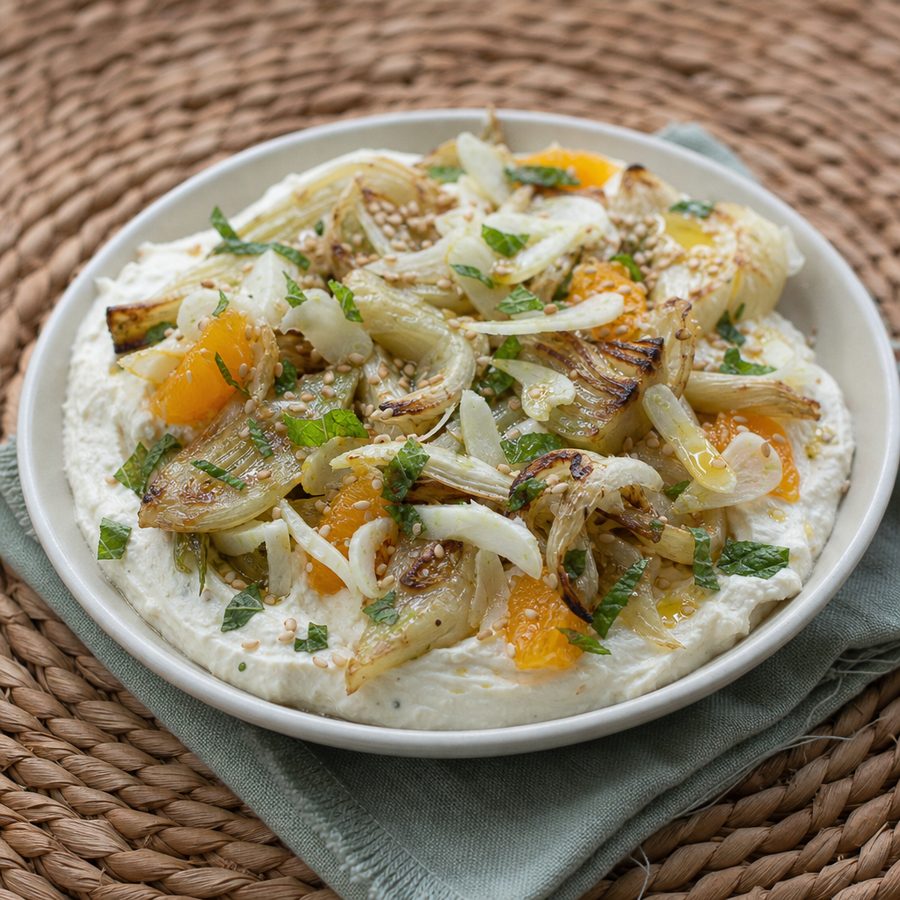
Half the fennel caramelized in olive oil and half left crisp and shaved, piled over whipped ricotta with orange segments, toasted sesame, torn mint, and a thread of honey.
Why You'll Love This Recipe
Fennel and orange is the salad you see on every table in Sicily in winter, usually on its own with oil and pepper. I started cooking half the fennel because a plate of sharp anise first thing in the morning is a lot to ask of anybody, and because a bronzed wedge of fennel is a different vegetable entirely. The heat trades the sharpness for something closer to caramelized onion, sweet and a little smoky at the cut edges. Leaving the other half shaved thin keeps the crunch and the perfume, so you get both versions in the same forkful. It took me a few tries to stop cooking all of it.
The plate is built in layers and eats that way. Ricotta whipped with lemon and oil goes down first, thick and slightly grainy the way ricotta should be, and everything else lands on top of it. Orange segments burst and run into the cheese, the sesame gives a toasted, faintly bitter crunch, and the mint hits your nose before the fork gets to your mouth. Honey is the last thing on, just enough to pull the whole plate together against the pepper. It is cold, warm, sweet, savory, and crunchy all at once, which is why it wakes you up.
Some mornings breakfast should feel like something rather than fuel, and this comes together in the time it takes to boil water for coffee. It suits a slow Saturday, a houseful of people picking at a big platter, or one person eating standing at the window in February when the oranges are finally worth buying. I make it through the whole citrus season and switch to blood oranges when they show up, which turns the plate a deep rose and tastes faintly of raspberry.
Ingredients
- 2 small fennel bulbs (about 14 oz total), fronds reserved
- 2 navel oranges, peel and pith cut away, sliced into rounds or segmented
- 1 cup ricotta
- 2 tbsp sesame seeds
- 2 tbsp extra-virgin olive oil, divided
- 1 1/2 tbsp lemon juice
- 2 tsp honey
- 3 tbsp torn fresh mint leaves
- scant 1/8 tsp fine sea salt
- 1/2 tsp coarsely ground black pepper
Instructions
- Prepare the fennel: Trim the stalks and reserve a handful of the feathery fronds. Halve each bulb through the root, then cut one bulb into 1/2-inch wedges with a bit of core left on each so they hold together. Shave the second bulb as thinly as you can on a mandoline or with a sharp knife, and drop the shavings into cold water with a squeeze of the lemon.
- Caramelize the wedges: Heat 1 tbsp of the oil in a skillet over medium-high. Lay the fennel wedges cut side down with the salt and leave them undisturbed for 4 minutes, until the underside is properly bronze. Turn and cook 3 to 4 minutes more, until they give easily to the tip of a knife but still hold their shape. Set them aside to cool slightly.
- Toast the sesame: Wipe the pan, add the sesame seeds, and toast over medium heat for 2 to 3 minutes, shaking constantly. They are ready when they turn the color of straw and start popping and smelling nutty. Tip them straight out of the pan onto a cold plate, because they will keep browning in the residual heat.
- Whip the ricotta: Put the ricotta in a bowl with the remaining tablespoon of oil, the rest of the lemon juice, and half the black pepper. Beat it hard with a whisk or a fork for a full minute, until it lightens and holds a soft ridge. It will not go completely smooth and it should not. Spread it across four plates in a thick swipe with the back of a spoon.
- Build the plates: Drain the shaved fennel and pat it dry. Arrange the warm wedges and the cold shavings over the ricotta with the orange, tucking the segments into the gaps so their juice runs down into the cheese. Scatter the sesame, the mint, and the reserved fronds over the top, thread the honey across in a thin line, and finish with the last of the pepper.
Variations
- Blood orange and pepper: Swap in blood oranges and double the black pepper for a darker, sharper plate that leans savory.
- Ricotta with lemon zest: Whip a teaspoon of grated lemon zest into the cheese, which perfumes the whole base and makes the honey taste less sweet.
- Toasted pistachio: Use chopped toasted pistachios in place of the sesame for a greener, richer crunch, which is very Sicilian.
- On toast: Spread the whipped ricotta on thick griddled bread and pile the fennel and orange on top, which turns the plate into an open sandwich.
Storage & Leftovers
This is a plate to build and eat, but the parts keep well separately for three days. Store the whipped ricotta in a sealed container, the cooked fennel wedges in another, and the orange segmented in its own juice. Toasted sesame lives in a jar on the counter for a couple of weeks and is worth toasting a big batch of while the pan is hot.
Shaved fennel is the one component with a short life. It goes limp and loses its perfume within a few hours, so shave it the morning you plan to eat it and keep it in cold water until the plate goes together. If you are making this ahead for a crowd, prepare everything else the night before and leave yourself two minutes on the mandoline.
Nothing here freezes usefully. Ricotta goes grainy and weeps when it thaws, and fennel turns to string. If you have cooked fennel wedges left over, chop them and fold them into eggs or a grain salad the next day, which is a better use than trying to hold the plate together for another morning.
Notes & Tips
- Leave the core on the wedges: A wedge cut through the root holds together in the pan and gives you those layered petals. Cut the core out and you are left with a heap of loose sheets that scorch before they soften.
- Give the wedges a still pan: Fennel browns slowly and only where it is in contact with the metal. Lay the wedges down, walk away for four minutes, and resist the urge to move them around.
- Shave the second bulb last: Cut fennel starts fading the moment it meets air. Shave it while the wedges cook, keep it in cold water with lemon, and dry it just before it goes on the plate.
- Tip the sesame out immediately: A hot pan keeps toasting long after the burner is off, and sesame goes from nutty to acrid in under a minute. Get it onto a cold plate the second it starts popping.
- Whip the ricotta longer than feels necessary: A full minute of hard beating is what turns it from a lumpy scoop into something that holds a swipe. It will still be slightly grainy, which is the texture you want under the fruit.
Nutrition & Mindful Eating
- Fennel, orange, and ricotta are the three things holding this plate up, and they are doing different jobs. The fennel gives bulk and fiber, the orange gives juice and vitamin C, and the ricotta gives the calcium and the body that keeps a fruit-and-vegetable plate from eating like a snack.
- Fennel is one of the few vegetables that is genuinely good both cooked and shaved thin, and it carries potassium along with a soft fiber that most people find easy on the stomach. Browning the wedges converts its anise oils into something sweeter without losing the perfume.
- Ricotta is made from the whey left after other cheeses, which is why it is soft, mild, and milky rather than sharp, and it carries a real amount of calcium in a spoonable form. Whipping it with lemon and oil lightens the texture without thinning what it brings.
- Sesame seeds are tiny and easy to underestimate. Two tablespoons toasted give the plate its crunch and a faint bitterness against the honey, and they carry more calcium than anything that small has any business carrying.
- Mint and black pepper are what keep this from tasting like dessert. The mint lifts the citrus, the coarse pepper lands warm at the back of the palate, and the two together are the reason a plate with honey on it still reads savory.
- As you eat, pay attention to how differently the cooked and the shaved fennel behave against the cheese, and let the cold, the warm, and the crunch each register before you take the next bite.
Frequently Asked Questions
My fennel tastes too strong. What can I do?
Cook more of it. Heat converts the anethole that gives fennel its licorice note into something rounder and sweeter, so cooking both bulbs rather than one takes the edge off completely. Soaking the shavings in cold water for ten minutes helps too, and choosing small, tight, pale bulbs matters more than either.
Can I use whole-milk ricotta?
Yes, and it whips into something closer to a mousse. Whichever you buy, drain it in a sieve for half an hour if there is standing liquid in the tub, since watery ricotta will not hold the ridge and the plate goes soupy under the oranges. Good ricotta should smell faintly sweet and taste of milk.
What if I cannot find good oranges?
Grapefruit works and gives a sharper plate, and clementines are the easy answer because they segment in seconds. Blood oranges are the ones I wait for. Whatever you use, cut the peel and the white pith away with a knife rather than peeling by hand, since the pith is where the bitterness lives.
Is this enough for breakfast?
It is a light, bright plate rather than a heavy one, and the ricotta gives it real body. If you want more on the table, a slice of griddled bread underneath turns it into a fuller meal and catches everything that runs off the plate.