
Sicilian Tuna with Blistered Cauliflower, Kale, and Sesame
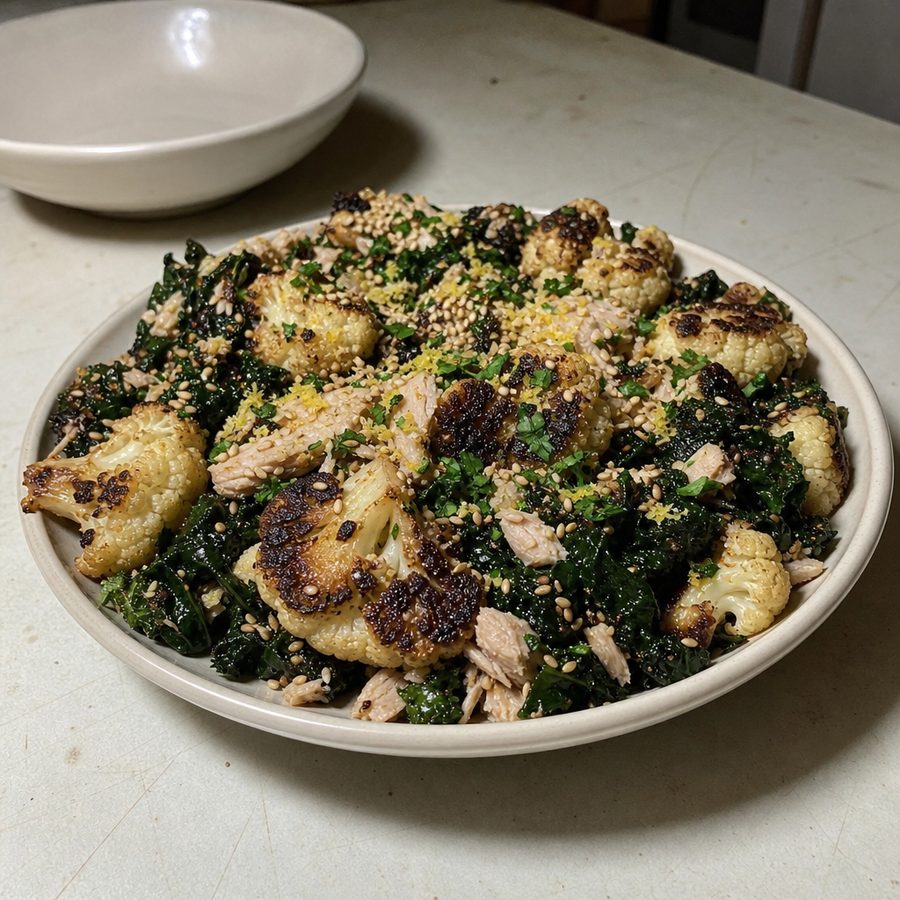
Cauliflower blistered dark in a hot skillet with garlic and chile, kale wilted into it, canned tuna folded through off the heat, and toasted sesame seeds, oregano, lemon, and parsley over the top.
Why You'll Love This Recipe
This started as a way to use the half head of cauliflower that lives in my refrigerator drawer, and it turned into something I now shop for on purpose. Sicilian kitchens put cauliflower with anchovy, chile, and toasted crumbs, and canned tuna slots into that same space without needing a trip anywhere. The trick is cutting the florets so they have flat faces, then leaving them completely alone in a hot pan. Cauliflower browned properly does not taste like cauliflower boiled: it goes sweet and nutty and faintly like popcorn, and that is the whole dish.
It eats dry in the best sense, a pan of separate things rather than a stew. You get crisp-edged florets, kale that has gone silky where it touched the metal, flakes of tuna that stay whole because they went in after the burner was off, and sesame seeds crackling against all of it. Lemon zest and juice go on at the end and wake the whole thing up. It wants to be eaten with a fork out of a wide bowl, and it is one of the rare quick dinners that tastes good at every temperature between hot and cold.
I make it on nights when I have not shopped and I want something that does not feel like a compromise. It takes under half an hour, it uses one skillet and one small dry pan for the seeds, and it feeds four people from a can of fish and a head of cauliflower. If you have a jar of good olive-oil-packed tuna, this is the recipe to spend it on, though the ordinary canned kind from the supermarket does the job perfectly well.
Ingredients
- 2 tbsp extra-virgin olive oil
- 1 small head cauliflower (about 1 lb), cut into small flat-sided florets
- 1 large shallot, thinly sliced
- 4 garlic cloves, thinly sliced
- 1/2 tsp crushed red chile flakes
- 1 tsp dried oregano
- 1 large bunch lacinato kale (about 10 oz), stems stripped out and leaves torn
- 4 cans (5 oz each) chunk light tuna in water, drained well
- 5 tbsp sesame seeds
- 2 tbsp lemon juice, from 1 lemon, plus its zest
- 1/2 cup chopped flat-leaf parsley
- 1/2 tsp coarsely ground black pepper
- a scant 1/8 tsp fine sea salt
Instructions
- Toast the sesame seeds: Put the sesame seeds in a small dry skillet over medium heat and shake it steadily for two to three minutes, until they turn one shade darker and start popping and smelling nutty. Tip them straight onto a plate. Left in the hot pan they keep cooking and go bitter within a minute.
- Blister the cauliflower: Heat the olive oil in a 12-inch skillet over medium-high until it shimmers. Add the florets cut side down with the salt, spread them out, and do not touch them for four minutes, because cauliflower only browns where a flat face stays in contact with hot metal. Lift one to check: you want deep brown, nearly black in spots. Toss and give them three or four minutes more, until they are tender at the stem when pressed.
- Shallot, garlic, and chile: Lower the heat to medium, push the cauliflower to the edges, and add the shallot to the middle of the pan. Cook for two minutes until soft, then add the garlic, chile flakes, oregano, and black pepper and stir for forty five seconds, since the garlic would have been bitter long before the shallot softened if the two had gone in together, until the garlic is pale gold and the whole pan smells sharp and sweet.
- Wilt the kale: Add the torn kale in two handfuls, letting the first collapse before the second goes in, since the whole pile at once cools the pan and simply sits there, along with three tablespoons of water. Cover and cook for three minutes, then uncover and toss for one minute more, until the leaves are dark green and silky and any water in the pan has cooked away.
- Fold in the tuna and finish: Take the pan off the heat. Break the drained tuna into large flakes over the top and fold it through once or twice, gently, so it warms in the residual heat without shredding. Add the lemon juice and zest, then scatter the toasted sesame seeds and the parsley across the surface and serve straight from the pan.
Variations
- Sweet and sour: Add a tablespoon of chopped dates with the shallot for the sweet note Sicilian cooks get from currants.
- Tomato: Halve a cup of cherry tomatoes into the pan with the kale and press them until they burst, which turns the dish saucier.
- Sardines: Canned sardines laid over the top in place of the tuna, warmed for two minutes under a lid, make it richer and stronger tasting.
- Beans: Fold a cup of drained cannellini beans in with the kale for a softer, more filling pan.
Storage & Leftovers
Sealed in the refrigerator this holds three days, and the flavors settle into the cauliflower overnight. The sesame seeds soften, which is the only real loss, so hold a spoonful back and toast them fresh if you know you are eating it again tomorrow.
Reheat it in a hot dry skillet for three or four minutes, spread flat and left undisturbed for the first two so the cauliflower crisps up again. It is also very good cold, tossed with another squeeze of lemon and eaten out of the container, which is what happens to most of my leftovers.
I would not freeze this. Cauliflower that has been frozen and thawed goes watery and gives up the browned edges you worked for, and the kale turns limp. If you want a head start, blister the cauliflower a day ahead and keep it refrigerated, then build the rest of the pan around it.
Notes & Tips
- Cut florets with flat faces: Halve or quarter each floret through the stem. Round surfaces touch the pan at one point and never brown properly.
- Four minutes, hands off: Stirring in the first few minutes is what stops cauliflower from browning. Set it down, walk away, and trust the smell.
- Strip the kale stems: Run your hand up the stem against the leaf. Stems left in stay tough long after the leaves have gone silky.
- Drain the tuna hard: Press it in a sieve with the back of a spoon. Water carried into the pan puddles at the bottom and undoes the browning.
- Fish goes in off the heat: It is already cooked. Folding it through a hot pan with the burner off keeps the flakes big and the texture tender.
- Zest before you juice: A zested lemon is easy, a juiced one is not. Take the zest off first and add both at the same moment at the end.
Nutrition & Mindful Eating
- Cauliflower, kale, tuna, and sesame each carry a different part of this pan. The vegetables give it bulk and fiber, the tuna gives it the protein that makes it dinner, and the seeds bring the crunch along with a surprising amount of calcium.
- Sesame seeds toasted until they pop are the loudest thing in the bowl, and spoon for spoon they are one of the richest sources of calcium in the cupboard, with iron alongside it.
- Kale wilted in a hot pan goes silky and sweeter than it tastes uncooked, and it holds onto calcium, vitamin K, and vitamin C through the short time it spends over the heat.
- Canned tuna is protein you can keep on a shelf for a year, close-grained and mild, and folding it in off the heat keeps the flakes large enough to taste like fish rather than filler.
- Chile, garlic, oregano, and the lemon zest that goes on last are what keep a pan of browned vegetables from tasting heavy, and the olive oil underneath them helps you take up the vitamins the greens carry.
- As you eat, listen for the sesame seeds against the soft cauliflower and notice how the lemon zest keeps arriving late in each bite, and let the bowl last longer than the twenty minutes it took to cook.
Frequently Asked Questions
Which tuna should I buy?
Chunk light tuna in water is what I use, drained hard in a sieve so the pan does not go watery. Olive-oil-packed tuna is richer and holds together in bigger flakes if you want to spend more. Either way, break it up over the pan rather than in the can so the pieces stay large.
My cauliflower steamed instead of browning.
Two usual causes. The pan was not hot enough when the florets went in, or there were too many of them at once. Cauliflower needs contact with metal, so use the widest skillet you own and brown it in two batches if the florets are stacked.
Can I use a different green?
Collard greens, mustard greens, or escarole all work. Collards need an extra two or three minutes under the lid, mustard greens bring a peppery bite that suits the chile, and escarole wilts fastest of the three and turns slightly bitter and sweet.
Do I have to toast the sesame seeds separately?
It is worth the extra pan. Seeds thrown into the main skillet sink into the oil and steam rather than toast. Two minutes dry over medium heat gives you the crackle and the nutty smell that make the top of this dish.