
Sizzled Shrimp with Blistered Green Beans, Garlic, and Basil
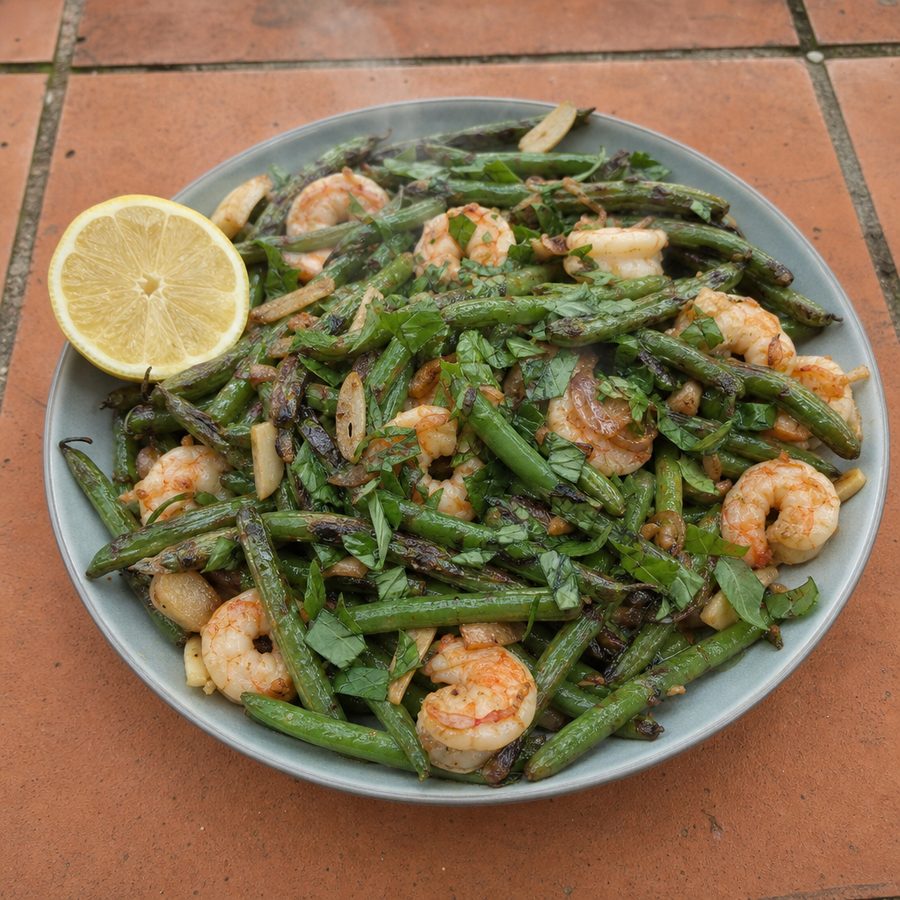
Green beans blistered dark in a hot skillet, then shrimp sizzled in olive oil with sliced garlic and shallot, pulled together with bone broth, lemon, and a fistful of torn basil.
Why You'll Love This Recipe
The refrigerator is nearly empty and a real dinner is still the goal. A bag of green beans, a pound and a half of shrimp, and the garlic that is always in the bowl on the counter. It comes together in under half an hour with one pan, and the entire method is a single idea: get the skillet much hotter than feels reasonable, and cook the two main things separately so each one gets the heat it needs. Beans want minutes and shrimp want seconds, and trying to do both at once is how this dish goes wrong.
Blistering is worth understanding, because it is not the same as sauteing. You put the beans into a nearly dry pan over high heat and leave them until the skin scorches in dark patches and buckles away from the flesh. The bean inside barely cooks, so it keeps a hard snap while the outside tastes toasted and slightly sweet. Shrimp get the same treatment for a fraction of the time, ninety seconds a side, and come out sweet and firm rather than tight. The lemon and the basil go in with the burner off, so both stay bright.
I put this in the week when I want dinner to feel like summer regardless of the month, since green beans and basil are reliable year round and shrimp comes out of the freezer. It reheats better than most shrimp dishes because the beans protect it, and it is good at room temperature, which makes the leftovers a decent lunch out of a container. If I have people over I double the basil and put the pan straight on the table with lemon wedges around it.
Ingredients
- 1 1/2 lb large shrimp, peeled and deveined, patted dry
- 1 1/2 lb green beans, stem ends trimmed
- 4 tbsp extra virgin olive oil, divided
- 5 cloves garlic, thinly sliced
- 1 large shallot, thinly sliced
- 1/4 cup chicken bone broth
- 2 tbsp lemon juice, plus wedges for the table
- 1/2 cup torn fresh basil leaves
- 1/2 tsp fine sea salt, divided
Instructions
- Get everything ready first: This cooks too fast to chop as you go. Trim the beans, slice the garlic and shallot, tear the basil, and pat the shrimp thoroughly dry on paper towel. Have the broth and the lemon juice measured and within reach of the stove.
- Blister the beans: Heat a large skillet, ideally cast iron, over high heat for two minutes, then add one tablespoon of the olive oil and the beans with half the salt. Spread them into one layer and leave them for three minutes without stirring, until the undersides are scorched dark in places, since beans that get moved give up their water and stew in it instead of blistering. Toss and repeat twice, six to eight minutes in total, until the beans are blistered all over and still snap. Move them to a plate.
- Sizzle the shrimp: Add two tablespoons of olive oil to the same pan, still over high heat, and lay the shrimp in a single layer with the rest of the salt. Leave them ninety seconds, until the undersides are pink and opaque, then turn and give them sixty seconds more. They should be curled into a loose C. Move them to the plate with the beans, because shrimp go from tender to rubbery in about a minute and everything still to come takes longer than that.
- Frizzle the garlic and shallot: Drop the heat to medium and add the last tablespoon of olive oil with the garlic and shallot. Stir constantly for sixty to ninety seconds, until the garlic is pale gold and smells sweet rather than sharp. It goes from gold to burnt in about fifteen seconds, so stay with it.
- Deglaze and finish: Pour in the bone broth and scrape the browned bits off the bottom of the pan with a wooden spoon, since everything the beans and the shrimp left down there is the entire sauce. Return the beans and shrimp with any juices, toss for thirty seconds to coat, then take the pan off the burner and add the lemon juice and the basil. Toss once more and serve straight from the skillet with lemon wedges.
Variations
- Asparagus: Swap the beans for asparagus cut into two-inch lengths, which blisters in about four minutes rather than eight.
- Olives and parsley: Add a handful of chopped kalamata olives with the broth and finish with parsley in place of the basil for a saltier, more savory pan.
- Bay scallops: Use bay scallops in place of the shrimp, seared for a minute total. They are sweeter and want the lemon even more.
- Over squash: Serve it over roasted delicata or spaghetti squash so the pan juices have somewhere to go.
- Ginger and lime: Trade the basil for cilantro, the lemon for lime, and add a tablespoon of grated ginger with the garlic for a plate that leans east instead of south.
Storage & Leftovers
Sealed in the refrigerator this keeps three days, and it is one of the few shrimp dishes I am happy to eat on day two. The blistered beans hold their snap and the garlic in the pan juices gets rounder overnight, so the leftovers taste more of themselves than they did at dinner.
Reheat it fast or eat it cold. Thirty seconds in a very hot skillet is enough to warm it through, and anything longer starts to tighten the shrimp. Cold from the container with an extra squeeze of lemon over the top is genuinely good and is what I usually do at lunch.
I do not freeze this one. Shrimp that has been frozen, thawed, cooked, and frozen again turns tough, and the beans lose the snap that the blistering gave them. If you want to get ahead, blister the beans a day early and keep them in the refrigerator, then cook the shrimp fresh in five minutes.
Notes & Tips
- Preheat the pan empty: Two full minutes over high heat before any oil goes in. This is the difference between beans that blister and beans that steam, and it is the step people skip.
- Dry the shrimp properly: Wet shrimp will not sizzle, and without the sizzle you get no browning and no flavor in the pan for the sauce to pick up later.
- Cook in stages, not together: Beans need six to eight minutes and shrimp need two and a half. Putting them in the pan at the same time gives you one overcooked ingredient no matter which one you favor.
- Watch the garlic like a hawk: Sliced garlic in hot oil goes from sweet and gold to bitter and brown in seconds. Lower the heat before it goes in and keep the spoon moving.
- Acid goes in off the heat: Lemon juice added to a screaming pan cooks off and turns flat. With the burner off, it stays sharp and perfumed.
- Tear the basil at the end: Basil bruises and blackens fast. Tear it just before it goes in and let the residual heat in the pan wilt it rather than cooking it.
Nutrition & Mindful Eating
- Shrimp, green beans, and the garlic in the pan juices each do a distinct job here. The shrimp carries the protein and the sweetness, the beans give the plate its bulk and its snap, and the garlic, lemon, and basil are what make a skillet this plain taste finished.
- Shrimp cook in about two minutes and come out sweet and firm, and they bring a dense amount of protein along with selenium and B12 for something that eats as lightly as this does.
- Green beans blistered rather than boiled keep their squeak and pick up a toasted flavor across the scorched patches. They carry fiber, vitamin K, and vitamin C, and the fast cooking is what keeps that C in the pan.
- Olive oil is the cooking medium and the sauce at the same time. It is mostly monounsaturated fat, it carries vitamin E, and it is what lets the garlic go gold and sweet instead of scorching.
- Basil torn in off the heat and lemon squeezed over at the end are the two things you smell first. The acid lifts the sweetness of the shrimp, and the basil keeps the whole skillet tasting green and fresh right down to the last forkful.
- As you eat, listen for the snap the beans still make and notice how the basil smell arrives before the first bite does, then slow down enough to feel when you have had enough of a pan this quick to finish.
Frequently Asked Questions
Fresh or frozen shrimp?
Frozen, in most kitchens. Nearly all shrimp at the counter was frozen and thawed anyway, so buying it frozen means you thaw it when you want it. Sit the bag in a bowl of cold water for fifteen minutes, drain it, and dry the shrimp very well, because thawed shrimp carries a lot of surface water.
How do I keep the shrimp from going rubbery?
Pull them early. Shrimp are ready when they form a loose C and the flesh has turned opaque with a faint line of translucence at the thickest part. A tight O means they have gone too far. They also carry on cooking on the plate, so the last thirty seconds happens off the heat.
My beans came out soft and gray. What happened?
Not enough heat and too many beans. A blister needs the pan hotter than a saute and the beans in a single layer with room around them. If your skillet is smaller than twelve inches, blister them in two batches, and dry them completely after washing since wet beans steam.
Can I use vegetable broth?
Yes, it works fine, though the pan sauce comes out thinner. Bone broth has enough body to cling to the beans, which is why I reach for it here. Water and an extra squeeze of lemon will also do the job of getting the browned bits off the pan.