
Sizzled Shrimp with Napa Cabbage, Edamame, and Ginger
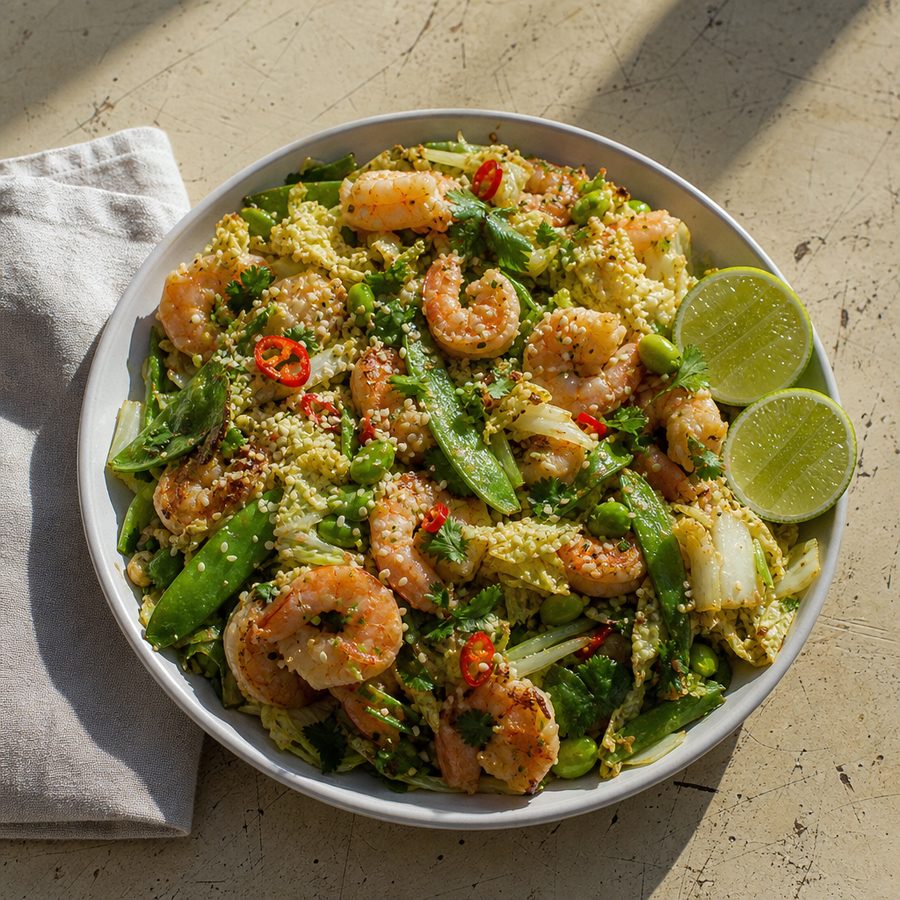
Shrimp seared hard in a smoking pan with ribbons of napa cabbage, snow peas, and edamame, finished off the heat with ginger, chile, lime, and hemp seeds.
Why You'll Love This Recipe
Seven o'clock and I have not thought about dinner, and every part of this cooks in the time it takes to boil a kettle. Shrimp are the fastest protein in any kitchen, three minutes at most, and napa cabbage is the fastest of all the cabbages: cut into wide ribbons it wilts almost on contact and keeps a crisp spine at the base of every leaf. The whole thing is a matter of getting the pan properly hot, then working quickly and in the right order, which is easier than it sounds when nothing in the pan takes more than four minutes.
Order is the only technique here. The snow peas and edamame go in first because they can take real heat and want a little blistering, then the shrimp, which come out the moment they curl and turn opaque all the way through, then the cabbage into the empty pan where it wilts in the residual heat. Ginger, garlic, chile, lime, and sesame oil all go on after the burner is off. Grated ginger scorches in seconds over high heat and turns bitter, and raw heat is exactly what you want it to taste like: hot, sweet, and sharp.
What makes it worth repeating is the range of textures in one bowl. Shrimp are firm and springy, edamame are dense and a little starchy, snow peas snap, cabbage goes silky at the leaf and stays crunchy at the rib, and the hemp seeds are soft and nutty against all of it. The lime is not a garnish here, it is a load-bearing ingredient, and I put the spent halves on the table so people can add more. It is enough food that nobody asks what else there is, and it takes twenty five minutes start to finish.
Ingredients
- 1 1/4 lb large shrimp, peeled, deveined, and patted dry
- 1 small head napa cabbage (about 14 oz), cut crosswise into 1-inch ribbons
- 2 cups shelled edamame, thawed if frozen
- 6 oz snow peas, strings pulled
- 3 tbsp hemp seeds
- 4 scallions, cut into 1-inch lengths
- 1 1/2 tbsp finely grated fresh ginger
- 4 garlic cloves, thinly sliced
- 1 jalapeno, thinly sliced into rings
- 2 1/2 tbsp lime juice, from about 2 limes, plus halves to serve
- 1/2 cup cilantro leaves and tender stems
- 1 tbsp avocado oil
- 1 tbsp toasted sesame oil
- 1/3 tsp fine sea salt
Instructions
- Get everything cut before you start: This cooks faster than you can chop, so prepare it all first. Ribbon the cabbage, string the snow peas, slice the scallions, garlic, and jalapeno, grate the ginger, and juice the limes. Put the ginger, garlic, chile, lime juice, and sesame oil together in a small bowl so they go in as one addition at the end.
- Blister the peas and edamame: Heat the avocado oil in a twelve-inch skillet or wok over high until it is just smoking. Add the snow peas and the edamame with a pinch of the salt and cook for two minutes, tossing twice, until the peas are blistered in spots and the edamame have picked up a little color. Tip them into a large bowl.
- Sear the shrimp: Add the shrimp to the same pan in one layer, still over high heat, with the rest of the salt. Leave them for ninety seconds so the undersides pick up color, then turn them and give them another minute. Pull them the moment they are opaque through the middle and curled into a loose C, and add them to the bowl.
- Wilt the cabbage: Add the napa cabbage and the scallions to the empty pan and toss for sixty to ninety seconds. The leafy parts will collapse to a third of their volume while the white ribs stay crisp. Do not cook it any further than that, since napa releases a lot of water once it goes past this point.
- Dress it off the heat: Turn the burner off, return the shrimp, snow peas, and edamame to the pan, and pour the ginger, garlic, chile, lime, and sesame oil mixture over everything. Toss for thirty seconds so it coats. Scatter the hemp seeds and cilantro over the top and serve straight away, with lime halves on the table.
Variations
- Bok choy: Use halved baby bok choy in place of the napa, stems in first and leaves a minute later, for a version with more crunch.
- Tofu: Cubed firm tofu browned hard in the first step stands in for the shrimp and holds the ginger dressing just as well.
- Peanut and lime: Stir a spoonful of peanut butter into the lime and ginger mixture for a thicker dressing that clings to the cabbage.
- Coconut aminos: Add a tablespoon of coconut aminos to the dressing for a rounder, slightly sweeter finish against the chile.
- Mint and basil: Swap half the cilantro for torn mint and basil, which pushes the bowl in a fresher, more herbal direction.
Storage & Leftovers
This keeps two days in a sealed container in the refrigerator, and shrimp are the reason for the short window rather than the vegetables. The cabbage softens overnight and gives up water, so pour off anything that collects in the bottom of the container before you reheat it or eat it cold.
It is genuinely good cold, straight from the refrigerator, which is how I most often eat the leftovers. If you want it warm, use a hot dry skillet for two minutes and no longer, since shrimp go rubbery on a second cooking. A fresh squeeze of lime and a few more hemp seeds bring it back to where it started.
I do not freeze this one. Shrimp turn watery and firm after thawing, and napa cabbage collapses into something limp with no structure left at the ribs. If you want a head start, cut all the vegetables and mix the ginger and lime dressing up to a day ahead and keep them separately in the refrigerator.
Notes & Tips
- Dry the shrimp properly: Wet shrimp steam and go gray. Two minutes with paper towel is the difference between a pan that sizzles and a pan that puddles.
- Let the pan smoke: Everything here cooks in under four minutes, so the heat has to be there before the food is. Wait for the oil to shimmer and just begin to smoke.
- Cook in stages, not all at once: Each thing wants a different length of time, and a full pan drops the temperature. Three quick rounds into one bowl beats one crowded round.
- Pull the shrimp early: They keep cooking in the bowl. A loose C shape means they are ready; a tight O means they went a minute too far and turned springy.
- Grate the ginger on a microplane: You want it to disappear into the dressing rather than sit in fibrous threads, and a microplane gives you the juice along with the pulp.
- Keep the cabbage ribs thick: Cutting the whole head into even ribbons means the crisp white parts stay crisp. Shredding it finely gives you a pan of uniformly soft cabbage.
Nutrition & Mindful Eating
- Shrimp, edamame, and a pan full of cabbage and peas are the three things holding this bowl up. The shrimp bring the protein and cook in minutes, the edamame add protein and fiber together, and the cabbage and snow peas give the volume that makes a serving look like dinner.
- Shrimp are firm and slightly sweet and take on ginger and lime better than almost any other seafood. They are dense in protein for how briefly they cook, and they carry selenium and iodine, which is worth knowing about a food most people treat as an occasional splurge.
- Edamame are young soybeans, sweet and a little starchy, and they are one of the few beans that arrive at the table already tender. They carry plant protein and fiber in the same bite, along with folate, and they hold their shape in a hot pan without going soft.
- Hemp seeds are soft rather than crunchy and taste faintly of pine nuts, and they scatter over the top carrying plant-based omega-3 fats and magnesium. Adding them off the heat keeps their flavor sweet, since they turn bitter if they sit in a hot pan.
- Ginger, garlic, chile, lime, and toasted sesame oil all go in with the burner off, and that is the whole flavor of the dish. Heat would flatten the ginger and dull the lime, so the finished bowl tastes sharp, hot, and fragrant rather than merely cooked.
- As you eat, notice how many different textures are in a single forkful, the snap of a snow pea against the silk of the cabbage, and let the lime and the chile keep you at the table long enough to finish the bowl slowly.
Frequently Asked Questions
Can I use frozen shrimp?
That is what I use most of the time. Thaw them in a colander under cold running water for five minutes, then dry them thoroughly on paper towel, because any surface water will steam them instead of searing them. Buy them already peeled and deveined and the prep drops to nothing.
What can I use in place of napa cabbage?
Green cabbage works if you slice it thinly, though it needs about three minutes rather than ninety seconds. Bok choy is the closer match, with the stems going in a minute before the leaves. Either way, keep the total cabbage weight the same so the bowl stays balanced.
Why does the ginger go in at the end?
Grated ginger burns within seconds in a smoking pan and turns acrid, which spoils everything it touches. Added off the heat it keeps its perfume and its sweetness, and the residual warmth of the pan is enough to soften its edge. The garlic and chile behave the same way.
Can I make this for a crowd?
Double it, but cook it in two batches in the same pan and combine them at the end. A wok or skillet that is crowded drops in temperature and everything steams, which is the one failure this dish cannot recover from. The dressing can be doubled in a single bowl.