
Skillet Delicata Squash with Kale, Quinoa, and Pumpkin Seeds
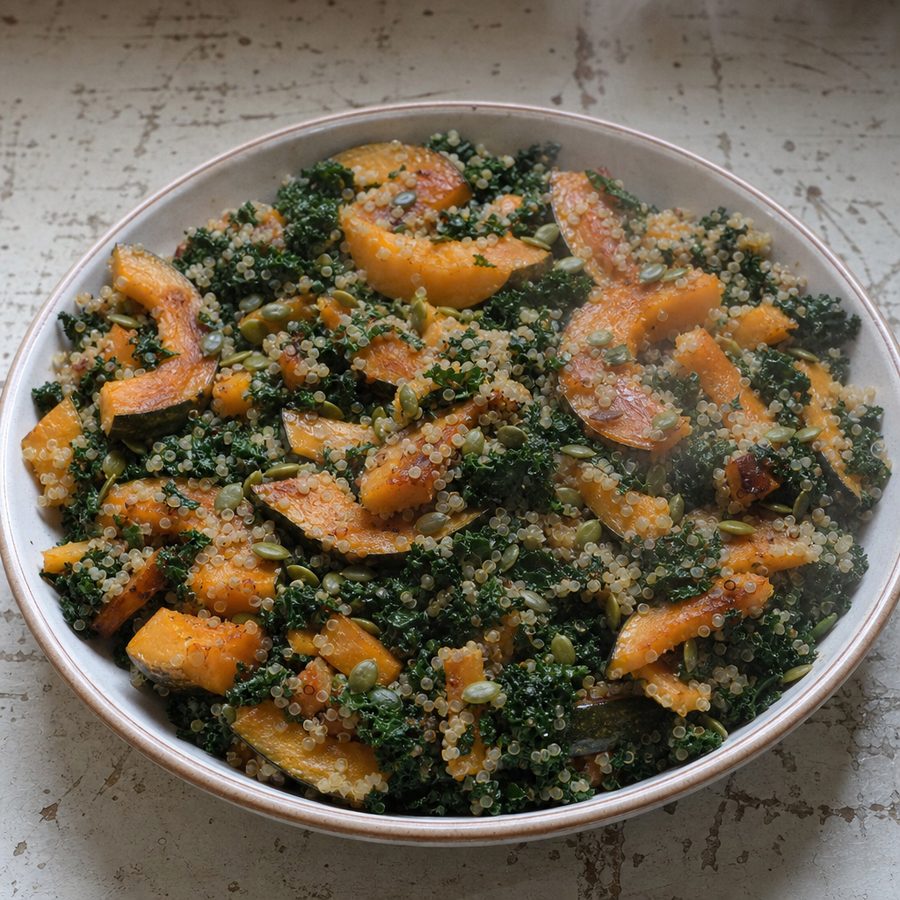
Half-moons of delicata squash browned in a skillet with shallot and cinnamon, tossed through warm quinoa with wilted kale, cider vinegar, and toasted pumpkin seeds.
Why You'll Love This Recipe
Delicata is the squash I reach for on a weeknight, because it is the one you do not have to fight. The skin is thin enough to eat, which means no peeling, no wrestling a heavy knife through a hard shell, and no thirty minute roast waiting at the end of it. Sliced into half-moons it browns in a skillet in about eight minutes, and the flesh underneath goes silky while the ridged edges catch and turn the color of caramel. If you have only ever met squash as cubes from a sheet pan, this is a quicker and, to my taste, considerably better version of the same pleasure.
What I love about the bowl is how the four main things stay separate on the fork. The squash is sweet and soft, the quinoa is nubbly and a little chewy, the kale holds on to a green bitterness that stops the sweetness from taking over the plate, and the pumpkin seeds crack between your teeth. Cinnamon sounds like a dessert spice right up until you cook it with shallot and thyme in hot oil, at which point it turns savory and woody and does something for squash that nothing else in my cabinet quite manages. The cider vinegar off the heat is what ties the whole bowl together.
This is my early autumn dinner, the first cool evening when the squash pile shows up at the market and the oven still feels like too much to switch on. It comes together in twenty five minutes as long as the quinoa is already cooked, which is why I make a big pot of it on Sunday and keep it in the refrigerator in a covered bowl. It travels well in a jar, it is just as good at room temperature as it is warm, and it is the rare dinner my kitchen can produce entirely out of things that were sitting there anyway.
Ingredients
- 2 delicata squash, about 1 1/2 lb total, halved lengthwise, seeded, and sliced into 1/3-inch half-moons, skin left on
- 3 cups cooked quinoa, from about 1 cup dry, warm or leftover from the refrigerator
- 1 large bunch lacinato kale, about 9 oz, stems stripped out and leaves torn into wide ribbons
- 1/4 cup raw pumpkin seeds
- 2 shallots, halved and sliced thin
- 2 tbsp olive oil, divided
- 4 tsp apple cider vinegar
- 3 cloves garlic, thinly sliced
- 3/4 tsp ground cinnamon
- 1 tbsp fresh thyme leaves, from about 6 sprigs
- 3/4 tsp coarsely ground black pepper
- 1/4 tsp fine sea salt
Instructions
- Prepare the squash: Halve each delicata lengthwise and scrape out the seeds with a spoon. Lay the halves cut side down and slice them into half-moons about a third of an inch thick. Leave the skin on, since it softens completely as it cooks and holds each piece together in the pan.
- Toast the pumpkin seeds: Put the seeds in a large dry skillet over medium heat and cook for two to three minutes, shaking often, until they puff, darken a shade, and start popping against the pan. Tip them onto a plate right away. They go from toasted to burnt in under a minute, and the pan is about to get much hotter.
- Brown the squash: Add 1 tbsp of the oil to the same skillet over medium-high heat and lay the squash in a single layer. Leave it undisturbed for four minutes, until the undersides are deep gold, then flip each piece and cook three to four minutes more. The half-moons should give easily when you press one and be dark at the ridges.
- Add the shallot, garlic, and spice: Push the squash to the edges of the pan, add the remaining oil, the shallot, and the garlic to the middle, and cook for a minute until they soften and smell sweet. Stir in the cinnamon, the thyme, the salt, and the black pepper and cook thirty seconds more, until the cinnamon smells toasted rather than raw.
- Wilt the kale and fold in the quinoa: Add the kale a handful at a time, tossing, and cook one to two minutes, just until it turns glossy dark green and shrinks by half. Fold in the quinoa and cook another minute to warm it through, then take the pan off the burner, pour in the cider vinegar, and toss. Scatter the pumpkin seeds over the top and serve straight from the skillet.
Variations
- Acorn or butternut: Either works if delicata is out of season, peeled and cut into half-inch pieces, though they need an extra five minutes in the pan to go tender.
- Maple and chile: A teaspoon of maple syrup and a good pinch of cayenne with the vinegar turns the bowl sweet and hot, which suits the squash well.
- Collard greens: Use collard ribbons in place of the kale, sliced thin and given three minutes rather than one, for a sturdier and slightly sweeter green.
- White beans: A cup of rinsed cannellini beans stirred in with the quinoa makes this a heavier bowl for a cold night.
Storage & Leftovers
This keeps four days in a sealed container in the refrigerator and is one of the better packed lunches I make. The squash softens a little further overnight and the kale takes on the cinnamon, so day two tastes rounder than day one. Keep the pumpkin seeds in a separate jar if you want them to stay crisp.
Reheat it in a skillet over medium heat with a teaspoon of water, tossing for two or three minutes. It is also very good cold or at room temperature, closer to a grain salad than a hot dinner, and a fresh splash of cider vinegar wakes it up either way.
It freezes for up to two months, though the squash gives up water as it thaws and comes back softer. Thaw overnight in the refrigerator and reheat in a hot pan rather than a microwave so that liquid cooks off and the edges catch again.
Notes & Tips
- Slice the half-moons evenly: A third of an inch is the sweet spot. Thicker and the middle is still firm when the outside is dark, thinner and they fall apart when you flip them.
- Toast the seeds first, in the dry pan: They need gentle heat and they need to come out before the oil goes in. Doing them first means one pan and no scorched seeds sitting under the squash.
- Leave the squash alone: Four still minutes is what makes the gold crust. Every time you move the pieces around you interrupt the browning and end up with pale, steamy squash.
- Add cinnamon to fat, not to liquid: Ground spices bloom in hot oil and turn savory. Stirred into the vinegar at the end, cinnamon tastes dusty and sits on top of everything.
- Vinegar off the heat: Poured into a hot pan it hisses away in seconds and takes its brightness with it. Off the burner, it stays sharp and coats the quinoa.
Nutrition & Mindful Eating
- Squash, quinoa, and kale each bring something different to the bowl. The delicata carries the sweetness and soft texture, the quinoa brings a complete set of amino acids in a grain that eats like a grain, and the kale brings both bulk and a green bitterness that keeps the whole thing from tasting like a dessert.
- Delicata squash is one of the sweeter winter squashes, and the deep orange flesh under that striped skin is where its beta-carotene sits. The skin is edible once cooked, which means the fiber that lives in it stays on your plate rather than in the compost.
- Kale wilts down to almost nothing here, and what looks like a small handful in the finished bowl started as a whole bunch. It carries vitamin K and calcium, and the quick minute in a hot pan keeps its color bright and its texture intact.
- Pumpkin seeds toast in the dry pan until they pop, which is worth doing for the crunch alone. They bring magnesium and zinc along with that crunch, and their green color against the caramel squash is half the reason the bowl looks the way it does.
- Cinnamon, thyme, and shallot cooked in oil are what make this savory. Cinnamon bloomed in fat loses its dessert associations and turns warm and woody, the thyme adds a resinous note under it, and the cider vinegar at the end sharpens everything the squash sweetened.
- As you eat, notice the difference in texture between the soft squash and the seeds that crack against your teeth, and let the bowl cool enough to taste the cinnamon properly rather than eating it straight off the burner.
Frequently Asked Questions
Do I really eat the skin?
Yes, and that is the whole reason to buy delicata. The skin is thin, it goes tender in the pan, and it holds the half-moons together so they do not collapse when you toss them. Butternut and acorn skin stay tough and do need to come off, which is why they are slower dinners.
How do I pick a good delicata?
Look for a squash that feels heavy for its size with deep cream and green stripes and no soft spots at either end. A dull, matte skin is a good sign of ripeness. Two medium ones, around three quarters of a pound each, is right for this pan.
Can I use quinoa straight from the pot?
You can, and warm quinoa is lovely here. I usually use leftovers because it makes this a twenty five minute dinner rather than a forty minute one. If you are cooking it fresh, start it before you touch the squash and it will be ready at about the same time.
My kale came out chewy. What should I change?
Two things, usually. Strip the stems out properly, because they never soften in a minute of cooking, and tear the leaves into pieces no bigger than your palm. Then give the pan a minute of tossing rather than dumping the kale in and walking away, so every ribbon touches the heat.