
Skillet Lentils with Blistered Tomatoes, Fennel, and Dill
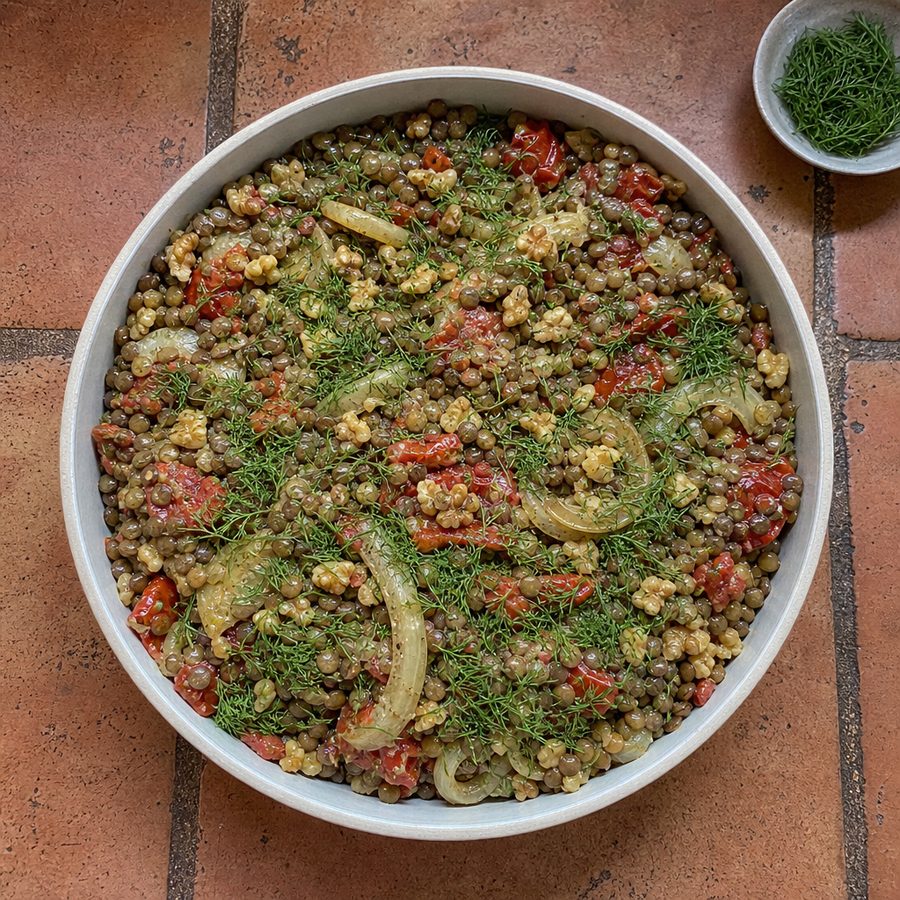
Sliced fennel browned in a hot skillet with cherry tomatoes until they burst, folded through brown lentils with mustard, lemon, toasted walnuts, and a great deal of dill.
Why You'll Love This Recipe
This started as a way to use half a fennel bulb and turned into one of the dinners I make most often in late summer. It takes under half an hour, it uses one skillet, and it leans on two cans of lentils, which is the sort of thing that saves a weeknight. Fennel is the ingredient people are unsure about, and cooked hard it stops tasting of licorice almost entirely and goes sweet and mellow instead. If you have someone at the table who says they do not like it, cook it darker than you think and do not tell them what it is.
The order in the pan is doing real work. Fennel goes in first because it needs the longest and it likes a still pan, and the slices should be thick enough to hold together while the cut faces caramelize. The tomatoes go in whole so they blister rather than stew, and the moment you hear the first one pop you know the pan is hot enough. Pressing a few of them against the metal with the back of a spoon releases their juice into the fennel, and that juice plus the mustard and lemon is the entire dressing. Nothing else is needed.
Lentils go in last and only long enough to warm through, which keeps them whole rather than turning them to paste. Then the pan comes off the heat and the dill goes in by the handful, along with the feathery fronds from the fennel, which taste like a greener version of the bulb. It eats warm rather than hot, which suits it, and it is even better at room temperature after twenty minutes on the counter. I make a double batch on Sunday and eat it out of the container all week.
Ingredients
- 3 cups cooked brown lentils (two 15 oz cans, drained and rinsed well)
- 1 lb cherry tomatoes, left whole
- 1 large fennel bulb, halved, cored, and sliced 1/4-inch thick, fronds reserved
- 2 shallots, thinly sliced
- 3 cloves garlic, thinly sliced
- 2 tbsp olive oil
- 1/3 cup walnut halves, roughly chopped
- 1/2 cup fresh dill, roughly chopped, plus the fennel fronds
- 1 1/2 tbsp lemon juice
- 2 tsp dijon mustard
- 1/2 tsp coarsely ground black pepper
- 1/4 tsp fine sea salt
Instructions
- Prep everything first: Halve the fennel bulb, cut out the tough core, and slice it a quarter inch thick. Pull off the feathery fronds and chop them with the dill. Slice the shallots and garlic, drain and rinse the lentils, and chop the walnuts. This pan moves quickly once it is hot.
- Toast the walnuts: Put the chopped walnuts in a dry 12-inch skillet over medium heat and shake the pan every 30 seconds for three minutes, until they smell toasted and darken slightly. Tip them onto a plate. They will keep browning if you leave them in the hot pan.
- Caramelize the fennel: Add the olive oil to the same skillet over medium-high heat. Lay the fennel slices in a single layer and leave them alone for four minutes, until the undersides are deep gold. Turn them, add the shallots, and cook three minutes more, until the fennel is tender at the edge of a knife and the shallots have softened.
- Blister the tomatoes: Add the whole cherry tomatoes and the salt, raise the heat, and let them sit for two minutes without stirring until the skins blacken in spots and the first ones split. Press about half of them against the pan with the back of a spoon to release their juice, then add the garlic and the black pepper and cook 30 seconds more.
- Warm the lentils through: Tip in the lentils and fold them gently through the tomatoes and their juice. Cook two to three minutes, just until they are hot, stirring as little as you can get away with so they stay whole. If the pan looks dry, add a splash of water and let it steam.
- Dress it off the heat: Take the skillet off the burner. Whisk the dijon mustard and the lemon juice together and pour it over, then fold once or twice so it coats everything. Add the dill and the fennel fronds, scatter the toasted walnuts over the top, and serve warm or at room temperature.
Variations
- Orange and fennel: Swap the lemon juice for the juice and grated zest of half an orange, which suits the sweetness of the caramelized bulb.
- Warm spice: Add a teaspoon of cracked coriander seed with the garlic so the pan smells of citrus and toast.
- Green olive: Fold a small handful of chopped green olives in with the lentils for a saltier, brinier bowl.
- Peppery greens: Fold two big handfuls of arugula or watercress in off the heat so they half wilt against the warm lentils.
- Yogurt underneath: Spread thick Greek yogurt across the bottom of each bowl and spoon the warm lentils over it.
Storage & Leftovers
This keeps four days in a sealed container in the refrigerator and improves for the first two. The lentils go on absorbing the tomato juice and the mustard, so the flavor settles into something rounder than it is on the night you make it.
Eat it cold from the container or let it sit on the counter for twenty minutes, which is how I like it best. If you want it hot, warm it in a skillet over medium for three minutes rather than the microwave, which cooks the tomatoes further and makes the lentils pasty.
Freeze it in flat sealed portions for up to two months, understanding that the fennel softens and the walnuts lose their crunch. Thaw overnight in the refrigerator, warm it briefly, and bring it back with fresh dill and a squeeze of lemon and a handful of newly toasted walnuts.
Notes & Tips
- Slice the fennel thick: A quarter inch holds together and browns. Shaved thin, it wilts into threads before it ever caramelizes and you lose the sweetness entirely.
- Keep the fronds: They taste like a fresher, greener version of the bulb and cost nothing. Chopped in with the dill they double the amount of herb in the bowl.
- Tomatoes go in whole: Halved, they release their juice immediately and stew. Whole, they blister and hold that juice until you press them, which is when you want it.
- Fold the lentils, do not stir them: Two or three gentle turns with a spatula. Vigorous stirring breaks the skins and you end up with something closer to a mash.
- Dress it off the heat: Mustard splits and lemon dulls in a hot pan. Both go in once the burner is off, which keeps the dressing sharp and glossy.
- Toast the walnuts first, in the dry pan: Doing it before the oil goes in means you can watch them, and they come out of the pan before anything else can burn them.
Nutrition & Mindful Eating
- Lentils, tomatoes, and fennel each pull in a different direction here, and that is why the bowl works. The lentils bring the protein, the fiber, and the body, the tomatoes bring sweetness and all the liquid, and the fennel brings a sweet caramelized edge that keeps it from tasting flat.
- Brown lentils hold their shape through a warm-through in the pan, which is what lets them stay distinct rather than turning to puree, and each one carries a good amount of plant protein along with the iron and folate lentils are known for.
- Cherry tomatoes blistered rather than simmered concentrate their sugars and their lycopene, and cooking them in oil is what makes that lycopene easier for the body to take up. The blackened skins are where most of the flavor sits.
- Fennel goes from sharply anise-scented raw to sweet and mellow after seven minutes in a hot pan, and it brings potassium and a soft fiber along with that sweetness. The fronds on top are the same plant tasting greener.
- Dill, lemon, and mustard all go in with the burner off, and that is deliberate. Heat would round off the mustard and dull the dill, and it is the sharpness of those three landing together that makes you want another forkful.
- As you eat, look for the tomatoes that split hardest and notice how the dill hits at the very end of each bite, and let the bowl cool a little rather than rushing it.
Frequently Asked Questions
Can I use dried lentils?
Yes. Brown or green lentils simmer in about twenty five minutes, which pushes this past the half hour but costs nothing in effort. Cook them until just tender and drain them well. Red lentils are the one to avoid here, since they break down into a puree and this dish needs them whole.
My tomatoes never blistered.
The pan was not hot enough, or they were crowded. They need high heat, a single layer, and two full minutes of stillness. A wet pan or a lid also steams them, so keep it uncovered and let the skins meet dry metal.
What if I do not like fennel?
Cook it harder than you would think and most of the licorice edge caramelizes away. If you would rather leave it out entirely, thick slices of leek or half a head of shaved cabbage go in on the same timing and behave the same way in the pan.
Can I make this ahead for lunches?
It is one of the best things I make for that. Make it through the dressing step, cool it, and keep the dill and walnuts separate. Fold them in the morning you eat it so the herbs stay green and the nuts stay crisp.