
Skillet Sardines with Charred Fennel and Navy Beans
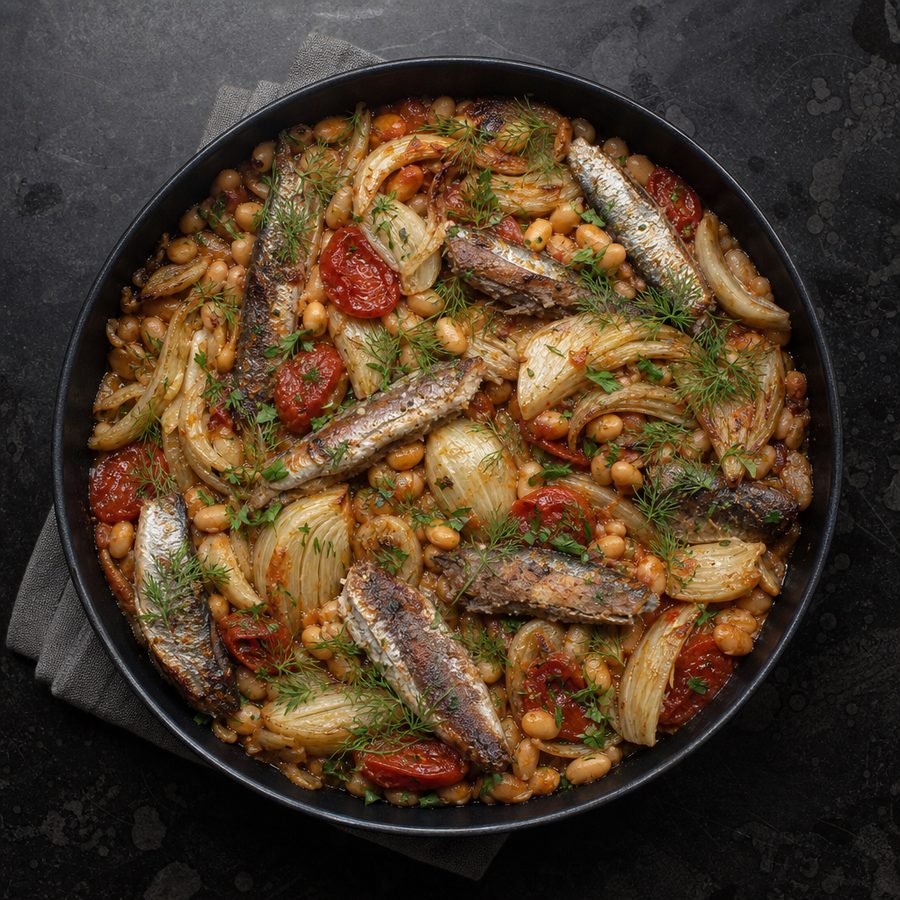
Fennel seared until amber, navy beans warmed in the pan oil, and tinned sardines folded through in whole fillets with cherry tomatoes, chile, and lemon.
Why You'll Love This Recipe
I keep tins of sardines in the cupboard for exactly this kind of night, the one where dinner has to happen in about the time it takes fennel to brown and nobody has the patience for a second pan. Everything here comes out of the pantry except the fennel and a handful of tomatoes, which makes it the dinner I cook the day before the grocery run rather than the day after. It feeds four people properly, it is done in under half an hour from the moment the oil goes in, and the only knife work is two bulbs, four cloves of garlic, and a lemon.
The fennel is the part worth being patient about. Sliced thick and then left alone in a hot pan, it browns across the cut faces and turns from sharp and anise-forward into something much closer to sweet onion, and that sweetness is what the sardines need underneath them. Garlic, cayenne, and oregano go in once the fennel has real color on it, the beans follow and take on the oil, and the tomatoes collapse just enough to make a little sauce in the bottom of the pan. The fish goes in last and barely gets heated at all.
Sardines are strong, oily, and salty, and they want something to push against. Here that is the sweet browned fennel on one side and the lemon on the other, with the beans in the middle catching everything that runs off both. The first forkful tastes mostly of the sea and the last one mostly of lemon and fennel fronds, which is a good direction for a plate of food to travel. I put this into a week when the other dinners have been mild, because it wakes up a run of quiet meals, and it eats just as well at room temperature the next day.
Ingredients
- 2 medium fennel bulbs, cored and sliced 1/4 inch thick, a handful of fronds reserved
- 2 tbsp olive oil
- 4 garlic cloves, thinly sliced
- 1/4 tsp cayenne, or more if you like heat
- 1 tsp dried oregano
- 1 (15 oz) can navy beans, drained and rinsed
- 1 1/2 cups cherry tomatoes, halved
- 4 (3.75 oz) cans sardines packed in olive oil, drained
- 2 tbsp lemon juice, from 1 lemon
- 1/2 cup flat-leaf parsley leaves, roughly chopped
Instructions
- Cut the fennel thick: Trim the stalks off each bulb and set aside a small handful of the feathery fronds. Halve the bulbs from top to bottom, cut out the solid wedge of core at the base, and slice them a quarter inch thick. Thinner than that and the slices fall into strings in the pan; at this thickness they brown on the faces and stay in one piece.
- Brown it hard and leave it alone: Warm the olive oil in a twelve-inch skillet over medium-high heat until it shimmers, lay the fennel in one layer, and do not touch it for four minutes. You want a steady sizzle rather than a roar, and amber patches on the underside when you lift a piece to look. Toss once, spread it out again, and give it three to four minutes more until a knife tip slides into the thickest slice.
- Bloom the garlic and chile: Push the fennel to one side of the pan and add the sliced garlic, cayenne, and oregano to the bare metal with whatever oil has pooled there. Stir for about forty five seconds, until the garlic smells sweet and has just turned pale gold at the edges. Take it no further than that, because garlic browned hard goes bitter and you will taste it under the fish.
- Warm the beans and burst the tomatoes: Add the drained navy beans and the halved cherry tomatoes and cook for three minutes, stirring once or twice and pressing a few of the tomato halves against the hot pan so they give up their juice. The beans should turn glossy and a shallow pool of orange oil should gather at the edge of the skillet.
- Fold the sardines through: Turn the heat to low and lay the drained sardines over the top in whole fillets. Fold them through twice with a rubber spatula, no more than that. They come out of the tin already cooked, so they need only thirty seconds or so to warm, and every extra stir breaks them down further than you want them broken.
- Finish off the heat: Take the pan off the burner, add the lemon juice, and scatter the chopped parsley and the reserved fennel fronds over everything. Taste before you reach for the salt cellar, since the fish and the beans have both brought their own. Serve it straight out of the skillet while the oil at the bottom is still warm.
Variations
- Tinned mackerel: Swap the sardines for two tins of mackerel fillets, broken into large pieces and folded in the same way at the very end.
- Sicilian: Add a tablespoon of golden raisins with the beans and finish with grated orange zest along with the lemon juice.
- Greener: Wilt two big handfuls of chopped collard greens into the pan after the garlic and before the beans, with a splash of water to help them soften.
- Sharper: Stir a tablespoon of drained capers in with the tomatoes for a saltier, more puttanesca-leaning skillet.
- Over grains: Spoon the whole pan over warm bulgur or farro so the oil and tomato juice have somewhere to go.
Storage & Leftovers
This keeps three days in a sealed container in the refrigerator and settles overnight into something rounder, with the fennel sweeter and the oil carrying more of the chile. The sardines soften further, so expect a looser texture on day two rather than whole fillets.
I eat the leftovers at room temperature more often than I reheat them, straight from the container with another squeeze of lemon. If you do want it hot, use a skillet over medium for two or three minutes and stir as little as you can manage.
It does not freeze well. The beans go mealy and the fish turns to paste after thawing, so make what you will eat within a few days. Extra beans and fennel, cooked without the sardines, do freeze fine for a month if you want a head start.
Notes & Tips
- Cut the core out first: The base of a fennel bulb is dense and cooks at a different rate than the rest. Two seconds with a paring knife saves you a plate of half-crunchy slices.
- Dry the pan before the oil: Wet fennel steams rather than browning. Pat the slices with a towel after cutting and give them a hot, dry skillet to land in.
- Save the oil from the tins: Spoon a tablespoon of it in with the beans. It is full of the flavor of the fish and it seasons the whole pan for free.
- Two folds, then stop: Sardines are delicate and already cooked. Fold them through twice and let them sit; anything more and you have a paste rather than fillets.
- Taste before salting: Between the tins and the canned beans there is already plenty of salt in the pan. Check at the very end, after the lemon, and add more only if it genuinely falls flat.
- Buy fennel with the fronds on: The fronds are half the finish of this dish and most stores trim them off. A bulb with its greenery still attached is worth crossing the aisle for.
Nutrition & Mindful Eating
- Sardines, navy beans, and fennel are each doing something different in one pan. The fish carries the protein and most of the salt, the beans give the skillet its body and its fiber, and the sweetness of the browned fennel keeps something this oily from ever feeling heavy.
- Sardines come out of the tin whole, fine soft bones and all, and those bones are the reason a fish this small carries so much calcium. The oil-packed flesh brings omega-3 fats along with a deep savory salt that seasons the beans sitting underneath it.
- Navy beans go creamy at the center while their skins stay intact, so they take on the pan oil rather than falling apart in it. They bring most of the fiber here, and the iron they carry is helped along by the lemon squeezed over the top at the end.
- Fennel is sharp and anise-forward when it is sliced, and browning is what changes it. Left still in a hot pan long enough for the cut faces to caramelize, it turns sweet and rounded, which is the flavor holding up everything else in the skillet.
- Cherry tomatoes pressed against the hot metal give up their juice and turn the oil into a shallow orange sauce, and the lycopene that makes them red is easier for your body to use once they have met heat and fat like this.
- As you eat, notice how the sweetness of the browned fennel sits under the salt of the fish, and let the lemon and the fronds at the end be a reason to slow down over the last few bites.
Frequently Asked Questions
Which tinned sardines should I buy?
Look for whole fillets packed in olive oil rather than water or tomato sauce, with the bones left in. The bones are so soft you will not notice them, and the oil in the tin is worth spooning into the pan. Skinless and boneless tins work in a pinch but give you a plainer, drier fish.
Can I use a different bean?
Cannellini beans are the closest match and behave the same way, and chickpeas work if you want something firmer that stays separate in the pan. Whatever you use, drain and rinse it well so the canning liquid does not dull the lemon at the end.
My fennel came out tough in places. What went wrong?
Almost always the core. The solid wedge at the base of the bulb takes twice as long to soften as the layers around it, so cut it out before slicing. A crowded pan does the same thing by steaming the slices rather than browning them, so use twelve inches of skillet or work in two batches.
Is this too fishy for someone who is unsure about sardines?
It is a strong dish and I would not pretend otherwise, but the browned fennel and the lemon do a great deal to round the fish off. If you are cooking for a doubtful table, use three tins rather than four and add an extra handful of tomatoes.