
Skillet Shrimp with Blistered Cherry Tomatoes, Feta, and Basil
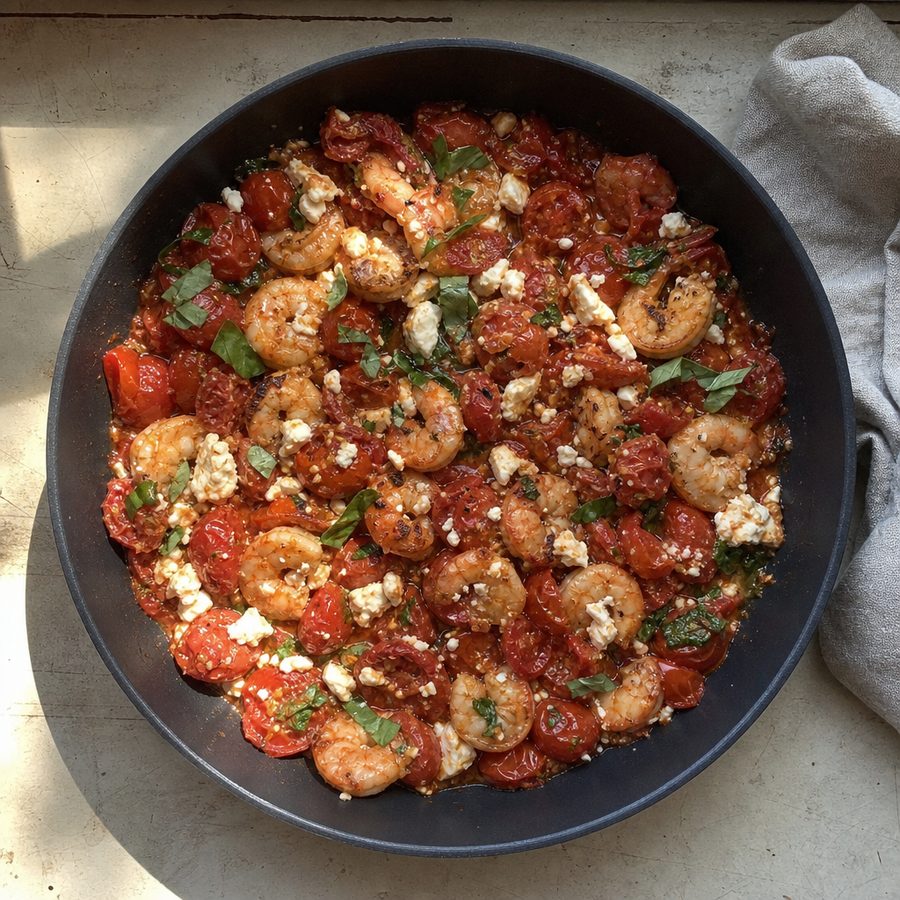
Cherry tomatoes blistered hard in garlic-infused oil until they burst into a loose sauce, then cooked shrimp warmed through in the juices and finished with feta and torn basil.
Why You'll Love This Recipe
Cooked peeled shrimp is the ingredient that makes a hot breakfast possible on a morning with no time in it. It needs about ninety seconds in a warm pan, only enough to heat through, and everything else here is a tomato bursting. Start to finish it is ten minutes, most of which you spend leaving the tomatoes alone. I keep a bag of cooked shrimp in the freezer for exactly this, and it thaws under cold running water in about five minutes while the pan comes up to heat. One skillet, one plate, and a savory breakfast that tastes like something you decided to make.
The tomatoes are where the sauce comes from and they need real heat to get there. Into hot oil, left completely alone for three minutes, until the skins blacken in patches and begin to split, then pressed with the back of a spoon so the insides run out and cook down with the oil into something loose and sweet. That is the whole sauce. The shrimp go in after, with the heat turned low, because shrimp sold already cooked only wants warming and will tighten into rubber inside a minute of real heat. Feta and basil land at the very end, in whatever warmth is left in the pan.
Nothing sweet in the morning, for the people who want none of it. It tastes of blistered tomato first, then the salt of the feta, then basil over the top of both, and the shrimp stay firm and faintly sweet in the middle of all of it. A squeeze of lemon off the heat keeps the pan lively, and the cayenne is in there for warmth rather than heat, so a quarter teaspoon across four servings reads as a low hum underneath the tomatoes. There is enough protein on a plate this size to make eleven o'clock a non-event, and it eats perfectly well straight from the skillet standing at the counter, which is honestly how it usually happens here.
Ingredients
- 1 1/4 lb cooked peeled shrimp, tails removed
- 10 oz cherry tomatoes, left whole
- 2 tbsp garlic-infused olive oil
- 4 oz feta, crumbled
- 1/2 cup torn fresh basil leaves
- 1 tbsp fresh lemon juice
- 1/4 tsp cayenne
- 1/4 tsp fine sea salt
- 3/4 tsp freshly ground black pepper
Instructions
- Get the shrimp ready: If the shrimp are frozen, put them in a colander under cold running water for 4 to 5 minutes, until thawed through. Drain them and pat them thoroughly dry, since wet shrimp cool the pan and steam rather than warm.
- Blister the tomatoes: Heat the garlic-infused olive oil in a large skillet over medium-high heat until it shimmers. Add the whole cherry tomatoes in a single layer and leave them completely alone for 3 minutes, until the skins blacken in patches and start to split.
- Make the sauce: Press each tomato with the back of a spoon so it collapses and its juices run into the oil. Add the salt, black pepper, and cayenne and cook 2 minutes more, stirring once, until the juices have reduced into a loose glossy sauce.
- Warm the shrimp: Turn the heat to low, add the shrimp, and turn them through the sauce for 60 to 90 seconds, only until they are hot to the touch. They are already cooked, and anything longer tightens them.
- Finish off the heat: Take the pan off the burner and add the lemon juice. Scatter the feta over the top and leave it for a minute in the residual heat, so the crumbles soften at the edges and keep their shape.
- Serve it hot: Tear the basil over everything at the last moment and serve straight from the skillet, spooning the sauce and the blistered skins over each portion.
Variations
- Greens in the pan: Wilt two big handfuls of spinach or chard into the sauce just before the shrimp go in.
- Goat cheese: Dot the pan with goat cheese in place of the feta for something creamier that melts into the sauce.
- Over a grain: Spoon it over a cup of warm quinoa or rice on a morning when you need it to carry further.
- Smokier: Swap the cayenne for a teaspoon of smoked paprika added with the tomatoes.
- Cooler herbs: Chopped dill or mint in place of the basil takes the pan somewhere sharper and greener.
Storage & Leftovers
This keeps in a sealed container in the refrigerator for 2 days. Shrimp is not at its best reheated, so if you are cooking for later, make the tomato sauce and hold it on its own, then add cold shrimp and bring the two together for a minute in the morning you want it.
To reheat a full portion, use a skillet over low heat for about 2 minutes and stop the moment it is warm. A microwave overcooks shrimp faster than anything else in the kitchen, and rubbery shrimp cannot be brought back. Add fresh basil and another squeeze of lemon either way.
Do not freeze the finished dish, since shrimp cooked, chilled, frozen, and then reheated turns dry and stringy. Freezing a bag of cooked shrimp on its own is exactly right, and thawing what you need under cold running water takes about five minutes on the morning.
Notes & Tips
- Dry the shrimp properly: Pat them dry before they go in. Water in the pan drops the temperature and steams them, which is the fastest route to a rubbery shrimp.
- Why garlic-infused olive oil: The flavor of garlic moves into oil while the part of it that a sensitive gut cannot handle stays behind, so infused oil gives a pan this simple its savory base and none of the trouble.
- Leave the tomatoes alone: Three undisturbed minutes is what blisters and splits the skins. Stirred, they roll around and go soft without ever blackening, and there is no sauce without that.
- Ninety seconds and no more: Cooked shrimp is being warmed, not cooked. Turn the heat down first, count it out, and pull the pan.
- Feta after the heat is off: Off the burner, the crumbles soften and hold their shape. Stirred into a hot pan, they melt into the sauce and you lose the salty pockets.
- Tear the basil, do not chop it: A knife bruises basil and blackens the cut edges within minutes. Tear the leaves as you drop them on.
Nutrition & Mindful Eating
- Shrimp, tomatoes, and feta are the whole plate and each does one job. The shrimp carries the protein, the tomatoes cook down into the sauce that holds it all together, and the feta puts sharp salty pockets through both.
- Shrimp is firm and faintly sweet and stays that way as long as it is only warmed through, and it brings protein along with selenium and B12. A plate built on it eats substantially and still feels light on a warm morning.
- Cherry tomatoes blistered until they split give up the juice that becomes the sauce, and cooking them in oil is what makes lycopene, the pigment behind their color, easier for the body to take up.
- Feta crumbled on after the heat is off softens at its edges and keeps its shape, which puts the salt exactly where you want it. It brings calcium and protein, and its sharpness is what stops a sweet tomato sauce from tasting flat.
- Basil torn over at the last moment smells green and peppery and lifts the whole skillet, and the lemon underneath does the same job from another direction. Between the shrimp and the sauce, this holds you well past the middle of the morning.
- As you eat, notice how sweet and faintly smoky the tomato skins have gone where they blackened against the pan, and give the skillet ten minutes at the table rather than finishing half of it at the stove.
Frequently Asked Questions
Can I use raw shrimp?
Yes, and it is a better piece of shrimp if you have three extra minutes. Add raw peeled shrimp to the finished tomato sauce over medium heat and cook 2 to 3 minutes, turning once, until they curl loosely and turn opaque through. A tight curl means they have gone too far.
My shrimp came out rubbery.
They cooked twice. Shrimp sold cooked only needs warming, so drop the heat to low before it goes in and count out ninety seconds. The other cause is wet shrimp hitting a hot pan, which steams instead of warming and takes far longer to come up to temperature.
Can I prepare any of it ahead?
The tomato sauce can be made up to 3 days ahead and refrigerated, which turns this into a four-minute breakfast. Warm the sauce, add the shrimp, and finish with the feta and basil. Keep the shrimp out of it until the morning you plan to eat.
Does this fit a low-FODMAP breakfast?
It does. Shrimp, feta, and basil are all comfortable, ten ounces of tomatoes divides into a reasonable portion across four servings, and the savory depth comes from garlic-infused olive oil rather than garlic itself, so nothing is stripped out of the pan.