
Skillet Shrimp with Collard Ribbons, White Beans, and Lemon
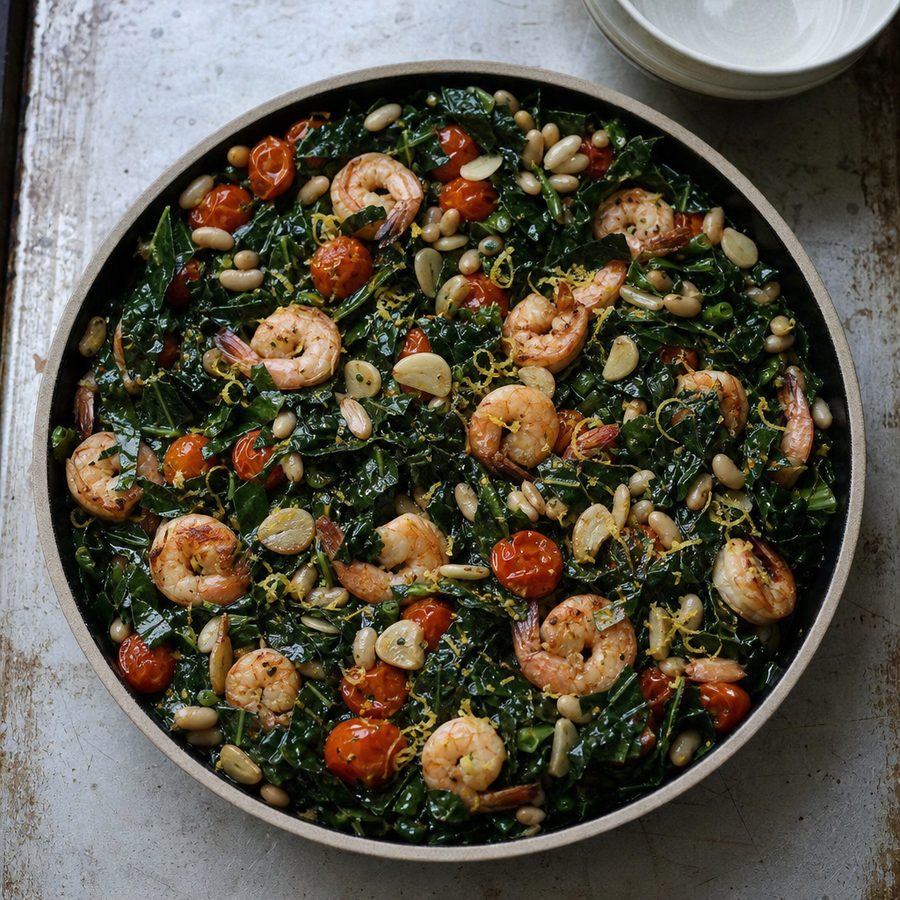
Collard greens cut into thin ribbons and braised down in garlicky olive oil with navy beans and blistered cherry tomatoes, with shrimp added at the last minute and a hard squeeze of lemon over everything.
Why You'll Love This Recipe
Collards get treated as a long-cook green, and they do not have to be. Cut across into ribbons no wider than a shoelace, they go tender in about eight minutes in a covered pan with a splash of broth, and they keep a little bite and all of their color. That is what makes them a lunch green rather than a Sunday one. I strip the stems out by hand, folding each leaf in half and running a knife down the spine, and the whole bunch is ready in about four minutes at the board. The stems are worth keeping as well, sliced thin and thrown in a couple of minutes ahead of the leaves.
Everything after that happens fast in one pan. Sliced garlic goes gently into olive oil until it is barely gold, the collards go in with the broth and the lid, and the tomatoes go on top so they blister and split. The beans go in whole and some of them break down against the side of the pan, which thickens the little bit of liquid at the bottom into something closer to a sauce. The shrimp are last, two minutes, and they are done the moment they curl into a loose C and turn opaque. Take the pan off the burner while you are still slightly unsure, because they carry on cooking in the hot greens underneath them.
The middle of the week wants something hot that is not a sandwich, and this takes about twenty five minutes. It reheats better than most shrimp dishes because the greens and beans protect the fish from the worst of the second heating. Pack it in a wide container rather than a deep one and it warms evenly. Lemon at the end is not a garnish here, it is the thing that makes the whole pan taste finished. Use the zest as well as the juice, and grate it straight over the skillet so the oil that sprays off the peel lands in the food.
Ingredients
- 1 1/4 lb large shrimp, peeled and deveined, tails off
- 1 large bunch collard greens (about 9 oz of leaves), stems stripped out, leaves stacked, rolled, and cut into thin ribbons
- One 15-oz can navy beans, drained and rinsed (about 1 1/2 cups)
- 1 1/2 cups cherry tomatoes, left whole
- 1/2 cup chicken broth
- 5 garlic cloves, sliced thin
- 2 tbsp extra-virgin olive oil
- 2 1/2 tbsp lemon juice, plus the zest of 1 lemon
- 2 tsp dried oregano
- 1/2 tsp coarsely ground black pepper
- 1/4 tsp fine sea salt
Instructions
- Prepare the collards: Fold each collard leaf in half along the spine and cut the stem away in one stroke. Stack six or eight leaves, roll them into a tight cigar, and slice across into ribbons about a quarter inch wide. Wash them after cutting and leave them wet in the colander, since that water helps them steam.
- Warm the garlic in oil: Put the olive oil and sliced garlic into a wide skillet over medium-low heat and cook for two minutes, stirring, until the slices are pale gold at the edges and smell sweet rather than sharp. Do not let them brown. Stir in the oregano and the black pepper and give it fifteen seconds in the hot oil.
- Braise the collards: Add the collards in handfuls, letting each one wilt before the next goes in, then pour in the broth and cover the pan. Cook for eight minutes over medium heat, lifting the lid twice to turn everything over. They are ready when a ribbon is tender enough to bite through cleanly but still holds its dark green color.
- Add the beans and tomatoes: Uncover and stir in the beans, then scatter the tomatoes over the top. Raise the heat and cook for four to five minutes without much stirring, until the tomatoes split and slump and some of the beans have broken against the pan and thickened what is left in the bottom. Season with the salt now.
- Cook the shrimp last: Lay the shrimp over the greens in one layer, cover, and cook for two minutes. Turn them and give them one minute more, just until they have curled into a loose C and gone opaque all the way through. A shrimp curled into a tight O has gone too far. Take the pan off the heat, add the lemon juice and zest, and turn everything over once.
Variations
- Chile and fennel seed: Add a pinch of cayenne and a teaspoon of crushed fennel seed to the garlic oil for something closer to a sausage-and-greens flavor.
- Smoked paprika: Stir a teaspoon of smoked paprika in with the oregano, which gives the pan a deeper, redder character.
- Grain underneath: Spoon it over a cup of cooked barley or brown rice per bowl to stretch it further and soak up what is in the bottom of the pan.
- Herb finish: Scatter a half cup of chopped parsley and a little grated garlic over the finished pan for a raw, sharp edge against the soft greens.
Storage & Leftovers
This keeps three days in the refrigerator, and it is one of the better shrimp leftovers because the greens and beans around them hold the heat evenly on the way back up. Store it in a wide, shallow container rather than a tall one, which is what lets it reheat without the shrimp on the outside going rubbery.
Reheat it in a skillet over medium heat with a tablespoon of water, covered, for three or four minutes. The microwave works at half power in short bursts, stirring between them. Either way, add a fresh squeeze of lemon at the end, since the acid fades overnight and it is what wakes the whole pan back up.
It does not freeze well. Shrimp go from tender to chalky through a freeze and thaw, and the tomatoes lose all their structure. If you want a version to keep in the freezer, make the greens and beans without the shrimp, freeze that for two months, and cook fresh shrimp into it when you reheat.
Notes & Tips
- Cut the ribbons thin: Wide collard strips need twenty minutes and turn olive drab. A quarter inch is the width that goes tender in eight and stays green.
- Leave the greens wet: The water clinging to washed leaves is what steams them under the lid. Spun bone dry, they want more broth and take longer.
- Watch the shape of the shrimp: A loose C is cooked, a tight O is overcooked. It is a better guide than any number of minutes, since size varies so much.
- Save the lemon for the end: Acid added to the pan early dulls as it cooks and turns the greens gray. Off the heat, at the last second, it stays bright and does its job.
Nutrition & Mindful Eating
- Shrimp, collards, and navy beans cover a lot of ground between them. The shrimp bring the protein, the collards bring an unusual amount of calcium for a vegetable along with all that dark color, and the beans add the fiber and the starch that make a pan of greens into an actual lunch.
- Collard greens are one of the few leafy greens whose calcium your body absorbs readily, since they carry very little of the oxalate that ties calcium up in some other greens. Cut fine and cooked briefly, they keep their color and their vitamin K.
- Shrimp cook in about three minutes and come out sweet and firm, and they deliver a lot of protein for their size along with selenium and iodine, two minerals that are hard to find in many other foods.
- Navy beans break down just enough at the edges to thicken what is in the bottom of the pan, and the soluble fiber that does that thickening is the same fiber that makes beans sit so steadily with a meal.
- Sliced garlic warmed slowly in olive oil, dried oregano, blistered tomatoes, and lemon zest at the end are what make this taste like more than the sum of its parts, and the olive oil carries all of those flavors into the greens.
- As you eat, notice how much sweeter the collards turned than their smell in the raw bunch suggested, and let the last few bites be about the lemon and the garlic rather than about clearing the bowl.
Frequently Asked Questions
Can I use frozen shrimp?
Yes, and most shrimp at the counter was frozen anyway. Thaw them in a bowl of cold water for fifteen minutes, then dry them thoroughly on a towel. Wet shrimp dropped into the pan steam rather than cook properly and give up water that thins the sauce.
What other greens work?
Kale is the closest, cut the same way, and it wants a minute or two less. Mustard greens are sharper and quicker still. Swiss chard works if you add the stems first and the leaves at the end, though it holds more water, so keep the lid off for the last minute.
Which beans should I buy?
Navy beans are small and creamy and break down just enough to thicken the pan. Cannellini are bigger and hold their shape more, which some people prefer. Rinse whichever you use under cold water for a good twenty seconds so the canning liquid does not muddy the flavor.
Can I make it ahead for the week?
Cook the greens, beans, and tomatoes through step four and refrigerate that for up to four days. It takes three minutes to bring back to a simmer and two more to cook shrimp into it, so lunch on Thursday is five minutes of work.