
Skillet Sirloin with Wilted Dandelion Greens and Lemon Tahini
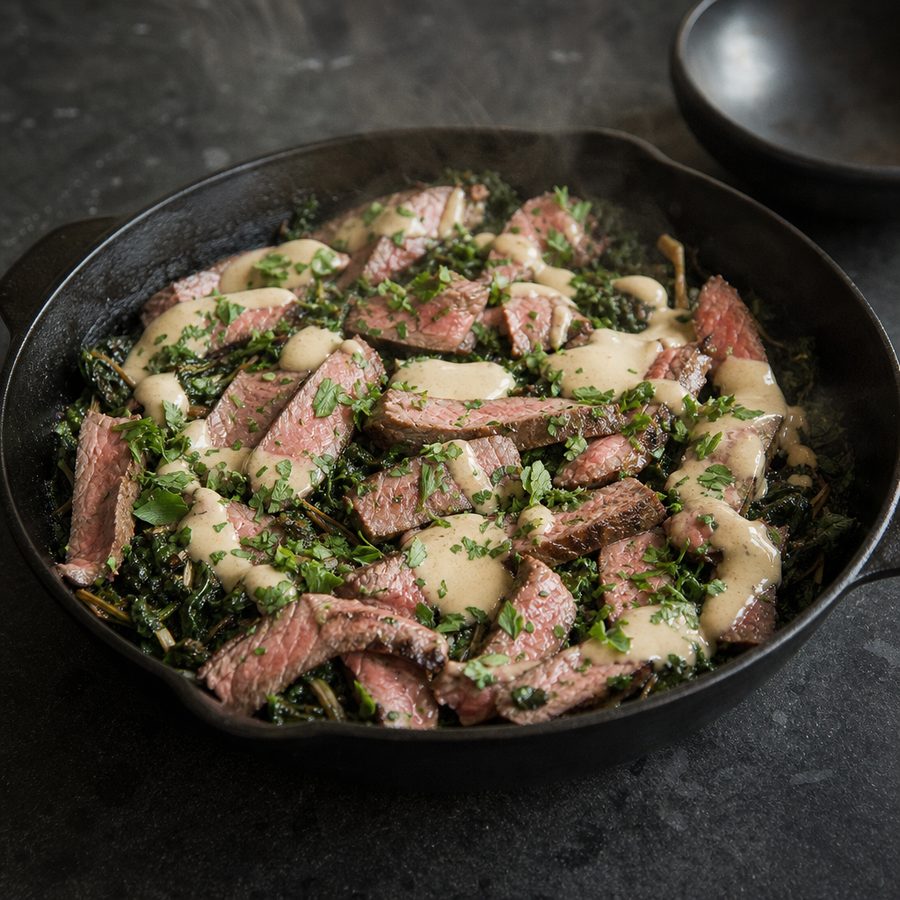
A thick sirloin seared hard in a cast iron pan, rested and sliced over dandelion greens wilted in the drippings, with a loose lemon tahini sauce poured across the whole plate.
Why You'll Love This Recipe
Half an hour, one pan, and a plate that looks like you tried much harder than you did. I built this around dandelion greens because bitterness is the flavor most home cooking leaves out, and it is exactly what a rich seared steak wants next to it. If you have walked past those bunches at the market wondering what anyone does with them, this is what I do with them. They cook down to almost nothing, so buy more than looks sensible. I make it on a weeknight, when half an hour is the whole budget and I still want to sit down to something.
Sequence, not skill, is what this asks for. The steak goes into a very hot dry pan and is left alone until a real crust forms, then it comes out and rests, which is the part people rush. While it sits, the greens go into the same skillet with sliced garlic and shallot and pick up every scrap of fond stuck to the metal. They spit, they collapse, and in four minutes they have taken on all the flavor of the sear. Slicing the steak across the grain at the end is what keeps it tender.
Tahini and lemon make a sauce that does something odd and wonderful. Stirred together the tahini seizes and goes stiff, and then a few tablespoons of cold water bring it back to a pale, pourable cream. Poured over the hot greens it loosens further and pools in the bottom of the plate, and you end up chasing it with the last slice of steak. That sauce is what turns three ounces of beef into a plate that eats like a lot more.
Ingredients
- 13 oz top sirloin steak in one piece, about 1 1/4 inches thick
- 2 large bunches dandelion greens (about 1 lb trimmed), cut into 3-inch lengths
- 3 tbsp tahini, well stirred
- 2 1/2 tbsp lemon juice, from about 1 lemon
- 5 garlic cloves, 4 sliced thin and 1 grated for the sauce
- 2 shallots, sliced into thin rings
- 2 tsp olive oil
- 1 tsp ground cumin
- 1/8 tsp cayenne
- 3/4 tsp coarsely ground black pepper
- 1/4 tsp fine sea salt
- 1/4 cup chopped flat-leaf parsley
Instructions
- Get the steak ready: Take the sirloin out of the refrigerator forty minutes ahead, since a cold steak cooks unevenly. Pat it thoroughly dry on both sides, then season it with the salt, half the black pepper, and the cumin, pressing the spices into the surface with your hand.
- Make the tahini sauce: Whisk the tahini with the lemon juice and the grated garlic clove in a small bowl. It will seize into a stiff paste, which is normal. Add cold water a tablespoon at a time, whisking, until it turns pale and pours off the whisk in a slow ribbon, about three tablespoons in total. Set it aside.
- Sear hard: Heat a cast iron skillet over high until a drop of water skitters and vanishes. Add the olive oil, swirl once, and lay the steak down away from you. Do not move it for four minutes. Turn it and give the second side three to four minutes, until an instant-read thermometer in the middle reads 130°F for medium rare.
- Rest the meat: Move the steak to a board or a warm plate and leave it for at least eight minutes. This is not optional. Cut straight off the heat, the juices run out onto the board and the slices go gray and dry. Tent it loosely with foil if your kitchen is cold.
- Wilt the greens: Lower the heat to medium and add the shallot and sliced garlic to the same pan with the cayenne. Cook for two minutes, scraping the browned bits up as the shallot softens. Add the dandelion greens in handfuls with a splash of water, tossing with tongs, and cook for four to five minutes until they are wilted, dark, and glossy.
- Slice and build: Find the direction of the muscle fibers and cut the steak across them into thin slices, catching any juice on the board. Spread the greens over a platter or leave them in the skillet, lay the slices over the top with their juices, pour the tahini sauce across in wide ribbons, and finish with the parsley and the rest of the pepper.
Variations
- Charred lemon: Halve a lemon and sear it cut side down alongside the steak, then squeeze the caramelized juice over the greens.
- Pomegranate: Scatter a handful of pomegranate seeds over the finished plate for pops of sharp sweetness against the bitterness.
- Sumac and mint: Swap the parsley for chopped mint and dust the sliced steak with sumac for a sharper, more fragrant finish.
- Chicken breast: Sear a butterflied chicken breast in place of the steak, cooked through to 165°F, and the sauce and greens stay exactly the same.
- Warm chickpeas: Toss a drained can of chickpeas into the pan with the greens for a heartier skillet.
Storage & Leftovers
Steak and greens keep three days in the refrigerator in a sealed container, and the tahini sauce keeps a week in a jar. Store them apart. Sauce left sitting on the greens overnight is absorbed completely and you lose the contrast that makes the plate work.
Sliced beef does not reheat well, so I eat the leftovers cold or barely warmed, laid over the greens after they have had thirty seconds in a hot pan. Cold sliced sirloin with the tahini sauce and a squeeze of lemon makes a better lunch than most things I plan on purpose.
The tahini sauce thickens considerably in the refrigerator and looks ruined. It is not. Whisk in a tablespoon of cold water and it comes straight back to a pourable cream. I usually make a double batch for this reason and keep it for vegetables through the week.
Notes & Tips
- Dry the steak, then dry it again: Surface moisture has to boil off before browning can start. A dry steak in a hot pan crusts in four minutes; a damp one grays.
- Let the pan get properly hot: Cast iron needs a good five minutes over high heat. Put the steak in early and it sticks, then tears when you try to turn it.
- Cold water into the tahini: The sauce emulsifies with cold water and stays gluey with warm. Add it slowly and keep whisking through the ugly stage.
- Rest longer than feels right: Eight minutes minimum on a steak this thick. The juices redistribute and the middle carries on cooking a few degrees while it sits.
- Buy more greens than you think: A pound of dandelion greens fills a sink and cooks down to about four cups. They look like too much right up until they hit the pan.
- Save the board juices: Whatever pools under the resting steak goes over the greens. It is the most concentrated thing on the plate.
Nutrition & Mindful Eating
- The steak, the greens, and the tahini were chosen to work as a set. The sirloin brings the protein, the dandelion greens bring fiber and a large amount of calcium, and the tahini adds more calcium along with the fat that makes the sauce pour.
- Sirloin is a close-grained cut with a clean beefy flavor, and it carries iron in the form your body absorbs most readily along with zinc and B12.
- Dandelion greens are properly bitter, which is the point of them, and they bring calcium, vitamin A, and vitamin K into a plate where the beef brings none of those.
- Tahini is nothing but ground sesame, so the calcium and the copper of the whole seed come through in the sauce, and its fat is what carries the flavor of the lemon and raw garlic across the plate.
- Lemon juice, raw garlic, and cumin are the three sharp notes here, and the acid in particular helps your body take up more of the iron the beef and the greens are carrying.
- As you eat, notice how the bitterness of the greens keeps changing against the sweetness of the sauce, and take the time to chase the last of that tahini around the plate rather than clearing it away.
Frequently Asked Questions
What if I cannot find dandelion greens?
Escarole, mustard greens, or the tops from a bunch of beets all give you the same bitter edge and cook in about the same time. Swiss chard or kale work as well and are milder, so add an extra squeeze of lemon at the end to make up the sharpness.
How do I know where the grain runs?
Look at the surface of the raw steak and you will see fine lines all running one way. Your knife goes across those lines, not along them. On sirloin they are quite visible, and cutting the wrong way is the single most common reason a well-cooked steak eats tough.
My tahini sauce split and went grainy.
That is the seizing stage and it always looks alarming. Keep whisking and keep adding cold water in small amounts. Warm water makes it worse. Within a minute it will turn smooth, pale, and glossy.
Can I use a different cut of beef?
Flank and flat iron both sear the same way and slice beautifully across the grain. Both cook faster than sirloin, so start checking at the three minute mark on the first side, and rest them just as long.