
Skillet Tempeh with Collards, Tomato, and Cumin
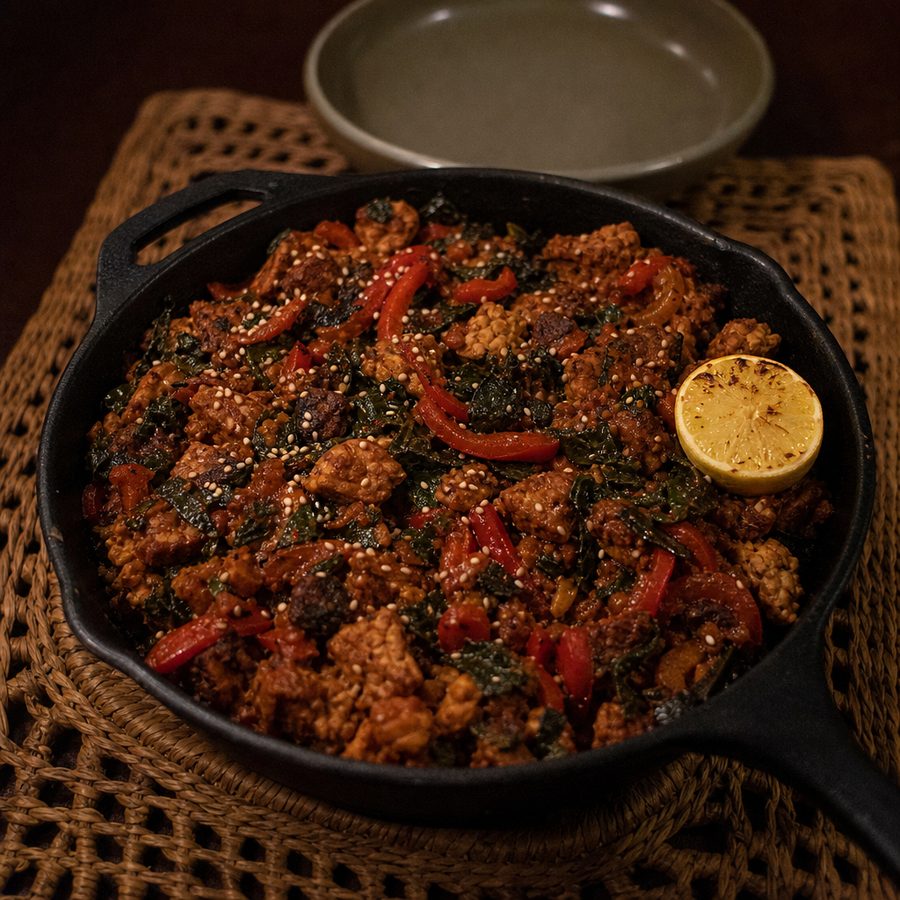
Crumbled tempeh browned hard in a skillet, then braised with red pepper, tomato, and toasted cumin until the collard ribbons underneath go dark and tender.
Why You'll Love This Recipe
This is a pan I eat straight from, standing at the counter more often than I should admit. It takes forty five minutes and one skillet, and it is the recipe I hand to anybody who tells me they have tried tempeh once and did not like it. Almost always the problem was that it went into a sauce without ever seeing dry heat first. Tempeh is a fermented cake of whole soybeans, and browning it hard is what turns that faintly bitter edge into something toasted and nutty. Crumbling it rather than slicing gives you more surface to brown.
The collards are the other half of the argument. They are the sturdiest green in the store and they want time, so they go in early and braise for a quarter of an hour rather than getting wilted at the end. In that time the ribbons stop squeaking against your teeth and turn dark, silky, and slightly sweet, and they take on the tomato and the cumin the way spinach never could. Cutting the center ribs out is not optional. Those stay tough long after the leaf is tender and they will spoil an otherwise good pan.
It eats like a real meal. There is a solid amount of tempeh in every portion and it has the texture to chew, so this is not a plate you finish and then go looking for something else. The spicing runs warm rather than hot, cumin and coriander and sweet paprika, with garlic sliced rather than minced so you find soft slivers of it through the sauce. Lemon squeezed over at the last second is what keeps a pan this earthy from sitting heavy, and I would not skip it.
Ingredients
- 14 oz tempeh, broken into rough 1/2-inch crumbles
- 1 large bunch collard greens (about 10 oz), center ribs cut out, leaves stacked and sliced into ribbons
- 1 1/4 cups canned crushed tomatoes
- 1 red bell pepper, seeded and cut into thin strips
- 1 medium yellow onion, halved and sliced thin
- 5 cloves garlic, thinly sliced
- 1 cup vegetable broth
- 2 tbsp extra virgin olive oil
- 1 1/2 tsp ground cumin
- 1 tsp coriander seeds, crushed under a pan
- 2 tsp sweet paprika
- 2 tsp dried oregano
- 1 lemon, half juiced and half cut into wedges
- 2 tbsp sesame seeds, toasted
- 1 tsp coarsely ground black pepper
- 1/2 tsp fine sea salt
Instructions
- Brown the tempeh: Heat 1 tbsp of the olive oil in a large heavy skillet over medium-high. Break the tempeh into rough crumbles straight into the pan, spread them out, and leave them undisturbed for four minutes so the undersides go deep gold. Stir once and brown three minutes more, then tip the crumbles onto a plate.
- Soften the onion and pepper: Add the remaining oil, the onion, and the red pepper strips with the salt. Cook over medium for eight minutes, stirring occasionally, until the onion is translucent and the pepper has slumped and started to catch color at the edges.
- Toast the spices: Push the vegetables to one side, add the garlic, cumin, crushed coriander, paprika, oregano, and black pepper to the bare metal, and stir them in the oil for about sixty seconds. They will darken a shade and the kitchen will smell strongly of cumin. Move fast here, since ground spices burn in seconds.
- Braise the collards: Stir in the crushed tomatoes and the broth, scraping the bottom of the pan. Add the collard ribbons a large handful at a time, pressing each batch down into the liquid before adding the next. Cover, lower the heat, and simmer for fifteen minutes, until the ribbons are dark green and give completely when you press one against the side.
- Return the tempeh: Uncover, fold the browned tempeh and any juices back in, and simmer uncovered for six to eight minutes. The sauce should reduce until it clings rather than pools, and the tempeh will drink up enough of it to go from dry to glossy while keeping its crumbled shape.
- Finish with lemon and sesame: Take the pan off the heat, squeeze in the juice from the lemon half, and stir once. Taste and add more pepper if you want it. Scatter the toasted sesame seeds over the top and bring the skillet to the table with the lemon wedges.
Variations
- Harissa heat: Stir a tablespoon of harissa in with the tomatoes for a pan that runs genuinely hot under the cumin and coriander.
- Chickpeas alongside: Add a drained can of chickpeas with the tomatoes for extra body and a softer texture through the sauce.
- Mustard greens: Use mustard greens rather than collards for a sharper, more peppery pan. They need only eight minutes of braising.
- Tahini finish: Drizzle a loose lemon-tahini sauce over the finished skillet, which turns the whole thing creamier and rounder.
- Smoked: Swap the sweet paprika for smoked paprika and add a bay leaf to the braise for a deeper, campfire kind of flavor.
Storage & Leftovers
This keeps five days in a sealed container in the refrigerator, longer than most things I cook, and it is better on day two. The tempeh keeps absorbing the tomato overnight and the collards soften a little further without going to mush, so the whole pan tastes more settled than it did fresh.
Reheat it in a dry skillet over medium for four or five minutes, spread flat and left alone for the first two so a few of the tempeh crumbles catch and crisp again. Add a splash of water if it has tightened. A fresh squeeze of lemon at the end puts back the brightness that fades in the cold.
It freezes for up to three months in flat sealed portions. Thaw overnight in the refrigerator and reheat in a pan rather than from frozen. The collards come out softer than they went in, so if that matters to you, hold back a handful of raw ribbons and stir them into the reheated pan.
Notes & Tips
- Crumble, do not cube: Broken edges brown far better than clean cut faces, and the craggy pieces hold sauce in a way that neat cubes never manage.
- Leave the tempeh alone: Four undisturbed minutes builds the crust. Stirring it every thirty seconds gives you pale, slightly bitter tempeh and nothing else.
- Cut out the collard ribs: Fold each leaf along the center rib and slice it out, then stack the leaves, roll them like a cigar, and cut across into ribbons.
- Spices go into oil, not into liquid: Sixty seconds in the hot fat is what wakes cumin and coriander up. Thrown into the tomato they taste raw and dusty for the rest of the cook.
- Slice the garlic instead of mincing it: Slices survive a fifteen minute braise and turn soft and sweet. Minced garlic dissolves and you lose it entirely.
- Reduce at the end, uncovered: The last six minutes with the lid off is what turns a soupy pan into a glossy one that clings to the tempeh.
Nutrition & Mindful Eating
- Tempeh, collards, and tomato are the three things holding this skillet together. The tempeh brings the protein and the chew, the collards bring bulk and a mineral edge, and the tomato reduced down is what ties them into one dish rather than two things in a pan.
- Tempeh is whole soybeans fermented into a firm cake, and that fermentation is why it holds together in a hot pan and why it carries protein at a level unusual for a plant food. The whole beans also mean it comes with fiber, which soy protein on its own does not.
- Collard greens are the sturdiest of the cooking greens and they hold a genuine amount of calcium for a leaf, along with vitamin K. Braising them for a full fifteen minutes is what turns that squeaky raw texture silky.
- Cumin, coriander, and paprika toasted in oil give the pan its warmth, and the sixty seconds they spend in the fat matters. Cumin in particular is dense in iron for a spice, and toasting is what pulls its oils out so you taste it rather than just see it.
- Sesame seeds scattered at the end add a nutty crunch against all that softness, and seed for seed they are one of the more calcium-dense things in the pantry. Lemon squeezed over the hot pan is what makes the last bite taste as bright as the first.
- As you eat, look for the crumbles of tempeh that caught the most color and notice how much the lemon changes the pan, and let yourself sit down with the skillet rather than eating it standing up.
Frequently Asked Questions
Can I use kale in place of the collards?
You can, and it needs about six minutes rather than fifteen, so add it much later. Collards are what make this pan what it is, though. They stay in ribbons under a long braise where kale collapses into the sauce and disappears.
My tempeh tastes bitter. What happened?
That faint bitterness is natural to the fermentation and it goes away with browning and acid. Make sure the crumbles get a proper four minutes of undisturbed contact with a hot pan, and do not skip the lemon at the end. Steaming the tempeh for ten minutes first also mellows it if you are sensitive to it.
Can I make this ahead for the week?
Yes, and it is one of the better candidates for it. Cook the whole pan, cool it, and portion it. It holds five days and reheats in a skillet in five minutes, which makes it a genuinely useful thing to have in the refrigerator on a Monday.
What can I serve it on?
It stands on its own straight from the skillet, which is how I usually eat it. If you want it stretched further, a scoop of cooked barley or brown rice under it soaks up the sauce well and turns four servings into five or six.