
Skillet Tempeh with Mustard Greens, Toasted Coriander, and Lime
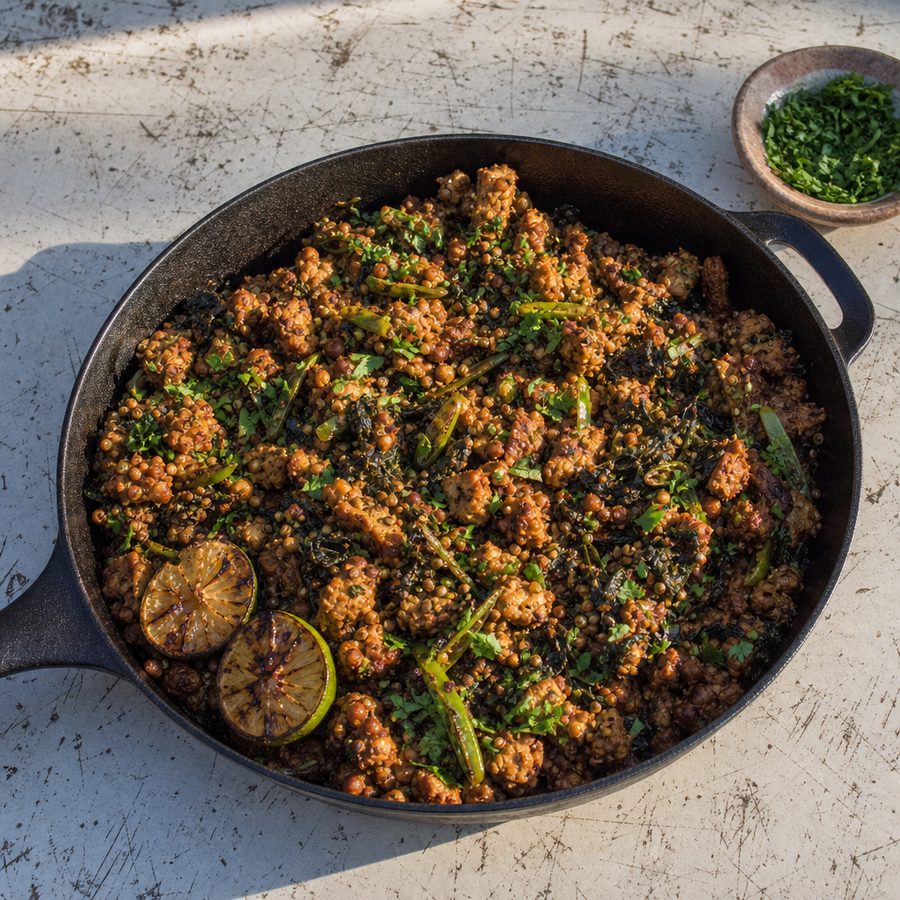
Tempeh broken into craggy pieces and fried until the edges go crisp, then tossed with wilted mustard greens, whole coriander seed toasted in the pan, jalapeno, and a hard squeeze of lime.
Why You'll Love This Recipe
Tempeh took me years to cook well, and the thing that finally fixed it was giving up on neat cubes. Broken by hand it comes apart in uneven pieces with torn faces, and those faces catch far more oil and go far crisper than a smooth cut side ever will. The other half of it is patience in the first three minutes: put the pieces in a hot pan, spread them out, and then leave them completely alone. Every time I have stirred early I have ended up with pale, soft tempeh, and every time I have waited I have ended up with something worth eating on its own.
Mustard greens are the right partner because they are assertive enough to stand up to it. They carry a horseradish sharpness that cooks down into something rounder but never disappears, and they wilt in about two minutes, which fits the timing of the pan exactly. The stems are worth keeping. Sliced thin and started before the leaves, they stay a little crunchy and give the skillet some texture. Coriander seed goes in whole rather than ground, toasted in the oil until it pops, and it brings a bright, almost lemony note that ground coriander loses on the shelf within weeks.
Under half an hour, and it needs nothing alongside it, though I often put a bowl of sliced cucumber on the table because the pan is warm and spicy and something cold helps. It reheats better than most greens dishes, since the tempeh keeps some of its crunch, and it makes a lunch the next day that I actually look forward to. I make it most in early spring and late fall, when mustard greens are at their best and a pan of something peppery is exactly what the evening calls for. In summer I swap in whatever green is cheap and treat the coriander and lime as the part that stays fixed.
Ingredients
- 14 oz tempeh, broken into rough 1/2-inch pieces with your hands
- 1 large bunch mustard greens (about 12 oz), stems sliced thin, leaves torn
- 2 shallots, sliced thin
- 5 garlic cloves, sliced thin
- 1 jalapeno, seeded and cut into thin slivers
- 2 tsp whole coriander seed
- 2 tbsp olive oil, divided
- 2 tbsp lime juice, plus 2 lime halves for charring
- 1/2 cup cilantro leaves and tender stems, chopped
- 1/2 tsp fine sea salt
Instructions
- Break the tempeh and prep the greens: Break the tempeh into rough half-inch pieces with your hands rather than cutting it, so the faces stay torn and irregular. Strip the mustard green leaves from their stems, slice the stems thin, and tear the leaves into large pieces. Keep the stems and leaves in separate piles.
- Toast the coriander: Heat one tablespoon of the olive oil in a large skillet over medium heat and add the coriander seed. Toast for about a minute, swirling the pan, until the seeds darken a shade, start to pop, and smell sharply citrusy. Tip them onto a plate, oil and all, so they do not burn while the tempeh cooks.
- Crisp the tempeh: Raise the heat to medium-high, add the remaining oil, and spread the tempeh pieces in a single layer. Leave them undisturbed for three minutes so the undersides go deep brown, then toss once and leave them another two to three minutes. You are listening for a steady sizzle and looking for dark, crunchy edges. Season with half the salt and move the tempeh to a plate.
- Soften the aromatics: Lower the heat to medium and add the shallots, garlic, jalapeno, and mustard green stems to the pan with a splash of water to lift the browned bits. Cook for two to three minutes, stirring, until the shallots go translucent and the garlic is fragrant but still pale.
- Wilt the greens and finish: Add the mustard green leaves in handfuls, turning each one through the pan before adding the next, and cook for two minutes until they have collapsed and turned glossy dark green. Return the tempeh and the toasted coriander with its oil, add the remaining salt, and toss. Off the heat, squeeze in the lime juice, scatter the cilantro over, and press the lime halves cut side down into a corner of the hot pan for thirty seconds to serve alongside.
Variations
- Chard and dill: Swap the mustard greens for swiss chard and the cilantro for dill, which gives you a softer, greener pan with less pepper in it.
- Add mushrooms: Brown eight ounces of sliced mushrooms after the tempeh comes out and before the aromatics go in, for a meatier, darker skillet.
- Cumin and lemon: Use whole cumin seed in place of the coriander and lemon in place of the lime, which moves the whole thing toward the eastern Mediterranean.
- Fried egg on top: Set a fried egg over each portion and break the yolk into the greens, which turns the pan into something richer.
Storage & Leftovers
This keeps four days in a sealed container in the refrigerator and is one of the better skillet leftovers I make, because tempeh holds its structure where most crisped things go soft. The greens continue to absorb the coriander and chile overnight and the whole pan tastes more integrated on day two.
Reheat it in a dry skillet over medium-high for three minutes, spread flat and left alone for the first two, which brings some of the crunch back to the tempeh edges. A microwave heats it perfectly well but everything softens, so add a fresh squeeze of lime if you go that route.
It freezes for up to three months in flat sealed portions. Thaw overnight in the refrigerator and reheat in a hot pan rather than from frozen, since the greens give up water as they thaw and you want that to cook away. Fresh cilantro and a new squeeze of lime at the end make it taste made that day.
Notes & Tips
- Tear, do not cube: Torn faces have more surface area and more crevices, and every one of them is a place for the oil to crisp. Cubes brown on two flat sides and stay soft everywhere else.
- Toast the seed separately: Coriander needs a full minute in oil at medium heat and would scorch during the five minutes the tempeh takes. Toasting it first and adding it back at the end keeps it bright.
- Keep the stems: Mustard green stems are crisp and peppery and cook in about the same time as a shallot. Slicing them thin and starting them early is free texture.
- Deglaze with water, not oil: The browned film the tempeh leaves is pure flavor, and a tablespoon of water lifts it off the pan and into the greens. More oil just slides over it.
- Char the lime halves: Thirty seconds cut side down in the hot pan takes the raw edge off the juice and adds a faint bitterness that suits the coriander.
Nutrition & Mindful Eating
- Tempeh and mustard greens carry this pan between them. The tempeh brings the protein and the substance, the greens bring the bulk and most of the color, and the chile, coriander, and lime supply everything the two of them do not.
- Tempeh is whole soybeans held together by a culture, which is why it has a nutty, mushroomy flavor and a texture you can break by hand. That whole-bean structure is also why it carries real fiber, which is unusual for a food with this much protein in it.
- Mustard greens belong to the cabbage family, and the sulfur compounds that give them their horseradish sharpness are the same ones that make the family interesting to researchers. They also carry vitamin K and folate, and a couple of minutes in a hot pan is all it takes to turn that sharpness round and savory.
- Coriander seed toasted whole releases linalool, the compound behind its citrus smell, and it is the reason this pan tastes bright rather than heavy. Ground coriander has mostly lost it before it reaches your kitchen.
- A skillet this dense in protein holds you through the evening, and the fiber in the tempeh and the greens is doing its share of that work alongside it.
- As you eat, look for the darkest tempeh pieces and notice how differently they eat against the soft greens, and let the heat of the chile set the pace rather than clearing the bowl at speed.
Frequently Asked Questions
Do I need to steam tempeh before cooking it?
Not for this. Steaming is sometimes recommended to soften the bitterness of the fermented soybean, but a hard sear in hot oil does the same job by browning it, and here the coriander, chile, and lime cover any bitterness that remains. If you are sensitive to it, ten minutes in a steamer basket before you break it up will settle the question.
What can I use in place of mustard greens?
Any sturdy green with some bite. Turnip greens are the closest match, collards work if you slice them thin and give them four minutes rather than two, and kale is fine though it is milder and you may want a little more chile to compensate.
My tempeh came out soft rather than crisp.
Almost always a crowded pan or an early stir. Fourteen ounces needs a twelve-inch skillet to sit in a single layer, and if yours is smaller, brown it in two batches. The first three minutes are the whole game, and moving the pieces during them means they steam in their own moisture.
Is whole coriander seed worth buying?
It is the ingredient that makes this dish what it is. Ground coriander loses its volatile oils in a matter of weeks and tastes dusty, while whole seed keeps for a year and turns bright and citrusy the moment it hits hot oil. A jar costs very little and lasts a long time.