
Sliced Sirloin and Snap Pea Plate with Olives
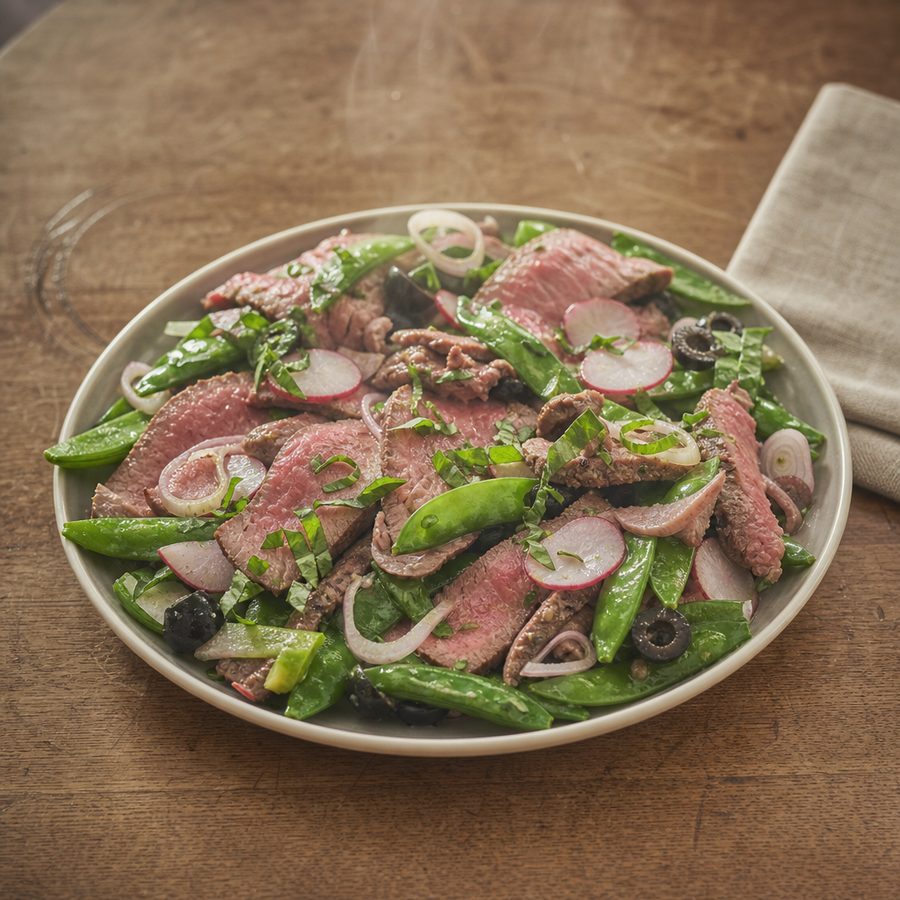
Seared sirloin sliced thin and served cool over blanched snap peas, radishes, and kalamata olives, with a lemon and shallot dressing spooned over at the table.
Why You'll Love This Recipe
Packing it the night before is the only way it happens on a day that is going to get away from me. Everything about it is better cool, which is not true of most cooked meat, and that is the reason I make it on purpose rather than as a way of using up a steak. Sear the sirloin after dinner, blanch the snap peas in water you already have on the stove, and by the time the kitchen is cleaned up you have four containers ready to go. It travels well, it needs no reheating at all, and it does not go sad and gray in the refrigerator the way a dressed salad does.
Two details decide whether this works. The snap peas need a fast two-minute boil in well-salted water and then a real ice bath, because pods left to cool on the counter keep cooking in their own heat and turn olive-colored and limp by morning. The steak needs a full ten-minute rest and then thin slices cut against the grain, since sirloin firms up as it chills and a thick slice cut the wrong way will be chewy no matter how carefully you cooked it. Keep the dressing in a separate jar and spoon it over when you sit down, because pods sitting in lemon juice overnight lose both their color and their snap.
What makes this taste like something rather than like cold leftovers is the salt in the olives and the acid in the lemon working on plain beef and plain vegetables. The shallot rings sit in the lemon juice for ten minutes first, which takes the raw bite off them and leaves them sweet and slightly pickled. Radishes go in for crunch and their faint mustardy heat, torn basil goes on at the last moment, and the whole plate reads as fresh even though most of it was cooked twelve hours earlier. It is a substantial lunch, and the sirloin is doing that work, so it carries you through an afternoon of meetings.
Ingredients
- 1 1/4 lb beef sirloin steak, about 1 inch thick
- 1 lb sugar snap peas, strings pulled
- 8 radishes, sliced paper thin
- 1/2 cup pitted kalamata olives, halved
- 1 small shallot, sliced into thin rings
- 3 tbsp fresh lemon juice, plus the zest of 1 lemon
- 3 tbsp olive oil
- 1 tbsp avocado oil
- 1 small clove garlic, grated
- 1/4 cup fresh basil leaves, torn
- 2 tbsp sliced fresh chives
- 1 tsp fine sea salt, divided
Instructions
- Blanch the snap peas: Pull the tough string down the seam of each pod. Bring a large pot of well-salted water to a rolling boil and set a bowl of ice water beside it. Drop in the snap peas and cook for 2 minutes, until they turn vivid green and still squeak against the tooth, then lift them straight into the ice water, since a pea left to cool in its own heat goes olive-colored and limp. Leave them 2 minutes, drain, and spread them on a towel to dry.
- Sear the sirloin: Pat the steak dry and season it on both sides with 1/2 teaspoon of the salt. Heat the avocado oil in a heavy skillet over medium-high until it shimmers, because a pan below that temperature grays the surface instead of browning it, then sear the steak 4 minutes on the first side and 3 to 4 on the second, until the crust is dark and the center reads 130°F (54°C) for medium-rare.
- Rest the steak: Move the steak to a cutting board and let it rest for a full 10 minutes. If you are making this for tomorrow, cool it completely and refrigerate it whole rather than sliced, since a whole piece holds its juice far better overnight.
- Soften the shallot and make the dressing: Put the shallot rings in a small bowl with the lemon juice and the remaining 1/2 teaspoon of salt and leave them for 10 minutes, until they turn pale pink and lose their raw edge. Whisk in the lemon zest, the grated garlic, and the olive oil.
- Slice the beef: Find the direction the muscle fibers run and cut straight across them, since cutting with the grain leaves long fibers that eat tough however well the steak was cooked. Hold the knife at a slight angle to get wide slices about a quarter inch thick. Pour any juice from the board into the dressing.
- Compose the plates: Spread the snap peas across four plates or into four containers, arrange the sliced sirloin over them, and scatter the radishes, the olives, and the dressed shallots on top. Spoon the dressing over just before eating and finish with the torn basil and the chives.
Variations
- Asparagus in spring: Swap the snap peas for asparagus cut into batons, blanched 2 minutes the same way, and keep everything else as it is.
- Fennel and orange: Trade the radishes for shaved raw fennel and use orange juice and zest in the dressing for a sweeter, softer plate.
- Herb-heavy: Add chopped parsley, mint, and dill along with the basil for a plate that tastes almost entirely of herbs.
- Artichoke hearts: Scatter a jar of drained artichoke hearts over the top for something briny and soft against the crisp pods.
- A heavier lunch box: Add cooked, cooled cassava chunks tossed in a little of the dressing when you want the container to carry you further.
Storage & Leftovers
Assembled without dressing, this holds for up to 3 days in the refrigerator. Keep the dressing in a small jar and the basil in a separate bag, since torn basil blackens within hours once it meets acid. Everything else sits happily together in one container.
The blanched snap peas on their own keep for 4 days and are worth cooking in a double batch. Dry them properly before they go in the container, because a wet pod goes slippery at the seam by the second day no matter how carefully you cooked it.
Freezing does not suit this one. Snap peas lose their structure entirely and thawed sirloin weeps. What you can do ahead is sear the whole steak up to 2 days early, refrigerate it uncut, and slice it the morning you want it, which takes about 3 minutes.
Notes & Tips
- Pull the strings first: The fibrous string along the seam does not soften in a two-minute boil and it will catch between your teeth. Snap the stem end and draw it down the pod.
- Salt the blanching water properly: Snap peas season from the inside only in the couple of minutes they are boiling. Water that tastes like the sea is the difference between pods that taste of something and pods you have to fix later.
- Use a real ice bath: A rinse under the cold tap does not stop the cooking fast enough. Ice and water, straight from the pot, is what locks in the color and the crunch.
- Rest the steak whole: Slicing early lets the juices run onto the board. Ten minutes whole, then cut, and the beef keeps what it should.
- Let the shallot sit in the lemon: Ten minutes in acid turns raw shallot from sharp to sweet, and the leftover juice becomes the base of the dressing.
- Tear the basil, do not chop it: A blade bruises basil leaves and turns the cut edges black. Torn by hand they stay green through the whole lunch break.
Nutrition & Mindful Eating
- Sirloin, snap peas, and a sharp lemon dressing carry this plate between them. The beef gives it substance, the pods give it crunch and fiber, and the olive oil and olives supply the fat that makes a cool plate satisfying rather than spare.
- Sirloin is a firm, close-grained cut that slices cleanly and stays tender when it is cut thin across the grain. It carries iron in the form the body absorbs most readily, along with zinc and B12, and the protein in it is what makes this hold you through a long afternoon.
- Snap peas are eaten pod and all, which is where the fiber comes from, and two minutes in boiling water is enough to set their color while leaving the crunch intact. They bring vitamin C and vitamin K to a plate that is otherwise mostly protein and fat.
- Kalamata olives are cured until they turn soft and winey, and the fat in them is mostly monounsaturated, the same kind that makes olive oil worth using. A handful of them is doing the work of a whole seasoning cabinet here.
- Lemon zest, torn basil, chives, and shallot softened in acid are what make this taste fresh hours after it was cooked. The zest carries aromatic oils that the juice alone cannot give you, which is why both go into the dressing.
- As you eat, pay attention to how the cool beef and the crisp pods feel against the sharpness of the lemon, and let lunch be its own twenty minutes rather than something you do while you answer messages.
Frequently Asked Questions
Can I use a different cut of steak?
Yes. Flat iron, flank, and skirt all slice well against the grain and eat well cool. Bison sirloin works too and will need a minute less per side. What does not work is a slow-cooked cut like chuck, which turns waxy and dull once it is chilled.
The steak tastes tough when it is cold. What did I do wrong?
Almost always the slicing. Cold beef needs to be cut thinner than hot beef and always across the grain, so look at the direction of the fibers on the cutting board and turn the steak 90 degrees before you start. Overcooking is the other culprit, so pull it at 130°F (54°C).
Can I eat it warm?
You can. Serve the pods straight from the pot, skip the ice bath, and lay the just-rested steak over them so the dressing loosens against the warm vegetables. Made that way it is best eaten within the hour, since warm dressed snap peas do not hold.
Does this fit an AIP elimination phase?
It does. There are no grains, dairy, eggs, nuts, seeds, or nightshades on the plate, and the dressing is lemon, garlic, shallot, olive oil, and salt. Snap peas are an immature pod eaten whole rather than a dried legume, which is why they are allowed on the protocol when beans are not. Check that your olives are cured in brine with no chili in it.