
Slow Cooker Chicken Adobo
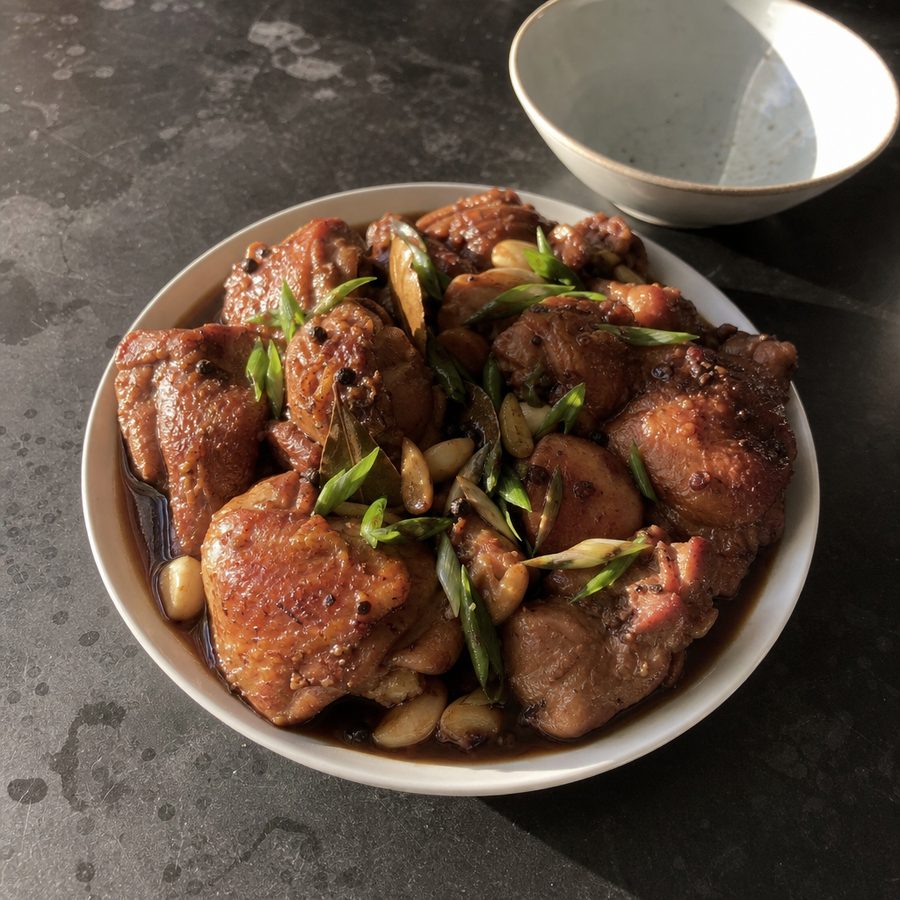
Filipino chicken adobo braised low in soy sauce, vinegar, garlic, bay and cracked black pepper.
Why You'll Love This Recipe
Adobo is the closest thing the Philippines has to a national dish, and it is built on a ratio rather than a recipe. Soy sauce, vinegar, garlic, bay and a lot of cracked pepper, in whatever proportion your family settled on generations ago. Every household version is the correct one, which is a rare and generous thing in a national dish. What holds all of them together is the balance of salt against acid; everything past that is negotiable, and this version leans a little sweet with a spoonful of honey.
The vinegar is what makes this a natural fit for a slow cooker. Acid that sharp needs a long gentle cook to lose its edge, and in a covered pot it turns from harsh to round without ever boiling hard enough to go bitter. What comes out four and a half hours later tastes tangy rather than sour, and the ten cloves of garlic have gone soft and sweet enough to eat whole alongside the chicken.
There is no browning step and no thickening step. Ten minutes of peeling garlic and slicing an onion is the whole of the work, and the ingredient list is short enough that most of it already lives in your pantry. This is the pot I reach for on a night when I want something that tastes considered and cannot face doing anything considered. It keeps well through the week, and the sauce is better on the second day than it is on the first.
Ingredients
- 2 1/2 lb boneless skinless chicken thighs
- 1/4 cup soy sauce
- 1/3 cup cane vinegar or apple cider vinegar
- 1/2 cup chicken broth
- 10 garlic cloves, peeled and lightly smashed
- 1 medium yellow onion, sliced
- 3 dried bay leaves
- 1 1/2 tsp whole black peppercorns, cracked
- 1 tbsp minced fresh ginger
- 1 tbsp honey
- 1 tbsp avocado oil or other neutral oil
- 3 scallions, sliced thin, for serving
Instructions
- Set up the pot: Scatter the sliced onion and the smashed garlic across the bottom of a 6-quart slow cooker, since they cushion the chicken and keep it up off the hot floor of the crock where it would otherwise scorch.
- Add the chicken: Lay the thighs over the onion in as close to a single layer as they will go, then tuck the bay leaves in among them and scatter the cracked peppercorns over the top, because cracked pepper gives up far more of itself over a long cook than ground pepper does.
- Mix the braise: Whisk the soy sauce, vinegar, chicken broth, ginger, honey, and oil together in a bowl until the honey dissolves, then pour it around the edges of the chicken rather than over it.
- Cook it low: Cover and cook on low for 4 1/2 hours. It is done when the chicken gives easily to a fork. Thighs are forgiving here, which means another half hour on low will not hurt anything if the timing suits you better.
- Taste the sauce: Lift out the bay leaves and taste. If the vinegar still reads sharp, leave the lid off for the last 20 minutes on high and it will round out, since some of the acid cooks away once the steam has somewhere to go. If it reads flat instead, add a teaspoon more vinegar off the heat.
- Serve it: Spoon the chicken into bowls with the garlic cloves, which will be soft and sweet by now, and ladle the thin sauce over the top. It is supposed to be thin, because adobo is a sauce for spooning over rice rather than a gravy for coating meat. Scatter the scallions and serve.
Variations
- With coconut milk: Stir in a half cup of canned coconut milk in the last 30 minutes for adobo sa gata, a southern Filipino version. It softens the acid considerably and makes the sauce creamy.
- Crisped at the end: Pull the thighs out, pat them dry and sear them in a hot skillet for a minute a side before returning them to the sauce. This is how many cooks finish it and it adds real texture.
- With pork: Swap in cubed pork shoulder and cook 6 hours on low. Pork adobo is just as traditional as chicken and the longer cook suits the cut.
- Instant Pot: Cook on high pressure for 12 minutes with a 10 minute natural release, then simmer on saute to concentrate the sauce.
- With eggs: Add 6 peeled hard-boiled eggs in the last hour so they take on color and soak up the braise. It is a common addition and stretches the pot further.
Storage & Leftovers
Cooled leftovers keep in the refrigerator for 4 days, and adobo is one of the few dishes that genuinely improves overnight. The vinegar and soy keep working into the meat while it sits.
It freezes for up to 3 months. Freeze the chicken submerged in its sauce so the surface does not dry, and thaw overnight in the refrigerator before reheating.
Reheat gently in a covered pan over medium-low, or in the microwave at half power. If you want the more traditional finish, crisp the reheated thighs in a hot dry skillet for a minute a side before saucing them.
Notes & Tips
- Crack the peppercorns: Whole peppercorns stay whole and mostly stay quiet. Crushing them under the flat of a knife is what releases the heat that adobo is supposed to have.
- Smash the garlic, do not mince it: Minced garlic dissolves into the sauce over four hours. Smashed whole cloves stay intact and turn soft and sweet, and they are one of the best parts of the bowl.
- Sauce around, not over: Pouring the braise around the edges keeps the seasoning on the chicken rather than washing it into the pot.
- Do not add salt: The soy sauce is the salt in this dish. Tasting for salt before the cook is finished is how adobo ends up too salty to eat.
- Let it sit: If you can make it a day ahead, do. Adobo is one of the rare dishes where the second day is unmistakably better than the first.
- Adjust the vinegar last: Every vinegar is a different strength. Taste at the end and add a teaspoon more off the heat if it needs brightening, which costs you nothing and cannot be undone the other way.
Nutrition & Mindful Eating
- The protein here comes almost entirely from the chicken thighs rather than from anything added alongside them.
- Soy sauce kept to a quarter cup, with broth and vinegar making up the rest of the liquid, gives the braise its savory depth without letting the salt take over.
- There is almost no carbohydrate in the pot itself. What you serve it over decides that, and a bed of white rice moves the plate a good deal further than cauliflower rice or greens would.
- Chicken thighs bring more iron and zinc than breast meat does, and the fat they carry is what lets them sit in acid for four and a half hours and stay tender.
- The single tablespoon of honey works out to under a gram of added sugar a serving. It is there to round the vinegar rather than to sweeten anything.
- As you eat, notice how the sour and the salty arrive at slightly different moments, the vinegar first and the soy just behind it, with the pepper showing up at the very end.
Frequently Asked Questions
What kind of vinegar is right?
Cane vinegar is traditional and worth seeking out if you have a Filipino or Asian grocery nearby. Apple cider vinegar is the closest common substitute and what these numbers are based on. White distilled vinegar works but reads harsher, so start with a little less.
Can I use chicken breast?
You can, but cut the time to about 3 hours on low. Breast has almost no fat to protect it, and a long braise in acid leaves it dry and chalky rather than tender.
Is the sauce supposed to be thin?
Yes. Adobo sauce is a thin braising liquid meant to be spooned over rice, not a gravy. If you want it thicker, reduce it in a saucepan on the stove after the chicken comes out.
Why so much garlic and pepper?
They are load-bearing rather than decorative. Ten cloves sounds like a lot until you taste them after four hours, when they have gone soft and mellow. The cracked peppercorns are what keep the soy and vinegar from dominating everything.