
Slow Cooker Irish Lamb Stew
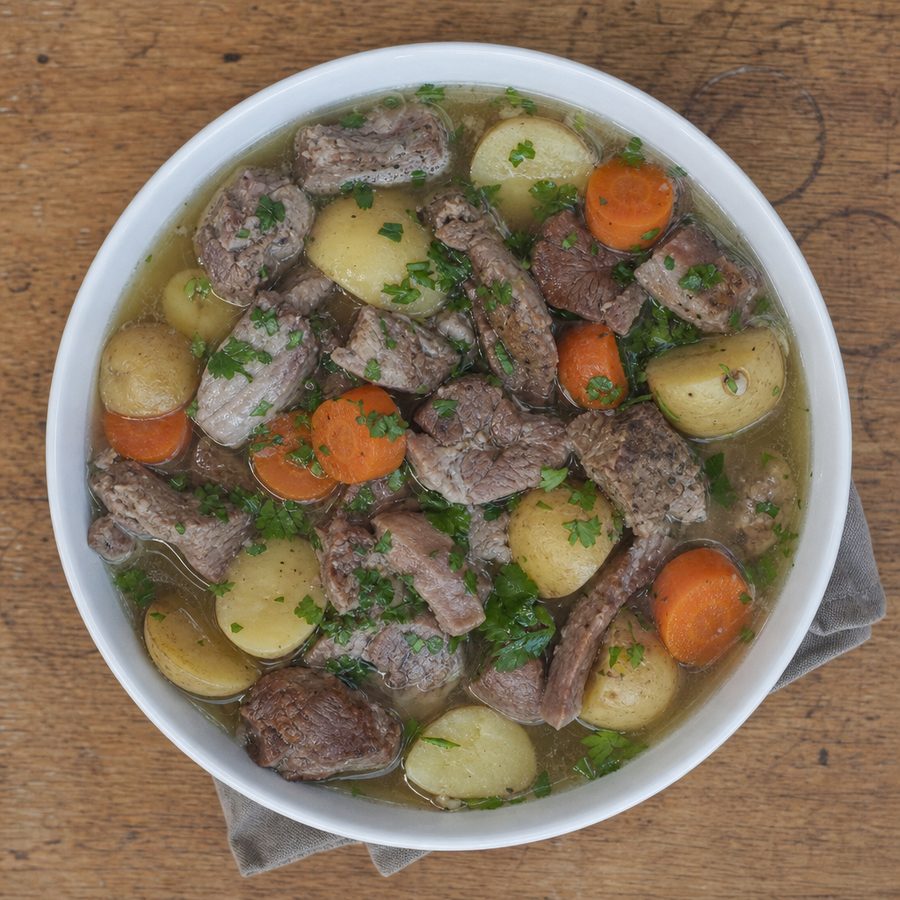
Lamb shoulder slow cooked with gold potatoes, carrots and thyme in a clear, unthickened broth.
Why You'll Love This Recipe
Traditional Irish stew does not brown the meat, and that is not a shortcut anyone invented for a slow cooker. It is how the dish was always made, in a single pot over a low fire, and the result is a pale clear broth rather than a dark gravy. It means this is one of the very few stews where skipping the sear is the correct choice rather than a compromise. Most people think of it in March, and it deserves better than one day a year, because eight unattended hours is exactly what a cold evening wants.
Lamb shoulder is the cut for this and there is no good substitute. It is threaded with connective tissue that needs eight full hours to turn to gelatin, and that gelatin is what gives the broth body without a spoonful of flour anywhere in the pot. Leg or loin will be dry and stringy long before the potatoes are done, since neither one has anything in it for that time to work on.
The potatoes do two jobs. The halves stay in recognizable pieces, but the cut faces give up enough starch over eight hours to thicken the broth slightly on their own. That is why this stew tastes like it has more in it than the ingredient list suggests. Reach for gold potatoes rather than russets if you have the choice, because russets go to pieces entirely over that long a cook and leave you with soup.
Ingredients
- 2 lb boneless lamb shoulder, trimmed and cut into 1 1/2-inch pieces
- 1 1/2 lb small gold potatoes, halved
- 4 large carrots, cut into thick rounds
- 1 large yellow onion, sliced
- 3 celery stalks, cut into thick pieces
- 5 garlic cloves, smashed
- 3 cups beef broth
- 2 tbsp tomato paste
- 1 tbsp fresh thyme leaves
- 2 bay leaves
- 1 tbsp olive oil
- 1/2 tsp salt
- 3/4 tsp black pepper
- 1/4 cup chopped fresh parsley, for serving
Instructions
- Trim the lamb: Cut the lamb shoulder into 1 1/2-inch pieces and trim the heavy pads of surface fat back until only a thin layer is left. Some fat should stay, since it is carrying most of the flavor, but the thick pieces will not render fully in a covered pot.
- Season it: Toss the lamb with the salt, black pepper, and half the thyme. There is no browning step here, so this seasoning is what gets onto the meat itself rather than into the broth around it.
- Layer the pot: Put the onion, celery, and garlic in the bottom of a 6-quart slow cooker, add the lamb, then set the potatoes and carrots on top so they sit above the meat rather than under it.
- Add the liquid: Whisk the beef broth, tomato paste, and olive oil together until smooth, then pour it around the edges of the pot. Tuck in the bay leaves. The liquid should not cover the potatoes.
- Cook it low: Cover and cook on low for 8 hours. It is ready when a piece of lamb falls apart under the side of a fork with no resistance at all. Lamb shoulder does not get tough from extra time, only from too little.
- Skim and finish: Tilt the crock and spoon off any fat that has pooled at the surface, then pull out the bay leaves and stir in the remaining thyme. Let the pot stand uncovered for 5 minutes, since that gives the broth a moment to settle before you ladle it, then scatter parsley over each bowl.
Variations
- Instant Pot: Cook on high pressure for 35 minutes with a natural release of 15. The texture is close, though the broth stays a little thinner.
- With stout: Replace 1 cup of the broth with a dark stout. It takes the stew somewhere maltier and darker, further from the traditional version but very good.
- With turnips: Swap half the potatoes for 12 oz of peeled diced turnip. It is the older version of this dish and it comes out lighter and slightly peppery.
- With peas: Stir in a cup of frozen peas during the last 15 minutes. They stay bright green and give the bowl some color it otherwise does not have.
- Stretch the lamb: Use 1 1/2 lb of lamb and add a can of drained cannellini beans at the start. You keep the protein, add fiber and bring the saturated fat down noticeably.
Storage & Leftovers
Cooled leftovers keep in the refrigerator for 4 days and are better on the second day, once the broth has had time to take on more of the lamb. The fat sets in a solid layer on top overnight, which makes it easy to lift off if you want to.
Reheat gently in a covered pan over medium-low. Boiling a lamb stew hard breaks the potatoes down into the broth and turns something clear into something cloudy.
It freezes for up to 3 months, though the potatoes come back grainier than they went in. If you know a batch is headed for the freezer, leave the potatoes out and add freshly cooked ones when you reheat it.
Notes & Tips
- Do not sear: This is the rare stew where browning works against you. A clear pale broth is the whole character of the dish.
- Trim the heavy fat: Surface fat pads do not render properly under a lid and end up as slicks on top. Leave the marbling, take off the slabs.
- Potatoes on top: Keeping them above the meat and mostly out of the liquid is what lets their cut faces thicken the broth instead of dissolving into it.
- Cut the carrots thick: Thin rounds disappear entirely over eight hours. Inch-long pieces stay sweet and intact and give the bowl something to chew.
- Give it the full eight hours: Lamb shoulder at six hours is chewy and at eight it falls apart. This is the one thing in the recipe you cannot rush.
- Skim before serving: Lamb gives up a lot of fat. Two minutes with a spoon at the end changes how the whole bowl eats.
Nutrition & Mindful Eating
- Lamb shoulder is a fatty cut and this page reflects that honestly. The saturated fat runs higher than most of what I write, which is why this is a stew I would put on a Sunday rather than a Tuesday.
- The trade is real nutritional density. Lamb carries more iron, zinc and vitamin B12 than most red meats, and a serving here covers a substantial share of the day for all three.
- Skimming the fat at the end is not a fussy step. Two minutes with a spoon takes several grams of fat out of the pot, and the stew loses nothing you would miss.
- The potatoes and carrots are why this bowl has fiber and potassium at all. A lamb stew without them is just meat in broth, and they are also what makes it a complete plate on its own.
- Half a teaspoon of salt across six servings is very little for a stew of this size. The lamb and the long cook are doing the seasoning, along with the thyme and the parsley at the end.
- As you eat, notice how much of the flavor is in the broth rather than the meat, and take a spoonful of it between bites.
Frequently Asked Questions
Do I really not brown the lamb?
Not for this one. Irish stew is a white stew by tradition and the pale broth is part of what it is. If you want a dark stew with a browned crust on the meat, that is a different recipe and you should sear.
Can I use leg of lamb instead?
You can, but it has far less connective tissue and it will be dry at eight hours. If leg is what you have, cut the time to about 6 hours and expect a firmer, less unctuous stew.
Why is my broth thin?
Either the potatoes were fully submerged and never gave up starch at the cut faces, or it went less than eight hours. Mash two potato halves against the side of the crock and stir them in to fix it.
Can I add barley?
Yes, and it is a common addition. Half a cup of pearl barley added at the start will thicken the broth considerably and soak up about a cup of liquid, so add broth to compensate.