
Slow Cooker Moroccan Chickpea and Butternut Tagine
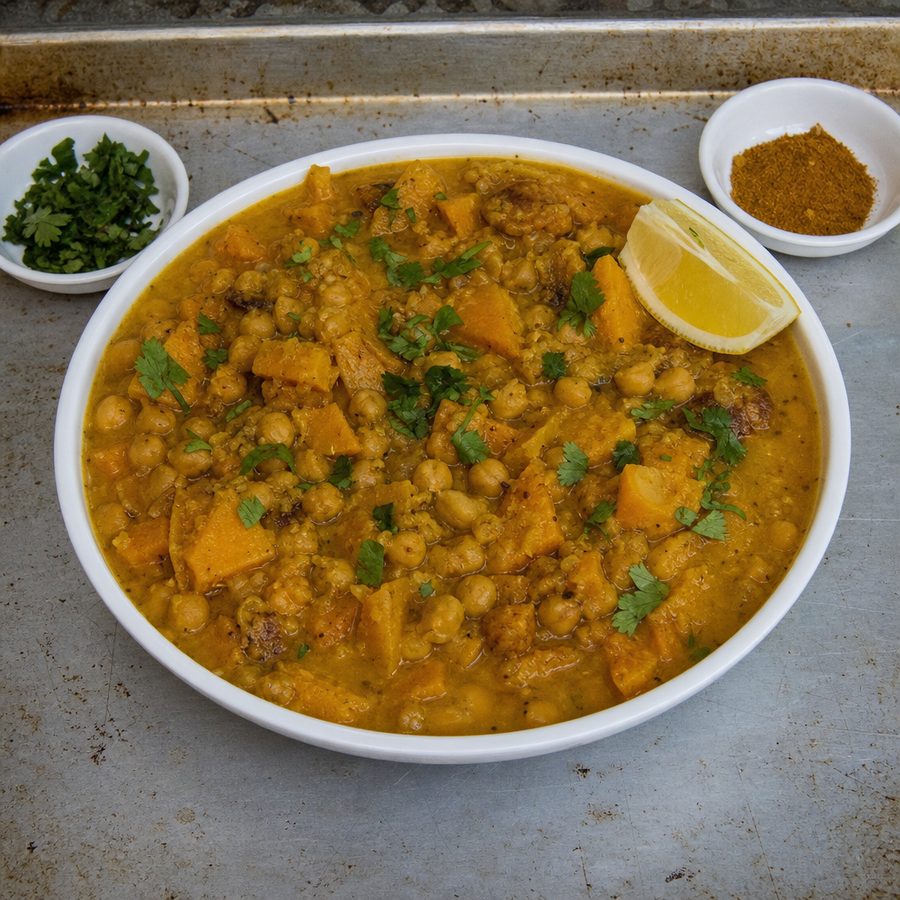
Chickpeas and butternut squash slow cooked with cumin, cinnamon and smoked paprika until the squash is spoon tender and the pot is thick.
Why You'll Love This Recipe
November is when the weather has finally turned, and this is the pot I load then, so that the house smells like cinnamon and cumin by the time everyone gets home. It goes together in about twenty minutes with a knife and a cutting board, and after that it asks nothing of you at all. What comes out is thick, gold and warm without being hot.
Butternut squash is the ingredient doing the quiet work. Cut into inch cubes it holds its shape through seven hours and then collapses into softness the moment a spoon presses it, which is what gives the stew its body without anything being stirred or thickened. The chickpeas stay whole and firm alongside it, and the three chopped dates melt away completely, leaving behind a low sweetness that makes the spices taste rounder.
It is one of those dishes that tastes like it should be complicated. Cumin and coriander sit at the base, cinnamon and smoked paprika sit on top of them, and a squeeze of lemon at the very end lifts the whole pot. I eat it in a bowl with a spoon, my husband spoons it over couscous, and it is just as good cold out of the refrigerator the next day.
Ingredients
- 2 cans (15 oz each) chickpeas, drained and rinsed
- 5 cups butternut squash, peeled and cut into 1-inch cubes
- 3 medium carrots, cut into thick coins
- 1 large yellow onion, diced
- 4 garlic cloves, minced
- 2 tsp grated fresh ginger
- 1 1/2 cups crushed tomatoes
- 1 1/2 cups vegetable broth
- 2 tbsp olive oil
- 3 Medjool dates, pitted and chopped
- 1 tbsp ground cumin
- 2 tsp ground coriander
- 1 tsp ground cinnamon
- 1 tsp ground turmeric
- 1 tsp smoked paprika
- 1/8 tsp cayenne pepper
- 1/2 tsp salt
- 1/2 tsp black pepper
- 1 tbsp fresh lemon juice
- 1/3 cup chopped fresh cilantro, for serving
Instructions
- Prep the vegetables: Peel the butternut squash and cut it into 1-inch cubes, cut the carrots into thick coins and dice the onion. Cubes smaller than an inch will disappear into the sauce over a long cook, which is fine if that is what you want, but you lose the pieces of squash.
- Mix the spices: Stir the cumin, coriander, cinnamon, turmeric, smoked paprika, cayenne, salt and black pepper together in a small bowl. Having them premixed means they go into the pot evenly rather than in clumps.
- Load the cooker: Put the squash, carrots, onion, garlic, ginger, chickpeas and chopped dates into a 6-quart slow cooker. Pour the olive oil over the top and stir until everything is lightly coated, then add the spice mixture and stir again until the vegetables are evenly colored.
- Add the liquid: Pour the crushed tomatoes and vegetable broth over the top. Do not stir them all the way in, since the liquid will find its own level as things heat up and over-stirring at this stage breaks up the squash cubes before they have set.
- Cook it low: Cover and cook on low for 7 hours. The tagine is ready when a squash cube gives way under gentle pressure from the back of a spoon but still holds its edges. If it is still firm, give it another 30 to 45 minutes.
- Finish and serve: Stir in the lemon juice, taste and adjust the salt. Let the pot sit uncovered for 5 minutes so the surface thickens slightly, then scatter the cilantro over the top and serve.
Variations
- Instant Pot: Cook on high pressure for 12 minutes with a natural release of 10. Add the lemon juice and cilantro after the pressure drops.
- With greens: Stir 5 cups of chopped kale or spinach in during the last 20 minutes. Kale needs the full 20, spinach only needs 5.
- Preserved lemon: Replace the fresh lemon juice with 2 tablespoons of chopped preserved lemon rind stirred in at the end. It is the more traditional finish and it is considerably more assertive.
- Heartier: Add 1 1/2 cups of cooked pearl couscous or farro to the pot for the last 30 minutes. It drinks up liquid, so add another half cup of broth alongside it.
- With lamb: Brown 1 pound of cubed lamb shoulder and add it at the start along with an extra half cup of broth. Everything else stays the same.
Storage & Leftovers
Cooled leftovers keep in the refrigerator for 5 days in a covered container. This is one of the few things I make that is arguably better on day three, because the squash keeps softening into the liquid and the whole pot turns silkier. Reheat gently in a covered pan over medium-low with a splash of broth or water.
It freezes for up to 3 months. Portion it into flat freezer bags or wide-mouth jars, leaving an inch of headroom if you use glass. Squash can go slightly grainy on thawing, which disappears as soon as it is warm and stirred.
If you want to stretch it, add a cup of cooked quinoa or a drained can of white beans to the leftovers when you reheat. It turns four remaining servings into six without anything else needing to be cooked.
Notes & Tips
- Buy the squash already cubed: Peeling and cubing a whole butternut is the only real work in this recipe. Pre-cut squash from the produce section cuts the prep in half and behaves identically.
- Keep the cubes big: One inch is the number. Anything smaller loses its edges over seven hours and you end up with a puree, which is a different and much less interesting dish.
- Rinse the chickpeas well: The liquid in the can carries a lot of sodium and a slightly metallic taste. Thirty seconds under running water takes care of both.
- Coat with the oil first: Stirring the oil through the vegetables before the spices go in helps the spices stick to the food rather than settling into the liquid at the bottom.
- Do not stir after the liquid goes in: Everything settles into place as it heats. Stirring at the start knocks the squash cubes apart before they have firmed up.
- Save the lemon for the end: Acid added at the start goes flat over a long cook. That final tablespoon is what makes the difference between a good pot and a dull one.
Nutrition & Mindful Eating
- The chickpeas, the squash and the spices are each pulling in a different direction and that is the point. The chickpeas give the pot something to chew, the squash gives it sweetness and body, and the spices keep the sweetness from taking over.
- Chickpeas are what make this eat like a full dinner. They bring plant protein and a great deal of fiber, and the soluble kind of fiber in them is the sort that turns a bowl of vegetables into something that actually holds you.
- Butternut squash is that deep orange for a reason. The color comes from beta-carotene, which your body turns into vitamin A, and the olive oil in the pot is what helps you absorb it.
- Cumin and coriander sit at the base of the flavor, cinnamon and smoked paprika sit on top, and the three chopped dates dissolving into the liquid are what round the whole thing off and keep the spices from tasting sharp.
- A bowl of this carries enough fiber to slow the meal down considerably, which is why it stays with you through an evening rather than fading an hour after you put the spoon down.
- As you eat, notice how the cinnamon and the squash meet somewhere in the middle of each spoonful, and let the bowl take as long as it takes rather than finishing it standing up.
Frequently Asked Questions
Can I use frozen butternut squash?
Yes, and you do not need to thaw it. Cut the cook time to about 5 hours on low, because frozen squash has already had its cell walls broken by freezing and will soften considerably faster than fresh.
My squash turned to mush. What happened?
Either the cubes were smaller than an inch or the pot ran on high. Slow cookers vary a lot, and a hot one will take squash past the point of holding its shape in five hours. Cut the pieces larger next time and check at hour six.
Do I have to use canned chickpeas?
No. Dried chickpeas soaked overnight work beautifully here and hold their shape even better. Use 1 1/2 cups of dried, add an extra cup of broth, and cook on low for 8 hours instead of 7.
What do you serve with it?
It stands on its own in a bowl. Couscous, warm flatbread, quinoa or plain brown rice all work underneath it, and a spoonful of plain yogurt on top is common if that suits how you are eating.