
Slow Cooker Pot Roast with Carrots and Parsnips
A whole chuck roast slow cooked over carrots, parsnips and onions until it falls into pieces and the vegetables taste like the roast.
Why You'll Love This Recipe
Pot roast is the Sunday dinner that most people remember and almost nobody makes on a weekday, which is a shame, because a slow cooker turns it into a twenty minute job you do before you leave the house. You come back to a roast that has given up entirely and a platter of vegetables that taste like they have been sitting in beef all day, because they have.
The parsnips are the part people are surprised by. Carrots go sweet in a long braise, which everyone expects, but parsnips go sweet and slightly peppery at the same time, and they hold their shape better than potatoes do across eight hours. Cutting everything into two inch lengths matters more than it sounds like it should, since smaller pieces disintegrate into the juices and you lose the vegetables entirely.
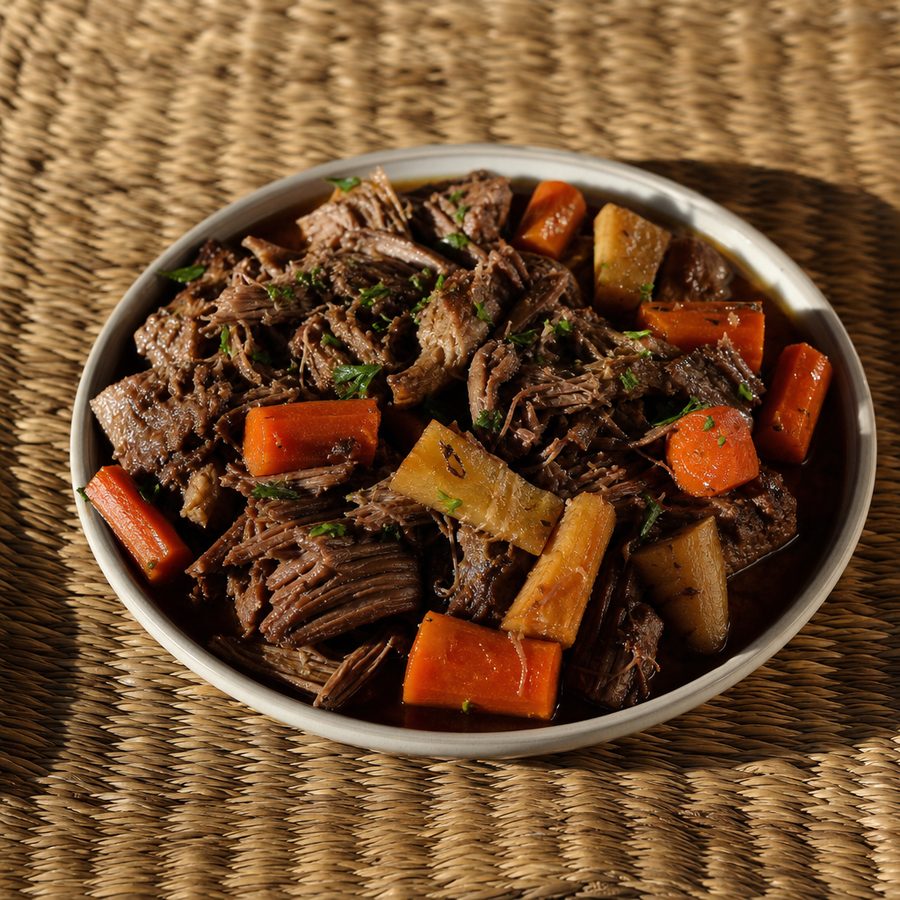
What you get at the end is a whole dinner from one pot with no side dish to think about. I pull the roast apart with two forks right on the platter, spoon the vegetables around it and pour the skimmed juices over everything. Skimming is worth the two minutes, since a chuck roast gives up a great deal of fat over eight hours and it all sits on top where a spoon can reach it. The next day, the leftovers make the best sandwich of the week.
Ingredients
- 3 lb boneless beef chuck roast, trimmed
- 6 medium carrots, cut into 2-inch lengths
- 4 large parsnips, peeled and cut into 2-inch lengths
- 2 medium yellow onions, quartered
- 3 celery stalks, cut into 2-inch lengths
- 5 garlic cloves, smashed
- 1 1/2 cups beef broth
- 2 tbsp tomato paste
- 1 tbsp balsamic vinegar
- 2 tsp fresh thyme leaves
- 1 tsp chopped fresh rosemary
- 2 bay leaves
- 3/4 tsp salt
- 3/4 tsp black pepper
- 1/4 cup chopped fresh parsley, for serving
Instructions
- Season the roast: Pat the chuck roast dry on all sides and rub it all over with the salt, black pepper, thyme, and rosemary. A dry surface takes seasoning, a wet one lets it slide off into the pot.
- Cut the vegetables: Cut the carrots, parsnips and celery into 2-inch lengths and quarter the onions. Keep the pieces big. Anything smaller than two inches will not survive a long braise as a recognizable vegetable.
- Build the bottom layer: Scatter the carrots, parsnips, celery, onions and smashed garlic across the bottom of a 6-quart slow cooker. They act as a rack that holds the roast up out of the liquid, which is what lets the top of the meat stay meat rather than turning into boiled beef.
- Add the roast and the liquid: Set the seasoned roast on top of the vegetables. Whisk the tomato paste and balsamic vinegar into the beef broth until the paste is dissolved, then pour it around the edges of the pot rather than over the roast. Tuck in the bay leaves.
- Cook it low: Cover and cook on low for 8 hours. Leave the lid alone the whole time. The roast is ready when a fork pushed into the center and twisted turns with no resistance at all. If it fights back, it is undercooked, so give it another 45 minutes and check again.
- Rest, skim and serve: Lift the roast onto a platter and let it sit for 10 minutes, then pull it apart with two forks. Spoon the vegetables around it, discard the bay leaves, skim the fat off the surface of the juices and pour them over the top. Scatter the parsley and serve.
Variations
- Instant Pot: Cook on high pressure for 75 minutes with a full natural release. Add the vegetables for the last 12 minutes if you want them firmer.
- Dutch oven: Cover and braise at 300°F (150°C) for about 3 1/2 hours, checking that the liquid stays at a bare simmer and topping up with broth if it drops too low.
- With mushrooms: Add 12 ounces of quartered cremini mushrooms at the start. They shrink to almost nothing and leave behind a much deeper, earthier pot.
- Red wine: Replace half a cup of the broth with dry red wine. It is the classic version and it makes the juices noticeably richer.
- Rutabaga and turnip: Swap the parsnips for a mix of cubed rutabaga and turnip. Both hold up just as well and give the pot a slightly sharper, more savory edge.
Storage & Leftovers
Cooled leftovers keep in the refrigerator for 4 days. Store the beef and vegetables together in the skimmed juices in a covered container, because that liquid is what keeps everything from drying out. Reheat in a covered pan over medium-low or in a low oven, never on high heat.
It freezes for up to 3 months. Portion the beef, vegetables and juices into flat freezer bags and lay them flat to freeze. The parsnips soften further on thawing, which nobody has ever complained about at my table.
The best use of the leftovers is a sandwich. Pile the cold beef on good bread with a smear of mustard and a spoonful of the jellied juices, and it is better than the dinner was. A close second is chopping everything and warming it in a skillet with an egg on top.
Notes & Tips
- Buy chuck, not round: Chuck is threaded with connective tissue that melts over a long cook. Round and sirloin roasts have almost none, and they come out dry and stringy however long you give them.
- Two inch pieces, no smaller: This is the single most common thing that goes wrong. Big pieces of vegetable survive eight hours and small ones do not.
- Vegetables on the bottom: They hold the roast above the liquid line so it braises rather than boils, and they soak up everything that drips down. There is no reason to ever put them on top.
- Dissolve the tomato paste first: Whisked into the broth it spreads through the whole pot. Dropped in as a lump it stays a lump, and you find it at the end.
- Do not add extra liquid: A chuck roast and two pounds of vegetables release a great deal of water, and a sealed slow cooker loses almost none of it. A cup and a half of broth is the right amount even though it looks like too little at the start.
- Skim before you serve: Chuck gives off a lot of fat over eight hours and it all rises. Two minutes with a spoon takes it off and leaves you the juices that everything good ended up in.
Nutrition & Mindful Eating
- The roast, the root vegetables and the long braise are one system here. The beef gives up its fat and juices into the pot, the carrots and parsnips soak them up, and the vegetables end up tasting like the best part of the meal.
- A serving of this carries a great deal of protein, and beef is one of the few foods that brings iron in the heme form along with vitamin B12, both of which your blood depends on.
- Parsnips are the surprise of the dish. They bring more fiber than carrots do and they turn sweet and faintly peppery over a long cook, which is why they read as something between a vegetable and a seasoning here.
- Carrots are that orange for the same reason squash is, and the beta-carotene behind the color becomes easier to absorb when the vegetable is cooked this long and there is fat in the pot with it.
- Thyme, rosemary, bay and a spoonful of balsamic are doing quiet work in the background. They are the reason a pot with only fifteen ingredients tastes like it has been developing for a long time, which it has.
- As you eat, notice how differently the carrots and the parsnips taste even though they cooked side by side, and let the meal be something you sit down to rather than something you get through.
Frequently Asked Questions
Do I need to sear the roast first?
You do not, and I usually skip it. Searing adds a layer of browned flavor and about fifteen minutes, so it is a fair trade if you have the time. If you skip it, the tomato paste and the long braise carry more than enough depth on their own.
Can I add potatoes?
Yes. Add 1 1/2 pounds of halved baby potatoes with the other vegetables. They will be very soft after eight hours, which some people love and some do not, so cut them large.
My vegetables turned to mush.
They were cut too small, almost always. Two inch pieces are the minimum for an eight hour cook. Carrots and parsnips cut into coins will be gone by hour five.
What cut should I buy if the store has no chuck?
Look for anything labeled shoulder roast, blade roast or seven bone roast, which are all chuck under different names. Brisket flat also works. Avoid eye of round and sirloin tip, which have no connective tissue and stay tough no matter how long they cook.