
Slow Cooker Ropa Vieja
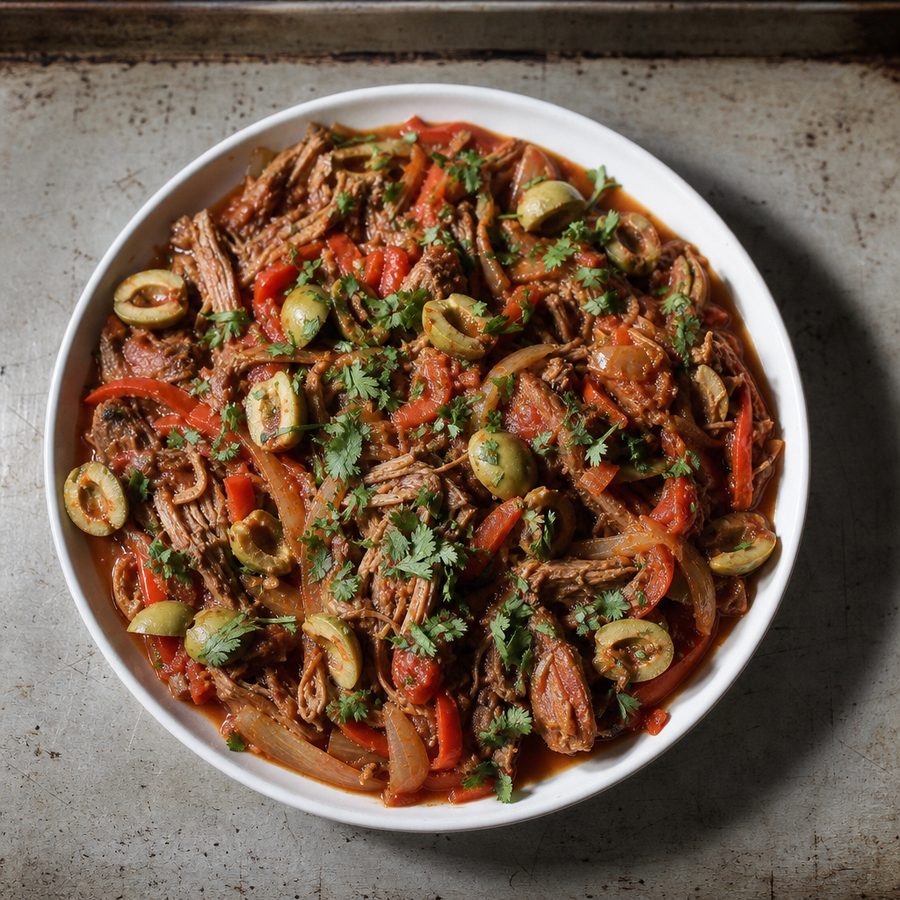
Cuban shredded flank steak slow cooked with red peppers, onion, tomato, and green olives.
Why You'll Love This Recipe
Ropa vieja translates to old clothes, which is a strange name until you see the finished pot. The beef pulls into soft ragged strands that look like fabric pulled apart at the seams, and every one of those strands carries sauce with it. That is why two pounds of steak feeds six people without anyone feeling short-changed, and why it is worth shredding with two forks rather than chopping, since the ragged edges are the part that holds the sauce.
Flank steak is the cut for this. It is dense and full of connective tissue, which means it fights you on the stove and gives in completely under seven hours of low moist heat. This is one of the few pots on the site where the long cook is not a convenience, it is the only way the cut works. Skirt steak behaves the same way if flank is hard to find, since it is built along the same long coarse grain.
I keep this one in the lunch column because it is heavy on peppers and tomato and light on starch. It fills you up without the afternoon slump that comes from a plate built mostly of rice, and it reheats better on day two than it tastes on day one. Pile it over a handful of greens when you want it to stay that way, or over white rice on an evening when you want it to eat like a full dinner.
Ingredients
- 2 lb flank steak, cut into 3 pieces across the grain
- 2 large red bell peppers, cut into thin strips
- 1 large yellow onion, halved and sliced thin
- 5 garlic cloves, minced
- one 20 oz can crushed tomatoes
- 2 tbsp tomato paste
- 1 cup beef broth
- 1/3 cup pitted green olives, halved
- 2 tsp ground cumin
- 2 tsp dried oregano
- 2 bay leaves
- 1 tbsp olive oil
- 1 tbsp apple cider vinegar
- 1/3 tsp salt
- 1 tsp black pepper
- 1/4 cup chopped fresh cilantro, for serving
Instructions
- Season the beef: Pat the flank steak dry and season it all over with the black pepper and half the salt. Cut it into three pieces across the grain first, since that lets it sit flat in the cooker and makes the shredding a good deal easier at the end.
- Brown it: Warm the olive oil in a wide skillet over medium-high and brown the steak about 3 minutes per side. You are after color, not doneness, because the browning is where the deep savory flavor comes from and the seven hours ahead will take care of the cooking. Move the browned pieces to a 6-quart slow cooker.
- Build the base: Lower the heat to medium and cook the onion, peppers, and garlic in the same skillet for about 5 minutes, scraping up the browned bits. Stir in the tomato paste, cumin, and oregano and cook 1 minute more until the paste darkens, since tomato paste tastes tinny until it has had a moment in hot fat.
- Everything in: Scrape the vegetables over the steak, then add the crushed tomatoes, beef broth, olives, bay leaves, and remaining salt. Stir gently so the liquid works around the meat rather than sitting on top of it.
- Cook it low: Cover and cook on low for 7 hours or on high for 4. It is ready when a fork twists through the beef with no resistance. If it still holds together in a solid piece, give it another 45 minutes, because flank pulled early shreds into stringy shards rather than soft strands.
- Shred and finish: Lift the steak onto a board, discard the bay leaves, and shred it with two forks. Return it to the pot with the vinegar and stir it through so the strands take up sauce, then scatter the cilantro over individual bowls.
Variations
- Green peppers: Swap in two large green bell peppers for the more traditional version. They are less sweet than red and give the sauce a grassier edge.
- With heat: Add a chopped jalapeno or half a teaspoon of red pepper flakes with the aromatics. The dish is traditionally mild, so this is a departure, but a gentle one.
- With chicken: Use boneless chicken thighs in place of the steak and cut the time to about 4 hours on low. The result is closer to a Cuban stewed chicken and shreds just as readily.
- Instant Pot: Cook on high pressure for 35 minutes with a 15 minute natural release, then shred and simmer on saute to tighten the sauce.
- Without olives: Leave the olives out if the brine is not to your taste. You lose some salty punch, so bump the vinegar to a tablespoon and a half to keep the sauce lively.
Storage & Leftovers
Cooled leftovers keep in the refrigerator for 4 days. Store the beef sitting in its sauce, because the liquid is what keeps the shredded strands from drying at the edges.
It freezes for up to three months, and shredded beef in sauce freezes unusually well, because the liquid around the strands keeps the freezer's dry air off them. Fill flat containers, or bags laid flat until solid, which thaw in about half the time a block does and let you snap off only as much as you want.
Reheat gently in a covered pan over medium-low with a splash of broth to loosen the sauce. A microwave at half power works too, stirring halfway through so the edges do not overcook.
Notes & Tips
- Cut the peppers thick: Over 7 hours anything sliced thin collapses into the sauce. Thick strips still soften completely but stay in recognizable pieces.
- Cut across the grain first: Doing it before the cook shortens the muscle fibers from the start, which makes shredding easier and the finished strands more tender.
- Keep the lid on: Each peek costs roughly 20 minutes of heat recovery, and a cut like flank has no margin built in for that.
- Check early if your cooker runs hot: Overcooked flank goes past tender into stringy and there is no coming back from it. Check at 6 hours if you know yours is aggressive.
- Vinegar at the end: Acid added at the start can tighten the meat. Added off the heat it brightens the whole pot without that cost.
- Save some liquid: If you store the beef separately from the sauce, keep a few tablespoons of the cooking liquid with it so it does not dry out in the refrigerator.
Nutrition & Mindful Eating
- Flank steak is one of the few close-grained cuts that still shreds well, which is the whole reason a serving lands so high in protein.
- Nearly all the carbohydrate here comes from peppers, onion and tomato rather than from anything added, so it arrives with fiber and potassium attached instead of on its own.
- Red bell peppers carry more vitamin C than an orange does gram for gram, and two of them are spread across six bowls here.
- Beef is among the most absorbable sources of iron and zinc there is, which is worth knowing if red meat is something you eat only occasionally rather than daily.
- The olives and the broth are doing the seasoning work in a pot with only a third of a teaspoon of added salt, which is why the braise tastes this savory without much salt going in.
- As you eat, notice how differently the beef and the sauce behave, the strands savory and firm, the sauce sweet from the peppers and sharp at the finish from the vinegar.
Frequently Asked Questions
Do I have to brown the steak first?
You can skip it and still eat well, but it is worth the 10 minutes here. Flank has very little fat to carry flavor on its own, so the browned crust is doing real work. If you skip it, at least cook the tomato paste with the aromatics.
Can I use a different cut?
Skirt steak behaves almost exactly like flank and shreds the same way. Chuck roast works too, though it is fattier, so the dish comes out richer and these numbers will not match. Skip anything already tender like sirloin, which goes dry rather than silky.
Why is my sauce thin?
Slow cookers trap the steam that would otherwise evaporate, and peppers and onion release a lot of water. Prop the lid open an inch for the last 30 minutes on high, or lift the beef out and simmer the sauce down on the stove.
What do I serve it with?
Rice and black beans are traditional and turn this into a full plate. For a lighter lunch, spoon it into butter lettuce cups or over roasted cauliflower. Lime and sliced avocado suit any of those.