
Smashed Beef Patties Crisped in Bacon Fat
Loose balls of ground beef pressed thin onto a smoking cast iron skillet slicked with rendered bacon fat, salted on the flip, and finished with crisp bacon broken over the top.
Why You'll Love This Recipe
I make these on nights when I want dinner ready in about the time it takes a skillet to get hot. The whole trick is the smash. A loose ball of ground beef pressed hard onto screaming metal spreads into a thin disc, and that disc puts far more surface in contact with the pan than a formed patty ever manages. More surface means more browning, and browning is where every bit of the flavor in this dish lives. There is nothing to chop and nothing to measure past a half teaspoon of salt, so the only thing standing between you and the table is how hot you are willing to let the pan get.
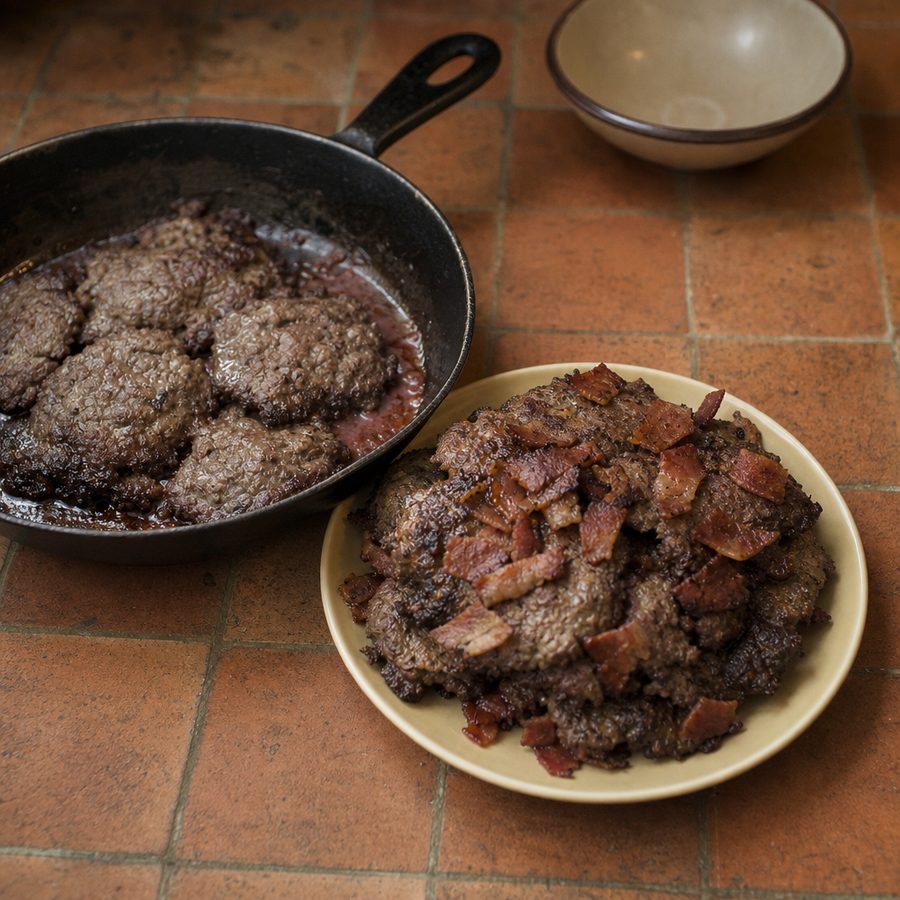
What comes off the skillet has two textures going at once. The outside is a brittle sheet of crust the color of dark coffee where the beef met the metal, and it gives way under a fork with an audible crack. Beneath it the meat is still soft and pink and giving up juice, because a patty this thin cooks through in about ninety seconds and never has the time to tighten up. The bacon rides on top in crisp shards that snap against the soft beef, and the salt sits on the outside where your tongue finds it first. I have eaten more of these standing at the counter than I would care to admit.
This belongs on a Tuesday rather than a Saturday. It costs a pound and a half of ground beef and four slices of bacon, it dirties one skillet, and it is done before anybody has finished asking what is for dinner. When the house is full I double it and work in rounds, wiping nothing out between batches so each round starts in the fat the last one left behind, and the final round is always the best one. It reheats decently, though this is really a dish to eat the minute it leaves the pan, so I save it for nights when everyone is home and hungry at the same hour.
Ingredients
- 4 slices bacon (about 4 oz)
- 1 1/2 lb ground beef, 80/20, cold from the refrigerator
- 1/2 tsp fine sea salt
Instructions
- Render the bacon: Lay the bacon slices in a cold twelve-inch cast iron skillet and set it over medium heat. After a minute or two you will hear a low whisper, and then it settles into a steady bubbling as the fat comes out. Cook eight to ten minutes, turning once, until the slices are stiff and dark at the edges. Lift them to a plate and leave every drop of fat in the pan.
- Ball the beef loosely: Divide the cold ground beef into eight portions of about three ounces each and cup each one into a rough ball, handling it as little as you can stand. A loose ball spreads out wide under the spatula. A tight, packed one fights back and stays thick in the middle, which is the one thing that will cost you the crust.
- Get the pan hotter than feels reasonable: Turn the heat to high and let the bacon fat thin out and shimmer until the first wisp of smoke lifts off the surface, about two minutes. That smoke is the signal. If the fat is not smoking when the beef lands, the meat steams in its own moisture, comes out gray, and no amount of time will build a crust after that.
- Smash and leave alone: Lay two or three balls in the pan with room between them and press each one flat right away with a stiff metal spatula, leaning your weight in for a full ten seconds until the patty is about a quarter inch thick with torn, uneven edges. The pan will roar. Salt the tops. Now leave them completely still for ninety seconds to two minutes, until you can see the brown creeping up the sides and the thin edges have gone dark and lacy.
- Flip once and finish: Slide the spatula under at a low angle and scrape hard so the whole crust comes up with the meat rather than staying welded to the pan, then flip. Thirty to forty five seconds on the second side is all they want: at a quarter inch thick they are cooked through by then, with no pink left at the center. If yours came out thicker than that, give them another thirty seconds and check one. Stack them on a warm plate, break the bacon over the top in shards, spoon on any fat left in the skillet, and cook the remaining balls the same way.
Variations
- Ground lamb: Use ground lamb in place of the beef, smashed exactly the same way. It renders faster and the crust comes out sweeter and more strongly flavored, so pull the patties a few seconds earlier.
- Egg on top: Fry an egg in the leftover fat while the patties rest and slide it over the stack so the yolk runs down through the crust. This adds egg to the plate.
- Cheese crown: Lay a slice of hard cheese on each patty the moment it is flipped so it slumps into the hot crust. This adds dairy.
- Double stack: Make sixteen smaller balls rather than eight and stack two patties per portion. You get twice as much crust per serving, which is the whole argument for a thinner patty in the first place.
Storage & Leftovers
Leftovers keep three to four days in a sealed container in the refrigerator. Stack the patties with the bacon separate, since the shards go soft against warm meat overnight and lose the snap that made them worth crisping in the first place.
Reheat them in a dry skillet over medium-high for about forty five seconds a side, long enough to wake the crust up without cooking the middle any further. A microwave will heat them through, but it also softens the crust into something closer to a steamed patty, and the crust is most of what you came for.
They freeze for up to three months in flat, sealed stacks with a square of parchment between them. Thaw overnight in the refrigerator and reheat in a hot pan rather than from frozen, because a frozen patty releases water as it thaws and that water will undo the surface you worked for.
Notes & Tips
- Cold beef, hot pan: Take the beef straight from the refrigerator. Cold meat holds its shape under the spatula and spreads evenly, while beef that has warmed on the counter smears and sticks.
- Give them room: Two or three patties at a time in a twelve-inch skillet, no more. Crowd the pan and the temperature drops, the meat starts to steam, and you get pale patties sitting in their own liquid.
- Ten full seconds of pressure: Count it out. A quick press springs back and leaves you with a thick disc. Steady weight for ten seconds is what flattens the ball to a quarter inch and holds it there while the crust sets.
- Leave the fat in the pan: Do not pour off the bacon drippings between rounds. Each batch adds a little more rendered beef fat, and the last patties of the evening cook in the best pan of the night.
Nutrition & Mindful Eating
- Ground beef, bacon, and salt are the entire list, so the pan does the work three ingredients cannot do on their own. The beef supplies the body and the juice, the rendered bacon fat gives the crust its smoke, and the salt lands on the surface where your tongue meets it first.
- Ground beef with a real amount of fat running through it stays juicy under heat this fierce, and it carries dense protein along with iron in the heme form your body takes up most readily.
- Bacon is doing two separate jobs. It renders the fat that fries the patties from below, which is where the smoke in every bite comes from, and it returns at the end as something brittle and salty against soft meat.
- The crust is the whole point of the technique. Beef pressed onto metal that hot browns within seconds, and that reaction is what gives a plate this short a flavor as deep as something you would otherwise braise for an afternoon.
- A stack of these holds you for a long stretch. The protein in the beef is doing most of that work, and the fat is what lets a modest weight of meat eat like a full dinner rather than a snack on the way to one.
- As you eat, tear one patty in half and look at the line where the dark crust stops and the pink middle begins, listen for the crackle it makes, and let a dinner this fast still be one you sit down for.
Frequently Asked Questions
What fat percentage of ground beef should I buy?
Eighty percent is the number I look for. The fat renders out under the smash and fries the patty from underneath, which is a good part of why the edges go so crisp. Ground beef with less fat through it browns more slowly and dries out at the thin edges before the crust ever sets.
My patties tore apart when I flipped them. What happened?
Almost always an impatient flip. The crust releases itself from the metal when it is properly set, so if you have to fight the patty, it needs another twenty seconds. Use a stiff metal spatula rather than a flexible one, hold it nearly flat against the pan, and push through in one motion.
Can I cook these on a griddle or an outdoor grill?
A flat griddle is ideal and lets you do all eight at once, which is the one real advantage over a skillet. Grill grates are the wrong surface for this, since a smashed patty needs continuous contact with hot metal, and over open grates most of the fat and most of the crust drop into the fire.
Do I have to salt after the smash rather than before?
It is worth doing it in that order. Salt drawn into the meat ahead of time pulls moisture to the surface and dissolves into it, and wet meat browns slowly. Salting the top after the patty is already flat puts the seasoning where you taste it and keeps the searing surface dry.