
Smashed Beef Patties with Lacy Edges
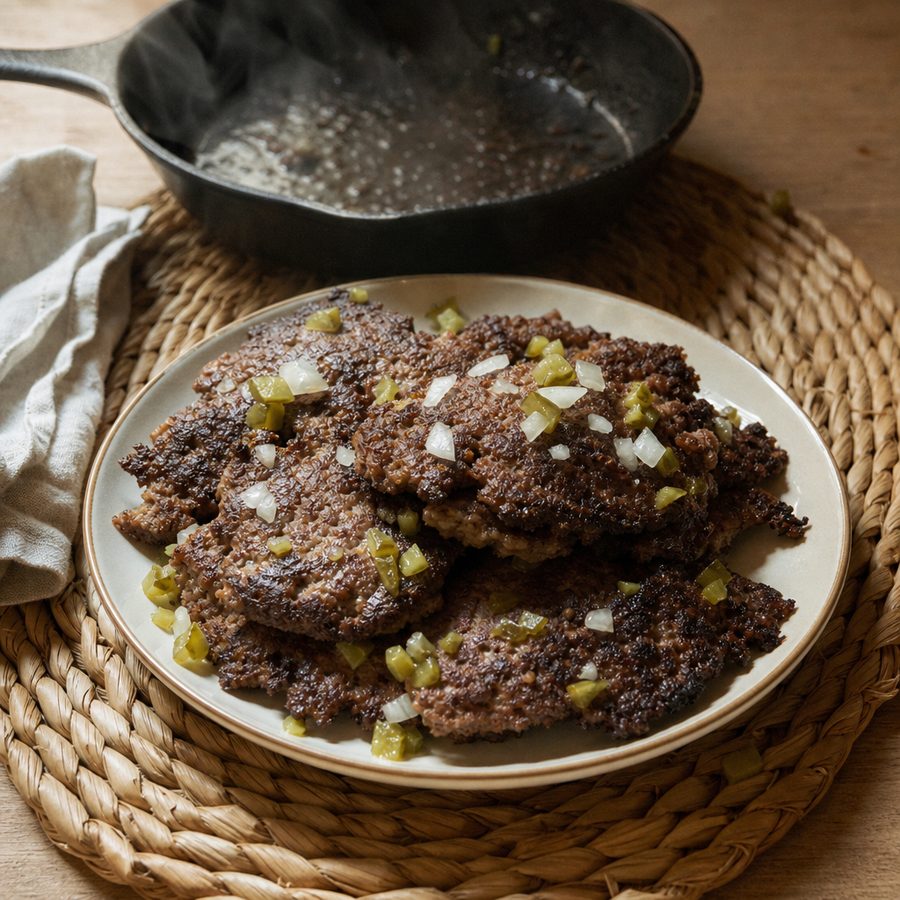
Loose balls of ground beef pressed thin on a screaming cast iron skillet, seared until the edges go dark and lacy, salted on the crust, and stacked two to a plate.
Why You'll Love This Recipe
I make these on the nights when I have twenty minutes and no patience. There is nothing to chop and nothing to marinate, and the entire quality of the dinner comes down to two decisions: how hot the pan is, and how long you leave the meat alone once it is down. A pan that is genuinely hot turns the underside of the beef into a sheet of crust in ninety seconds. A pan that is merely warm gives you gray meat sitting in its own gray liquid, which is the version most people have had and quietly given up on.
The eating is all about contrast. The face of each patty is dark, brittle, and faintly bitter in the way a good crust is, and the thin ragged edge where the beef spread out over the metal shatters between your teeth. Under that, the meat is still soft and running with fat. Stacking two patties together traps the heat between them so the second one stays as hot as the first, and the salt goes on after the smash rather than into the meat, so it sits on the crust where you taste it right away rather than dissolving into the interior.
This belongs on a weeknight, and it is the sort of thing I cook when someone is walking in the door hungry and unwilling to wait. Four people eat in about twenty minutes from a cold start. It is also worth knowing on a night when your fridge is bare, because a package of ground beef and a spoon of ghee is a real dinner rather than a placeholder. Make it once with an honest 80/20 grind and a pan you have preheated longer than feels reasonable, and it stops being a recipe and becomes a habit.
Ingredients
- 1 1/2 lb ground beef, 80/20, chilled until firm
- 1 tbsp ghee
- 1/2 tsp fine sea salt, for finishing
Instructions
- Portion the beef without working it: Divide the chilled ground beef into eight loose balls of about three ounces each, rolling only enough to keep them together. Do not pack them tight. Compressed meat presses out into a dense disc, while a loose ball spreads wide and ragged and gives you the thin edges that go crisp. Set them on a plate and keep them cold until the pan is ready.
- Get the skillet properly hot: Set a heavy cast iron or carbon steel skillet over high heat and leave it there for a full five minutes. Add the ghee and tilt to coat. It should thin out instantly and send up a thin wisp of smoke. If the fat sits there looking placid, the pan is not ready, and putting meat down now is the single most common way this dish fails.
- Smash and leave them alone: Lay four balls in the skillet with space between them, cover each with a square of parchment, and press straight down hard with a stiff spatula until the patty is about a quarter inch thick. Hold the pressure for ten seconds, then peel the paper away. Do not touch them again for ninety seconds to two minutes, until you can see the edge going dark and open and lacy all the way around.
- Scrape, flip, and salt: Slide the sharp edge of a metal spatula flat along the pan and scrape under the patty so the whole crust lifts with the meat rather than staying behind. Flip, sprinkle the tops with a pinch of the salt, and give them forty five seconds on the second side. They are thin, so they are done almost the moment they turn, with no pink left in the middle; a patty pressed thicker than a quarter inch wants another half minute and a look before it comes off.
- Stack and serve straight away: Move the patties to a warm plate, stacked in pairs so they hold their heat, and cook the second batch the same way. Wipe nothing out of the pan between batches. Serve them immediately, while the lace at the edges is still brittle, and spoon any beef fat left in the skillet over the top.
Variations
- Cheddar crown: Lay a slice of cheddar on each patty the moment it is flipped so it slumps over the crust in the last forty five seconds.
- Egg on top: Fry an egg in the beef fat left in the skillet and slide it over a stack, letting the yolk break down through the crust.
- Bacon fat instead of ghee: Render two slices of bacon first, cook the patties in what they leave behind, and crumble the bacon over the finished stacks.
- Ground bison: Swap in ground bison for a firmer, sweeter patty. It carries less fat, so add a second spoon of ghee to the pan.
Storage & Leftovers
These keep three to four days in a sealed container in the refrigerator, though the crust is a fleeting thing and will soften overnight no matter what you do. Cool them uncovered for ten minutes before you seal them so trapped steam does not sit against the surface.
Reheat in a dry skillet over medium high for about a minute a side. That is enough to bring some of the crust back and to warm the fat through without cooking the middle any further. A microwave will heat them, but the texture goes uniformly soft and the best part of the dish is gone.
They freeze well for up to three months, stacked with a square of parchment between each patty so you can pull out one or two at a time. Reheat straight from frozen in a covered skillet over medium for four to five minutes, then uncover for the last minute to dry the surface and firm the edges.
Notes & Tips
- Keep the balls loose: The urge to shape a neat puck is strong and it is the thing to resist. A loose ball spreads out thin and ragged under the spatula, and those ragged edges are where the lace comes from.
- Wait for the wisp of smoke: Five minutes of preheating feels excessive and it is not. The fat should shimmer and send up a thread of smoke before the first ball goes down, because a hot pan is doing most of the cooking here.
- Salt after the smash: Salt drawn into the meat before it cooks pulls moisture to the surface and works against browning. Sprinkled on after the flip, it stays on the crust where you taste it in the first bite.
- Four at a time, no more: Every patty you add drops the pan temperature further. Four in a twelve inch skillet keeps the metal hot enough to sear, and the second batch cooks even better than the first.
Nutrition & Mindful Eating
- Ground beef, a spoon of ghee, and salt on the crust is the whole build, and each one has a job. The beef brings the body and the juice, the ghee gets the pan hot enough to brown rather than steam, and the salt lands last so it sits where your tongue meets it first.
- Ground beef with real fat marbled through it is what makes a patty this thin stay juicy, and the same beef carries iron in the form your body takes up most readily, along with the B12 and zinc red meat is known for.
- Ghee is butter with the water and milk solids cooked away, which is why it can sit at searing heat without burning, and it still carries the vitamin A that came with the cream it started as.
- The dark face of the patty is not just color. Browning at that temperature builds hundreds of new aroma compounds, which is why a smashed patty smells and tastes so much deeper than the same beef cooked gently in a pan.
- Beef this rich eats like a proper dinner rather than a stopgap, and the protein is doing most of that work while the fat gives the meat the richness that makes two thin patties feel generous.
- As you eat, break off a piece of the lacy edge on its own before you take a proper bite, notice how brittle it is against the soft middle, and let the plate be a real sit down rather than something eaten over the stove.
Frequently Asked Questions
What pan do I need for this?
Cast iron or carbon steel, and nothing else really works. Both hold enough heat that laying cold meat down does not stall the surface temperature. A nonstick pan cannot legally be taken to the heat this needs, and a thin stainless pan drops so far the moment the beef lands that the patties steam.
Why ghee rather than butter?
Butter carries milk solids and water, and at the temperature this needs the solids blacken and turn acrid within seconds. Ghee has had both cooked out of it, so it stays clean and takes the heat. Beef tallow or bacon fat behave the same way if you have either on hand.
Which grind should I buy?
An 80/20 chuck grind. The fat is doing double duty here, keeping the middle juicy through a hard sear and pooling under the patty to fry the edges into lace. A finer, drier grind will brown, but it comes out tight and the ragged edge never really forms.
My patties tore when I flipped them. What went wrong?
You lifted rather than scraped. The crust bonds to the metal on purpose, and a spatula angled up will pull the meat away and leave the good part in the pan. Lay the blade almost flat against the surface and drive it under in one push, and the whole patty comes free with its crust attached.