
Smashed Sardine and Navy Bean Jars with Celery and Dill
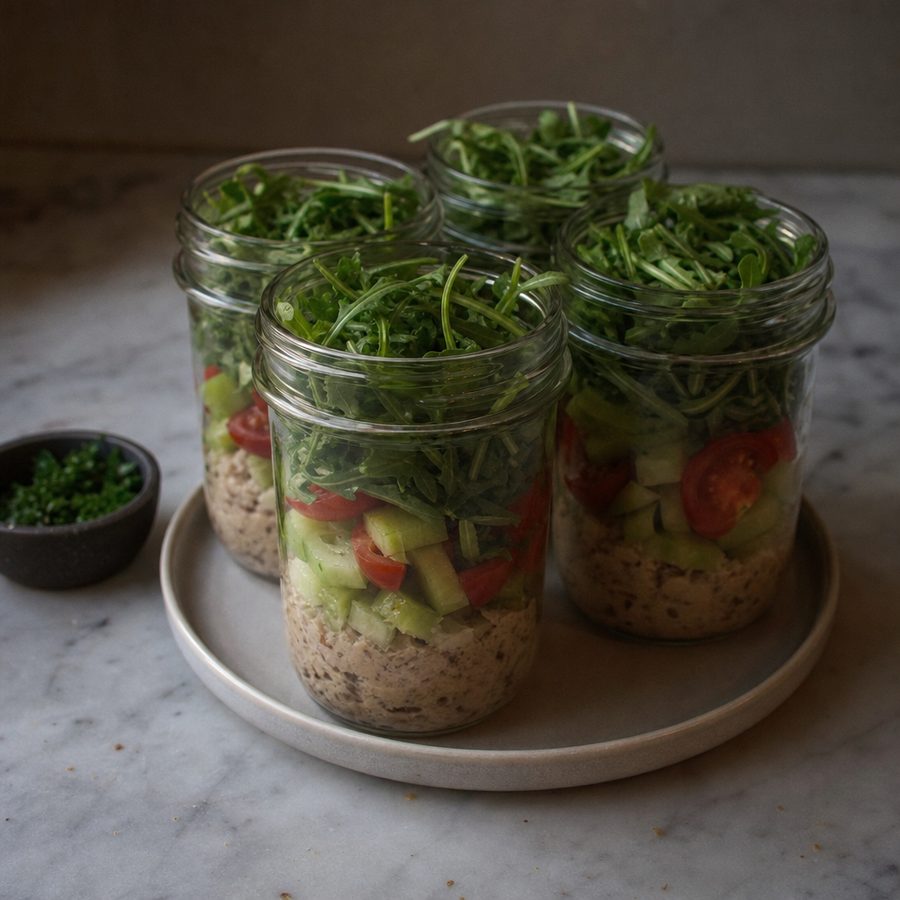
Sardines mashed into navy beans with shallot, lemon, and a great deal of dill, layered into jars over sliced celery and cherry tomatoes with arugula packed on top.
Why You'll Love This Recipe
I keep these in the refrigerator for the days I already know I will not stop working at noon. Four jars go together in about twenty minutes with a can opener, a fork, and a cutting board, and they are honestly better on the second day than they are the hour you build them. Sardines are the ingredient people flinch at, so let me say plainly that mashing them into beans with a lot of lemon and a lot of dill turns them into something much gentler than they are straight out of the tin. If you have only ever met one on a cracker, start here instead.
The order things go into the jar is the whole trick. Dressing and the mashed sardine and bean mixture go in first, at the bottom, where they sit heavy and keep everything above them dry. Celery and tomatoes go next, then the arugula last, packed right up under the lid so the leaves are nowhere near the acid until you want them to be. Shake the jar hard, tip it into a wide bowl, and the dressing comes up through all of it at once. Half the beans crush against the fork and half stay whole, and that is what keeps the texture from turning to paste.
What makes this eat like a real lunch rather than a snack is that there is serious food sitting in the bottom of the jar. One forkful gets you soft beans, flaked fish, a piece of celery still snapping, and a tomato that bursts. The dill is not a garnish here, it is a quarter cup, and it is the reason the whole jar tastes green rather than fishy. I build these on Sunday night for Monday and Tuesday, and I have eaten one at three in the afternoon at my desk without once wishing I had gone out for something hot.
Ingredients
- Four 3.75-oz cans sardines packed in olive oil, drained well
- Two 15-oz cans navy beans, drained and rinsed
- 4 celery stalks, sliced 1/4 inch thick on a long angle
- 1 heaping cup cherry tomatoes, halved through the stem end
- 4 packed cups arugula
- 1 large shallot, minced fine
- 1/4 cup chopped fresh dill, fronds and thin stems
- 1/3 cup chopped flat-leaf parsley
- 3 tbsp lemon juice, from 1 large lemon
- 2 tbsp extra-virgin olive oil
- 3/4 tsp coarsely ground black pepper
Instructions
- Start the dressing and let the shallot sit: Whisk the lemon juice, olive oil, minced shallot, and black pepper together in a small bowl and leave it for ten minutes while you work. The shallot loses its raw bite in the acid in about that long, going from sharp to sweet, and the dressing thickens slightly as it stands.
- Mash the sardines into half the beans: Drain the sardines well, tipping the cans against the lid so the oil runs off, and put the fish in a bowl with half the navy beans. Press with a fork until the sardines have broken up completely and those beans are roughly crushed, about twenty seconds of work. The soft bones disappear into the mixture as you go.
- Fold in the whole beans and the herbs: Add the remaining beans whole, along with the dill, the parsley, and about half the dressing, and fold gently so you do not crush anything else. You want a mixture that holds together when you press it with the back of the fork but still shows plenty of whole beans standing up in it. Taste and add pepper if it needs it.
- Cut the vegetables so they stay crisp: Slice the celery on a long angle a quarter inch thick, which gives you wide pieces that stay crunchy for days where thin half moons would go limp by tomorrow. Halve the cherry tomatoes through the stem end so they hold their juice. Keep both away from the sardine mixture until the jars go together.
- Layer four jars: Spoon the remaining dressing into the bottom of four wide-mouth pint jars, then divide the sardine and bean mixture over it and press it level. Add the celery, then the tomatoes, then pack the arugula in last and screw the lids on. Everything wet is now at the bottom and everything crisp is sitting above it.
- Shake it out when you eat: Hold the lid down and shake the jar hard for five seconds, then tip the whole thing into a wide bowl. Toss once with a fork so the leaves pick up the dressing that has come up from the bottom, and eat it while the arugula is still standing.
Variations
- Chickpeas: Use chickpeas in place of the navy beans, which stay firmer under the fork and give the jars more chew.
- Fennel and orange: Shave fennel rather than slicing celery and add a spoonful of orange juice to the dressing for a sweeter, anise-scented jar.
- Olive and caper flavor: Chop a handful of kalamata olives into the sardine mixture for a saltier, more southern Italian version.
- Mustard bite: Whisk a teaspoon of dijon mustard into the dressing, which thickens it and makes it cling to the beans.
- Sesame finish: Scatter a tablespoon of toasted sesame seeds over each bowl after you tip it out, for a nutty crunch against the soft beans.
Storage & Leftovers
Layered and lidded this way, the jars hold four days in the refrigerator. The sardine and bean mixture genuinely improves overnight as the lemon works its way into the beans, and the celery stays crisp the whole time because it is sitting above the dressing rather than soaking in it.
If you are eating within a few hours you can skip the jars entirely and toss everything in a bowl. Made ahead, though, the layering is the difference between lunch and disappointment. Arugula dressed the night before is water by noon, and no amount of shaking brings the leaves back.
This one does not freeze. The beans go grainy, the celery collapses, and the dill turns black. Treat it as a four day refrigerator dish. You can make the sardine and bean mixture on its own up to five days ahead and build jars from it as you need them.
Notes & Tips
- Drain the cans hard: Press the fish against the lid and let it sit tipped for a minute. Oil left behind slackens the mixture and the jars separate in the refrigerator.
- Give the shallot its ten minutes: Raw minced shallot is aggressive, and lemon juice tames it completely in the time it takes to open the cans and slice the celery.
- Cut celery thick and on the angle: Wide angled pieces keep their snap for four days. Thin half moons go soft by the next morning and take the best texture in the jar with them.
- Use wide-mouth jars: A narrow neck makes packing the arugula a wrestling match and makes tipping the jar out cleanly almost impossible.
- Chop the dill last: Dill bruises and darkens within an hour of being cut. Chop it right before it goes into the beans and it stays bright green in the jar.
- Taste after the shake, not before: The dressing at the bottom has not touched most of the jar yet. Judge the seasoning once everything is tossed together in the bowl.
Nutrition & Mindful Eating
- Sardines, navy beans, and a lot of chopped herbs are doing three different jobs in one jar. The fish brings the richness and most of the protein, the beans bring body and soft fiber, and the dill and parsley keep something this savory tasting green all the way down.
- Sardines are small, strong-flavored fish meant to be eaten whole with their soft bones, and those bones are where the calcium sits. They carry omega-3 fats and vitamin D as well, which is an unusual thing to find in something that keeps in a cupboard.
- Navy beans crush into a creamy base under the fork and hold their shape wherever you leave them whole. Their fiber is the soft, soluble kind that keeps working on the lemon overnight, and it is part of why these jars eat better on day two.
- Arugula tastes peppery and faintly bitter, which is exactly what oily fish wants sitting next to it. The leaves carry calcium and folate, and they need nothing more than five seconds of shaking to take on the dressing.
- Lemon juice and a quarter cup of dill are what keep this from tasting like fish out of a tin. The acid cuts the oil, the herbs run green and grassy through the beans, and the celery snapping against all that softness is most of the pleasure here.
- As you eat, notice how the celery still snaps against beans that have gone soft and lemony overnight, and let the jar be something you sit down with rather than something you finish standing at the counter.
Frequently Asked Questions
I do not like sardines. What else works here?
Canned tuna goes in at the same weight and behaves the same way under a fork, though it comes out drier, so add another tablespoon of olive oil with it. Smoked trout is the other good one. I would ask for one honest try with the sardines first, because mashed into beans with this much lemon and dill they taste almost nothing like they do alone.
Do I have to keep the bones in?
Keep them. The bones in canned sardines are so soft they break apart under a fork and vanish into the beans, and nobody has ever found one in a finished jar of this. Skinless and boneless fillets will work if that is what your store carries, they are simply milder and a little drier.
Can I really build these the night before?
Yes, and they are better for it. Build the jars all the way, lid them, and refrigerate. The only rule that matters is that the arugula goes in last, on top, and never touches the dressing until the moment you shake the jar.
My mixture came out like paste. What happened?
Too much mashing, and usually a potato masher rather than a fork. Crush only half the beans, and stop while you can still see whole ones in there. A fork gives you control a masher does not, and those whole beans are the reason every bite is not identical.