
Smoked Paprika Pork and Collard Baked Eggs
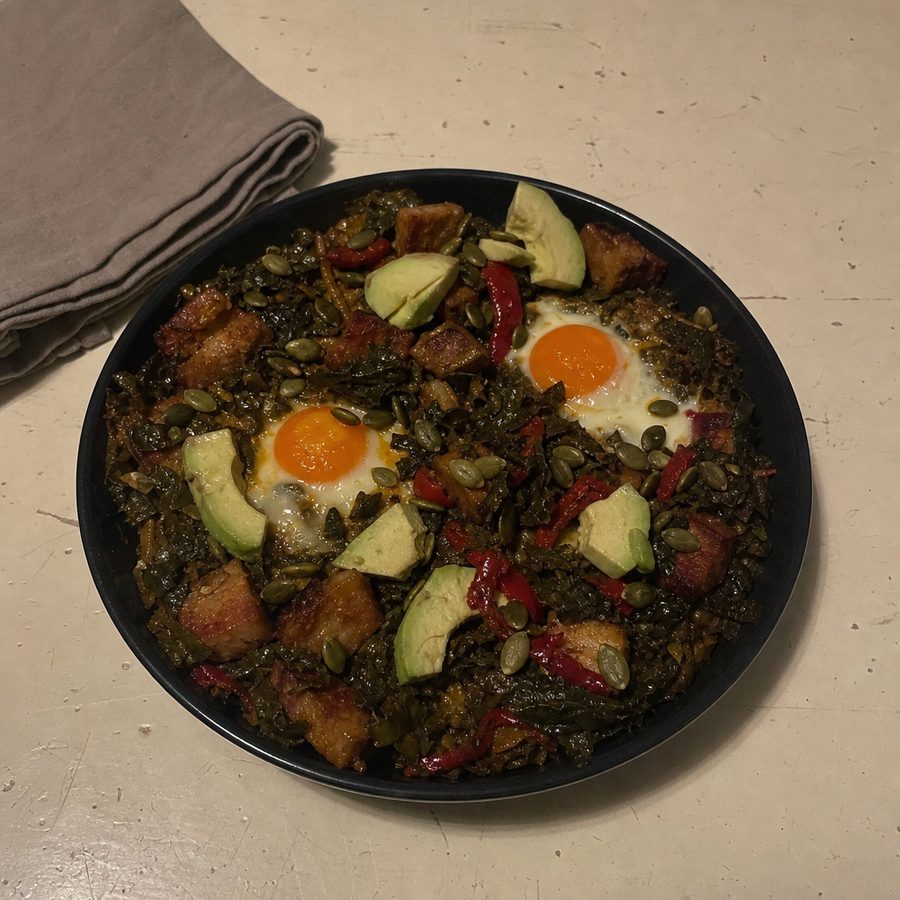
Collard ribbons braised with smoked paprika and garlic, browned cubes of pork tenderloin folded through, and eggs baked into the greens under pumpkin seeds and avocado.
Why You'll Love This Recipe
A slow Sunday, a bunch of collards that needs using, and a house that should smell like something: that is this. It takes about fifty minutes, most of it the greens quietly braising while I read, and it feeds four people with real appetites. Collards are usually treated as a supper vegetable cooked for hours with a ham hock, and they turn out to be even better in the morning, where their faint bitterness has something to push against in the eggs.
When each thing goes into the pan is the whole trick. Pork tenderloin browns first in a hot pan and comes out while it is still pink in the middle, because it will go back into a hot skillet later and finish there. The onion, pepper, and garlic soften in the fat left behind, the paprika goes in with them so the oil can carry it, and then the collards go in with a splash of water and cook down slowly until a ribbon bends without snapping. Wells get pressed into the greens, the eggs go in, and the oven does the rest.
The pan tastes smoky and green and a little sour from the lemon, with soft yolks running into the collards wherever you break one. The pumpkin seeds go on toasted and stay crunchy, and the avocado goes on cold at the very last second, which is the contrast that makes the whole thing work. It is a substantial plate, the kind that changes what you want at lunchtime, and it reheats respectably if there is any left.
Ingredients
- 10 oz pork tenderloin, trimmed and cut into 1/2-inch cubes
- 1 large bunch collard greens (about 14 oz), stems stripped out and leaves cut into 1-inch ribbons
- 8 large eggs
- 1 red bell pepper, seeded and cut into thin strips
- 1 small yellow onion, halved and thinly sliced
- 4 cloves garlic, thinly sliced
- 1 tbsp smoked paprika, sweet or hot
- 1 small ripe avocado, halved, pitted, and sliced
- 1/3 cup raw pumpkin seeds
- 1 1/2 tbsp olive oil
- 1 1/2 tbsp fresh lemon juice, from about half a lemon
- 1/4 cup chopped fresh cilantro
- 1/2 tsp fine sea salt
Instructions
- Prep the greens: Fold each collard leaf in half along the stem and cut the stem away, then stack six or eight leaves, roll them into a tight cigar, and slice across into 1-inch ribbons. Wash the ribbons in a bowl of cold water and lift them out rather than pouring them into a colander, since the grit sinks and pouring tips it straight back over the leaves. They do not need to be dry.
- Brown the pork: Pat the pork cubes dry and season them with half the salt. Heat 1 tbsp of the olive oil in a 12-inch ovenproof skillet over medium-high until it shimmers, add the pork in a single layer, and leave it alone for three minutes so a crust forms. Turn and give it two minutes more, then move it to a plate. The centers should still be rosy, because the pork goes back into the pan at the end and anything finished now would be dry by the time it reached the table.
- Build the base: Lower the heat to medium and add the remaining oil, the onion, and the pepper strips. Cook for six to seven minutes until the onion is translucent and the pepper has gone floppy, then stir in the garlic and the smoked paprika and cook for forty seconds, just until the paprika smells toasted. Stop there, since paprika scorches in seconds and turns the whole pan bitter when it does.
- Braise the collards: Add the collard ribbons in handfuls, turning each batch into the hot oil until it wilts enough to make room for the next. Pour in 1/2 cup water, add the rest of the salt, cover, and cook over medium-low for fifteen to eighteen minutes, because collards are tough enough that they need liquid and a lid rather than a hot dry pan. They are ready when a ribbon bends limply around a spoon and the pan is nearly dry. Heat the oven to 375°F while this happens.
- Add the eggs and bake: Stir the pork and any juices back into the greens. Press eight wells into the surface with the back of a spoon and crack an egg into each. Slide the skillet into the oven for eight to ten minutes, until the whites are set and opaque but the yolks still wobble when you nudge the pan. Pull them a shade early, since a cast iron skillet holds enough heat to keep setting the yolks for a minute after it leaves the oven.
- Finish at the table: Toast the pumpkin seeds in a dry pan over medium heat for two to three minutes, shaking often, until they pop and smell nutty. Squeeze the lemon over the whole skillet, scatter the seeds and the cilantro, and lay the avocado slices across the top. Serve straight from the pan.
Variations
- Chorizo-spiced: Add a teaspoon of ground cumin and a pinch of cayenne with the paprika, which pushes the pan toward the flavor of fresh chorizo.
- Ground turkey: Swap the tenderloin for a pound of ground turkey browned in crumbles, which spreads the meat more evenly through the greens.
- Tomato-braised: Stir half a cup of crushed tomatoes in with the water so the greens braise in something redder and slightly sweeter.
- Cheese on top: Crumble a couple of ounces of feta over the greens just before the eggs go in so it softens without melting away.
- More heat: Add a sliced jalapeno with the bell pepper and finish with a spoonful of the pickling liquid from a jar of hot peppers.
Storage & Leftovers
Leftovers keep three days covered in the refrigerator, though the eggs are always best the day they are baked. If you know in advance you will have extra, bake only as many eggs as you plan to eat and refrigerate the pork and greens on their own, then reheat and add fresh eggs in the morning.
To reheat a whole portion, cover it and warm it in a 325°F oven for ten to twelve minutes. A microwave works and is faster, but the yolks firm up completely and you lose the run. Add the avocado and the pumpkin seeds after reheating rather than before, since both go soft in the refrigerator.
The braised collard and pork base freezes well for up to three months in flat sealed portions, eggs left out. Thaw overnight in the refrigerator, warm it in a skillet until it steams, then press in the wells and bake the eggs as written. A fresh squeeze of lemon at the end wakes the whole thing up again.
Notes & Tips
- Strip the stems: Collard stems never soften in twenty minutes and turn a good pan stringy. Fold each leaf and cut the rib away in one pass, and the whole bunch takes two minutes.
- Wash after cutting, not before: Ribbons rinse far more thoroughly than whole leaves, and the water still clinging to them is exactly the moisture the braise wants.
- Bloom the paprika in fat: Paprika stirred into a dry pan scorches in seconds. Give it oil and forty seconds and the flavor spreads through everything the oil touches.
- Pull the pork early: Tenderloin dries out fast. Take it out while the middle is still rosy, since it goes back into a hot skillet and finishes there.
- Press the wells deep: Shallow dents let the whites run and cook unevenly. Push each one down to the metal so the egg sits in a proper pocket.
- Avocado last, always: Sliced avocado laid on a pan that is still going into the oven turns gray and slack. It goes on after the skillet is on the table.
Nutrition & Mindful Eating
- The pork, the collards, the eggs, and the avocado each do a different job in one pan. The meat carries most of the protein, the greens bring the bulk and the fiber, the yolks pull it together, and the avocado goes on cold at the end for softness.
- Pork tenderloin is a close-grained cut that cooks in minutes and stays juicy as long as you take it off the heat early. It brings a lot of protein for its size, and it is where the thiamin that pork is known for comes onto the plate.
- Collard greens hold their shape through a long braise rather than dissolving the way tender greens do, and that sturdiness is the same fiber that gives this pan its body. The leaves also carry calcium and vitamin K in real quantity.
- Avocado laid on cold at the end is buttery against the hot greens, and it brings fiber and monounsaturated fat in the same soft slice.
- Smoked paprika is the flavor people try to name and cannot. It goes in with the garlic and the oil so the fat can carry it through the whole skillet, which is why the greens taste of woodsmoke rather than of something sprinkled on at the end.
- As you eat, break a yolk into the greens and notice how the smoke, the lemon, and the cool avocado land in three different places, then slow down enough to feel the meal settle before you go back for more.
Frequently Asked Questions
Can I use kale or chard rather than collards?
Yes, with a shorter cook. Kale needs about eight minutes and chard closer to four, so add it later and use less water. Collards are the sturdiest of the three and are the only one that will still have real texture after twenty minutes in a covered pan, which is why they are written in.
My egg whites were still runny but the yolks looked done. What went wrong?
The wells were too shallow, so the whites spread across the surface where the oven air hits them last. Press each well all the way down to the pan with the back of a spoon so the white sits in a deep pocket and cooks from the metal as well as from above.
Is there a way to make this on a weekday?
Braise the collards and brown the pork the night before and keep them together in the skillet, covered, in the refrigerator. In the morning, set the pan over medium heat for five minutes until it steams, then press the wells, add the eggs, and bake. That puts breakfast on the table in about fifteen minutes.
What kind of smoked paprika should I buy?
Spanish pimenton, either dulce for sweet or picante for heat, and buy the smallest tin you will use within a year. Ground paprika loses its smoke quickly once opened. If all you have is regular sweet paprika the dish still works, it just tastes brighter and less like a fire.