
Smoked Paprika Tempeh with Swiss Chard and White Beans
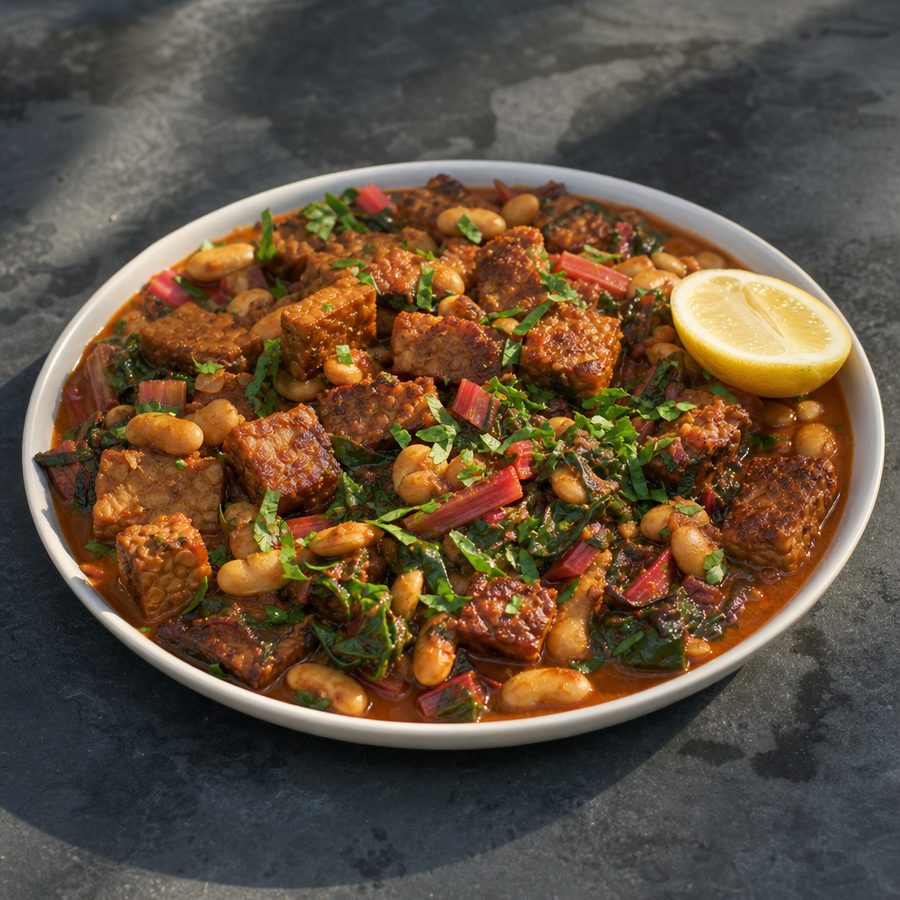
Cubes of tempeh browned hard in smoked paprika oil, simmered briefly with white beans and chard stems, then finished with ribbons of chard, lemon, and a handful of parsley.
Why You'll Love This Recipe
This started as a way to use a bunch of chard that was taking over the crisper drawer, and it became one of the lunches I make most often through the colder half of the year. Smoked paprika is the whole personality of it. Bloomed in hot oil for thirty seconds it goes from red powder to something deep and resinous that stains everything it touches, and tempeh, which is porous and slightly rough on the outside, grabs onto it better than almost any other food I cook. The result tastes like it has been over a fire, and it takes twenty minutes on the stove.
Chard is really two vegetables in one bunch and it pays to treat it that way. The stems are crisp and mild and want the same seven or eight minutes as the onion, so they go in early and end up tender and sweet with a bit of resistance left. The leaves need almost nothing, ninety seconds at the very end, folded through until they slump into the broth and go glossy dark green. Cook them together from the start and you either get woody stems or leaves that have gone gray and sulfurous, and there is no reason to accept either.
A cup of white beans is doing something specific here. They break down just slightly at the edges over a few minutes of simmering and give the broth a creaminess that no other ingredient in the pan can offer, so what could have been a dry skillet of cubes and greens turns into something you want a spoon for. This reheats well, packs well, and eats even better on the second day once the paprika has had a night to settle into the beans. I keep a lemon on hand for that reheated bowl, because acid is the first thing to fade.
Ingredients
- 14 oz tempeh, cut into 3/4-inch cubes
- 1 large bunch swiss chard (about 10 oz), stems sliced thin and leaves cut into wide ribbons
- 1 cup cannellini beans, drained and rinsed, from a 15-oz can
- 1 small yellow onion, diced small
- 3 garlic cloves, sliced thin
- 2 tsp smoked paprika
- 2 tbsp olive oil, divided
- 2/3 cup vegetable broth
- 1 1/2 tbsp lemon juice
- 1/3 cup chopped flat-leaf parsley
- 1/2 tsp coarsely ground black pepper
- 1/4 tsp fine sea salt
Instructions
- Prepare the chard: Strip the leaves from the chard stems by running a knife down either side of each rib. Slice the stems crosswise into 1/4-inch pieces and keep them in one pile, then stack the leaves, roll them loosely, and cut them into ribbons about an inch wide. Keep the two piles separate, since they go into the pan eight minutes apart.
- Brown the tempeh: Heat 1 tbsp of the olive oil in a 12-inch skillet over medium-high until it shimmers. Add the tempeh cubes in a single layer with a pinch of the salt and leave them for 3 minutes without stirring, until the undersides are properly brown. Turn and give them 3 minutes more so at least two faces have color, then move them to a plate.
- Build the base: Lower the heat to medium and add the remaining 1 tbsp oil, the onion, and the chard stems with the rest of the salt. Cook for 7 to 8 minutes, stirring now and then, until the onion is translucent and the stems bend without snapping. Add the garlic and the smoked paprika and stir constantly for 30 seconds, until the oil turns deep red and smells like a fire that has just gone out.
- Simmer with the beans: Add the beans and the broth, scrape the bottom of the pan to lift everything the tempeh left behind, and bring it to a simmer. Cook for 4 minutes, pressing a few beans against the side of the pan with the back of a spoon so they thicken the liquid. Return the tempeh with any juices on the plate and simmer 2 minutes more.
- Wilt the leaves and finish: Pile the chard ribbons on top, cover the pan for 1 minute, then fold them through until they are glossy and dark. Take the skillet off the heat, add the lemon juice and black pepper, and stir once. Scatter the parsley over and serve straight from the pan, spooning the broth from the bottom over each bowl.
Variations
- With olives and orange: Add a small handful of chopped kalamata olives with the beans and finish with orange juice in place of the lemon for a sweeter, saltier pan.
- Tomato-forward: Stir a heaped tablespoon of tomato paste in with the paprika and let it darken for a minute before the broth goes in, which gives a deeper red, slightly sweeter sauce.
- Cumin and coriander: Swap the smoked paprika for two teaspoons of ground cumin and one of coriander for a warmer, earthier version that sits closer to north Africa.
- With almonds: Scatter a handful of toasted sliced almonds over each bowl for crunch against the soft beans and greens.
- Brothy: Double the broth and serve it as a loose stew in deep bowls, which suits a cold day and stretches the pan to five servings.
Storage & Leftovers
This keeps four days in a sealed container in the refrigerator and is one of the few greens dishes I am happy to eat cold from the box. The paprika settles into the beans overnight and the whole thing tastes rounder and less sharp on the second day, though the acid fades, so keep a lemon wedge with it.
Reheat it gently in a covered pan over medium-low with a splash of water or broth, which takes about 5 minutes and keeps the chard from going stringy. High heat drives the liquid off and leaves the tempeh dry. The microwave is fine at half power, stirring once halfway through.
It freezes for up to three months, though the chard leaves come back softer than they went in. Freeze it flat in sealed portions, thaw overnight in the refrigerator, and reheat with a little extra broth and a fresh squeeze of lemon to wake it up. Adding a handful of fresh greens at the reheat covers the texture loss entirely.
Notes & Tips
- Give the tempeh a still, hot pan: Three minutes without touching it is what builds the crust. Cubes that are stirred every thirty seconds come out pale and slightly damp, and no amount of paprika fixes that.
- Bloom the paprika in oil, not liquid: Thirty seconds in hot fat is where the flavor comes out. Stirred into broth it stays flat and dusty, and it can taste faintly of chalk.
- Watch the paprika closely: It burns in about a minute over high heat and turns bitter the moment it does. Lower the heat before it goes in and have the beans and broth within reach.
- Split the chard: Stems early, leaves at the end. The whole texture of the dish depends on this one piece of timing, and it costs you nothing but an extra pile on the cutting board.
- Crush a few beans: Pressing five or six against the side of the pan releases enough starch to turn the broth silky. It is the difference between a skillet of separate things and a dish that holds together.
- Lemon goes in off the heat: Acid boiled in a pan flattens out within a minute. Added after the burner is off, it stays bright and cuts straight through the smoke.
Nutrition & Mindful Eating
- Tempeh, white beans, and chard divide the work in this pan. The tempeh carries the protein and the browned flavor, the beans bring fiber and the creaminess that turns the broth into something worth spooning up, and the chard adds volume, color, and minerals for very little else.
- Tempeh is soybeans fermented whole and pressed into a cake, so it keeps the fiber and the minerals of the bean while delivering protein at a level usually reserved for animal foods. The fermentation also softens the beany flavor and leaves something nuttier behind.
- Swiss chard carries vitamin K, vitamin A, and magnesium, and it is one of the few greens whose stems are worth eating in their own right, sweet and celery-like once they have had eight minutes in the pan.
- Cannellini beans are soft-skinned and floury in the best sense, which is why a few crushed against the pan thicken the broth, and the soluble fiber doing that thickening is the same kind that makes a meal sit steadily.
- Smoked paprika, garlic, and a squeeze of lemon are the three things you actually taste first. The paprika brings smoke without a grill, the garlic goes sweet in the oil, and the lemon at the end lifts the whole skillet so a dish built on beans and greens tastes bright rather than heavy.
- As you eat, notice how the crisp edge of the tempeh softens once it sits in the broth, and take a moment with the smoke and the lemon before the next spoonful, letting a warm bowl be the pause in the middle of your day.
Frequently Asked Questions
Can I use a different green?
Yes. Collard greens need about four minutes rather than one and want their ribs sliced fine, kale sits somewhere in the middle at two to three minutes, and spinach needs only to be stirred through the hot pan off the heat. Chard is my first choice here because the stems give you a second texture for free.
Does the tempeh need to be steamed first?
Not for this recipe. The paprika, garlic, and lemon are assertive enough to carry any bitterness a particular batch might have. If you know your brand runs bitter, steam the cubes for ten minutes and pat them dry before browning, and they will come out mild and slightly sweeter.
What if I only have regular paprika?
It will still be a good lunch, just a gentler one. Add a pinch of chipotle powder or a few drops of liquid smoke if you have either, and if not, brown the tempeh a shade darker than you normally would to build some of that depth in the pan instead.
Can I use dried beans?
Certainly, if you have cooked some already. A cup of drained cooked beans is what you want, and their cooking liquid is excellent in place of the broth, since it is starchy and thickens the pan beautifully. Cooking them from dry is a separate afternoon and not part of this recipe.