
Soupe au Pistou with White Beans and Summer Vegetables
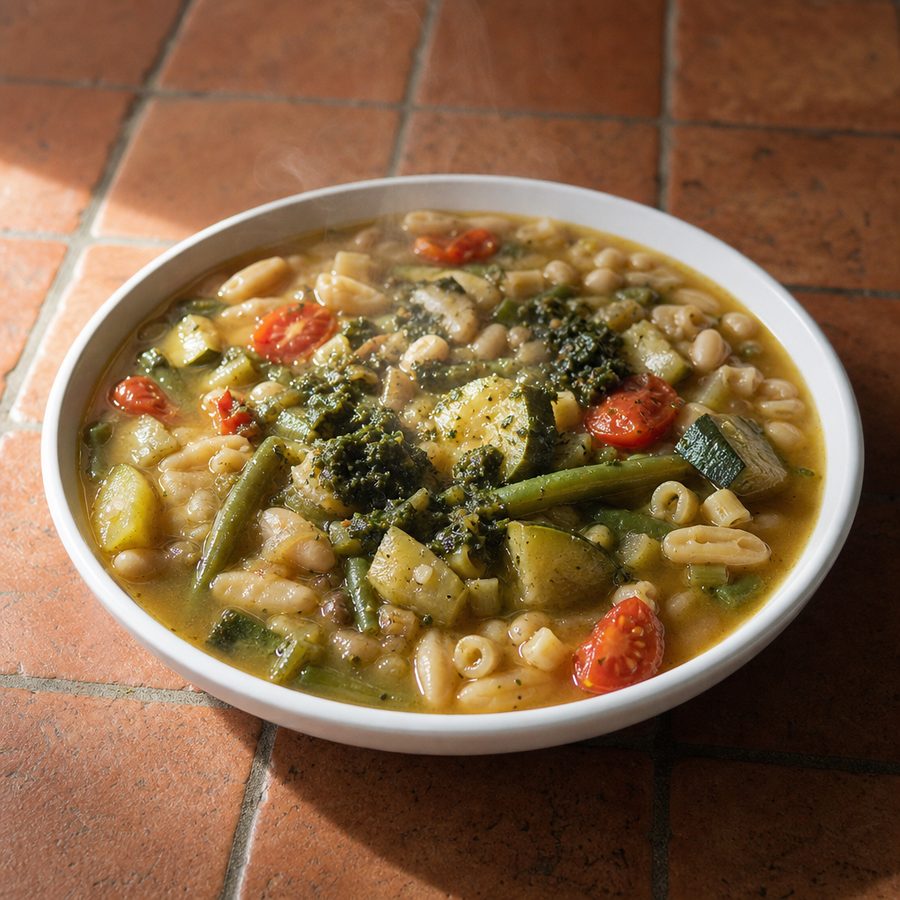
A Provencal vegetable soup of leeks, green beans, zucchini, potato, and small pasta with white beans, finished at the table with basil and garlic pounded into olive oil.
Why You'll Love This Recipe
This is the soup that gets made in Provence in the weeks when the garden is producing faster than anyone can eat it, and it is built so that whatever is in the basket goes into the pot. I cook it on late summer evenings when it is still too warm for anything braised but a plate of salad will not do. It takes a little over an hour, most of it chopping, and it fills four deep bowls with something you eat slowly. The pistou is stirred in by each person at the table, which is half the pleasure of it.
The order things go into the pot is the whole technique. Leeks, onion, and carrot soften first in olive oil without taking any color, because this soup is meant to taste sweet and green rather than browned. Potatoes go in with the liquid, then the beans, then the zucchini and pasta, then the tomatoes for the last few minutes only. Everything should be soft when you serve it. This is not a soup of crisp-tender vegetables. Simmered properly, each one gives something up to the broth, and what you end up with tastes far bigger than a pot of water and vegetables has any right to.
Pistou is the Provencal cousin of pesto and it has no pine nuts in it: basil, garlic, olive oil, and a little cheese, pounded rather than blended. Pounding bruises the leaves and pulls the oil out of them slowly, so the sauce turns a deep matte green and smells enormous. It goes into the bowl, never into the pot, because a minute of boiling would flatten everything you just built. Stir it in yourself, watch the surface go cloudy and green, and eat it before the smell fades. If you have no mortar, a bowl and the end of a rolling pin will get you most of the way there.
Ingredients
- 3 tbsp extra-virgin olive oil, divided
- 2 medium leeks, white and pale green parts only, halved lengthwise and sliced into thin half moons
- 1 small yellow onion, cut into small dice
- 2 medium carrots, cut into 1/4-inch dice
- 8 garlic cloves, 6 for the pistou and 2 thinly sliced
- 2 small gold potatoes (about 9 oz), cut into 1/2-inch dice
- 2 1/2 cups vegetable broth, plus 4 cups water
- 1 3/4 cups canned navy beans, drained and rinsed well
- 1/2 lb green beans, topped and cut into 1-inch lengths
- 2 medium zucchini (about 10 oz), quartered lengthwise and sliced 1/2 inch thick
- 2 oz dry small whole wheat pasta, ditalini or broken spaghetti (about 1 cup once cooked)
- 1 pint cherry tomatoes (about 10 oz), halved
- 2 packed cups basil leaves, from 1 large bunch
- 3 tbsp finely grated parmesan
- 1/4 tsp fine sea salt
- 1/2 tsp coarsely ground black pepper
Instructions
- Soften the base without coloring it: Warm 2 tbsp of the olive oil in a large pot over medium-low heat. Add the leeks, onion, carrot, sliced garlic, and salt, and cook for 10 to 12 minutes, stirring often. You want everything limp and translucent with no golden edges at all. If you hear sizzling rather than a quiet murmur, turn the heat down and add a spoonful of water.
- Potatoes and liquid: Add the potato dice, the broth, and 4 cups of water. Bring it to a boil, then reduce to a steady simmer and cook for 12 minutes, until the potatoes are nearly tender. Keep the lid off. The broth should reduce a little and start to taste of something rather than of hot water.
- Pound the pistou: While the soup simmers, put the 6 remaining garlic cloves in a mortar with a pinch of the basil and pound them to a smooth paste. Add the rest of the basil a handful at a time, grinding in circles against the sides until the leaves break down into a dark green pulp. Work in the parmesan, then trickle in the last tablespoon of olive oil while you stir. It should be thick and matte, not runny.
- Beans, then zucchini and pasta: Add the navy beans and the green beans to the pot and simmer 6 minutes. Add the zucchini and the dry pasta and simmer 8 to 10 minutes more, until the pasta is soft and the green beans have lost their squeak. Stir now and then so the pasta does not settle and stick on the bottom.
- Tomatoes at the end: Stir in the halved cherry tomatoes and the black pepper and simmer for 3 minutes only, until the skins loosen and the halves slump but before they dissolve. Take the pot off the heat and let it stand for 5 minutes. The broth thickens slightly as the starch from the pasta and potato settles into it.
- Pistou goes into the bowl: Ladle the soup into deep bowls and put a heaping spoonful of pistou on top of each one. Bring the mortar to the table with the rest. Each person stirs their own in, which sends the basil smell up out of the bowl in one go, and eat it while that is still happening.
Variations
- Red beans as well: Provencal cooks often use two beans. Halve the navy beans and add a cup of drained and rinsed kidney beans for a pot with two colors in the spoon.
- Winter version: Replace the zucchini and cherry tomatoes with diced butternut squash and a can of crushed tomatoes, and let it simmer 10 minutes longer.
- Tomato pistou: Pound a halved cherry tomato into the mortar with the garlic, which is how it is done in Nice and gives the sauce a pink-green color and a rounder taste.
- Bigger pasta: Break long whole wheat spaghetti into short lengths, which is closer to the traditional shape and gives you something to chase around the bowl.
- Herb swap: Pound half basil and half flat-leaf parsley when basil is out of season, and add a strip of lemon zest to the mortar to make up for it.
Storage & Leftovers
The soup keeps four days in the refrigerator and thickens considerably as it sits, because the pasta and potato keep drinking the broth. Store it and the pistou in separate containers. Pistou stirred into the whole pot loses its smell overnight and turns the soup a dull olive color.
Reheat gently over medium-low with a splash of water to loosen it back to a soup, and stop as soon as it steams. Boiled a second time, the zucchini falls apart entirely and the pasta goes past soft into pasty. Add the pistou fresh to each reheated bowl.
It freezes for three months, though leave the pasta out if you know you are freezing it and boil a fresh handful when you reheat. Pistou freezes beautifully in an ice cube tray with a film of olive oil over the top, and a single cube dropped into a hot bowl in February is worth the freezer space.
Notes & Tips
- Wash the leeks properly: Grit hides between the layers and ruins a whole pot. Slice them first, then swish the slices in a bowl of cold water and lift them out, leaving the sand behind.
- Keep the base pale: Browning the leeks and onion changes the soup into something else. Low heat, a quiet murmur, and no color at all is what you are after.
- Cook the vegetables all the way: This is not a soup that wants crisp-tender anything. Green beans should bend, zucchini should be soft, and every piece should give up flavor to the broth.
- Add the pasta directly to the pot: It thickens the broth as it cooks, which is exactly what you want. Boiling it separately gives you a thinner soup and one more pan to wash.
- Pound, do not chop: A mortar takes four minutes and is the entire difference between pistou and chopped basil sitting in oil.
- Never boil the pistou: It goes in the bowl, at the table, after the ladle. Sixty seconds in a hot pot and the smell is gone for good.
Nutrition & Mindful Eating
- The white beans, the vegetables, and the small pasta each carry part of this bowl. The beans bring the protein and the creamy texture, the vegetables give the broth its sweetness and most of its bulk, and the pasta and potato are what turn a pot of vegetables into an actual dinner.
- Navy beans go soft and floury in a hot broth and thicken it a little as they sit, which is why the soup is denser on the second day. They carry a great deal of fiber along with plant protein, folate, and the magnesium that beans are quietly good for.
- Basil pounded with garlic and olive oil is where the whole bowl gets its character. Crushing the leaves against stone releases their oils slowly rather than shredding them, and the garlic goes in uncooked so it keeps the sharpness that cuts through a soup this soft.
- Green beans, zucchini, and carrot are cooked far past crisp on purpose, and what they give up to the broth is sweetness along with vitamin C, vitamin K, and beta-carotene. Cherry tomatoes go in for the last three minutes so their skins loosen and the halves stay whole in the spoon.
- A bowl of soup does not always hold you, and this one does. The beans and the pasta together are doing that work, and the olive oil, both in the pot and in the spoonful of pistou on top, is what gives it the weight of a meal.
- As you eat, stir the pistou in yourself and breathe in what comes off the surface before the first spoonful, then let the bowl cool between mouthfuls so the meal takes the time it deserves.
Frequently Asked Questions
Can I make the pistou in a food processor?
You can, and it will taste good. It will not taste the same. A blade chops the basil and bruises it against metal, which turns it darker and slightly bitter, while a mortar crushes the leaves and releases the oil more slowly. If you use a processor, pulse rather than run it, and stop while there is still texture.
What vegetables can I swap in?
Almost anything summer gives you. Fresh shell beans, wax beans, celery, fennel, small turnips, and a handful of chard all belong. Keep the total volume about the same and add each one according to how long it takes: hard things with the potatoes, soft things with the zucchini.
Can I use dried beans?
Yes, and in Provence they would. Soak half a cup of dried navy or cannellini beans overnight, simmer them separately in unsalted water until tender, and add them with their cooking liquid in place of some of the water. That bean liquid is starchy and gives the broth a rounder body.
My soup tastes flat. What is missing?
Usually the pistou is too small or went in too early. It is a sauce, not a garnish, and a heaping tablespoon per bowl is the right amount. Failing that, add a squeeze of lemon or a few drops of vinegar to the bowl, and check that you softened the leeks long enough at the start.