
Spanish Menestra of Spring Vegetables with Hard-Cooked Eggs
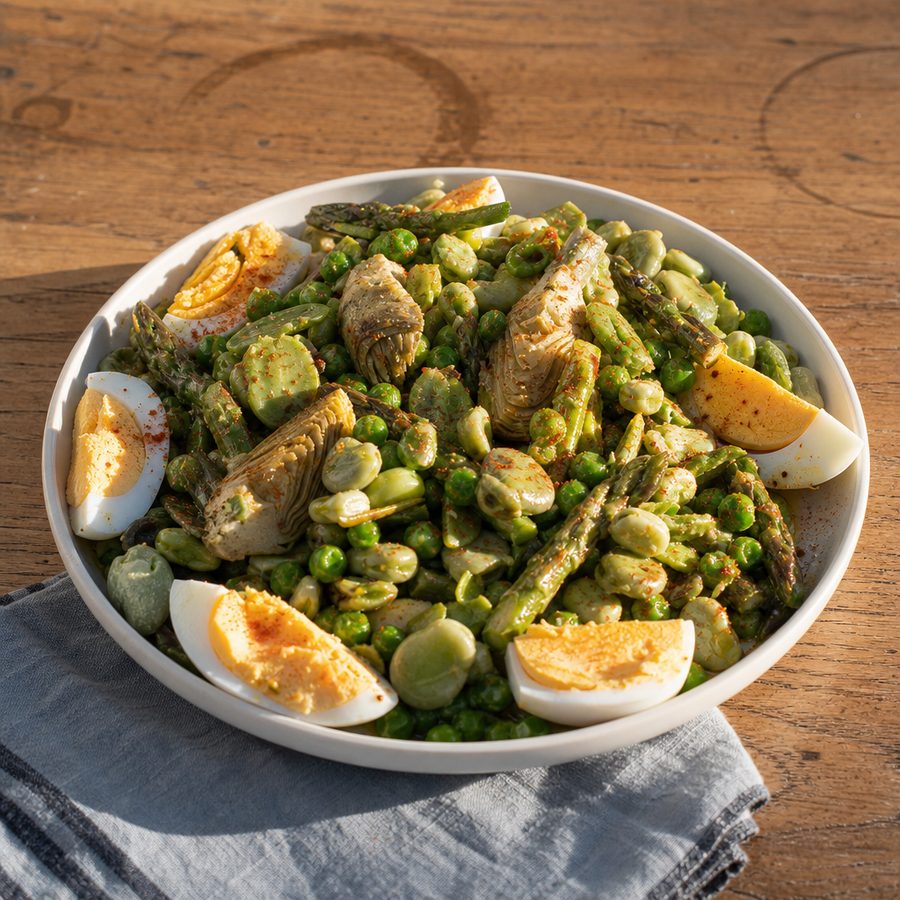
Artichokes, asparagus, peas, and fava beans blanched and then folded into a garlic and smoked paprika sofrito, with wedges of hard-cooked egg and a squeeze of lemon over the top.
Why You'll Love This Recipe
Menestra is what the vegetable growers of Navarra cook in spring, and the whole idea rests on treating each vegetable as its own thing. Artichokes, asparagus, peas, and favas all cook at different rates, so they go into the same pot of salted water one after another and come out the moment each is ready. It sounds fussy written down. In practice it is one pot of water, a timer, and a bowl of iced water beside the sink, and it takes about fifteen minutes from start to finish for all four. The order matters more than the exact timing does, since everything goes into the same pot of water and each vegetable picks up a little of what went in before it.
The second half is a shallow pan with olive oil, sliced garlic, and enough smoked paprika to turn the oil orange. The blanched vegetables go in with a splash of broth and get about two minutes to warm through and take on the flavor of the pan, no more, because the color is the point and it fades fast under heat. Eggs are what turn this from a side dish into dinner. Hard-cooked, quartered, and set around the bowl so the yolks break into the oil as you eat, they give the plate its backbone. Six eggs across four bowls is the right number, quartered lengthwise so the yolks sit face up in the oil.
I make this in April and May, when asparagus is cheap and the peas in the freezer are honestly better than anything at the store. It is also the dinner I make when I want vegetables to be the meal rather than the accompaniment to one. Serve it warm rather than hot, with lemon on the table and bread for anyone who wants it, and give people a spoon, because the last of the paprika oil at the bottom of the bowl is not something to leave behind. This is a Thursday dinner in my house, and it is what I cook when somebody who does not eat meat is coming, so that there is real food in front of them rather than an adapted version of something else.
Ingredients
- 2 cups quartered artichoke hearts (two 14 oz cans), drained and rinsed
- 12 oz asparagus, woody ends snapped off and spears cut into 2-inch lengths
- 6 large eggs
- 1 cup frozen green peas
- 3/4 cup cooked or frozen shelled fava beans, skins slipped off
- 2 tbsp extra virgin olive oil
- 3/4 cup vegetable broth
- 1/2 leek, white part only, halved lengthwise and sliced thin
- 2 tbsp lemon juice, plus wedges to serve
- 1/3 cup flat-leaf parsley, chopped
- 3 garlic cloves, sliced paper thin
- 2 tbsp fresh mint leaves, torn
- 1 tsp sweet smoked paprika
- 1/3 tsp fine sea salt
- 1/2 tsp freshly ground black pepper
Instructions
- Cook the eggs first: Lower the eggs into boiling water and cook for eleven minutes at a steady simmer, which sets the whites firm and the yolks through to the center. Move them straight into iced water for five minutes, then peel and quarter them lengthwise. Cooking them fully rather than leaving them soft matters here, and eleven minutes is the number I use for a large egg straight from the refrigerator.
- Blanch the vegetables in order: Bring a large pot of well-salted water back to the boil and set a bowl of iced water beside it. Boil the asparagus for three minutes, the peas for two, and the favas for two, lifting each with a slotted spoon into the iced water as it finishes. The artichoke hearts come from a can and need no boiling, so simply drain and rinse them. Drain everything well and pat it dry.
- Make the paprika oil: Warm the olive oil in a wide skillet over medium-low heat, add the leek and a pinch of the salt, and cook for four minutes until soft and sweet. Add the garlic and cook for one minute more, until it is pale gold and fragrant but nowhere near brown. Take the pan off the heat, stir in the smoked paprika, and let it bloom in the residual warmth for ten seconds so it does not scorch.
- Bring it together: Return the pan to medium heat, add the artichokes, and let them sit undisturbed for two minutes to pick up a little color. Pour in the broth, add the asparagus, peas, and favas, and toss for two minutes, until everything is hot and coated in the orange oil. Season with the rest of the salt and the pepper.
- Finish and serve: Take the pan off the heat, add the lemon juice, and scatter the parsley and mint over the top. Spoon it into shallow bowls, tuck the egg quarters in among the vegetables, and give each bowl a last thread of olive oil. Serve warm with lemon wedges.
Variations
- With white beans: Add a cup of drained cannellini beans with the artichokes for a heavier, more wintry bowl.
- Green garlic and lemon zest: Swap the leek for two stalks of green garlic in early spring and add the grated zest of a lemon off the heat.
- With shrimp: Slide half a pound of peeled shrimp into the pan with the broth and cover for three minutes, until opaque all the way through.
- Sherry vinegar finish: Use a tablespoon of sherry vinegar in place of half the lemon juice for a deeper, more Andalusian edge.
Storage & Leftovers
The vegetables keep three days in the refrigerator in a sealed container. Store the eggs separately, still in their shells if you have not peeled them all, because peeled hard-cooked eggs pick up other smells quickly and go rubbery sitting in a wet bowl.
This is one of the rare dishes I prefer at room temperature the next day. Take it out half an hour before eating, add a fresh squeeze of lemon and a little olive oil, and it comes back to life. If you want it warm, use a low burner and a couple of minutes only, since a second round of real heat turns the asparagus army green.
It does not freeze. Blanched asparagus and artichokes collapse into water when thawed, and the hard-cooked whites go tough and weeping. Cook the amount you plan to eat within a few days.
Notes & Tips
- Salt the blanching water properly: It should taste like the sea. Vegetables boiled in bland water taste bland no matter what you do to them afterward, and this is your only chance to season them from the inside.
- Keep the iced water close: Green vegetables carry on cooking with their own heat for a good while after they leave the pot. A hard chill is what locks in the bright color and the bite.
- Add the paprika off the heat: Smoked paprika burns in seconds and turns bitter. Take the pan off the burner, stir it into the warm oil, and it will stay sweet and red.
- Dry the vegetables before they hit the oil: Wet vegetables steam and dilute the paprika oil. A minute on a clean towel is all it takes.
- Slip the skins off the favas: The pale jacket around each bean is tough and a little bitter. Pinch one end and the bean pops out bright green, which is worth the five minutes it costs.
- Cook the eggs the full eleven minutes: You want the whites firm and the yolks set all the way through rather than loose in the middle, which is both the safer choice and the one that quarters neatly.
Nutrition & Mindful Eating
- Artichokes, asparagus, peas, and favas share this bowl with eggs, and the eggs are what make it a meal. The vegetables carry the fiber and the color, the legumes give it substance, and the yolks break into the paprika oil and pull everything together.
- Eggs cooked through to a firm yolk bring protein along with choline, which is one of the things eggs supply more generously than almost anything else on the table.
- Artichoke hearts are unusual among vegetables for how much fiber they hold, and much of it is inulin, the kind that feeds the bacteria in your gut. They also stay meaty and slightly firm in a hot pan, which is why they go in first.
- Fava beans and green peas both bring plant protein and folate, and their soft, mealy texture against the crisp asparagus is what keeps a bowl of vegetables from tasting like one note.
- Smoked paprika bloomed in warm olive oil is the flavor that makes this Spanish rather than simply green, and the oil carries it into everything, including the vitamin A and E that ride along in the fat.
- As you eat, break a yolk into the paprika oil and notice how the whole bowl changes, then take a moment between spoonfuls to see how satisfied a plate built on vegetables can leave you.
Frequently Asked Questions
Can I use fresh artichokes?
You can, and they are a different pleasure. Trim six small ones down to the pale hearts, rub them with lemon so they do not darken, and simmer them in the salted water for twelve to fifteen minutes until a knife slides in easily. Canned or jarred hearts are what most Spanish home cooks reach for on a weeknight, so use them without a second thought.
What if I cannot find fava beans?
Edamame is the closest match for size and bite, and butter beans work if you want something softer. You can also simply use more peas. What the favas bring is a slightly firm, mealy texture that keeps the bowl from being uniformly tender.
How do I keep the eggs from turning green around the yolk?
That gray-green ring comes from overcooking. Eleven minutes at a bare simmer, then straight into iced water, stops the cooking at the right moment and makes the shells release cleanly as well.
Is this filling enough to be dinner?
For four people with bread on the table, yes. The eggs and the two legumes give it real substance. If you want more, a handful of white beans warmed in with the artichokes is the way Spanish cooks stretch a menestra when there are extra people at the table.