
Spanish Potato and Pepper Hash with Collard Greens
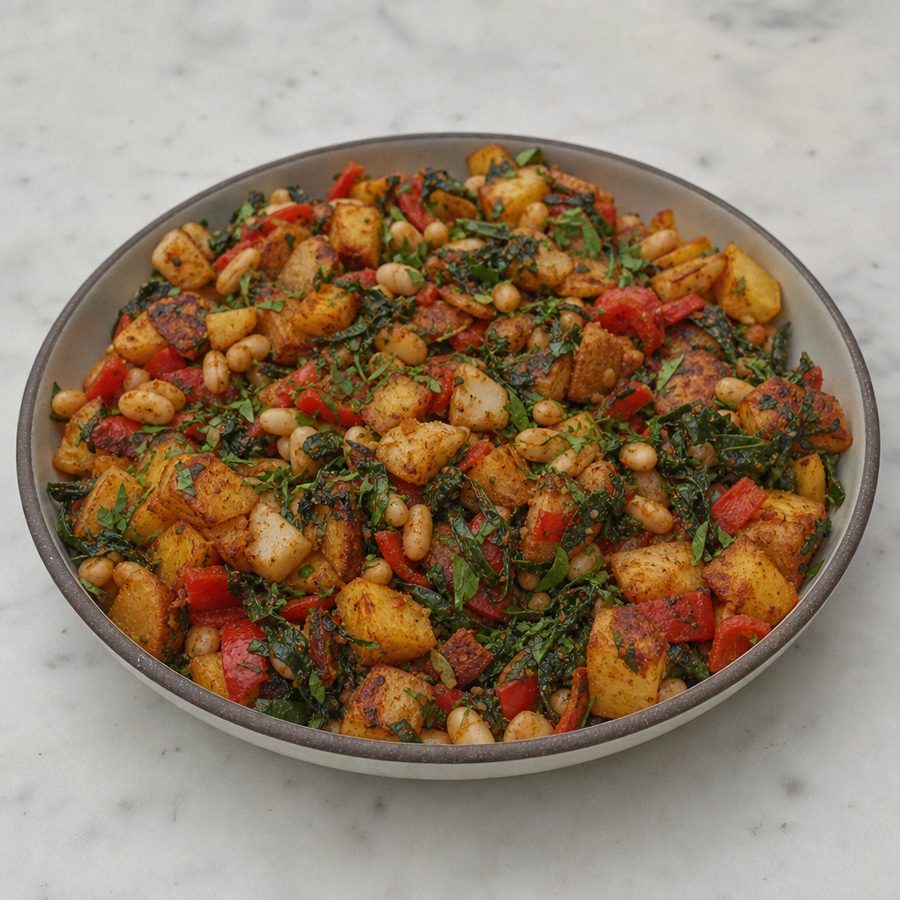
Diced Yukon Gold potatoes browned hard in olive oil with red peppers, onion, and smoked paprika, finished with ribbons of collard greens, white beans, and a splash of vinegar.
Why You'll Love This Recipe
This started as a way to use the last of a bunch of collards and turned into the skillet I make most often for lunch. Everything about it is Spanish bar food logic: potatoes fried properly in olive oil, sweet peppers cooked until they slump, garlic sliced rather than minced so it stays in pieces, and paprika added off the direct heat so it perfumes without scorching. What keeps it quick is the half-inch dice. Small cubes in a wide pan cook through in about twelve minutes, which is the difference between this being lunch and this being a project.
The eating is about the crust. You want potatoes that are genuinely browned on two or three faces and fluffy inside, which means putting them in a hot pan and then leaving them alone longer than feels natural. Collards go in at the very end and wilt in the residual steam, so they keep their color and a bit of chew rather than collapsing into the potatoes. The white beans warm through and go creamy, the peppers turn jammy, and the vinegar at the end cuts a clean line through all that olive oil.
I like it on a cold Saturday when lunch has to be substantial and made from what is already in the drawer. Potatoes, an onion, a pepper, a can of beans, and a bunch of hardy greens are all things that sit in a kitchen for a week without complaint. It also does the rare thing of being just as good at room temperature an hour later, which makes it useful for a lunch that people wander in and out of rather than sitting down to all at once.
Ingredients
- 1 3/4 lb Yukon Gold potatoes, scrubbed and cut into 1/2-inch dice
- 2 red bell peppers, seeded and cut into short, thin strips
- 1 large bunch collard greens (about 9 oz trimmed), stemmed and sliced into thin ribbons
- 1 (15 oz) can cannellini beans, drained and rinsed well, about 1 1/2 cups
- 1 large yellow onion, halved and sliced
- 3 tbsp olive oil, divided
- 4 cloves garlic, thinly sliced
- 2 tsp sweet smoked paprika
- 1 tbsp cider vinegar
- 1/4 cup chopped flat-leaf parsley
- 1 tsp dried oregano
- 3/4 tsp coarsely ground black pepper
- 1/4 tsp fine sea salt
Instructions
- Start the potatoes alone: Heat 2 tbsp of the olive oil in a 12-inch cast iron or heavy skillet over medium-high until it shimmers. Add the diced potatoes with the salt in as close to a single layer as you can manage, and leave them completely alone for 4 to 5 minutes. When you can smell them browning and a cube lifts away from the pan without sticking, turn them.
- Brown them on two more faces: Continue for 7 to 8 minutes more, turning every few minutes rather than stirring constantly, until most of the cubes are golden on at least two sides and a fork slides into one with only slight resistance. If they are browning faster than they are cooking through, drop the heat to medium and cover the pan for two minutes.
- Add the peppers and onion: Push the potatoes to one side, add the remaining 1 tbsp oil, and put the pepper strips and sliced onion into the cleared space. Cook them for 4 to 5 minutes, stirring the vegetables and leaving the potatoes be, until the peppers have gone limp and sweet and the onion edges are browning. Then stir the two halves of the pan together.
- Garlic, paprika, and beans: Drop the heat to medium-low, add the sliced garlic, and cook for one minute until it smells sweet. Sprinkle in the smoked paprika, the oregano, and the black pepper and stir for about 30 seconds, no longer, because paprika turns bitter fast over high heat. Fold in the drained beans and let them warm through for two minutes.
- Wilt the collards and finish: Pile the collard ribbons over the top, add 2 tbsp water, cover the pan, and let them steam for 3 minutes. Uncover and fold them through the hash. They should be bright green and still have a little bite. Take the pan off the burner, add the cider vinegar, stir once, and scatter the parsley over the top.
Variations
- Sherry vinegar and thyme: Use sherry vinegar in place of the cider vinegar and add a teaspoon of fresh thyme with the garlic, which pushes this further toward a Spanish tapas bar.
- Pimenton picante: Swap half the sweet smoked paprika for the hot kind, and add a pinch of cayenne if you want real heat behind the smoke.
- Chickpeas and cumin: Use chickpeas in place of the white beans and add a teaspoon of ground cumin with the paprika for a warmer, earthier pan.
- Fennel and orange: Add a sliced fennel bulb with the peppers and finish with a strip of orange zest grated over the top.
Storage & Leftovers
This keeps four days in a sealed container in the refrigerator and is genuinely good cold, which is not true of most hashes. The potatoes firm up and the paprika settles deeper into everything overnight, so day two tastes rounder and smokier than day one.
Reheat it in a dry skillet over medium-high, spread flat and left undisturbed for the first three minutes so the potatoes get their crust back. A microwave heats it evenly but softens the edges, and the browning is the whole point. A fresh splash of vinegar at the end brings it back to life either way.
It freezes for up to two months in flat sealed portions, though the potatoes come back a little grainier. Thaw overnight in the refrigerator and reheat in a pan rather than from frozen, and consider adding a handful of fresh greens as it warms to make up for the texture the freezer took.
Notes & Tips
- Cut the dice small and even: Half an inch is the number. Bigger cubes need twice the time and uneven ones give you burnt corners next to underdone middles.
- Use the widest pan you own: Nearly two pounds of potatoes need contact with metal to brown. A crowded pan steams them pale, and two batches beat one crowded batch every time.
- Leave them alone: Stirring is the enemy of a crust. Turn the potatoes three times in twelve minutes and no more, and let the pan do the work in between.
- Paprika goes in late and low: Off the high heat, into the oil, thirty seconds, then something wet. That is the whole technique, and it is the difference between sweet smoke and scorched dust.
- Save the vinegar for the end: Added while the pan is hot it just evaporates. Off the burner it stays sharp and lifts everything, which is what keeps a skillet this rich from feeling heavy.
Nutrition & Mindful Eating
- Potatoes, greens, and beans divide the work in this pan. The potatoes give it substance and the browned edges people eat it for, the collards bring the color and most of the minerals, and the white beans fold in creaminess along with the plant protein that makes it read as a meal rather than a side.
- Collard greens are sturdy enough to hold their shape after three minutes under a lid, and they are one of the most generous plant sources of calcium there is, with vitamin K alongside it. Sliced into thin ribbons they wilt without ever going to mush.
- Yukon Gold potatoes cooked and then cooled, which is what happens to the leftovers, develop resistant starch, a form of fiber that feeds gut bacteria. Cooked in their skins as they are here, they also keep their potassium, which sits mostly just under the surface.
- Cannellini beans warm through in two minutes and go creamy at the edges, and their soluble fiber is the kind that slows everything down in a useful way. A rinse under cold water before they go in is what lets the paprika and garlic come through.
- Smoked paprika is pimenton, made from peppers dried slowly over oak smoke, and it is the reason a pan of potatoes tastes like it came from somewhere. The cider vinegar goes in with the burner off so the acid stays sharp, which is why the last forkful tastes as bright as the first.
- As you eat, hunt out the potato cubes with the darkest crust and notice how the vinegar keeps arriving at the end of each bite, and let the pan sit for a minute before you decide on seconds.
Frequently Asked Questions
Can I use a different potato?
Yukon Gold is my first choice because it browns well and holds its shape without going waxy. Red potatoes work the same way. Russets will brown beautifully but break apart at the edges as you turn them, which gives you a rougher, more rustic pan.
Can I swap the collards for another green?
Yes. Kale behaves almost identically and needs the same three minutes under a lid. Mustard greens bring a peppery bite and cook a minute faster. Whatever you use, slice it into ribbons no wider than a finger so it wilts evenly.
Why did my paprika taste bitter?
It went in over heat that was too high, or it sat in the pan too long. Smoked paprika is a finishing spice as much as a cooking one. Drop the burner to medium-low, give it thirty seconds in the oil to release its color, and get something wet into the pan right after.
My potatoes stuck to the pan. What happened?
You turned them too soon. A potato releases itself when a crust has formed, and prying at it before that point tears the surface and leaves it welded to the metal. Give the first side a full four minutes without touching it, and make sure the oil was hot before the potatoes went in.