
Sticky Ginger-Orange Tempeh with Charred Green Beans
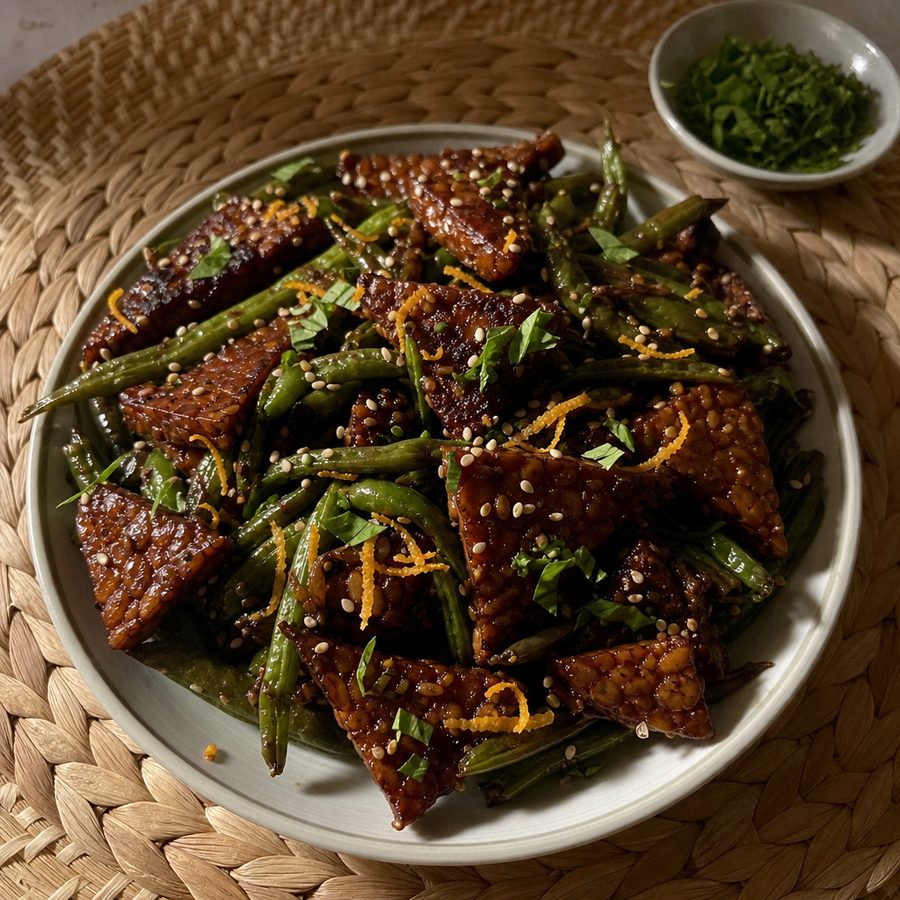
Tempeh browned hard in a hot skillet, tossed with charred green beans in a sticky glaze of ginger, orange, tamari, and maple, finished with sesame seeds.
Why You'll Love This Recipe
This is my Tuesday answer when nothing is thawed and I want dinner on the table before I lose interest in the idea of dinner. It is one skillet, two things in it, and a sauce you stir together in a measuring cup while the tempeh browns. Tempeh is the ingredient I wish more people knew what to do with. It costs very little, it keeps for weeks unopened, and unlike most plant proteins it holds its shape and takes on real color in a pan, so you end up with something that has a browned crust and a chew to it rather than something soft.
The glaze does the work that a base of onion and garlic normally would, and everything in it punches above its weight. Ginger grated on a microplane rather than chopped melts into the sauce and gives a heat that lands half a second after you swallow. Tamari brings the salt and the savory backbone, maple rounds the edges, and orange juice keeps the whole thing from tasting flat the way a plain soy glaze can. The zest goes in off the heat at the very end, so it stays perfumed rather than cooking away to nothing while the sauce reduces.
The green beans matter more than they look. Cooked hot and fast they blister into dark patches, stay squeaky in the middle, and give you something to bite against the tempeh. Cook them in the same pan and they pick up whatever glaze was left behind by the first round. This eats like a real dinner rather than a side dish that wandered onto the wrong plate, and the fat in the sesame oil is a good part of why it holds you through the evening. If anyone at the table wants more, a bowl of rice underneath takes it further without changing a single thing in the pan.
Ingredients
- 2 blocks (8 oz each) tempeh, cut into 1/2 inch triangles
- 1 lb green beans, trimmed
- 2 tbsp garlic-infused olive oil
- 1 tbsp toasted sesame oil
- 2 tbsp finely grated fresh ginger (a 2 inch piece)
- 1/4 cup certified gluten-free tamari
- 2 tbsp maple syrup
- 1 orange, zested and juiced (about 1/3 cup juice)
- 1 tbsp sesame seeds
- 1/4 tsp cayenne
- 1/2 tsp fine sea salt
Instructions
- Prepare the tempeh: Cut each block in half through its thickness, then cut each piece into triangles about half an inch thick. If your tempeh tastes bitter to you, steam the pieces in a covered pan with an inch of water for 5 minutes and dry them well. Otherwise go straight on.
- Mix the glaze: Stir the tamari, maple syrup, grated ginger, orange juice, and cayenne together in a cup. Keep the orange zest aside on its own, since it goes in at the very end. Have this ready before the pan gets hot, because once the tempeh is brown everything moves fast.
- Brown the tempeh: Heat the garlic-infused olive oil in a large skillet over medium-high until it shimmers. Lay the tempeh in a single layer with the salt and leave it undisturbed for 3 to 4 minutes, until the undersides are deep brown. Turn each piece and give it 3 minutes more, then move it to a plate.
- Char the green beans: Add the sesame oil to the same pan and turn the heat to high. Add the green beans and cook 5 to 6 minutes, tossing only twice, until they are blistered with dark spots and still snap when you bend one. Undercooking them is better than cooking them soft.
- Glaze everything: Return the tempeh to the pan, pour in the glaze, and let it bubble hard for 2 to 3 minutes, turning everything gently, until the sauce has reduced to a syrup that coats each piece and there is almost nothing loose left in the pan.
- Finish off the heat: Take the pan off the burner, scatter over the orange zest and the sesame seeds, and turn everything once more. Taste it and add a squeeze more orange if it needs lifting. Serve straight from the skillet while the edges are still crisp.
Variations
- Nutty: Whisk a tablespoon of peanut butter into the glaze for a rounder, richer sauce that clings even harder.
- Extra heat: Add a thinly sliced jalapeno with the green beans for a fresh green heat alongside the cayenne.
- Herb finish: Scatter torn fresh basil or mint over the pan off the heat for a cooler, brighter version.
- Firm tofu: Swap in pressed cubes of firm tofu, which need a couple of extra minutes to brown and a slightly hotter pan.
- Grain bowl: Serve over cooked quinoa or brown rice, doubling the tamari, maple, and orange juice so there is extra glaze to soak in.
Storage & Leftovers
Leftovers keep in a sealed container in the refrigerator for up to 4 days. Tempeh holds its texture far better overnight than most proteins do, and it soaks up whatever glaze is left in the container, so the second day tastes deeper and saltier and needs a fresh squeeze of orange.
Reheat in a dry skillet over medium-high heat for 3 to 4 minutes rather than in the microwave. Direct heat drives off the moisture picked up in the refrigerator and brings some of the browning back. A microwave leaves everything uniformly soft, which is edible but not what you cooked.
This freezes better than most weeknight dinners, up to 2 months in a flat sealed bag. The green beans lose some snap, so if you plan to freeze it, cook them a minute short. Thaw overnight and reheat in a hot dry pan, which brings the glaze back to a shine.
Notes & Tips
- Reach for the garlic-infused oil: Garlic flavor lives in fat, and the fructans that upset a sensitive gut stay behind in water, so an infused oil gives you the taste with none of the trouble. It is the reason a dish like this tastes cooked rather than careful.
- Cut the pieces evenly: Half inch triangles brown in the same three minutes across the pan. Thick and thin pieces together means some are dark and some are still pale when the glaze goes in.
- The pan has to be hot first: Tempeh dropped into a warm pan drinks up the oil and turns greasy rather than crisp. Wait for the shimmer, then commit and leave it alone.
- Grate the ginger, do not chop it: Grated ginger dissolves into the glaze and seasons every piece. Chopped ginger stays in lumps and gives you one fiery bite and eleven plain ones.
- Zest goes in last: The oils in orange zest are volatile and cook off in seconds. Added off the heat they perfume the whole pan, which is the difference between an orange glaze and a sweet salty sauce.
- Serving the rest of the table: Rice or rice noodles underneath make this a full dinner for anyone who wants more, and a fried egg on top of theirs is a good addition when the household is hungry.
Nutrition & Mindful Eating
- The tempeh, the green beans, and the sticky glaze hold this together. The tempeh gives the dish its body and most of its protein, the beans stay blistered and squeaky, and the ginger and orange sauce pulls the two into one thing rather than two things sharing a pan.
- Tempeh is whole soybeans bound by a culture, which is why it stays firm and nubbly and why it brings both protein and fiber, a combination that is unusual and part of why a plate of it eats so solidly.
- Fresh ginger grated rather than sliced melts into the sauce and gives a warmth that arrives a beat after the sweetness, and gingerol, the compound behind that heat, has long been studied for how it settles a restless stomach.
- Green beans cooked hot and fast keep their snap and pick up dark blistered patches where the sugars have caught, and they bring vitamin C and a little more fiber into a dish that would otherwise be all protein and glaze.
- The glaze reduces in about two minutes to something genuinely sticky, salty from the tamari, sweet from the maple, and lifted at the last second by orange zest that goes in off the heat so it keeps its perfume.
- As you eat, notice how the browned faces of the tempeh hold the glaze while the beans stay squeaky underneath, and slow down enough to find the orange sitting under all that salt.
Frequently Asked Questions
What exactly is tempeh?
Whole cooked soybeans bound into a firm cake by a culture, the way cheese is bound by one. That fermentation is why it is nutty and mushroomy rather than bland, and why it holds together in a pan. You will find it near the tofu, usually vacuum sealed.
Mine tasted bitter. What can I do?
Some brands carry more bitterness than others, and steaming the sliced tempeh for 5 minutes before browning takes most of it out. Drying the pieces thoroughly afterwards matters, since wet tempeh will not brown, and browning is the other half of the answer.
Can I use different vegetables?
Broccoli florets, bok choy, or thin strips of red bell pepper all work at about the same timing. Anything watery needs a hotter pan and more space, or the vegetables braise in their own liquid and never take on any color.
Does this fit a low-FODMAP dinner?
It does at this portion. Tempeh is generally well tolerated because fermentation breaks down much of what causes trouble in whole soybeans, and the flavor here is built on ginger, citrus, tamari, and garlic-infused oil rather than on onion and garlic themselves.