
Tempeh Jalfrezi with Red Peppers and Mustard Greens
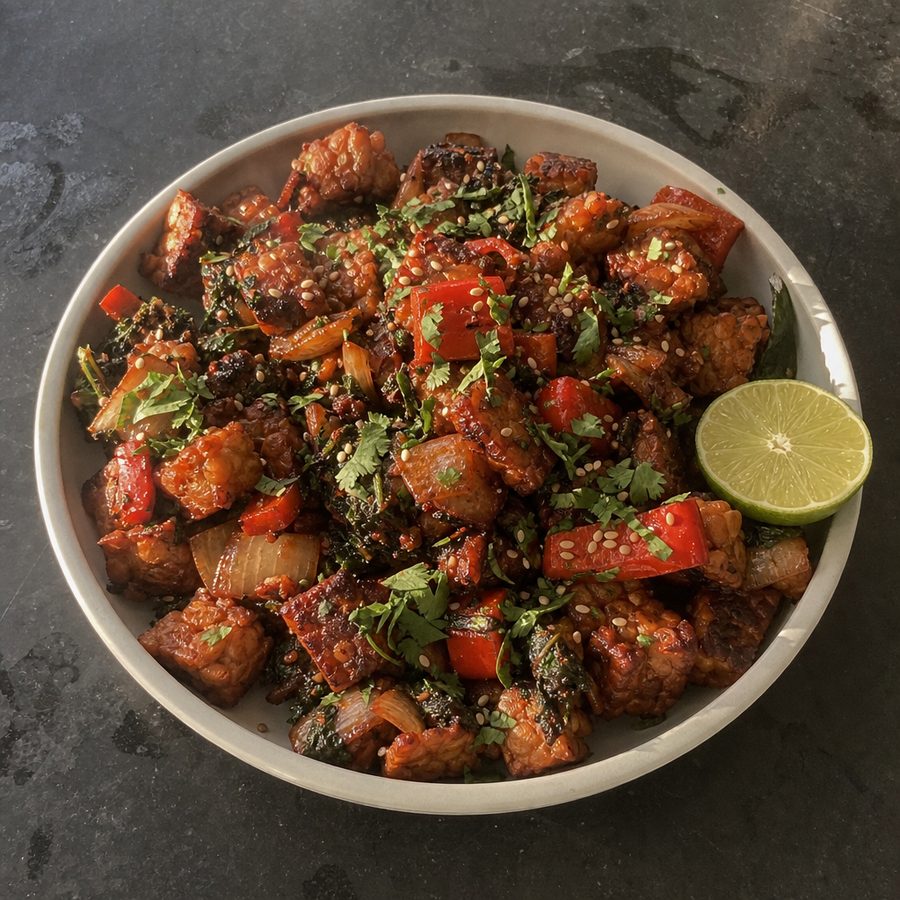
Cubes of tempeh seared hard with big squares of red pepper and onion, glazed in a dry tomato masala with cumin and green chile, and finished with torn mustard greens and lime.
Why You'll Love This Recipe
Jalfrezi is the dish I reach for when I want something with real char on it and no patience for a long simmer. The tomato is there to coat rather than to drown, so everything in the pan keeps its own shape and its own texture, and the peppers stay crisp enough to snap. Cutting them into big squares rather than strips is not fussiness. Large flat pieces sit against the metal and blister, while thin strips wilt before they ever brown. That contrast between charred pepper, nutty tempeh, and soft onion is most of what makes a plate of this interesting.
Tempeh is the right protein for this treatment because it browns rather than sticks. It is a firm cake of fermented soybeans, dense enough to take a hard sear and porous enough to soak up the tomato and the spice once the glaze forms. Some people find it faintly bitter straight from the package, and a five-minute steam before cubing takes that edge off completely if it bothers you. I usually skip it and let the browning and the lime do the work. Cubes rather than planks give you more corners, and the corners are the best part of every bowl.
The mustard greens go in last and only just wilt. They bring a peppery bite that plays against the sweetness the peppers develop as they char, and they keep the whole bowl from tasting one-note. This is a lunch I pack for work more often than I eat it standing at the stove, and it travels well because nothing in it is delicate. A wedge of lime in the container and a squeeze at the desk is enough to wake it back up hours later. I keep a lime in the bag with it and squeeze it over at the desk, which takes about five seconds and makes the difference between leftovers and lunch.
Ingredients
- 1 lb tempeh (two 8 oz blocks), cut into 3/4-inch cubes
- 2 red bell peppers, seeded and cut into 1-inch squares
- 1 large bunch mustard greens (about 8 oz of leaves), thick stems trimmed and leaves torn
- 1 medium red onion, cut into 1-inch squares and layers separated
- 1 1/2 cups cherry tomatoes, halved
- 2 1/2 tbsp tomato paste
- 5 garlic cloves, minced
- 1 1/2 tbsp finely grated fresh ginger
- 1 green chile, such as serrano or jalapeno, sliced into thin rings
- 1 1/2 tsp cumin seeds
- 1 tbsp coriander seeds, coarsely crushed
- 1 tsp ground turmeric
- 1 tsp coarsely ground black pepper
- 1 1/2 tbsp olive oil
- 1/4 cup sesame seeds
- 1 1/2 tbsp lime juice, from 1 lime
- 1/2 cup cilantro leaves and tender stems, chopped
- 1/4 tsp fine sea salt
Instructions
- Get the pan properly hot: Set a twelve-inch skillet or a wok over high heat and give it a full two minutes before anything goes in. A pan cooked this fast lives or dies on the heat it starts with. Add the olive oil, then the cumin and crushed coriander, and let them sizzle for about twenty seconds until they smell toasted and the seeds darken a shade.
- Brown the tempeh: Add the tempeh cubes in a single layer and leave them undisturbed for three minutes so that a deep golden face forms, since tempeh only browns where it stays in contact with the metal, then toss and cook two minutes more, until most sides have color. Scrape the cubes onto a plate and leave the pan on the heat, because anything left in it for the next six minutes would give back every bit of crust it just earned.
- Char the peppers and onion: Add the pepper and onion squares to the empty pan with the salt and spread them out. Leave them alone for two full minutes so that the undersides blister and blacken in spots, then toss and cook two minutes more. Peppers that get stirred give up their water and stew rather than charring. They should be marked and hot through while still snapping when you bite one.
- Build the glaze: Push the vegetables to one side, add the garlic, ginger, and green chile to the clear space, and cook for thirty seconds until fragrant. Stir in the turmeric, black pepper, and tomato paste and let the paste fry against the metal for a full minute, until it darkens from bright red to brick. Add the cherry tomatoes and cook two to three minutes, crushing them with the back of the spoon, until they collapse into a thick clinging glaze.
- Fold in the greens and finish: Return the tempeh with any juices and toss to coat every cube. Add the mustard greens in two handfuls and toss for about ninety seconds, just until they turn glossy and dark and lose their volume. Take the pan off the burner before the lime juice, sesame seeds, and cilantro go in, since lime goes flat over a live flame and cilantro loses its perfume within a minute, then toss once. Taste and adjust the lime.
Variations
- Mustard seed tempering: Add a teaspoon of black mustard seeds to the oil ahead of the cumin and wait for them to pop and skitter before anything else goes in, which pushes the pan toward a sharper southern accent.
- Tofu in place of tempeh: Use a pound and a half of firm tofu cut into slabs, browned hard on two sides. Tofu carries less of its own flavor, so let it sit in the glaze an extra minute before the greens go in.
- Paneer-style finish: Stir a handful of cubed mozzarella through the hot pan at the very end and let it soften into the glaze without melting away completely.
- More vegetables: A cup of halved green beans or a small head of cauliflower cut into small florets goes in with the peppers and takes the same charring, which stretches the pan to five or six servings.
Storage & Leftovers
Sealed in the refrigerator this holds four days and packs better than almost anything else I make for lunch. The glaze keeps working its way into the tempeh overnight, so the cubes taste more deeply of tomato and cumin on the second day than they did coming out of the pan. The peppers soften but keep some structure.
Reheat it in a hot dry skillet for three or four minutes, tossing only twice so the tempeh gets a chance to catch and crisp again. If it looks dry, a tablespoon of water loosens the glaze back up without diluting it. Eaten cold from the container it is also perfectly good, more like a warm salad in character.
It freezes for up to three months in flat sealed portions. The peppers give up water as they thaw and go noticeably softer, so freeze it knowing you are trading crispness for convenience. Thaw overnight in the refrigerator and reheat in a pan over high heat to drive off the extra moisture, then finish with fresh lime and cilantro.
Notes & Tips
- Cut everything in squares: Peppers and onion in 1-inch squares lie flat against the pan and blister. Thin strips have nowhere to sit and steam themselves soft before any color arrives.
- Fry the tomato paste: The minute the paste spends against hot metal is what takes it from sharp and tinny to deep and sweet. Watch for the color change from bright red to brick and do not skip it.
- Cook the tempeh separately: Browning it in an empty pan and pulling it out means it never has to compete with the water the vegetables release. It goes back in at the end and picks up the glaze anyway.
- Keep the heat high: This is a fast pan. If everything starts to look wet and dull rather than blistered, the burner is too low or the skillet is too small, and the dish turns into a stew.
- Salt with the vegetables: The quarter teaspoon goes in with the peppers and onion so it can draw out surface water early, while there is still time to cook it off.
- Save the greens for last: Ninety seconds is genuinely all mustard greens need. Longer and the peppery bite that earns them their place cooks straight out.
Nutrition & Mindful Eating
- Tempeh, mustard greens, and sesame seeds are the backbone of this pan. The tempeh brings the protein and most of the iron, the greens add fiber and calcium for almost nothing else, and the sesame scattered over the finished skillet quietly adds to both while giving every forkful something to crunch against.
- Tempeh is whole soybeans bound into a firm cake by fermentation, which is why it holds a sear the way it does and why it carries so much more fiber than most protein foods. It brings iron and calcium along with the protein, and the fermentation makes both a little easier for the body to get at.
- Mustard greens have a bite closer to horseradish than to lettuce, and it survives cooking as long as they only just wilt. Those dark leaves carry calcium, vitamin K, and folate, and they add real bulk to the bowl for very little in the way of calories.
- Red bell peppers turn sweet where they blister and stay crisp in the middle, and they are one of the better food sources of vitamin C there is, which sits usefully next to the iron the tempeh and sesame bring to the same forkful.
- Cumin, coriander seed, and turmeric are toasted in oil before anything else touches the pan, which is what gives the glaze its depth. Turmeric brings curcumin, and cooking it in fat at the start is how you get more of it than a sprinkle at the end would give you.
- As you eat, look for the blistered corners on the peppers and the nutty browned faces of the tempeh, and let a bowl this full of different textures slow your fork down enough to notice when you have had enough.
Frequently Asked Questions
Do I have to steam the tempeh first?
No, though it is worth trying once. Steaming for five minutes opens the cake up and mellows the faint bitterness some people notice. If you do it, pat the cubes very dry afterward or they will not brown. I skip the step most days and find the hard sear handles it.
Can I use green bell pepper?
You can, and it is closer to what most restaurants use. Green peppers are grassier and less sweet, which changes the balance against the tomato, so I add an extra teaspoon of tomato paste to compensate. A mix of one green and one red is my favorite version of the two.
What if I cannot find mustard greens?
Kale works with an extra minute in the pan, collard greens need two extra minutes and a splash of water, and arugula stirred in completely off the heat gives you a similar pepperiness with no cooking at all. Any of the three keeps the dish in the same place.
How hot is this?
Moderate as written. One serrano with its seeds left in gives a clear warmth that builds without taking over, and slicing the chile into rings spreads it evenly. Scrape the seeds out for something gentler, or add a second chile if your household likes heat.