
Tilapia and Plantain Pepper Pot
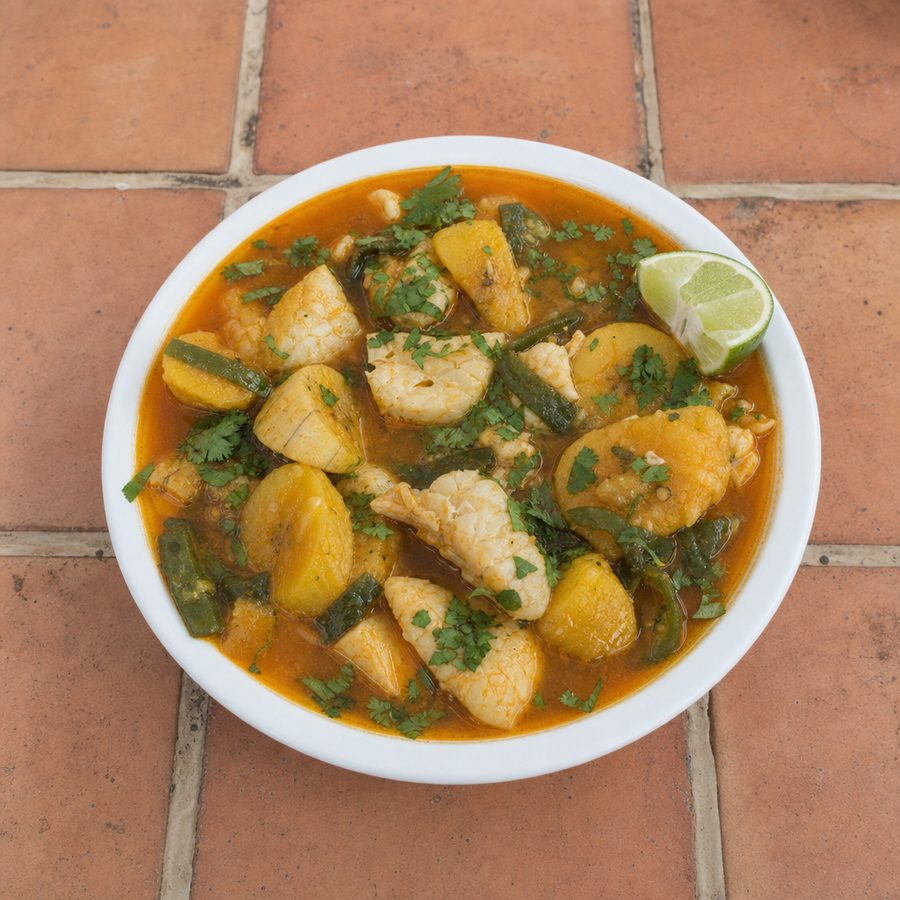
A brothy pot of tilapia and yellow plantain simmered in darkened tomato paste with ginger, poblano, and jalapeno, finished off the heat with lime and a lot of cilantro.
Why You'll Love This Recipe
A pepper pot is the kind of dinner I want on a cold night when a roast feels like too much work and a piece of fish on a plate feels like too little. Everything happens in one pot on the stove in about thirty-five minutes, and most of that is the plantain quietly softening while you do something else. It comes to the table in the pot with lime wedges and a stack of deep bowls, which is a good way to feed people who are hungry at different speeds. Buy plantains that are yellow with a few black freckles and still firm to a squeeze, since fully black ones turn to sweet mush.
The flavor is built in the first four minutes and everything after that is simmering. Ginger and crushed coriander go into hot garlic-infused olive oil and bloom for about a minute, until the kitchen smells sharp and warm. The tomato paste goes in next and cooks until it darkens from red to brick and starts to stick, which is where the depth in the broth comes from. Only then do the peppers, the crushed tomatoes, and the broth arrive. Fry the paste properly and this pot tastes like it has been going all afternoon, and skip it and you have ginger in salty water.
Tilapia is a delicate fish and it needs to be handled like one at the end. The pot comes down to a bare simmer, barely a bubble, and the pieces go in and sit for five or six minutes without stirring, which is enough to turn them opaque all the way through. Stir them and they shred. Then the heat goes off, the lime and the cilantro go in, and the whole thing tastes brighter than it did thirty seconds earlier. Served in a deep bowl with a plantain round split against the side and the broth chased with a spoon, it eats like a proper dinner.
Ingredients
- 1 1/2 lb tilapia fillets, cut into 2-inch pieces
- 2 firm yellow plantains (about 1 1/4 lb whole), peeled and cut into 1-inch rounds
- 1 large poblano pepper, seeded and cut into 1/2-inch strips
- 2 jalapeños, seeded and thinly sliced
- 3 tbsp finely grated fresh ginger
- 3 tbsp tomato paste
- 3/4 cup canned crushed tomatoes
- 4 cups chicken broth
- 2 tbsp garlic-infused olive oil
- 2 tsp coriander seed, crushed
- 2 bay leaves
- 1/4 tsp cayenne
- 3 tbsp fresh lime juice, plus wedges for the table
- 1/2 cup chopped fresh cilantro, leaves and tender stems
- 1 1/4 tsp fine sea salt, divided
- 1 tsp black pepper
Instructions
- Prep the plantain and peppers: Cut the ends off each plantain, run a knife through the skin along one of its ridges, and lift the peel away in sections with your thumb. Cut the flesh into 1-inch rounds. Seed the poblano and cut it into half-inch strips, and slice the jalapeños thin, keeping a few seeds if you want more heat.
- Bloom the ginger and spice: Warm the garlic-infused olive oil in a Dutch oven over medium heat for about a minute, until it smells faintly of garlic. Add the grated ginger, the crushed coriander, and the cayenne and stir constantly for 60 to 90 seconds, until the ginger stops smelling raw and the pot smells warm and sharp, since this is their only chance at hot oil before it fills with liquid.
- Darken the tomato paste: Add the tomato paste and cook for 2 to 3 minutes over medium-high, stirring the whole time, until it turns from bright red to deep brick and begins to catch on the bottom of the pot. That color is the savory base of the broth and there is no way to add it later.
- Build the broth: Add the poblano, the jalapeños, the crushed tomatoes, 1 teaspoon of the salt, and the black pepper, and scrape the bottom clean, because the dark layer the tomato paste left is where the pot gets its depth. Pour in the broth, drop in the bay leaves, and bring it to a simmer.
- Simmer the plantain: Add the plantain rounds and simmer, uncovered, for 15 to 18 minutes, with the lid off so that the broth reduces around them rather than staying thin, until a knife slides into a round with no resistance and the broth has reduced by about a quarter. The plantain gives up a little starch as it goes, which thickens the pot slightly.
- Poach the fish and finish: Season the tilapia with the remaining salt and lower the heat until the surface is barely moving. Slide the pieces in, cover, and cook for 5 to 6 minutes without stirring, since tilapia is delicate enough to fall into shreds if a spoon goes near it while it is cooking. Take the pot off the heat, add the lime juice and most of the cilantro, and fold once, gently. Fish out the bay leaves and serve in deep bowls with the rest of the cilantro and lime wedges.
Variations
- Coconut pepper pot: Stir a cup of canned coconut milk in with the last five minutes of the plantain for a rounder, richer broth.
- Greens in the pot: Wilt a few large handfuls of collard ribbons or swiss chard into the broth just before the fish goes in.
- Smoky version: Add a teaspoon of smoked paprika with the coriander, and a slice of bacon rendered in the pot first, for a smokier base.
- Shellfish pot: Use a pound of shrimp or mussels in place of the tilapia and add them at the very end, cooking only until they are heated through or open.
- Thicker and stewier: Mash three or four cooked plantain rounds against the side of the pot before the fish goes in so the broth thickens to a stew.
Storage & Leftovers
Leftovers keep 3 days in a sealed container in the refrigerator, and the broth is better on day two once the ginger and the plantain have had a night together. Store the fish in the broth rather than draining it, since tilapia dries out fast when it sits uncovered.
Reheat on the stove over low heat, covered, for about 5 minutes, and stop as soon as it steams. A hard boil breaks the fish into threads. The plantain firms up in the refrigerator and softens again as it warms, so give it the full time rather than rushing it.
The broth and plantain freeze well for up to 3 months, though the fish does not, so freeze the base before the tilapia goes in. Thaw overnight, bring it back to a bare simmer, and poach fresh fish in it for a dinner that takes about ten minutes.
Notes & Tips
- Buy the plantains yellow and firm: Yellow with black freckles gives you sweetness and a rounded shape that holds. Fully black plantains dissolve into the broth and make it cloying.
- Fry the paste until it sticks: The dark ring the tomato paste leaves on the bottom of the pot is the whole savory base. Scrape it up with the broth and the pot doubles in depth.
- Why the infused oil works: The flavor compounds in garlic dissolve into oil, and the FODMAPs that trouble your gut do not, so warming garlic in oil and straining the solids out carries the taste across and leaves the difficult part behind.
- Do not stir the fish: Tilapia holds together only if you leave it alone. Slide it in, put the lid on, and move the pot rather than the spoon.
- Lime after the heat is off: Acid simmered in a pot goes flat and slightly bitter. Off the burner it stays sharp, and you will reach for the salt less.
- Feeding people who are not on the plan: Fry a sliced onion in the pot before the ginger for their version, or keep the pot as written and put a spoonful of chopped raw onion and a shake of hot sauce on the table for whoever wants it.
Nutrition & Mindful Eating
- Fish, plantain, and chiles make one pot between them. The tilapia brings the protein and stays mild, the plantain gives the broth its body and a gentle sweetness, and the poblano and jalapeño keep the whole thing from tasting soft.
- Tilapia is a fine-textured white fish that turns into large opaque flakes in about five minutes of gentle poaching, which is most of the protein in the bowl arriving with very little fuss.
- Plantain simmered until tender goes creamy and slightly sweet, and it brings potassium and a starch that holds you the way a bowl of broth alone never would.
- Fresh ginger grated in at the start is where the warmth at the back of the throat comes from, and the gingerols behind that heat have been studied for their effect on nausea and digestion.
- Tomato paste fried until it darkens concentrates the lycopene along with the flavor, and the crushed tomatoes stirred in after keep a little brightness sitting behind that depth.
- As you eat, notice how the plantain has taken on the flavor of the broth while staying sweet in the middle, and let the heat of the chiles set your pace rather than eating faster than the bowl wants you to.
Frequently Asked Questions
Can I use a firmer fish?
Yes, and it is easier to handle. Cod, halibut, or mackerel all work at the same weight, though cod and halibut want 7 to 8 minutes rather than 5 or 6 because the pieces are thicker. Shrimp are good here too, added off the heat for 3 minutes so they warm through without tightening.
My plantains were hard to peel. What am I doing wrong?
They were probably still green. A yellow plantain peels like a stiff banana once you cut through the skin along a ridge, and a green one does not. If you are stuck with green ones, cut them into rounds first, then trim the peel off each round with a paring knife, and add 5 minutes to the simmer.
How spicy is this?
Mild to medium as written, since the poblano is more green than hot and the jalapeños are seeded. Leave the jalapeño seeds in, or add another quarter teaspoon of cayenne with the ginger, for something with real heat behind it. The lime at the end reads as heat to some people as well.
Does this fit a low-FODMAP dinner?
It does. The depth here is fried tomato paste, a lot of fresh ginger, toasted coriander, and the chiles rather than onion or garlic, so nothing important disappears if those are pulled from your plan. Garlic-infused olive oil carries the garlic note, and firm yellow plantain and this much tomato both sit in the well-tolerated range.