
Toasted Sesame Tempeh with Asparagus and Spinach
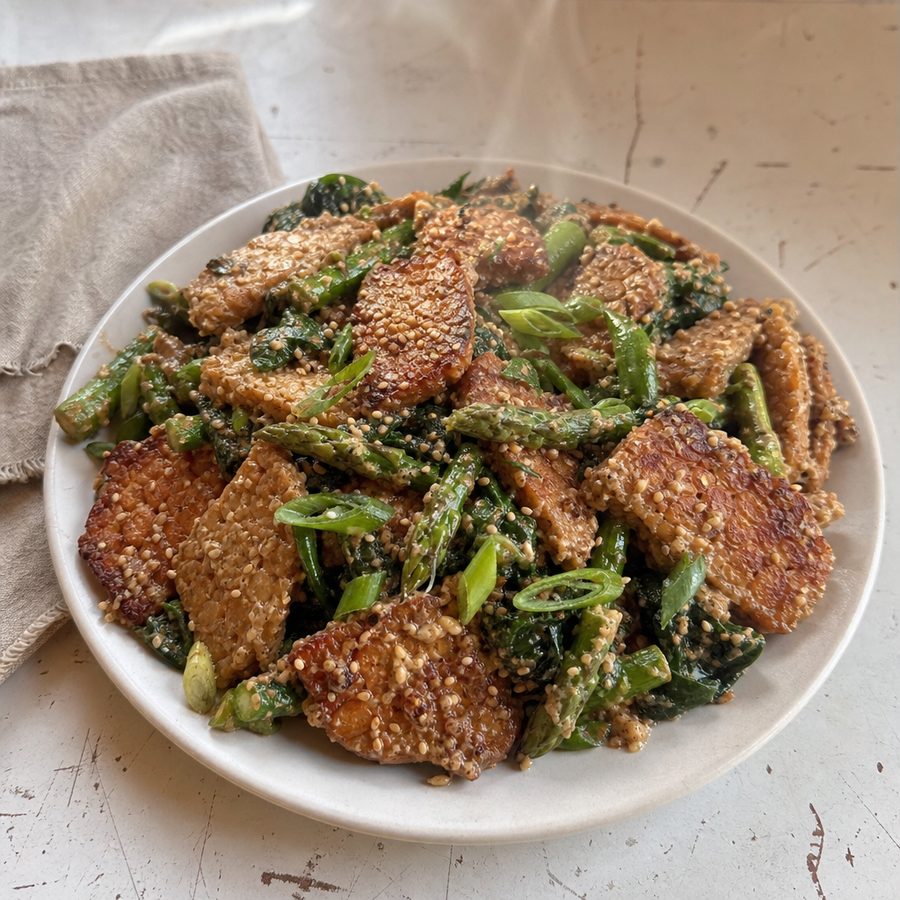
Slabs of tempeh browned in a skillet over asparagus and wilted spinach, all of it coated in a goma-ae dressing of sesame seeds crushed warm from the pan with soy, rice vinegar, and yuzu.
Why You'll Love This Recipe
Goma-ae is the Japanese way of dressing a vegetable in ground sesame, and it is one of those preparations that seems too simple to matter until you eat it. The seeds are toasted, then ground in a mortar or a small food processor while they are still warm, which is when the oil comes out and the whole thing turns from dry crumbs into a fragrant sandy paste. Loosened with soy sauce and a little acid, it coats vegetables in a way no vinaigrette can. I built a whole dinner around it because a dressing that good deserves more than a side dish.
Tempeh is what turns it into a meal rather than a side. Sliced into thin slabs and browned hard on both faces, it gets a crust that stands up to a heavy dressing and a nutty, faintly savory flavor that is already halfway to the sesame before the two of them meet. The asparagus goes into the same pan for barely three minutes, so it stays bright and squeaks against the tooth, and the spinach goes in last with the burner switched off, collapsing in the residual heat rather than cooking. Everything meets the dressing in the pan and comes out coated rather than swimming in it.
I make this in spring when the asparagus is worth buying, and with green beans or broccoli florets the rest of the year. It takes twenty five minutes start to finish, most of that hands off while the tempeh browns and I do nothing at all, and it is one of the few dinners that is genuinely as good at room temperature as it is hot from the skillet. That makes it useful on the evenings when people eat at different times, and it packs into a lunch container the next day better than almost anything else I cook on a weeknight.
Ingredients
- 1 lb tempeh (two 8 oz packages), each cut crosswise into 8 slabs
- 1 lb asparagus, woody ends snapped off, cut into 2-inch lengths
- 7 oz spinach (about 8 packed cups), stems trimmed
- 4 tbsp sesame seeds, toasted, 3 tbsp crushed and 1 tbsp left whole
- 4 scallions, thinly sliced on a sharp angle
- a 1 1/2-inch piece of fresh ginger, peeled and grated
- 3 garlic cloves, grated
- 2 tbsp soy sauce
- 1 1/2 tbsp unseasoned rice vinegar
- 1 1/2 tbsp yuzu juice, or lemon juice
- 1 tbsp olive oil
- 2 tsp toasted sesame oil
Instructions
- Toast and crush the sesame: Put all the sesame seeds in a dry skillet over medium heat and shake it constantly for two to three minutes, until they smell nutty and begin to pop and jump. Tip 3 tbsp into a mortar or a small food processor while they are still warm and grind to a coarse, sandy paste. Set the last tablespoon aside whole.
- Mix the dressing: Stir the soy sauce, the rice vinegar, the yuzu juice, the grated ginger, the grated garlic, and the sesame oil into the crushed seeds. It will look thick and grainy, which is correct. If it is stiff enough to hold a spoon upright, loosen it with a tablespoon of water so it pours slowly.
- Brown the tempeh: Wipe the skillet, set it over medium-high, and add the olive oil. Lay the tempeh slabs down in a single layer and leave them for three minutes, until the undersides are deep bronze. Turn each one and give it two to three minutes more. Work in two batches if they do not fit without touching. Move them to a platter.
- Cook the asparagus: Add the asparagus to the hot pan with two tablespoons of water and cover it for two minutes. Uncover, toss, and cook one minute more, until the spears are bright green and still firm at the center. A piece should bend a little and then break rather than flop.
- Wilt the spinach and dress it: Turn the burner off, pile the spinach onto the asparagus, and fold it over with tongs for a minute until it has just collapsed. Pour in the sesame dressing and toss until everything is coated. Spread it onto the platter, lay the tempeh over the top, and finish with the scallions and the whole sesame seeds you held back.
Variations
- Tofu slabs: Use a pound and a half of pressed firm tofu cut into planks and browned four minutes a side, which gives a softer, creamier center under the same dressing.
- Green bean goma-ae: Swap the asparagus for a pound of green beans and cook them five minutes under the lid so they go tender rather than crisp.
- Chile heat: Stir a teaspoon of gochugaru into the dressing for a warm red edge that suits the nuttiness of the sesame.
- Shiso and citrus: Tear a handful of shiso leaves over the finished platter and add an extra squeeze of yuzu for a sharper, more perfumed version.
- Cold noodle salad: Chill everything, chop the tempeh smaller, and toss it with cucumber ribbons and extra dressing for a summer plate.
Storage & Leftovers
This keeps three days in the refrigerator. The dressing thickens as it sits and clings even harder on day two, and the tempeh stays firm. The asparagus loses some of its brightness, which is the only real cost, so if you are cooking deliberately for leftovers, undercook it by half a minute.
Eat it cold or at room temperature rather than reheating, since that is how goma-ae is usually served in Japan and the flavors are clearer when the dish is not hot. If you want it warm, a dry skillet over medium for two or three minutes wakes up the tempeh crust.
I would not freeze it. Sesame dressing separates on thawing and asparagus and spinach both come back watery. The dressing on its own, though, keeps a week in a jar in the refrigerator and is worth making double for that reason alone.
Notes & Tips
- Grind the seeds warm: Cooled seeds shatter into dry crumbs. Warm ones give up their oil and come together into the sandy paste that makes this dressing cling to everything.
- Shake the pan, do not stir it: Toasting sesame is a two minute job and it goes from tan to burnt in seconds. Constant shaking keeps them moving and lets you smell the moment they are ready.
- Slice the tempeh thin: Thin slabs give you more surface for the crust and cook through in five minutes. Thick blocks brown outside while the middle stays dense and dry.
- Splash of water for the asparagus: Two tablespoons under a lid steams the spears through in two minutes while the pan heat still browns them where they touch metal. Dry-cooked asparagus takes twice as long and goes leathery.
- Spinach goes in off the heat: Residual pan heat is plenty. Spinach cooked over an active burner releases water that thins the dressing and leaves it sliding off everything.
- Dress at the very end: Sesame paste scorches if it hits a hot pan over a live flame. Add it once the burner is off and toss quickly so it coats rather than cooks.
Nutrition & Mindful Eating
- Tempeh, sesame, and a large amount of green vegetable make this work as a whole plate. The tempeh carries the protein, the sesame dressing brings the fat and the aroma, and the asparagus and spinach add fiber and bulk for very little carbohydrate.
- Tempeh is whole soybeans bound by a culture into a firm cake, which is why it slices cleanly and browns like something solid. That intact bean structure is where its fiber comes from, and fermentation gives it the nutty, slightly savory flavor that suits sesame so well.
- Sesame seeds crushed warm release their oil, and that is what turns a spoonful of them into a dressing that coats. For something used by the tablespoon they carry a striking amount of calcium, most of it in the hulls that stay on when the seeds are unhulled.
- Asparagus cooked briefly keeps its snap and its grassy sweetness, and the spears bring folate along with a kind of fiber that feeds the bacteria in the gut.
- Spinach wilted in residual heat rather than boiled holds onto its color and its texture, and the dark leaves carry vitamin K, magnesium, and iron into a dish that already tastes green.
- As you eat, pay attention to the grainy sesame against the snap of the asparagus, and notice how a plate this savory asks to be eaten slowly rather than pushed through.
Frequently Asked Questions
Can I use tahini for the dressing?
You can, and it makes a smoother sauce, though it is a different thing. Two tablespoons of tahini stirred with the soy, vinegar, and yuzu gets you a silky dressing, while crushed seeds give the grainy texture that is the whole character of goma-ae. I would do the seeds when I have five minutes and the tahini when I do not.
Do I have to grind the seeds by hand?
No. A mortar and pestle is traditional and pleasant, and a small food processor or a spice grinder does it in fifteen seconds. What matters more than the tool is grinding them warm, since that is when the oil releases and the crumbs come together into a paste.
Should I steam the tempeh first?
It is optional. Ten minutes in a steamer softens tempeh and takes off any bitter edge, which some people notice and others never do. I skip it here because the sesame dressing is assertive enough to cover it, and because a drier slab browns faster in the pan.
What else works in place of asparagus?
Green beans, broccoli florets, snow peas, or shredded cabbage, all cooked the same way with a splash of water under a lid. Spinach on its own is the most traditional version of goma-ae, so a double quantity of spinach and no asparagus at all is perfectly legitimate.