
Tomato-Braised Sardines over Garlicky Collard Greens
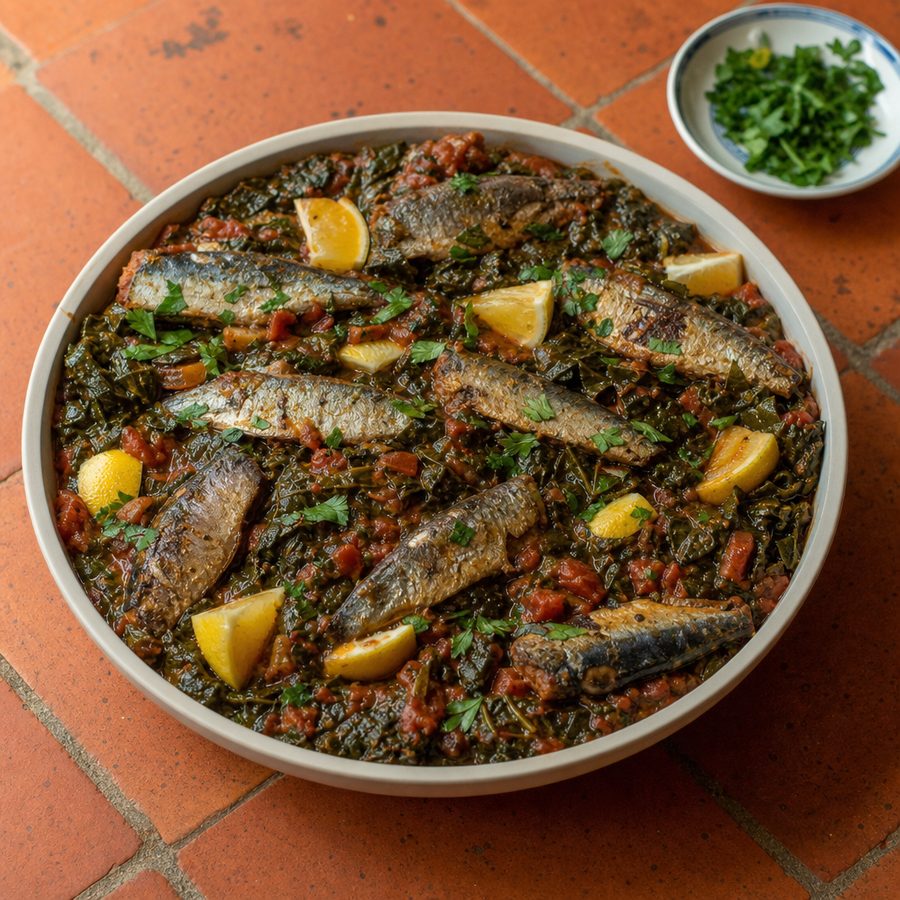
Collard ribbons braised soft in garlicky tomato, with whole sardines slipped in at the end to warm through, finished with lemon and torn parsley.
Why You'll Love This Recipe
The refrigerator is bare on a Tuesday and I still want dinner to taste like somebody cooked. Everything except the greens comes out of the cupboard, and the greens keep for a week and a half in the crisper, so this is genuinely a pantry dinner rather than a pantry dinner in name only. It takes about fifty minutes, forty of which are the collards quietly doing their thing on a low burner. If you have been buying sardines with good intentions and then leaving the tins at the back of the shelf, this is the recipe that empties them, because the tomato and the garlic meet the fish halfway.
Order comes first here, and technique a distant second. Onion and sliced garlic go into the oil first and cook until the garlic is pale gold and smells sweet, then the oregano goes in for thirty seconds to bloom in the fat. The tomatoes and the collards braise together for a long stretch, and that is where the dish is made: the greens give up their liquid, take on the tomato, and turn from squeaky and tough into something silky. The sardines go in only at the very end, laid on the surface and covered, so they warm through whole instead of breaking up into the sauce.
It is a deeply savory plate that eats like a stew and comes together like a skillet supper. The collards are sweet and faintly smoky from the long cook, the tomato has reduced to something thick enough to coat them, and each sardine is soft, salty, and rich against all that greenery. The lemon is not optional. Acid at the end is what keeps a dish this savory from flattening out on the second and third bite, and it makes the whole pan taste brighter than the ingredient list suggests. A serving of this is a real dinner on its own.
Ingredients
- 4 tins (3.75 oz each) sardines packed in olive oil, drained
- 2 bunches collard greens (about 1 lb), stems removed and leaves cut into 1/2-inch ribbons
- 1 1/2 cups canned crushed tomatoes
- 1 medium yellow onion, halved and thinly sliced
- 5 garlic cloves, thinly sliced
- 2 tbsp extra-virgin olive oil
- 2 tsp dried oregano, crumbled between your fingers
- 1/4 tsp cayenne, or to taste
- 1/2 tsp coarsely ground black pepper
- 1 1/2 tbsp fresh lemon juice, plus wedges for the table
- 1/3 cup flat-leaf parsley leaves, torn
Instructions
- Strip and ribbon the collards: Fold each collard leaf in half along the stem and pull the leaf away, or run a knife down either side of the rib. Stack six or eight leaves, roll them into a fat cigar, and slice crosswise into half-inch ribbons. Wash them in a bowl of cold water and lift them out rather than pouring, so the grit stays behind.
- Soften the onion and garlic: Warm the olive oil in a wide, deep skillet or Dutch oven over medium heat. Add the sliced onion and cook for six to eight minutes, stirring now and then, until it is translucent and just starting to color at the edges. Add the sliced garlic and cook two minutes more, until it is pale gold and smells sweet rather than sharp. Do not let it brown.
- Bloom the oregano and add the tomato: Crumble the oregano and the cayenne into the pan and stir for thirty seconds, until the fat looks rusty and the kitchen smells of it. Pour in the crushed tomatoes with a half cup of water, add the black pepper, and bring it to a lively simmer.
- Braise the greens: Add the collards in two or three handfuls, stirring each one down before the next goes in. Once they all fit, lower the heat, cover, and cook for thirty to thirty-five minutes, stirring every ten. They are ready when a ribbon is completely tender between your fingers and the sauce has thickened enough to sit on a spoon. Add a splash of water if it tightens up before the greens are soft.
- Warm the sardines through: Take the sardines out of their tins carefully so they stay whole and lay them on top of the greens in a single layer. Spoon a little sauce over each one, cover the pan, and leave it over low heat for four to five minutes, just until they are hot all the way through. Any longer and they start to fall apart.
- Finish with lemon and parsley: Take the pan off the burner, squeeze the lemon juice over the whole surface, and scatter the torn parsley across the top. Serve straight from the pan with extra lemon wedges, spooning greens onto each plate first and setting the sardines over them.
Variations
- Olives and capers: Add a handful of chopped kalamata olives with the tomatoes for a puttanesca direction, salty enough that you will want extra lemon at the end.
- Fennel and orange: Cook a thinly sliced fennel bulb with the onion and swap half the lemon juice for orange juice and a wide strip of zest.
- Smokier: Stir a teaspoon of smoked paprika in with the oregano for a Spanish-leaning version that tastes like it came off a grill.
- Mustard greens: Use mustard greens or a mix of mustard and collard for a peppery bite that stays sharp even after the long braise.
- Toasted almond finish: Scatter a small handful of chopped toasted almonds over the top with the parsley for crunch against the soft greens.
Storage & Leftovers
Leftovers keep for three days in a sealed container in the refrigerator, and the greens are honestly better on day two, once they have sat in the tomato overnight. Store the sardines on top of the greens rather than stirred through, so they stay in one piece when you go to reheat them.
Reheat gently in a covered skillet over medium-low with a spoonful of water, five or six minutes, until it steams. The microwave works if you cover the bowl and stop halfway to stir the greens, though the fish softens more that way. A fresh squeeze of lemon after reheating brings the whole thing back to where it started.
I would not freeze this one. The collards come through freezing fine, but the sardines go grainy and the sauce separates as it thaws. If you want a head start, braise the greens in the tomato up to three days ahead and add the fish only when you are ready to eat.
Notes & Tips
- Buy sardines packed in olive oil: They come out of the tin whole and firm. The ones packed in water tend to arrive already broken, which is fine for mashing on toast and wrong for a dish where they sit on top.
- Slice the garlic, do not mince it: Sliced garlic softens into sweet little slivers over a long braise. Minced garlic in a pan this hot goes bitter before the tomatoes are even in.
- Crumble the oregano in your palm: Rubbing dried oregano between your hands as it goes in breaks the leaves open and wakes up the oil in them. Whole flakes dropped in stay woody.
- Lift the greens out of the wash water: Collards hold sand in their folds. Swish them in a big bowl, then lift them out with your hands so the grit stays on the bottom rather than going back onto the leaves.
- Keep the lid on: The braise needs steam. An uncovered pan reduces too fast and you will end up adding water every few minutes and still finding tough ribbons at the end.
- Taste before you reach for the salt: The sardines and the tomatoes both bring seasoning of their own into the pan. Taste after the lemon goes in, when the flavors have settled, and adjust from there.
Nutrition & Mindful Eating
- Sardines, collards, and tomato are the three legs of this dish. The fish brings the richness and most of the protein, the greens bring bulk and fiber, and the tomato ties them together with enough acid to keep a savory pan from turning heavy.
- Sardines are meant to be eaten whole, soft bones and all, and those bones are exactly where the calcium sits. They also carry the long-chain omega-3 fats and vitamin D, which is a lot of work for a fish that comes out of a tin.
- Collard greens hold their shape through a long braise in a way most greens cannot, and they give up calcium of their own along with vitamin K and folate. Cooking them this far turns the mineral bitterness sweet.
- Sliced garlic and dried oregano do the aromatic work here. Oregano is one of the more concentrated dried herbs on the shelf, and two teaspoons crumbled into hot oil carry more flavor than a fistful of the fresh leaves would.
- Fish this rich over greens this substantial holds you well past the evening. Protein and fat are doing most of that, and the fiber in the collards is what makes the plate feel like a full dinner rather than a course.
- As you eat, notice how completely the collards have given way and how the lemon lifts the sardines out of the tomato, and let the pan sit on the table long enough that dinner is something you attend to rather than something you finish.
Frequently Asked Questions
Can I use a different tinned fish?
Mackerel fillets or tinned trout both work and are milder if sardines are a step too far for your table. Keep the weight about the same and add them at the same point. The one thing to know is that the soft edible bones in sardines are part of what makes them worth eating, so a boneless fillet is a different dish.
My collards are still tough after half an hour. What now?
Older, larger leaves can want closer to fifty minutes, and there is no shortcut. Keep the lid on, keep the heat low, and add a quarter cup of water every time the pan looks dry. Collards forgive a long cook completely, so err on the side of longer than you think.
Do I drain the oil from the tins?
Yes, drain it off. The pan already has olive oil in it, and the tin oil carries a strong fish flavor that can take over the sauce. If you like that flavor, spoon a teaspoon of it back in at the end rather than pouring the whole tin in.
What do I serve alongside?
It stands on its own as written, and that is how I usually eat it. If you want to stretch it further, a piece of grilled bread rubbed with a cut garlic clove is the traditional move, and a spoonful of farro or brown rice underneath will soak up the sauce.