
Toulouse-Style Cassoulet with Duck and White Beans
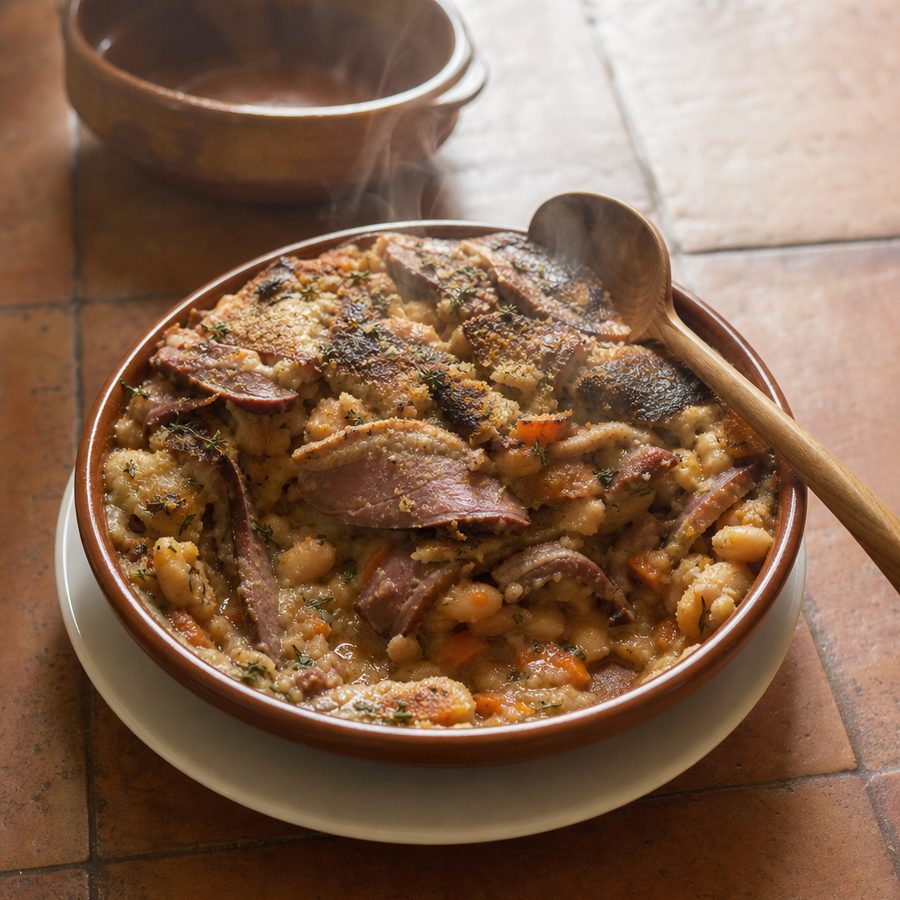
White beans baked slowly with duck breast, carrot, thyme, and tomato until the top sets into a skin you break with a spoon and the beans underneath go completely soft.
Why You'll Love This Recipe
A real cassoulet is a three-day argument between four towns in southwest France, and I am not going to pretend this is that. What I have kept is the part that makes cassoulet worth eating: beans baked long enough and slowly enough that they collapse into their own liquid, with a crust on top that you break and press back down more than once so it forms again. There are no breadcrumbs in this, which is how they do it in Castelnaudary. The crust is made of nothing but bean skins and the fat that rises through them.
Duck is what carries it. I sear the breasts skin down in a cold pan first, which renders out most of the fat slowly and leaves the skin crisp, and then a spoonful of that fat goes back in with the onion and carrot to build the base. The breasts finish in the oven on top of the beans, so their juices run down through everything. The result is a dish that tastes far richer than the amount of meat in it would suggest, which is precisely the logic of a peasant casserole in the first place.
This belongs to a cold Sunday, or a night when people are coming and you want one dish on the table and nothing else to do. It takes about ninety minutes end to end and almost all of that is the oven working without you. It is also the rare bean dish that people describe as a treat. Serve it with something sharp alongside, a green salad with a mustardy dressing, and there is nothing else the meal needs.
Ingredients
- 2 boneless duck breasts (about 11 oz total), skin scored in a crosshatch
- Two 15 oz cans navy or cannellini beans, drained and rinsed (about 2 1/4 cups)
- 2 cups chicken broth
- 1 small yellow onion, chopped fine
- 1 medium carrot, cut into small dice
- 2 1/2 tbsp tomato paste
- 3 garlic cloves, minced
- 1 tbsp olive oil, if you need it
- 1/3 cup chopped fresh flat-leaf parsley
- 1 tbsp fresh thyme leaves, or 1 tsp dried
- 2 dried bay leaves
- 1 tsp coarsely ground black pepper
- 1/4 tsp fine sea salt
Instructions
- Render the duck: Pat the duck breasts dry, season them with the salt and half the black pepper, and lay them skin down in a cold, dry ovenproof skillet or Dutch oven. Set it over medium-low heat and leave them for eight to twelve minutes as the fat runs out and the skin turns deep gold and crisp. Turn them, give them ninety seconds on the flesh side, and move them to a plate. Pour off all but about a tablespoon of the fat.
- Build the base: Add the onion, carrot, and a pinch of salt to the pan with the reserved fat, adding the olive oil only if the pan looks dry. Cook over medium heat for seven to eight minutes, scraping up the browned bits, until the onion is soft and the carrot has lost its hard edge. Stir in the garlic, thyme, and tomato paste and cook two minutes more, until the paste darkens from red to brick and smells sweet rather than sharp.
- Add the beans: Tip in the beans, the bay leaves, the rest of the pepper, and the broth. Stir gently so the beans stay whole, bring it to a simmer, and let it bubble for five minutes. The liquid should just cover the beans. Add a splash more broth or water if it does not, since the oven will take a good deal of it.
- Bake and break the crust: Lay the duck breasts on top, skin up, and slide the uncovered pan into a 325°F oven. Bake for fifty minutes. Twice during that time, at about twenty minutes and again at forty, pull it out and press the browned skin on the surface back down into the liquid with the back of a spoon so a new one forms. That repeated breaking is what builds the flavor at the top.
- Rest and serve: Take the pan out when the surface is set and browned and the beans no longer look soupy. Move the duck to a board, let it rest five minutes, then slice it across the grain about a quarter inch thick and lay the slices back over the beans. Scatter the parsley over everything and take it to the table in the pan.
Variations
- With sausage: Brown two coarse pork sausages, slice them thick, and tuck them into the beans before baking for a version closer to what Toulouse would serve.
- Garlic and parsley finish: Chop a clove of garlic with the parsley and lemon zest and scatter it over at the very end for a sharper, greener top note.
- More vegetables: Add a diced fennel bulb with the onion and carrot, which sweetens the base and makes the dish lighter on its feet.
- Duck legs: Use two confit duck legs in place of the breasts, tucked into the beans at the start and left in for the whole bake.
Storage & Leftovers
This keeps five days in a sealed container in the refrigerator and it is better on day two than it was on day one, which is true of every bean dish worth making. Store the sliced duck on top of the beans rather than separately so it stays moist.
Reheat it covered in a 325°F oven for twenty to twenty five minutes with a splash of broth stirred through first, since the beans drink most of the liquid overnight. Uncover it for the last five minutes to let the top set again. A microwave will heat it but you lose the crust entirely.
It freezes for up to three months. Freeze it in a flat, sealed container with the beans and duck together, thaw overnight in the refrigerator, and reheat in the oven as above. Do not freeze it in the earthenware dish you baked it in, since the temperature change can crack the glaze.
Notes & Tips
- Start the duck in a cold pan: Skin dropped into a hot pan seizes and the fat underneath never renders. A cold start and low heat gives you crisp skin and a tablespoon of good fat to cook the vegetables in.
- Cook the tomato paste properly: Two minutes in the hot pan takes the tinned edge off it and turns it a deeper brick red. Skipped, it leaves a sharp note running through the whole dish.
- Break the crust more than once: Every time you press the browned skin back under and let a new one form, you fold another layer of toasted flavor into the beans. Twice is the minimum, three times is better.
- Keep the beans covered in liquid: Dry beans at the top of the pan go leathery and never soften. Check at the halfway point and top up with hot broth if the surface looks parched.
- Rest the duck before slicing: Five minutes on the board lets the juices settle, and it makes the difference between neat pink slices and a puddle on your cutting board.
Nutrition & Mindful Eating
- The beans, the duck, and the long slow oven are what make this work together. The beans carry the fiber and most of the bulk, the duck brings protein and the fat that seasons everything under it, and the carrot, onion, and tomato underneath give the whole pot its sweetness and depth.
- White beans are the reason a spoonful of this stays with you. Their fiber is largely the soluble kind that turns creamy as it cooks, and they bring folate, magnesium, and a good deal of plant protein of their own to a dish where the meat is used sparingly.
- Duck breast is a dark, close-grained meat with real iron in it, more than poultry usually carries, and rendering the skin slowly is what lets you keep the flavor while pouring most of the fat away.
- Tomato paste cooked until it darkens is doing more than adding color. Concentrating tomatoes this far also concentrates their lycopene, and it is what gives the beans their savory backbone.
- Thyme, bay, and a full teaspoon of coarse black pepper are the smell that comes out of the oven when the crust sets, and the parsley thrown over at the end is what keeps a rich pot of beans tasting like it has something fresh in it.
- As you eat, listen for the crust cracking under the first spoon and notice how much softer the beans at the bottom are than the ones on top, and let something that took the oven an hour take you more than ten minutes.
Frequently Asked Questions
Do I have to use duck?
No, though it is what gives this its character. Bone-in chicken thighs, skin on, work well and behave almost identically in the pan: render them skin down first, then finish them on top of the beans. Pork tenderloin cut into thick medallions is the other good option, seared hard and added for only the last twenty minutes.
Can I use dried beans?
Yes, and the texture is better for it. Soak eight ounces of dried white beans overnight, simmer them until tender but not falling apart, about an hour, and use them and a cup of their cooking liquid in place of the cans. Salt them only once they are soft.
Why no breadcrumbs on top?
Because Castelnaudary would not have them, and the crust is better without. The skin that forms on the surface is bean starch and fat drying in the oven air, and pressing it down and letting it form again two or three times gives you far more flavor than a layer of crumbs sitting on top.
It came out dry. What happened?
Either the oven ran hot or the liquid was short at the start. The beans should be swimming when the pan goes in, since they will absorb most of it. If it looks dry at the halfway mark, pour in half a cup of hot broth and carry on.