
Tumbet Mallorqui with Potatoes, Eggplant, and Peppers
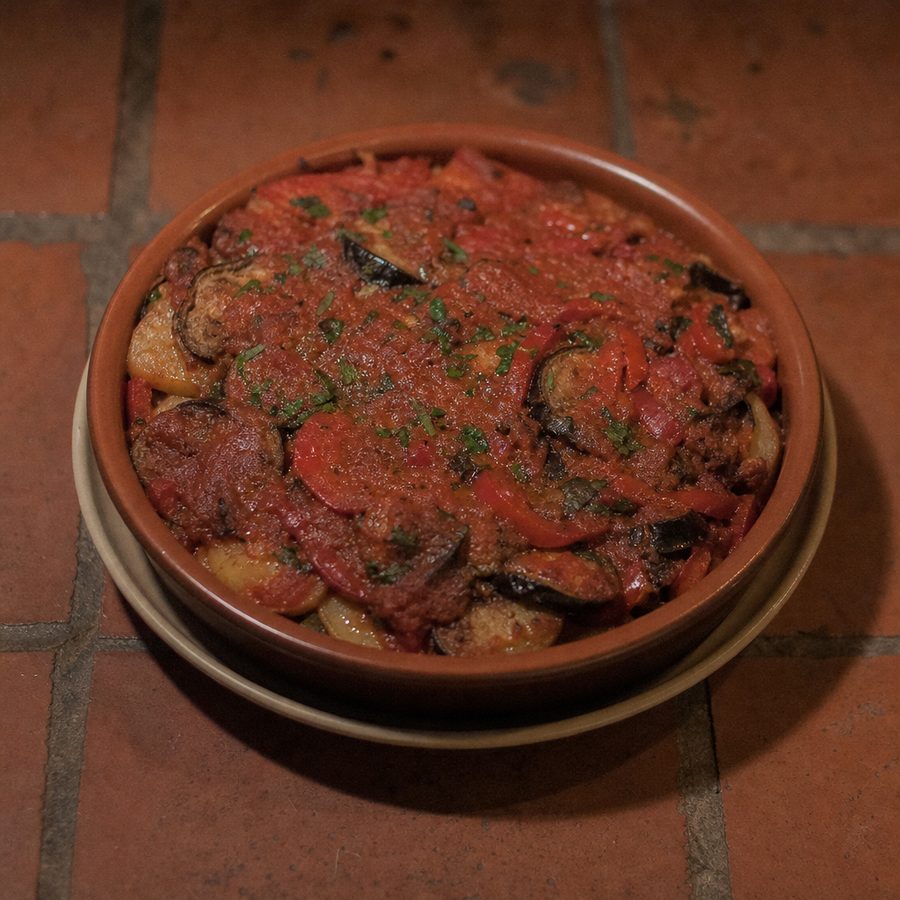
Potato, eggplant, and red pepper each fried separately in olive oil, layered in a dish, and baked under a garlicky tomato sauce until the whole thing settles into one thing.
Why You'll Love This Recipe
Tumbet is a Mallorcan summer dish and the thing that makes it worth the extra pans is exactly what people are tempted to skip: cooking each vegetable on its own before it goes in the dish. Potato, eggplant, and pepper want completely different amounts of time and different amounts of oil, and if you roast them together you get one of them right and two of them wrong. Cooked separately, each arrives at the layering stage already correct, and the oven's only job is to marry them. It is twenty five minutes of standing at the stove and it is the whole recipe.
What you get is texture in layers rather than mixed through. The bottom stays potato, soft and slightly collapsed and holding the juices. The eggplant in the middle goes almost custardy, because eggplant that has been properly fried in olive oil is one of the best things there is. The peppers stay in recognizable strips and go very sweet. And the tomato sauce, cooked down hard with garlic and a bay leaf until it is thick rather than loose, sits over the top and seeps down between the layers rather than flooding them.
I make this in late summer when peppers and eggplant are cheap and good, and I make enough for two nights because it is better on the second one. It is a full dinner on its own with bread, and it is also the traditional partner to a piece of grilled fish if you want it to stretch. Eat it warm rather than hot, which is how it is served on the island, and let it sit for a good ten minutes out of the oven before you cut into it.
Ingredients
- 5 tbsp extra virgin olive oil, divided
- 1 lb 2 oz Yukon Gold potatoes, peeled and sliced into 1/4-inch rounds
- 1 large eggplant (about 1 lb 2 oz), sliced into 1/3-inch rounds
- 2 large red bell peppers, seeded and cut into wide strips
- 1 large yellow onion, finely chopped
- 4 garlic cloves, thinly sliced
- 1 1/4 cups canned crushed tomatoes, no salt added
- 1 dried bay leaf
- 1/3 cup chopped flat-leaf parsley
- 1/2 tsp coarsely ground black pepper
- 1/4 tsp fine sea salt
Instructions
- Salt the eggplant while you work: Lay the eggplant rounds on a rack or a towel, sprinkle them with half the salt, and leave them for fifteen minutes while you prepare everything else. Beads of water will come to the surface. Blot them dry with paper towel, which keeps the slices from soaking up an unreasonable amount of oil in the pan.
- Fry the potatoes first: Heat 2 tbsp of the olive oil in a large skillet over medium heat. Lay the potato rounds in a single layer, working in two batches, and cook six to seven minutes a side. You want gold, tender all the way through, and just beginning to crisp at the edges, because this is the only time the potatoes meet direct heat and they will not soften any further under the sauce. Lift them out onto a plate and arrange them in the bottom of a 9-by-13-inch baking dish in an overlapping layer.
- Fry the eggplant and peppers: Add 2 tbsp more oil to the same pan and fry the eggplant rounds over medium-high, three to four minutes a side, until they are deep brown and completely soft in the middle. Layer them over the potatoes. Add the peppers to the pan with whatever oil remains and cook eight minutes, stirring, until they slump and their edges blister. Layer them over the eggplant.
- Make the tomato sauce in the same pan: Add the last tablespoon of oil, the chopped onion, and the rest of the salt to the pan and cook over medium heat for six minutes until soft. Add the sliced garlic and cook one minute, then the crushed tomatoes, the bay leaf, and the black pepper. Simmer for eight to ten minutes, stirring, until the sauce has darkened to brick red and is thick enough to hold a line when you draw the spoon through it, since a loose sauce runs straight down through the layers and leaves the top of the dish dry.
- Layer and bake: Fish out the bay leaf and spread the sauce evenly over the peppers, right to the edges of the dish. Bake at 375°F for twenty five to thirty minutes, until the sauce is set and bubbling at the corners. Let it stand ten minutes before serving, scatter the parsley over the top, and cut it into squares with the side of a spoon.
Variations
- With a fried egg: Set a crisp-edged fried egg on each portion and break the yolk into the tomato, which is a common way to serve it as a main course.
- Zucchini layer: Add a layer of fried zucchini rounds between the eggplant and the peppers for a milder, greener version.
- Smoked paprika sauce: Add a teaspoon of smoked paprika to the tomato sauce with the garlic for a deeper, smokier finish.
- Chickpeas underneath: Scatter a drained, rinsed can of chickpeas over the potato layer to make it a heavier one-dish dinner.
- Sobrassada-style heat: Add a pinch of chili flakes and a little extra garlic to the sauce for the spicier mainland version.
Storage & Leftovers
Four days sealed in the refrigerator, and it is markedly better on the second day than on the first. The layers settle, the tomato works its way down into the potatoes, and the eggplant goes even softer. Store it in the dish it was baked in if you can, covered, so the layers stay intact rather than being turned out and broken up.
Reheat it covered in a 350°F oven for fifteen to eighteen minutes, which is the only method that keeps the layers distinct. A microwave will do it in three minutes but the potatoes go gluey and the whole thing weeps water. It is also completely correct to eat this at room temperature, which is how it is most often served in Mallorca in August.
It does not freeze well and I would not try. Potato slices turn grainy and eggplant that has already given up its structure collapses to nothing on thawing. If you want a head start, fry all three vegetables and make the sauce up to two days ahead, keep them separate in the refrigerator, and then layer and bake when you want to eat.
Notes & Tips
- Slice the potatoes evenly: A quarter inch, and use a mandoline if you own one. Uneven rounds mean some are still firm while others have gone to mush, and once they are layered you cannot fix it.
- Blot the eggplant dry: Wet eggplant hitting hot oil steams and stays spongy. Dry slices brown in three minutes and turn creamy inside, which is the texture the middle layer is there for.
- Reduce the sauce properly: A loose tomato sauce runs straight to the bottom of the dish and makes the potatoes soggy. Cook it until the spoon leaves a track, and it will sit where you put it.
- Use one pan for everything: Each vegetable leaves flavor behind for the next, and the sauce made last picks all of it up. Wiping the pan between stages throws that away.
- Let it rest before cutting: Ten minutes out of the oven lets the layers set. Cut into it immediately and it slides apart into a heap, which tastes the same and looks like a different dish.
- Warm, not hot: This is at its best about twenty minutes after it comes out of the oven, when the sweetness of the peppers and the tomato is easiest to taste.
Nutrition & Mindful Eating
- Potato, eggplant, pepper, and tomato each stay themselves in this dish, which is the point of the separate pans. The potato gives it substance, the eggplant gives it richness, the peppers give it sweetness, and the tomato sauce ties three layers into one dinner.
- Eggplant is spongy and mild until it meets hot olive oil, at which point it turns silky and takes on the flavor of the fat it cooked in. Its soft fiber is the gentle kind, and it is what makes the middle layer taste far richer than the ingredient list suggests.
- Red bell peppers are sweeter and softer than green ones and hold a lot of vitamin C even after they have been cooked down, and their color deepens into the tomato sauce as everything bakes.
- Potatoes cooked and then cooled overnight develop resistant starch, the kind that behaves more like fiber, which is one more reason this dish is worth making the day before you plan to eat it.
- Olive oil is used with a Mallorcan hand here, and it is doing more than cooking. It is what turns eggplant creamy, what keeps the potato slices from drying out in the oven, and what carries the garlic through all three layers.
- As you eat, take a spoonful that goes through all three layers at once and notice how differently the potato, the eggplant, and the pepper give way, then slow down enough to taste the garlic underneath.
Frequently Asked Questions
Do I really have to fry each vegetable separately?
For the real thing, yes. Potatoes need moderate heat and time, eggplant needs hotter and faster, and peppers want to slump without browning. Combining them means compromising on all three. If you are short on time, roast the potatoes and peppers together on one sheet at 425°F and fry only the eggplant, which is the one that suffers most in an oven.
Can I bake the vegetables rather than frying them?
You can, and it is a lighter, drier dish. Toss the slices with the oil, spread them on separate sheets, and roast at 425°F, giving the potatoes twenty five minutes, the eggplant twenty, and the peppers fifteen. What you lose is the particular creaminess eggplant only gets from a hot pan with oil in it.
Is salting the eggplant necessary?
Modern eggplant is rarely bitter, so it is not about bitterness anymore. It is about water and oil: slices that have released some water and been blotted dry brown faster and absorb less oil. Fifteen minutes is enough, and you can skip it if your eggplant is small and very fresh.
What do I serve with it?
Bread and a green salad make it a full dinner. On the island it is just as often served alongside a piece of grilled fish or under a fried egg, both of which suit it. It also makes a very good room-temperature dish on a table with other things.