
Tuna and Taro Cakes with Chives and Lemon
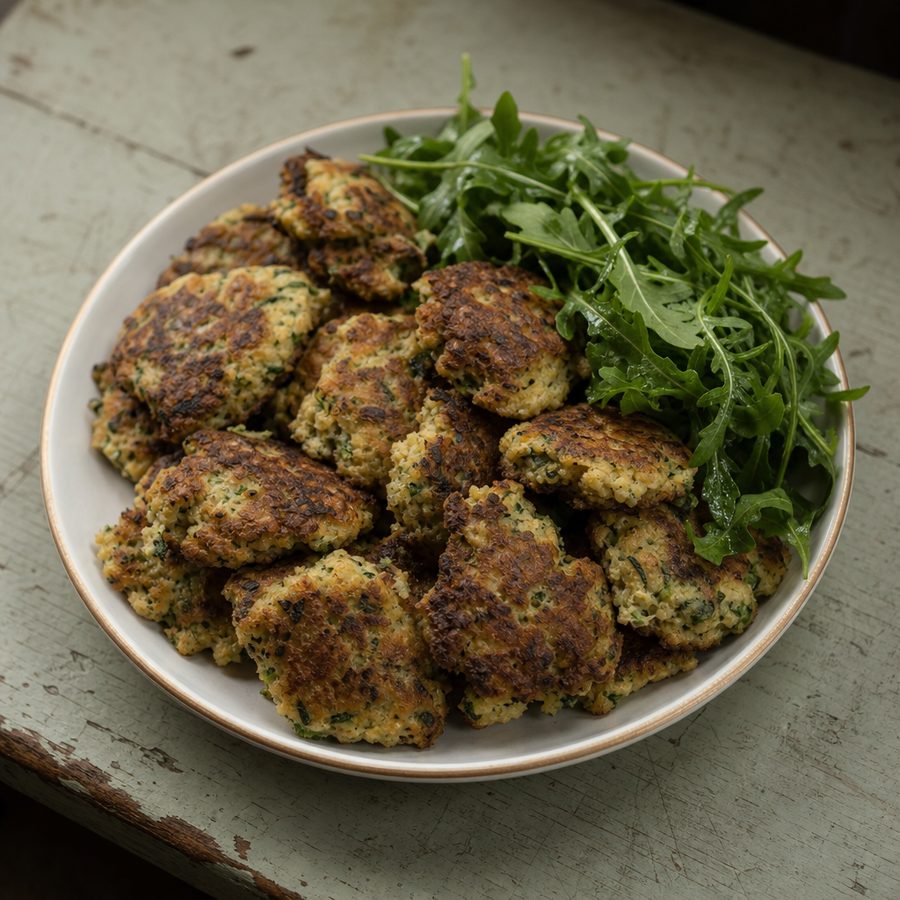
Canned tuna folded into mashed taro with scallion, chive, and lemon zest, shaped into eight cakes and fried in olive oil until the crust is deep gold.
Why You'll Love This Recipe
Fish cakes are usually held together with breadcrumbs and an egg, and taking both away is what stops most people from making them anymore. Taro solves it quietly. Boiled and mashed while it is hot, it turns sticky enough to bind a pound of tuna into eight cakes that hold their shape in the pan and do not need anything else to keep them there. I make these on the sort of Wednesday when the refrigerator is empty and nobody has been to the store, because the tuna is from the cupboard, the taro keeps for weeks in a cool corner, and the only fresh things are a handful of herbs and a lemon.
The two steps that decide how these turn out are the mash and the chill. Mash the taro while it is still steaming and it goes smooth and tacky, which is exactly the texture that binds. Let it cool first and it turns gluey and heavy, so do that part right off the heat. Then shape the cakes and put the tray in the refrigerator for twenty minutes, which firms them enough to survive being flipped. In the pan, keep the heat at a steady medium and leave them alone for four full minutes a side. Moving them early is how a cake ends up in two pieces with its crust stuck to the skillet.
They eat like something better than the sum of their parts. The outside is crisp and deep gold, the inside is soft and creamy from the taro, and the tuna keeps it firmly on the savory side of starchy. Grated raw garlic and lemon zest go into the mix rather than onto the top, so the flavor comes from the inside out, and the peppery arugula alongside does the same job a squeeze of lemon does. Cold cakes are good the next day straight from the container, and my honest opinion is that they are better cold than reheated in a microwave.
Ingredients
- 4 cans (5 oz each) tuna in water, drained well (about 1 lb drained)
- 1 lb taro (about 2 medium), peeled and cut into 1-inch chunks
- 4 scallions, thinly sliced
- 3 tbsp chopped fresh chives
- 1/4 cup chopped fresh parsley
- 3 cloves garlic, grated
- 2 tbsp fresh lemon juice, plus the zest of 1 lemon
- 5 tbsp olive oil, divided
- 5 cups arugula (about 3 1/2 oz)
- 1 1/4 tsp fine sea salt, divided
Instructions
- Boil the taro: Peel the taro under running water or with gloves on, since the raw sap can leave your hands itchy. Cut it into 1-inch chunks, cover with cold water in a saucepan, add 1/2 teaspoon of the salt, and boil for 18 to 20 minutes, until a knife slides through with no resistance. Drain well.
- Mash it hot: Return the drained taro to the dry pan and mash it thoroughly while it is still steaming, until it is smooth and tacky with no lumps left. This texture is what binds the cakes, and it only happens while the taro is hot. Spread it out and let it cool for 5 minutes.
- Mix the cakes: Squeeze the drained tuna between your palms to press out the last of the water, then flake it into the taro. Add the scallions, chives, parsley, grated garlic, lemon zest, lemon juice, 1 tablespoon of the olive oil, and the remaining 3/4 teaspoon of salt. Fold with a fork until it holds together when pressed.
- Shape and chill: Divide the mixture into 8 and press each portion into a cake about 3 inches across and 3/4 inch thick, smoothing the edges so they do not crack. Set them on a plate or tray and refrigerate for 20 minutes. Chilled cakes hold together in the pan and warm ones do not.
- Fry until deep gold: Heat 2 tablespoons of the olive oil in a large skillet over medium until it shimmers. Cook 4 cakes at a time for 4 minutes without touching them, until the underside is deep gold, then flip once and give them 3 to 4 minutes more. Add the last 2 tablespoons of oil for the second batch.
- Dress the greens and serve: Turn the arugula through the warm skillet drippings off the heat, just long enough to coat the leaves without wilting them. Pile it beside the hot cakes and serve straight away, while the crust is still crisp.
Variations
- Canned salmon or mackerel: Swap the tuna for the same weight of canned salmon or mackerel for a richer, stronger-tasting cake.
- Dill and lemon: Trade the parsley for a quarter cup of chopped dill, which suits the tuna and makes the whole plate taste cooler.
- Green onion and ginger: Add a tablespoon of grated fresh ginger to the mix with the garlic for a warmer, sharper cake.
- Olive and lemon: Fold a quarter cup of chopped kalamata olives into the mixture for a salty edge that plays against the soft taro.
- Small cakes for a starter: Shape the mixture into 16 small cakes and fry them 2 to 3 minutes a side to serve as a first course.
Storage & Leftovers
Cooked cakes keep in a sealed container in the refrigerator for up to 4 days. Layer them with parchment between so the crusts do not stick to one another, and let them cool completely before the lid goes on, since trapped steam softens the outside within an hour.
Reheat them in a dry skillet over medium-low for 3 minutes a side to bring the crust back, or in a 350°F (175°C) oven for 8 minutes. A microwave heats the middle fast and leaves the outside soft, which is fine on a busy night but loses the best part of the cake.
They freeze well cooked or raw. Freeze the shaped raw cakes on a tray, then bag them for up to 3 months and fry from frozen over medium-low, adding about 3 minutes a side. Cooked cakes freeze just as happily and reheat straight from the freezer in the oven.
Notes & Tips
- Handle raw taro carefully: The sap in raw taro irritates skin, so peel it under running water or wear gloves. Once it is boiled, it is completely benign.
- Drain the tuna twice: Tip the cans out, then squeeze the fish between your palms. The water left behind is the single most common reason cakes go soft.
- Mash while it steams: Hot taro mashes smooth and sticky, which is what binds the cakes. Cold taro turns rubbery and no amount of work will bring it back.
- Do not overwork the mix: Fold just until it clumps when you squeeze it. Beating it smooth makes the cakes dense and pasty in the middle.
- Four minutes, hands off: The crust needs uninterrupted contact to form. If a cake resists the spatula, it is not ready, so give it another 30 seconds.
- Taste the mixture before frying: Everything in the bowl is safe to taste, so check the salt and lemon then, when you can still fix it.
Nutrition & Mindful Eating
- The tuna, the taro, and the herbs cover three different bases in one cake. The fish brings the protein and the savory backbone, the taro brings the starch that binds and fills, and the scallion, chive, and parsley keep the mixture tasting fresh rather than heavy.
- Canned tuna is one of the easiest sources of protein to keep on a shelf, and it carries selenium and vitamin B12 along with a share of omega-3 fats. Because it comes cooked, it also means a real fish dinner on a night with no time in it.
- Taro is a starchy root with a soft, faintly sweet flavor, and it brings both fiber and potassium to the cake. Cooking it and then cooling it before frying also forms resistant starch, a type of carbohydrate that feeds the bacteria in your gut.
- Scallions, chives, and grated garlic go into the mixture rather than on top, so they season the cake all the way through. Alliums carry the sulfur compounds that have been studied for their role in immune function, and grating rather than chopping spreads them into every bite.
- Arugula alongside is peppery and slightly bitter, which is exactly what a fried cake wants next to it, and those dark leaves carry vitamin K, folate, and nitrates along with their bite.
- As you eat, listen for the crust giving way on the first cut and notice how soft the taro is underneath it, and let the peppery arugula between bites slow the plate down.
Frequently Asked Questions
Can I use something other than taro?
Cassava or a starchy white sweet potato both work, boiled and mashed the same way. Cassava binds hardest and gives a denser cake, sweet potato is softer and sweeter and wants an extra 10 minutes in the refrigerator before frying so it firms up.
My cakes fell apart in the pan. What happened?
Almost always one of three things. The tuna was still wet, the taro was mashed after it cooled, or the cakes went into the skillet straight from the counter. Press the tuna dry, mash the taro hot, and give the shaped cakes their 20 minutes in the cold.
Can I bake them rather than fry them?
You can. Brush both sides with olive oil and bake at 425°F (220°C) for 22 minutes, turning once at the halfway point. The crust is thinner and paler than a fried one, so I would add a little extra lemon zest to the mix to make up for it.
Is this suitable during an AIP elimination phase?
It is. There are no grains, dairy, eggs, nuts, seeds, or nightshades, and the taro is doing the binding that breadcrumbs and egg usually do. Buy tuna packed in water with nothing but salt on the label, since some brands add broth or a vegetable extract.