
Tunisian Fish Couscous with Chickpeas, Carrots, and Turnips
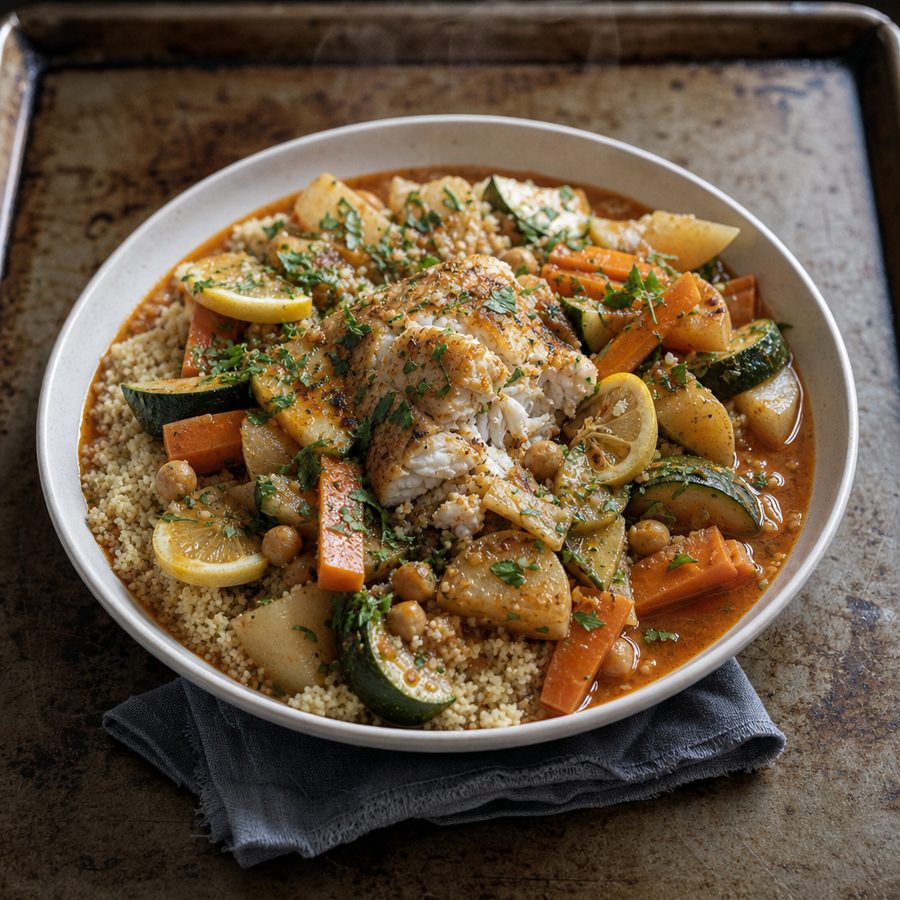
White fish poached at the last minute in a red tomato and chile broth with carrots, turnips, zucchini, and chickpeas, all spooned over couscous with lemon and herbs.
Why You'll Love This Recipe
Couscous is Friday food along the whole Tunisian coast, and the version made in the fishing towns swaps the lamb of the interior for whatever came off the boat that morning. I make it when I want a dinner that looks like an occasion without asking much of me: one pot of broth, one mound of couscous, and everything arranged on a platter at the end. It takes about an hour and five minutes of that is the fish. Four people eat well from it, and the leftovers make a better lunch than most things you plan on purpose.
Hard vegetables first, soft ones later, fish last. Carrots and turnips are hard and go in first, peppers and zucchini are soft and go in halfway, chickpeas only need warming through, and the fish is the last thing to touch the pot. Six or seven minutes covered, off a gentle simmer, and it is done. Fish poached hard falls apart into the broth and turns the whole pot cloudy, so the trick is to get the broth to the edge of a simmer, slide the fillets in, put the lid on, and then leave it alone and trust it.
What makes this taste Tunisian rather than generally North African is the chile and the coriander. Harissa or cayenne goes into the oil early so the heat cooks into the base, tomato paste is fried until it darkens and loses its metallic edge, and coriander seed toasted in a dry pan and crushed goes in at the same time. It is warm rather than sharp, and it builds. The lemon and the two handfuls of herbs at the end are what keep a red broth this deep from sitting heavy on the plate.
Ingredients
- 3 tbsp extra-virgin olive oil
- 1 medium yellow onion, cut into thin wedges through the root
- 6 garlic cloves, crushed flat
- 1 tsp cayenne, or 2 tbsp harissa
- 2 1/2 tsp sweet paprika
- 1 1/2 tsp coriander seed, toasted in a dry pan and ground
- 1 1/2 tsp ground cumin
- 2 1/2 tbsp tomato paste
- 1 2/3 cups vegetable broth, plus 2 cups water
- 3 medium carrots, halved crosswise then split into thick batons
- 2 medium turnips (about 7 oz), peeled and cut into 6 wedges each
- 1 1/4 cups canned chickpeas, drained and rinsed well
- 1 red bell pepper, seeded and cut into wide strips
- 2 small zucchini, cut into thick half moons
- 1 1/4 lb tilapia fillets, or another firm white fish, cut into 4 large pieces and patted dry
- 1 cup whole wheat couscous (about 2 3/4 cups once steamed)
- 2 tbsp lemon juice, plus wedges for the table
- 1/2 cup chopped cilantro
- 1/3 cup chopped flat-leaf parsley
- 1/4 tsp fine sea salt
- 1/2 tsp coarsely ground black pepper
Instructions
- Build the red base: Warm the olive oil in a wide pot over medium heat. Add the onion wedges and the crushed garlic and cook 6 to 7 minutes, until the onion is soft and translucent at the edges. Pull the pot off the burner, add the cayenne, paprika, ground coriander, cumin, and salt, and stir for 20 seconds so they bloom in the oil without catching.
- Darken the tomato paste: Return the pot to the heat, add the tomato paste, and cook 2 to 3 minutes, stirring constantly, until it turns from bright red to a dull brick and begins to stick to the bottom. That color change is what takes the metallic edge off the paste, and skipping it leaves the broth tasting sharp no matter how long it simmers afterward.
- Hard vegetables first: Pour in the broth and 2 cups of water and scrape the bottom of the pot clean. Add the carrot batons and turnip wedges, bring it to a boil, then reduce to a steady simmer and cook uncovered for 15 minutes, until the carrots are nearly tender and the broth has taken on their sweetness.
- Steam the couscous: Put the couscous in a wide bowl and pour over 1 1/4 cups of the hot broth from the pot. Cover the bowl tightly and leave it 10 minutes, then rake it apart thoroughly with a fork and your fingertips until every grain is separate. If you own a steamer basket, set it over the pot instead and steam the couscous for 15 minutes, which is how it is done and gives lighter grains.
- Soft vegetables and chickpeas: Add the pepper strips, the zucchini, and the chickpeas to the pot and simmer 8 minutes, until the zucchini is tender but the pieces still hold their shape. Taste the broth now. It should be deep red, warm with chile, and slightly sweet from the carrot.
- Poach the fish and serve: Lower the heat until the surface barely trembles, slide the fish pieces in, cover, and cook 6 to 7 minutes without stirring, until the fish flakes when you press it with a spoon. Spread the couscous on a platter, lift the fish and vegetables on top with a slotted spoon, and ladle broth over the whole thing. Scatter the cilantro, parsley, and black pepper, add the lemon juice, and put the wedges on the table.
Variations
- Chicken couscous: Swap the fish for boneless chicken thighs, added with the carrots and simmered the whole 25 minutes until they are falling apart.
- Pumpkin and cabbage: Add wedges of pumpkin and a quarter of a small cabbage with the hard vegetables, which is how the inland version of this pot is built.
- Merguez heat: Double the cayenne and add a teaspoon of caraway seed with the coriander for a broth closer to what a Tunisian cook would call properly spiced.
- Shrimp and fish together: Add half a pound of peeled shrimp for the last three minutes alongside the fish for a pot with two kinds of seafood in it.
- Barley in place of couscous: Spoon the vegetables and broth over cooked barley for a chewier, nuttier plate that holds up to the broth even longer.
Storage & Leftovers
Keep the couscous and the broth in separate containers for up to three days. Couscous left sitting in broth swells until it is heavy and pasty, and the vegetables keep softening in it as well. Kept apart, both come back nearly as good as they went in.
Reheat the broth and vegetables in a saucepan over medium until steaming, then add the fish for the last minute only, since it is already cooked through and will go tough if you bring it back to a simmer. Warm the couscous separately, covered, with a spoonful of broth to loosen it.
The broth and vegetables freeze for three months. The fish does not, and the couscous comes back grainy, so freeze the pot without either and cook a fresh cup of couscous and a fresh fillet when you thaw it. That takes about fifteen minutes and gets you most of a new dinner from the freezer.
Notes & Tips
- Toast the coriander seed: Two minutes in a dry pan until it smells like orange peel, then crush it. Ground coriander from a jar is a different and much duller spice.
- Cook the tomato paste until it dulls: Bright red paste tastes tinny in the finished broth. Fried until it goes brick and sticks, it tastes sweet and deep.
- Cut the vegetables big: Batons and wedges survive twenty five minutes in a simmering pot. Small dice disappears into the broth and leaves you nothing to eat.
- Barely simmer the fish: A rolling pot tears white fish into threads. You want the surface trembling, the lid on, and no stirring at all for those seven minutes.
- Rake the couscous with your fingers: A fork alone leaves lumps. Fingertips find every one of them, and the grains come out separate and light.
- Save some broth for the table: Ladle a little into a jug and pass it around. Everybody wants more of it on their couscous than you think to give them.
Nutrition & Mindful Eating
- The fish, the chickpeas, and the pile of vegetables share the work on this platter. The fillet brings the protein, the chickpeas add fiber and a second protein underneath it, and the carrots, turnips, and zucchini give the broth its sweetness and most of its volume before the couscous soaks it all up.
- Chickpeas hold their shape in a hot broth and turn creamy only when you bite them, which is why they sit so well among softer vegetables. They carry fiber, folate, and manganese, and they are the reason a plate of fish and vegetables eats as a full dinner.
- Tilapia is mild and close-grained, and it takes on the chile and tomato around it in the few minutes it spends in the pot. Like most white fish it is mostly protein, and it brings selenium and vitamin B12 along with it.
- Carrots and turnips go in first and stay in longest, and they come out sweet and stained red with the broth. The carrots give up beta-carotene along with that sweetness, and turnips bring a faint peppery bitterness that keeps the pot from tasting one-note.
- Toasted coriander, cumin, and chile bloomed in olive oil are what make this taste of somewhere in particular. The heat from the cayenne builds slowly through a plate rather than announcing itself, and the lemon squeezed over at the end is what lifts the whole red broth back up.
- As you eat, notice how much broth the couscous has taken up and how the heat from the chile builds a little with each forkful, and put the fork down now and then so you can tell when the platter has given you enough.
Frequently Asked Questions
What fish should I buy?
Anything firm and white that will not shred. Tilapia, cod loin, halibut, and hake all work, and along the Tunisian coast this is made with grouper, sea bream, or whatever was landed that day. Steer clear of very thin, delicate fillets like sole, which fall apart in the broth before the seven minutes are up.
Can I use harissa in place of the cayenne?
Yes, and it is the more authentic route. Two tablespoons of harissa paste stirred in with the tomato paste gives you heat plus the garlic, caraway, and roasted chile that a jar carries. Taste before you add more, since brands vary enormously in heat and in how much salt they carry.
My couscous came out clumpy. What did I do wrong?
Not enough raking. Once the grains have absorbed the liquid, break them up with a fork and then with your fingertips, rubbing the lumps apart until nothing is stuck together. A spoonful of olive oil worked through at that stage helps. Steaming over the pot solves it entirely if you have the equipment.
Can I make this vegetable pot ahead?
Yes, and it is better for it. Cook everything through the zucchini stage, cool it, and refrigerate for up to two days. On the night, bring it back to a bare simmer, poach the fish in it, and steam the couscous while that happens. Dinner lands about ten minutes after you walk in.