
Tunisian White Bean and Zucchini Stew over Couscous
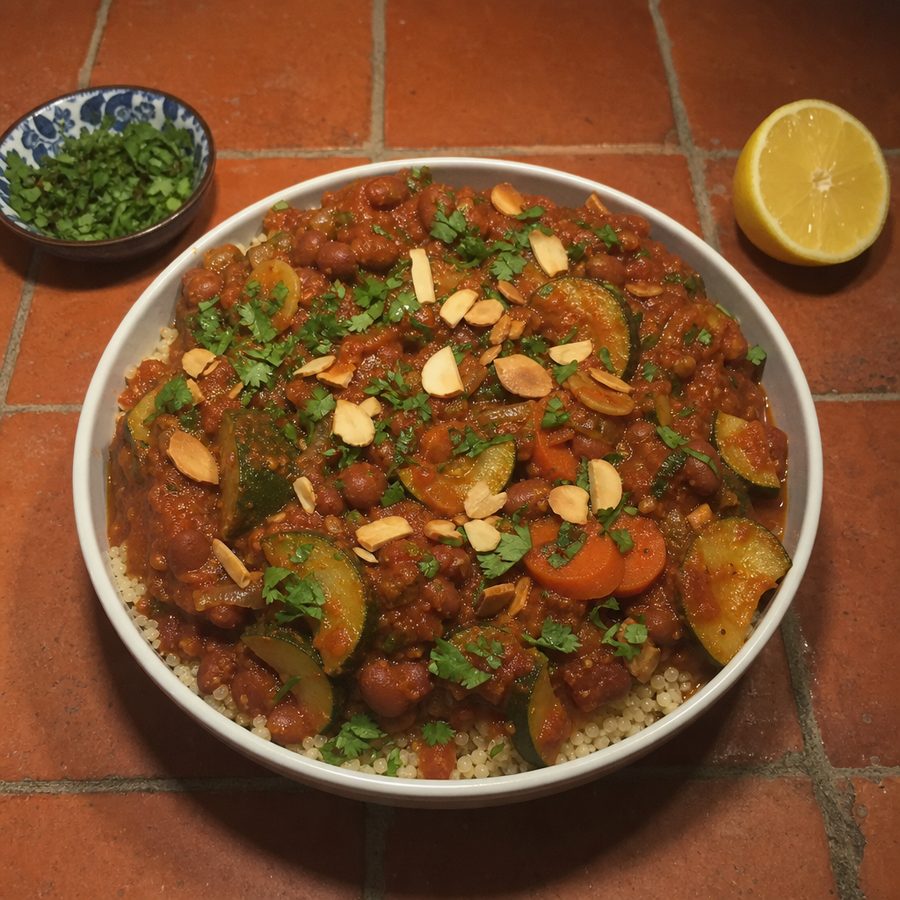
White beans stewed with carrot, zucchini, and tomato under a heavy hand of cumin and coriander, finished with lemon and cilantro and spooned over whole wheat couscous.
Why You'll Love This Recipe
This is a weeknight version of the bean stews cooked all along the Tunisian coast, where beans and a few vegetables and a great deal of cumin make dinner for a table without anybody thinking twice about it. I make it on the nights when the shopping has not happened, because two cans of white beans, a couple of carrots, a zucchini, and a spice drawer is genuinely all it takes. It costs very little, it feeds four properly, and it is on the table in half an hour, most of which is the pot simmering while the couscous sits under a lid.
The flavor comes from two moves. First, the spices go into hot oil with the onion rather than into the liquid, so the cumin and coriander toast and open up rather than tasting dusty. Second, the tomato paste gets its own thirty seconds against the bare metal until it darkens, which gives the pot the depth that usually takes an hour of simmering. After that it is only a question of timing: carrots early because they are hard, zucchini late because it is not, and the beans in the middle where they can soften at the edges and thicken everything around them.
It eats like a full dinner rather than a side dish, which is what the couscous and the amount of bean in each bowl are for. The stew is soft and warm all the way through, so it needs the sharp things at the end to keep it interesting: a full lemon squeezed over, a handful of cilantro, and almonds toasted until they crackle. I put the pot in the middle of the table with the couscous beside it and let people build their own bowls, which is how it would be served anyway. It also makes some of the best leftovers of anything I cook on a weeknight, so I usually start it knowing there will be lunch out of it as well.
Ingredients
- 2 (15 oz) cans cannellini or navy beans, drained and rinsed well
- 1 cup whole wheat couscous (about 3 cups cooked)
- 2 medium zucchini, halved lengthwise and cut into 1/2-inch half moons
- 3 carrots, cut into 1/4-inch coins
- 3/4 cup crushed tomatoes
- 1 medium yellow onion, finely chopped
- 4 garlic cloves, finely chopped
- 1 tbsp tomato paste
- 3 tbsp olive oil, divided
- 1 1/2 cups vegetable broth
- 2 tsp ground cumin
- 1 1/2 tsp ground coriander
- 1 1/2 tsp sweet paprika
- 1/3 tsp cayenne, or harissa to taste
- 1/3 cup sliced almonds
- 1 cup chopped cilantro, divided
- Juice of 1 lemon, plus a little grated zest
- 1/2 tsp freshly ground black pepper
- 1/4 tsp fine sea salt
Instructions
- Set the couscous going: Put the couscous in a heatproof bowl with a pinch of the salt and 1 tsp of the olive oil. Pour over 1 1/4 cups boiling water, cover tightly with a plate, and leave it for 10 minutes, then fluff it with a fork. It needs no attention while you cook the stew, and it will hold warm under the plate until you want it.
- Toast the spices with the onion: Warm 2 tbsp of the olive oil in a large skillet or wide pot over medium heat. Add the onion and carrot and cook for 5 to 6 minutes, until the onion is soft and translucent. Add the garlic, the cumin, the coriander, the paprika, and the cayenne and cook for 60 seconds, stirring hard, until the spices smell toasted and coat everything in the pan.
- Darken the tomato paste: Push the vegetables aside, add the tomato paste to the clear patch, and let it fry for 30 to 40 seconds until it turns from bright red to brick and smells sweet. Stir it through, then add the crushed tomatoes and cook 1 minute more, until the mixture looks thick and glossy rather than watery.
- Simmer the beans: Add the beans, the broth, and the black pepper. Bring to a simmer and cook uncovered for 6 to 7 minutes, crushing a few spoonfuls of beans against the side of the pan halfway through so the liquid thickens. It is ready when the sauce coats the beans rather than pooling around them.
- Zucchini, almonds, and lemon: Stir in the zucchini and cook 4 to 5 minutes, until the half moons are just tender and still hold their shape. While it cooks, toast the almonds in a dry pan over medium heat for 2 minutes until golden. Take the stew off the heat, stir in the lemon juice, the zest, half the cilantro, and the rest of the salt, and spoon it over the couscous with the almonds and remaining cilantro on top.
Variations
- Harissa and caraway: Stir a tablespoon of harissa and a pinch of ground caraway in with the tomato paste for the deeper, smokier Tunisian profile.
- Preserved lemon: Chop half a preserved lemon and add it at the end in place of the juice for a saltier, more floral sourness.
- Greens in the pot: Fold two big handfuls of spinach or chopped chard through the stew in the last minute so they wilt into the sauce.
- Eggs on top: Crack eggs into the simmering stew, cover, and cook until the whites set for a version people eat at any hour.
- Olives and mint: Scatter chopped olives and torn mint over the finished bowls for a sharper, brinier top note.
Storage & Leftovers
The stew keeps five days in the refrigerator and is one of those pots that improves for two of them, since the cumin and coriander go on working their way into the beans. Store the couscous separately so it stays loose and dry, and keep the almonds in a jar on the counter rather than on the stew, where they soften overnight.
Reheat the stew in a saucepan over medium with a splash of water, stirring until it steams through, about 4 minutes. The beans will have drunk more of the sauce as they sat, so it needs that water to come back to a spoonable thickness. Warm the couscous under a damp paper towel in the microwave for a minute, then fork it through.
It freezes for three months and thaws better than most vegetable stews, since the beans and carrots hold their texture. The zucchini is the exception and comes back softer, which is worth knowing but has never stopped me. Thaw overnight in the refrigerator and finish with fresh lemon and cilantro, which are what bring it back to life.
Notes & Tips
- Rinse the beans well: A full minute under running water takes the tinny canning liquid with it. That liquid is thick and it will follow the flavor of the whole pot.
- Toast the spices in oil: Ground cumin and coriander added to liquid taste dusty. Sixty seconds in hot oil is what turns them fragrant and rounds them out.
- Crush a few beans: Smearing a couple of spoonfuls against the side of the pan releases their starch and thickens the sauce so it clings rather than runs.
- Zucchini goes in late: Four minutes is enough. Any longer and the half moons collapse into the sauce and you lose the one vegetable with any bite left.
- Toast the almonds separately: A dry pan and two minutes gets them properly golden. Thrown on untoasted they taste of nothing and add no crunch worth having.
- Use the whole lemon: Juice and zest both. The zest carries the oils that the juice does not, and together they cut a line through all that cumin.
Nutrition & Mindful Eating
- White beans, couscous, and a pot of soft vegetables make this a complete bowl. The beans carry the protein and the bulk of the fiber, the couscous underneath soaks up the sauce, and the carrot and zucchini keep it from tasting like a bowl of one thing.
- Cannellini beans go creamy at the edges when you crush a few of them, which is how the sauce thickens, and they bring folate, potassium, and the kind of fiber that makes a plant-based dinner sit like a real meal.
- Carrots cooked slowly in olive oil give up their beta-carotene more readily than they do uncooked, and the fat in the pan is what carries it, which is one of the reasons this stew starts with oil rather than water.
- Cumin, coriander, and paprika bloomed in hot oil are the flavor of the whole dish, and blooming them is not only about taste, since the color and aroma compounds in those spices dissolve into fat rather than into water.
- Toasted almonds over the top give the bowl its only crunch, and they bring vitamin E and magnesium along with a fat that makes the last few spoonfuls feel as substantial as the first.
- As you eat, take a moment over the smell before the first bite, since the cumin and the lemon zest come up off a hot bowl the way they never do off a cold one, and let that be the signal to slow down.
Frequently Asked Questions
Can I use dried beans?
Yes, and the stew is better for it, but it stops being a half hour dinner. Soak a cup of dried white beans overnight and simmer them until tender, about an hour, then use them and a cup of their cooking liquid in place of the cans. On a weeknight the canned beans are what makes this possible, so rinse them well and carry on.
What can I use in place of couscous?
Bulgur, brown rice, farro, or barley all work, and any of them can be cooked while the stew simmers if you start them first. Bread torn into the bowl is the other honest answer, and in Tunisia that is often what happens. Keep some kind of starch under it, since the stew is loose and wants something to land on.
How hot should this be?
As hot as you like. A third of a teaspoon of cayenne gives a warm background rather than real heat. If you have harissa, a tablespoon stirred in with the tomato paste is the more authentic route and brings smoke and garlic along with the chile. Start low, since you can add more at the table but cannot take it out.
How do I make it more filling?
Add a third can of beans, or crack four eggs into wells in the simmering stew, cover, and cook for 5 minutes until the whites set. Both are done along that coast. A spoonful of thick yogurt on top of each bowl is the other move, and it cools the chile at the same time.