
Turkey and Ricotta Polpette with Escarole and Whole Wheat Pasta
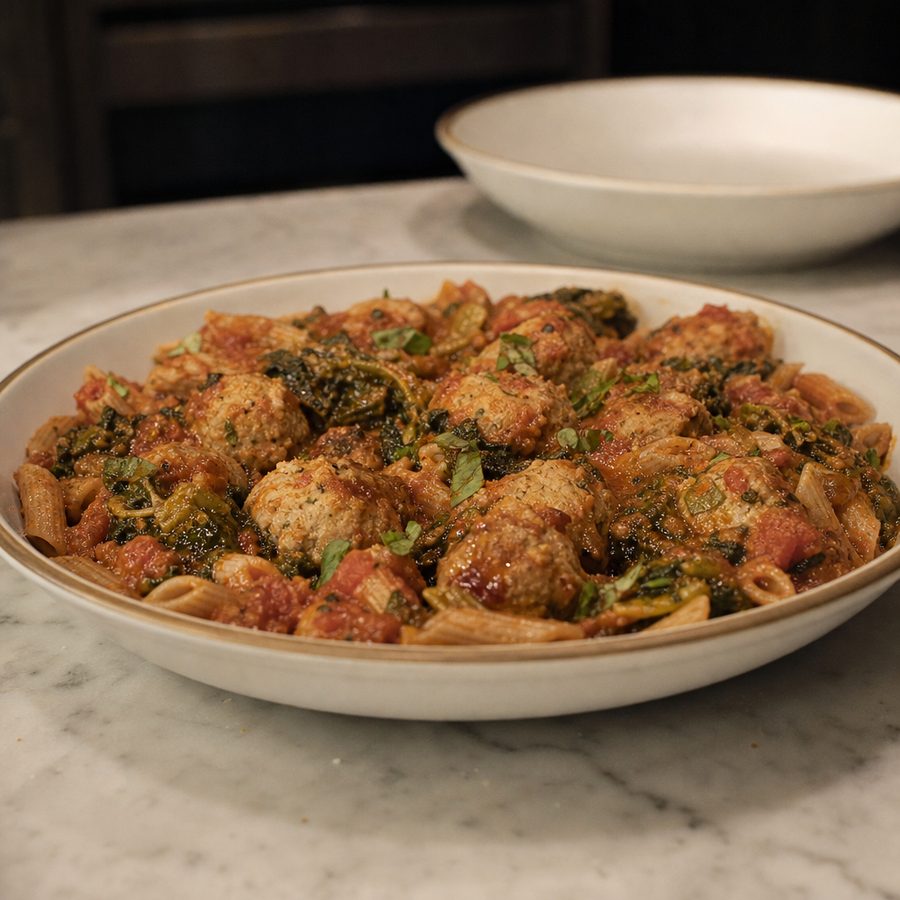
Neapolitan-style meatballs bound with ricotta and almond flour, browned in olive oil and finished in a slow tomato sauce with ribbons of escarole, spooned over whole wheat pasta with torn basil.
Why You'll Love This Recipe
I learned to put cheese in meatballs from a Neapolitan cookbook and I have never gone back. Ricotta does two things at once: it loosens the mixture so the polpette stay tender rather than tightening into rubber, and it carries a mild sweetness that plays against the tomato. Ground turkey on its own can turn dense and dry, which is why so many people give up on it, but bound this way it comes out soft all the way through. The almond flour takes the place of the usual soaked bread and holds everything together without making the inside pasty.
The sauce is deliberately short and quick. Onion, sliced garlic, chile flakes, and oregano go into olive oil, the tomatoes follow, and twenty minutes later it has thickened enough to coat a spoon. The browned polpette finish in it rather than being cooked through in the pan, so the juices they give up go into the sauce and the meat stays moist. Escarole goes in at the very end, and its faint bitterness is what stops the whole bowl from tasting like a jar. If you cannot find escarole, chicory or curly endive does the same work.
This is a Sunday-shaped dinner that fits inside an hour on a Tuesday, and it feeds four generously with pasta underneath. I make it when I want the house to smell like garlic and tomato for the rest of the evening. It reheats beautifully, so I often make the polpette and sauce a day ahead and boil the pasta fresh, which is how it lands on the table on the nights I have the least patience.
Ingredients
- 12 oz ground turkey, the darker kind if your store carries it
- 1/2 cup ricotta, drained in a sieve for 10 minutes if it looks wet
- 1 large egg, beaten
- 1/3 cup almond flour
- 1/2 cup chopped flat-leaf parsley, divided
- 5 garlic cloves, 2 grated and 3 thinly sliced
- 1 tsp coarsely ground black pepper, divided
- 1/4 tsp fine sea salt, divided
- 3 tbsp extra-virgin olive oil, divided
- 1 small yellow onion, diced small
- 1 1/2 cups no-salt-added crushed tomatoes
- 1/2 tsp crushed red chile flakes
- 1 tsp dried oregano, crumbled between your palms
- 1 head escarole (about 9 oz), leaves washed well and cut crosswise into wide ribbons
- 6 oz dry whole wheat rigatoni or penne, cooked in unsalted water to just under al dente, 1 cup cooking water reserved
- 1/2 cup basil leaves, torn at the last minute
Instructions
- Mix the polpette: In a wide bowl, combine the ground turkey, ricotta, beaten egg, almond flour, half the parsley, the 2 grated garlic cloves, half the pepper, and half the salt. Mix with your hands only until everything is evenly distributed, about thirty seconds. Overworking the mixture is what makes meatballs bouncy, and this one should feel loose and slightly tacky rather than firm.
- Roll and rest them: Wet your hands and roll the mixture into 16 balls a little larger than a walnut, setting them on a plate as you go. Let them sit for ten minutes while you start the sauce. That short rest lets the almond flour take up moisture so the polpette hold their shape when they hit the pan.
- Brown them and take them out: Warm 2 tbsp of the olive oil in a large deep skillet over medium heat. Add the polpette in a single layer with room between them and leave them undisturbed for three minutes, until the underside is deep gold and releases easily. Turn them once and give them two more minutes. They will not be cooked through, and that is correct. Lift them onto a plate.
- Build the sauce: Add the last tablespoon of oil to the same pan with the onion and cook for five minutes over medium heat until soft and translucent. Add the sliced garlic, the chile flakes, and the oregano and cook one minute more, until the garlic smells sweet and has taken on no color at all. Pour in the crushed tomatoes with the rest of the salt and pepper, scrape the browned bits off the bottom, and simmer for ten minutes until it thickens enough to hold a line when you drag a spoon through it.
- Finish the polpette in the sauce: Return the polpette and any juices from the plate, spoon sauce over the tops, cover, and simmer gently for twelve minutes, turning them once halfway. They are done when the centers reach 165°F and feel springy rather than soft. Stir in the escarole ribbons a handful at a time and cook two minutes more, just until they collapse and turn dark green.
- Bring it together: Add the drained pasta to the pan along with a splash of the reserved cooking water and toss gently, keeping the polpette whole. The starchy water pulls the sauce onto the pasta in about a minute. Take the pan off the heat, scatter the torn basil and the rest of the parsley over the top, and serve straight from the skillet with a thread of olive oil over each bowl.
Variations
- Fennel and lemon: Add a teaspoon of crushed fennel seed to the meat mixture and a strip of lemon zest to the sauce for a brighter, more aromatic version.
- Mozzarella top: Move the finished skillet under the broiler with a little torn mozzarella over the polpette until it blisters, about three minutes.
- White beans in place of pasta: Stir a cup and a half of drained cannellini beans into the sauce with the escarole and skip the pasta entirely.
- More heat: Double the chile flakes and add them to the meat mixture as well, which is how they would be eaten further south in Calabria.
- Baked, not browned: Roast the polpette on a sheet pan at 425°F for twelve minutes, then slide them into the finished sauce for five, which keeps the stovetop free.
Storage & Leftovers
The polpette and sauce keep four days in a sealed container in the refrigerator and are better on day two, once the meat has taken on the tomato and the escarole has softened into it. I store them separately from the pasta whenever I can, since cooked pasta goes on drinking sauce overnight and turns heavy.
Reheat gently in a covered pan over low heat with a spoonful of water, five to seven minutes, turning the polpette once so they warm through without boiling. Boiling is what tightens them. If you are reheating the pasta with the sauce, add a little more water than seems necessary and toss it over low heat until it looks glossy again.
The polpette in their sauce freeze well for up to three months. Freeze them flat in a sealed bag so they thaw quickly, then thaw overnight in the refrigerator and reheat in a covered pan. Add the escarole fresh at the reheat if you want it bright, since greens that have been frozen come back a shade duller.
Notes & Tips
- Drain wet ricotta: Supermarket ricotta often sits in its own liquid, and that water goes straight into the meat mixture and loosens it too far. Ten minutes in a sieve is enough.
- Mix with your hands, briefly: A fork will not distribute the ricotta evenly and a stand mixer will overwork the meat. Thirty seconds with your fingers, spread wide, is the whole technique.
- Let the pan tell you when to turn: A browning meatball sticks until the crust is formed and then lets go. If it fights you, it is not ready, and forcing it takes the crust off and leaves it in the pan.
- Wash escarole twice: Grit hides deep in the pale hearts and there is no rescuing a sauce once it is in there. Two changes of cold water, lifted out rather than poured out, does it.
- Keep the pasta short of al dente: It finishes in the sauce, which takes about a minute. Pasta boiled to perfect doneness in the pot comes out soft by the time it reaches the bowl.
- Save the pasta water: That cloudy cup is what binds sauce to pasta. Without it the sauce sits in the bottom of the bowl and the pasta stays bare.
Nutrition & Mindful Eating
- The turkey, the ricotta, and the pasta underneath are working as one plate here. The meat and the cheese together carry the protein, the escarole and tomato bring the vegetable weight and the bitterness, and the whole wheat pasta gives the bowl its body so nothing has to be eaten in a hurry.
- Ricotta is what makes these polpette soft, and it is the reason a turkey meatball can taste rich. It brings a real amount of calcium along with its protein, which is unusual for something this mild and this easy to fold into other food.
- Escarole is a bitter green that turns sweet and silky the moment it hits hot tomato, and it holds its shape better than spinach does. Cooked down this way it contributes calcium, folate, and a good deal of fiber to a bowl that could otherwise be all meat and sauce.
- Whole wheat pasta has a nutty chew that stands up to a chunky sauce, and it carries the fiber and the slower carbohydrate that keep a bowl of pasta eating like a full dinner rather than a first course.
- Garlic, oregano, chile flakes, and the basil torn in at the end are what make this taste Neapolitan. The oregano crumbled between your palms right before it goes in releases far more of its oil than oregano tipped straight from the jar, and that is most of the smell that reaches the table.
- As you eat, notice how much softer these are than a meatball usually is, and let the bitterness of the escarole cut in between bites so the bowl stays interesting to the last forkful.
Frequently Asked Questions
Can I use ground chicken or beef in place of turkey?
Yes to both. Ground chicken behaves almost identically and needs the same cooking time. Ground beef makes a richer, firmer polpetta and browns harder, so give it an extra minute in the pan and expect the sauce to carry more fat, which some people spoon off and some people stir in.
My meatballs fell apart in the sauce. What went wrong?
Almost always the ten-minute rest was skipped, so the almond flour had not taken up any moisture yet. The other culprit is turning them too early in the browning stage. Wait until they release from the pan on their own, which is the pan telling you a crust has formed.
What can I use in place of escarole?
Curly endive, chicory, or the pale inner leaves of a head of romaine all work and all bring that faint bitterness. Spinach wilts in beautifully but is much milder, so add a squeeze of lemon at the end to make up the difference.
Do I have to serve it with pasta?
No, though the pasta is what turns it into a whole dinner rather than a plate of meatballs. Soft polenta, a piece of good bread, or a bowl of white beans warmed in a little of the sauce all do the same job of catching what the polpette leave behind.