
Slow-Simmered Turkey Ragu with Gluten-Free Spaghetti
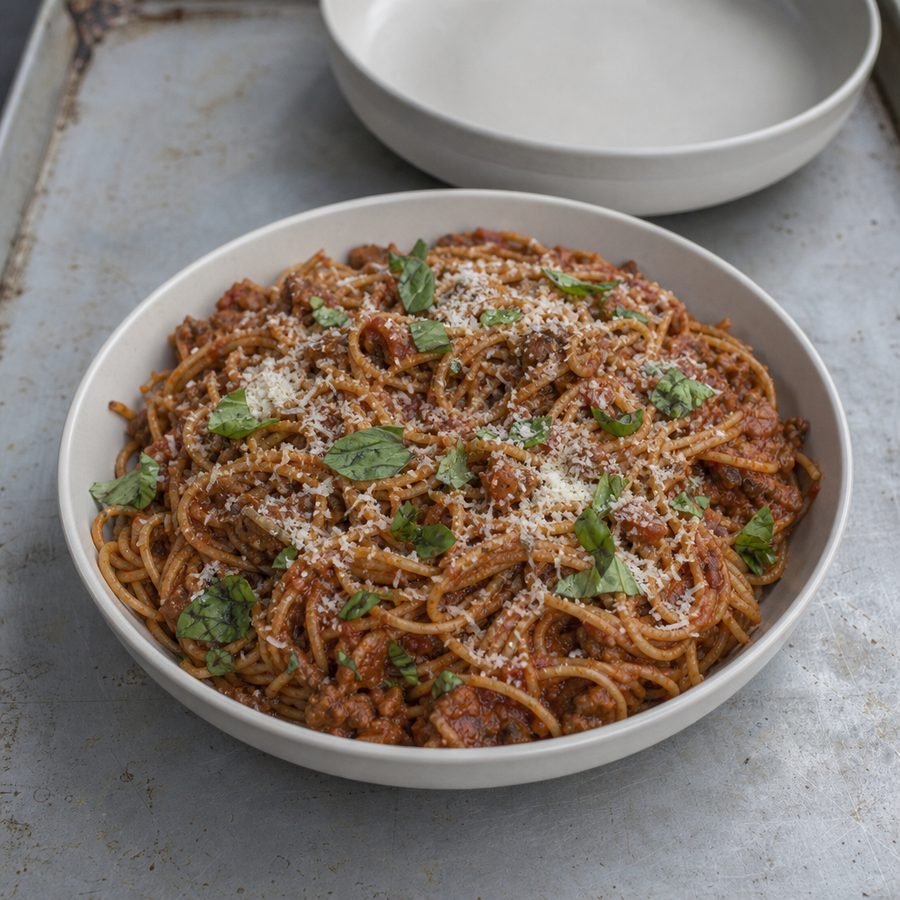
Ground turkey and a little bacon browned hard, then simmered an hour with carrot, crushed tomatoes, and basil into a ragu that clings to gluten-free spaghetti.
Why You'll Love This Recipe
A bowl of spaghetti with a real meat sauce is the dinner most people assume is off the table now, and it is not, though it does have to be built differently. This one simmers for an hour, feeds four with a bowl each, and looks like every other plate of spaghetti anyone has eaten. I make a double batch of the sauce most times, because the second half is a whole dinner already waiting in the freezer for a night when nobody has the energy. It is the meal I would put in front of guests without saying anything about it, and I have, more than once.
The savoriness comes from four things stacked in order, none of which is an allium. Two slices of bacon render first and leave their fat and their smoke behind. The turkey then browns hard in that fat, sitting untouched in big clumps for five minutes so a real crust forms, which is the step that separates a sauce with body from a pot of gray meat. Carrot diced small goes in next and slowly collapses into sweetness over the hour, and three spoonfuls of tomato paste fry against the hot pot until they turn brick red. A parmesan rind dropped into the simmer, if you keep one, adds the last layer of savoriness on its own.
Gluten-free pasta wants a little management and then it behaves. Salt the water properly, pull the spaghetti a full minute before the box says, and move it straight into the sauce with a ladle of its starchy cooking water, which is what makes the ragu coat every strand rather than sitting in a puddle underneath. Do not rinse it, since the starch on the surface is doing the work. Brown rice spaghetti keeps cooking in the pan, so serve it right away in warm bowls. Basil, parmesan, and two teaspoons of balsamic go in off the heat, and the vinegar is the reason the sauce tastes finished.
Ingredients
- 1 1/4 lb ground turkey (93/7)
- 12 oz gluten-free brown rice spaghetti (about 6 cups cooked)
- 1 can (28 oz) crushed tomatoes
- 2 slices bacon, finely chopped
- 2 medium carrots, cut into small dice
- 3 tbsp tomato paste
- 1 cup chicken broth
- 3 tbsp garlic-infused olive oil, divided
- 2/3 cup finely grated parmesan, plus a 2-inch piece of rind if you have one
- 1/2 cup torn fresh basil leaves
- 2 tsp dried oregano
- 2 bay leaves
- 2 tsp balsamic vinegar
- 1 tsp black pepper
- 2 tsp fine sea salt, divided
Instructions
- Render the bacon: Put the chopped bacon and 1 tablespoon of the garlic-infused olive oil in a heavy pot over medium-low heat and cook 6 to 8 minutes, stirring now and then, until the fat has run out and the pieces are lightly crisp. Leave everything in the pot.
- Brown the turkey hard: Raise the heat to medium-high, add the turkey in large clumps with 1 teaspoon of the salt, and leave it completely alone for 5 minutes so a brown crust forms underneath. Break it into rough pieces and cook 4 minutes more, until most of the surface has color. Do not crumble it fine. Some clumps will still be pink in the middle at this point, which is fine here and only here, because the ragu simmers long enough afterward to finish them. There should be no pink left anywhere in it by the time the ragu comes off the heat.
- Cook the carrot and fry the paste: Lower the heat to medium, add the remaining 2 tablespoons of oil and the diced carrot, and cook 6 minutes until the edges soften. Stir in the tomato paste, oregano, and black pepper and cook 2 minutes more, pressing the paste against the bottom of the pot until it darkens from red to brick.
- Simmer the ragu: Pour in the crushed tomatoes and the broth, scrape the bottom clean, and add the bay leaves, the parmesan rind, and the remaining 1 teaspoon of salt. Bring it to a boil, then drop it to the laziest simmer the burner will hold and cook uncovered for 45 to 55 minutes, stirring occasionally, until it is thick enough to hold a spoon track.
- Cook the spaghetti: Bring a large pot of well-salted water to a hard boil and cook the brown rice spaghetti 1 minute less than the package says, so it is still firm in the middle. Scoop out a mug of the cooking water, then drain the pasta without rinsing it.
- Bring them together: Fish out the bay leaves and the rind. Add the drained spaghetti to the pot with a splash of the pasta water and toss over low heat for a minute, adding more water until the sauce coats the strands. Off the heat, stir in the balsamic vinegar, half the parmesan, and most of the basil, then serve with the rest scattered over.
Variations
- Baked instead: Toss the sauce with the pasta, spread it in a dish under grated mozzarella, and bake at 400°F (200°C) for 20 minutes.
- Add greens: Wilt a few large handfuls of spinach or chopped swiss chard into the sauce in the last five minutes.
- Creamier sauce: Stir a quarter cup of canned coconut milk into the pot at the end for a rounder, softer sauce.
- More heat: Add a quarter teaspoon of cayenne with the oregano, or serve with sliced jalapeno for anyone who wants it.
- Over squash: Skip the pasta and serve the ragu over roasted spaghetti squash or thick zucchini ribbons.
Storage & Leftovers
The sauce alone keeps in a sealed container for up to 5 days and is better on the second day, once the tomato and the browned meat have settled into each other. Cool it uncovered for half an hour first so the steam does not collect in the lid and thin it out.
Store leftover dressed pasta separately from any extra sauce if you can, because brown rice spaghetti keeps absorbing liquid overnight and softens. Reheat either one in a covered skillet over low heat with a splash of broth or water, about 5 minutes, tossing gently rather than stirring hard.
The ragu freezes for up to 3 months and is one of the most useful things you can have in there. Freeze it flat in bags without pasta, thaw overnight in the refrigerator, and cook fresh spaghetti on the night, which takes about 10 minutes start to finish.
Notes & Tips
- Garlic-infused oil is the whole trick: Garlic flavor dissolves into fat while the part that troubles a sensitive gut stays behind in the clove, so infused oil tastes like a garlicky pot without behaving like one.
- Let the turkey sit still: Five undisturbed minutes builds the crust the whole sauce rests on, and turkey stirred the moment it lands is why so many pots come out gray and thin.
- Keep a parmesan rind: Freeze the ends of parmesan wedges and drop one into any long simmer, since a rind gives more savoriness over an hour than a spoonful of anything else in the cupboard.
- Cook the pasta short: Brown rice spaghetti goes from firm to soft in about ninety seconds, so pull it a minute early and let it finish in the sauce.
- Save the pasta water: That starchy water is what turns sauce and noodles into one thing, and a mug of it costs nothing to keep beside the pot.
- What the others can add: Anyone not being careful can have regular wheat spaghetti cooked in a second pot with the same sauce ladled over, plus more parmesan and a shake of chili flakes at the table.
Nutrition & Mindful Eating
- The turkey, the tomato, and the carrot become one thing over the hour. The meat gives the sauce its body, the carrot does the sweetening as it collapses, and the tomato and the splash of balsamic keep a rich pot tasting bright.
- Ground turkey browned in clumps rather than crumbled stays in pieces you can feel against the pasta, and it is dense in protein along with B6 and selenium, which is why a bowl of this holds you through a long evening.
- Carrot diced small and cooked slowly turns sweeter than it ever is raw, and the beta-carotene behind that sweetness is also part of the color that makes the finished sauce look the way it does.
- Tomatoes simmered a long time with oil in the pot are one of the better sources of lycopene, and cooking is what makes it easier for the body to take up, which is a good argument for the unhurried version of this sauce.
- Brown rice spaghetti is a whole grain that stays firm if you pull it early, and it brings a little more fiber and a nuttier taste than the pale strands most sauces sit on.
- As you eat, notice how the sauce holds onto each strand rather than sliding off, and twirl the fork slowly enough to taste the basil that went in last before the bowl is empty.
Frequently Asked Questions
What kind of gluten-free pasta works best here?
Brown rice spaghetti holds its shape and grips sauce better than most. Quinoa and corn blends work too but soften faster, so check them two minutes early. Whatever you use, cook it a minute short and finish it in the sauce, which is where the texture is decided.
Can I use ground beef or pork?
Yes, at the same weight, and the sauce gets richer and heavier. With beef, spoon off some of the fat after browning, and consider taking the balsamic up to a full tablespoon at the end so the pot stays bright underneath all that richness.
Mine tasted flat. What did I miss?
Almost always the browning. If the turkey went in and got stirred immediately it steamed and never seared, and the sauce loses the layer it was supposed to build. The other usual culprit is skipping the two minutes of frying the tomato paste, which is where a lot of the depth lives.
Does this fit a low-FODMAP dinner plan?
It does. The sauce is built on rendered bacon, hard-browned turkey, fried tomato paste, and a parmesan rind rather than on onion and garlic, and the pasta is brown rice. Use garlic-infused olive oil for that note, and keep to about a cup and a half a serving.