
Turkish Chicken and Collard Güveç with Chickpeas over Bulgur
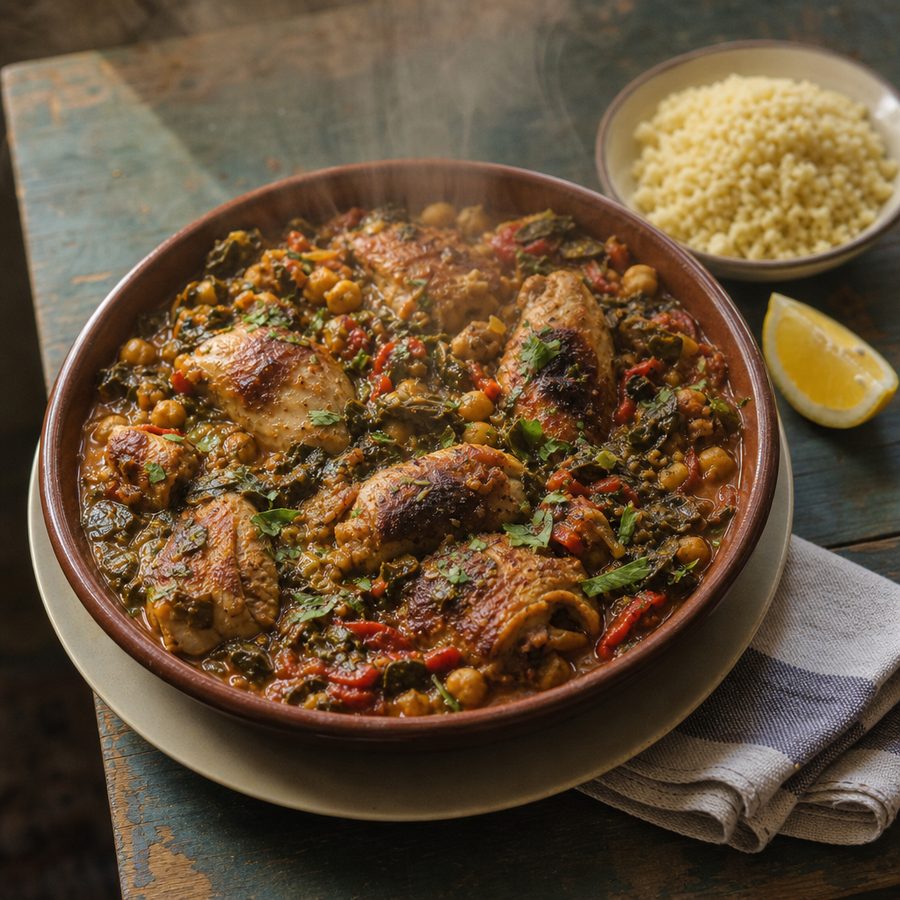
A slow oven pot of chicken, collard greens, chickpeas, red peppers, and tomato seasoned with paprika and cumin, spooned over coarse bulgur with lemon and parsley.
Why You'll Love This Recipe
Güveç is the name of both the clay pot and whatever goes in it, and the principle is always the same: everything into one vessel, low heat, no stirring, and time. I learned to make this version after eating a Black Sea version built on the big flat greens they call karalahana, which are the same broad-leaved collards sold in bunches at any American grocery store. The greens are the reason to make it. Cooked this long they lose every trace of squeak and turn into something between a vegetable and a sauce, and they carry the paprika and cumin better than a soft vegetable ever could.
What you notice first is how sweet it is without anything sweet in it. Onions and red peppers cook down for the better part of an hour, tomato paste caramelizes against the bottom of the pot before the liquid goes in, and the whole thing arrives tasting rounder than the list of ingredients suggests. The chicken is cut into large pieces on purpose, so it stays in identifiable chunks rather than shredding away into the stew. Lemon at the end is what pulls it back into focus, and I would not skip the parsley either, since a stew this dark needs something green and sharp on top.
This is a Sunday pot that feeds you on Tuesday. It is better the second day, when the greens have given up the last of themselves to the sauce, and it reheats without any of the usual penalties. I make the bulgur fresh each time because it takes twelve minutes and stale bulgur is a sad thing, but the stew can sit in the refrigerator for three days and only improve. If people are coming, I put the pot straight on a trivet in the middle of the table with the bulgur and the lemon wedges beside it and let everyone build their own bowl.
Ingredients
- 1 lb boneless, skinless chicken breast, cut into 1 1/2-inch pieces
- 1 large bunch collard greens (about 14 oz), stems stripped out and leaves rolled and cut into 1/2-inch ribbons
- 1 (15-oz) can chickpeas, drained and rinsed
- 1 1/4 cups canned crushed tomatoes
- 2 red bell peppers, seeded and cut into wide strips
- 1 large yellow onion, halved and sliced
- 2 tbsp tomato paste, or Turkish red pepper paste if you have it
- 2 1/2 tbsp extra-virgin olive oil
- 5 garlic cloves, sliced
- 2 tsp sweet paprika, plus more for the top
- 1 1/2 tsp ground cumin
- 3 cups cooked coarse bulgur, from about 1 cup dry
- 2 tbsp fresh lemon juice, plus wedges to serve
- 1/3 cup chopped flat-leaf parsley
- 1/2 tsp fine sea salt
- 1/2 tsp coarsely ground black pepper
Instructions
- Prepare the greens: Fold each collard leaf in half along the spine and cut the thick stem away, then stack the leaves, roll them into a cigar, and slice across into half-inch ribbons. Wash them in a bowl of cold water and lift them out, leaving the grit behind. You will have what looks like far too much; it cooks down to about a third of its volume.
- Brown the chicken: Heat the oven to 350°F. Warm 1 1/2 tablespoons of the olive oil in a Dutch oven or heavy ovenproof pot over medium-high heat. Pat the chicken dry, season with half the salt and pepper, and brown it in a single layer for about three minutes a side. It does not need to cook through, since it will finish in the oven under a lid. Lift the pieces out onto a plate.
- Build the base: Lower the heat to medium, add the remaining oil, and cook the onion and peppers for eight minutes, stirring now and then, until the onion is translucent and the peppers have gone limp. Add the garlic, paprika, and cumin and stir for one minute, until you can smell the spices. Push in the tomato paste and cook it for another two minutes, pressing it against the bottom of the pot until it darkens to the color of brick, which is the sugars in the paste caramelizing and the sharp canned taste cooking away.
- Wilt in the collards: Add the collard ribbons in three additions, turning each one under before the next goes in. They will steam down within a couple of minutes. Pour in the crushed tomatoes and a cup of water, scrape the bottom of the pot clean, and stir in the chickpeas and the remaining salt and pepper.
- Into the oven: Settle the chicken and any juices on top, half submerged rather than buried, because the browned surface has to stay clear of the liquid to keep any of its color. Cover the pot, slide it into the oven, and bake for 40 minutes without stirring. It is ready when the greens are completely silky and a piece of chicken pulls apart under gentle pressure from a spoon. There should be a loose, glossy sauce rather than a soup.
- Cook the bulgur and finish: While the pot is in the oven, bring 2 cups of water to a boil, stir in 1 cup of coarse bulgur, cover, and cook on the lowest heat for 12 minutes, then let it stand off the heat for 5 and fluff it with a fork. Stir the lemon juice into the stew off the heat, scatter the parsley over the top with a last pinch of paprika, and spoon it over the bulgur with lemon wedges alongside.
Variations
- Red pepper paste: Swap the tomato paste for Turkish biber salçası, which is sweeter and deeper and is what this dish would use in Turkey.
- With white beans: Use a can of navy beans in place of the chickpeas for a softer, creamier pot that thickens its own sauce.
- Sour finish: Stir a tablespoon of pomegranate molasses in with the lemon juice for a tart, fruity edge against the paprika.
- Hot pepper: Add a teaspoon of pul biber with the paprika, or a crumbled dried chile, for the gentle heat this stew often has.
- Over rice instead: Serve it over plain rice pilaf rather than bulgur when you want something milder underneath.
Storage & Leftovers
The stew keeps four days in a sealed container in the refrigerator and genuinely improves after the first night, when the greens finish giving themselves up to the sauce. Store the bulgur separately so it does not go soft, and add a fresh squeeze of lemon each time you reheat.
Reheat gently in a covered pot over low heat with a splash of water, about eight minutes, stirring once. Collards this well cooked will not fall apart on you. Bulgur reheats best with a tablespoon of water over it and a lid, or in a covered dish in a low oven.
It freezes well for three months, which is not true of most greens. Cool it completely, freeze it flat in sealed bags, and thaw overnight in the refrigerator. Freeze the stew alone and make bulgur fresh, since grains come out of the freezer with a mushy texture that no amount of fluffing fixes.
Notes & Tips
- Strip the collard stems properly: The center rib never softens in the way the leaf does. Fold the leaf and cut the stem out in one pass, and the ribbons will all cook at the same rate.
- Cook the tomato paste until it darkens: Two minutes of frying turns it from sharp and metallic to sweet and deep. This single step is most of the difference between a flat pot and a good one.
- Cut the chicken large: Inch-and-a-half pieces survive 40 minutes in the oven and stay in pieces. Small cubes disappear into the sauce and go stringy.
- Do not stir it in the oven: The point of a güveç is that everything settles into layers and stays there. Stirring breaks the chickpeas up and muddies what should be a clear, glossy sauce.
- Rinse the chickpeas well: The liquid in the can tastes tinny and clouds the sauce. A minute under running water in a sieve is enough.
- Let the bulgur stand: Five minutes off the heat under the lid is where the last of the water is absorbed. Fluffed too early it stays wet at the bottom of the pan.
Nutrition & Mindful Eating
- Chicken, chickpeas, and a whole bunch of collards make this pot what it is. The chicken carries the protein, the chickpeas give it body and soft fiber, and the greens bring the minerals along with the slight bitterness that keeps a tomato stew from tasting flat.
- Collard greens are the broad, sturdy leaf of the cabbage family, and long cooking is what they are built for. They are one of the few greens that hold onto their texture through 40 minutes in the oven, and they carry a generous amount of calcium along with vitamin K.
- Chickpeas soften but keep their shape here, and the ones that break down thicken the sauce around them. They bring plant protein and the kind of fiber that ferments slowly in the gut, which is part of why a bowl of this eats so substantially.
- Paprika, cumin, and garlic go into the hot oil before any liquid, and that order matters for flavor. Warmed in fat, their aromatic compounds dissolve and spread through the whole pot rather than sitting on top of it.
- Red peppers cooked this long turn sweet and almost jammy, and they hold their vitamin C better than you would expect from something that has been in the oven. The lemon squeezed in at the end adds more of it, and it also helps your body take up the iron from the chickpeas and greens.
- As you eat, notice how completely the greens have given way and how the bulgur underneath takes on the sauce, and let the bowl be something you sit down to rather than something you finish on your way somewhere else.
Frequently Asked Questions
Do I need an actual güveç pot?
No. Any heavy pot with a lid that goes in the oven does the same job, and a Dutch oven is what I use. If you do have an earthenware güveç, soak it in water first and start it in a cold oven, since clay does not like a sudden hot one.
Can I use chicken thighs?
Yes, and they are more forgiving over 40 minutes in the oven. Use boneless thighs cut into the same large pieces, and expect a slightly richer pot. Bone-in thighs work too if you give them an extra 15 minutes and skim the surface before serving.
What can I use in place of collards?
Kale is the closest and needs the same treatment, though it wants about ten minutes less in the oven. Chard works but goes soft quickly, so stir it in for only the last fifteen minutes. Whatever you use, cut it into ribbons rather than leaving big pieces.
Is there a way to make this without the chicken?
Double the chickpeas and add a pound of cubed firm tofu, browned in the pot the way the chicken is and returned at the same point. The greens and the paprika base carry the dish either way, and the cooking time stays the same.