
Turkish Navy Bean Stew with Beef, Tomato, and Red Pepper
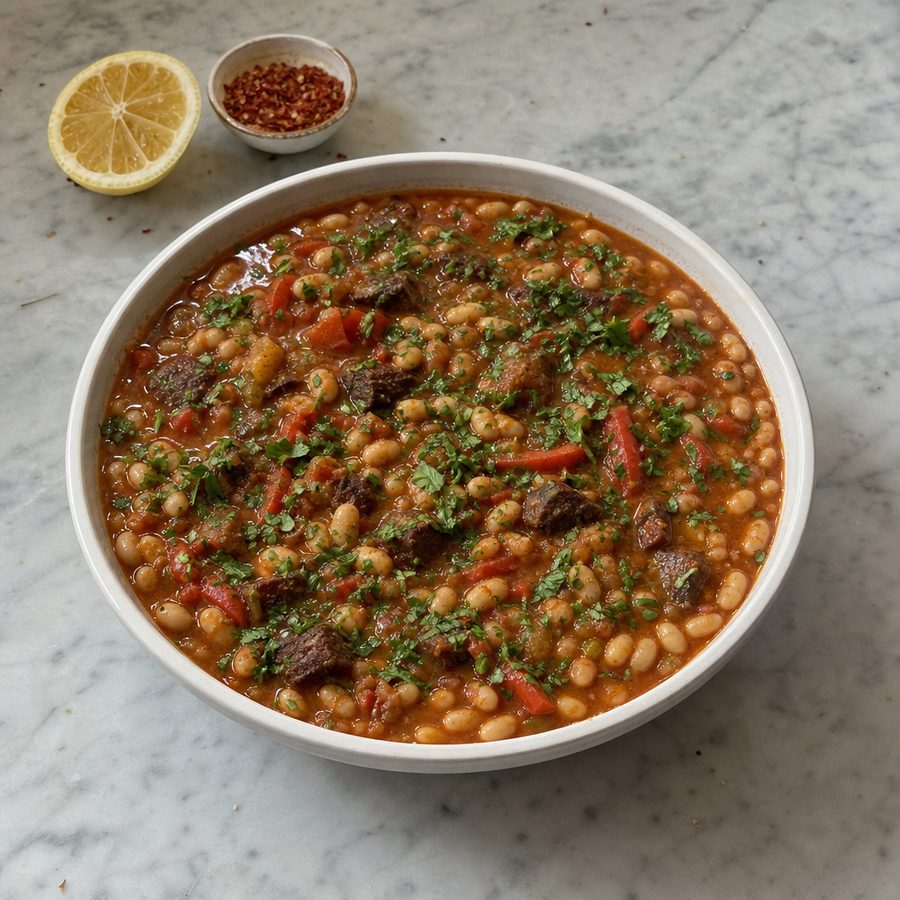
Navy beans simmered with cubes of beef, sweet red pepper, and tomato until the broth turns thick and rust-colored, finished with parsley and lemon.
Why You'll Love This Recipe
Kuru fasulye is the pot every Turkish household keeps a version of, and in the lokantas of Istanbul it is the dish that sells out first. Mine follows the shape of the original closely: onion and pepper softened slowly, tomato paste cooked until it darkens, a small amount of beef browned hard for the flavor it leaves in the pot, and beans that go in whole and come out yielding. What I changed is the beans themselves, since canned navy beans give me a Tuesday version of a Sunday dish, and the hour of simmering goes into the meat rather than into softening them.
The two moves that make this taste Turkish rather than generic are both small. The first is cooking the tomato paste in hot oil for a full two minutes before any liquid goes near it, until it turns from bright red to brick and smells sweet instead of tinny. The second is the pepper flakes, which go into the oil rather than into the broth, so their color and their gentle heat spread through the whole pot. After that it wants nothing but time, a low burner, and the lid slightly ajar so the broth reduces down around the beans.
It eats like something you would be served in a home rather than a restaurant, thick and savory, sweet from the peppers with a low warmth from the flakes that builds over a few spoonfuls. The parsley goes on in handfuls at the end and stays green and grassy against all that softness, and the lemon is not optional. A pot of beans without acid tastes flat and heavy, and one squeeze changes the whole bowl. I make it on a Sunday afternoon and eat it for three days, and it improves each time.
Ingredients
- 2 1/2 tbsp extra-virgin olive oil
- 12 oz beef chuck, cut into 3/4-inch cubes and patted dry
- 1 medium yellow onion, chopped fine
- 1 red bell pepper, or 2 long sweet red peppers, seeded and cut into short strips
- 3 garlic cloves, sliced thin
- 2 tbsp tomato paste
- 2/3 cup crushed tomatoes
- 1 1/2 cups canned navy beans, drained and rinsed well
- 1 1/4 cups beef broth, plus a splash more if the pot goes dry
- 2 tsp sweet paprika
- 1/4 tsp cayenne, or 1 tsp Turkish pul biber pepper flakes
- 1 tsp dried oregano, crumbled between your palms
- 1 bay leaf
- 2/3 cup chopped flat-leaf parsley
- 1 1/2 tbsp lemon juice, plus wedges for the table
- 3/4 tsp coarsely ground black pepper
- 1/2 tsp fine sea salt
Instructions
- Brown the beef: Warm 1 1/2 tbsp of the olive oil in a heavy pot over medium-high heat until it shimmers. Add the beef cubes in a single layer with room between them and leave them alone for three minutes, until the undersides are deeply browned, then turn and give them two minutes more. Move them to a plate. Do this in two batches if your pot is crowded, because meat packed tight will steam and stay gray.
- Soften the onion and pepper: Lower the heat to medium, add the rest of the oil, and stir in the onion and red pepper with the salt. Cook for eight to ten minutes, scraping up the browned bits from the beef as the vegetables release their water. You want the onion translucent and the pepper slumped and sweet, with no color on either of them yet.
- Bloom the paste and the pepper flakes: Push the vegetables to the side and add the garlic, the tomato paste, the paprika, and the cayenne to the bare patch of oil. Stir them together and cook for a full two minutes, pressing the paste flat against the pot. It will darken from bright red to brick and start to smell sweet and toasted, and that color is what the finished broth will look like.
- Set the pot to simmer: Return the beef and any juices, add the crushed tomatoes, the broth, the oregano, the bay leaf, and half the black pepper, and bring it to a bare simmer. Cover with the lid slightly ajar and cook for fifty to sixty minutes, stirring twice, until a cube of beef gives way when you press it with a spoon. Add a splash more broth if the pot looks dry.
- Add the beans: Stir in the navy beans and simmer, uncovered now, for fifteen to twenty minutes. The broth will reduce and thicken around them and the beans will take on the color of the pot. Crush a few against the side with the back of your spoon and stir them back in, which is the easiest way to give the whole thing body without adding anything to it.
- Finish with parsley and lemon: Fish out the bay leaf. Take the pot off the heat, add the lemon juice, the rest of the black pepper, and most of the parsley, and stir once. Taste and add a little more lemon if it tastes heavy. Ladle into wide bowls, scatter the last of the parsley over the top, and put lemon wedges and more pepper flakes on the table.
Variations
- Lamb instead of beef: Cubed lamb shoulder in place of the beef gives the pot a sweeter, more pronounced flavor, which is how a lot of home cooks in Turkey make it.
- With sucuk: Slice a few coins of Turkish sucuk sausage and crisp them in the pot before the beef goes in, then use the spiced fat to cook the onion.
- A greener pot: Stir two large handfuls of spinach or chopped chard in during the last five minutes so it wilts into the broth.
- Oven finish: Move the covered pot to a 325°F oven for the hour of simmering, which keeps the heat even and needs no stirring at all.
- Dill and scallion: Trade the parsley for chopped dill and a handful of sliced scallions, which pushes the bowl toward the Black Sea coast.
Storage & Leftovers
This keeps four days in a sealed container in the refrigerator and is genuinely better on day two, once the beans have finished drinking up the broth and the pepper flakes have spread through everything. It thickens as it sits, almost to the point of being spoonable rather than pourable, which I like. Loosen it with a little broth or water when you reheat.
Reheat it gently in a covered saucepan over low heat for six or seven minutes, stirring once or twice so the beans on the bottom do not catch. A hard, fast reheat breaks the beans apart into mush. Add fresh parsley and a fresh squeeze of lemon at the table, since both fade overnight and both are what make the bowl taste alive.
It freezes well for up to three months in flat, sealed portions. Thaw overnight in the refrigerator and reheat slowly on the stovetop with a splash of broth stirred in. The beef stays tender through freezing and the beans hold their shape better than you would expect, though the parsley should always go in fresh rather than being frozen with it.
Notes & Tips
- Dry the beef before it hits the pot: Wet meat steams and stays gray no matter how hot your pot is. A minute with paper towel is the difference between a broth with real depth and one that tastes only of tomato.
- Cook the tomato paste longer than feels right: Two full minutes in hot oil is what turns it from sharp to sweet, and you can watch the color go from red to brick. Underdone paste is the most common reason a bean stew tastes tinny.
- Put the pepper flakes in the oil: Fat carries their color and their warmth in a way water never will. Stirred into the broth later they sit on top and taste raw.
- Rinse canned beans properly: Run them under cold water until the water goes clear. The thick liquid in the can tastes of the can, and it will follow you into the finished pot.
- Keep the lid ajar: Fully covered, the broth never reduces. Fully uncovered, the pot goes dry before the beef is tender. A gap of about an inch is what you want for the long simmer.
- Add the lemon off the heat: Boiled lemon juice turns dull and slightly bitter. Off the burner, it stays bright and does the job it came to do.
Nutrition & Mindful Eating
- The beans, the beef, and the peppers each carry a different part of this pot. The navy beans give it body and most of the fiber, the beef browns hard and leaves the savory backbone everything else sits on, and the red peppers cook down sweet enough that the tomato never turns sharp.
- Navy beans are small, thin-skinned, and quick to go creamy, and a few crushed against the side of the pot thicken the broth on their own. Their soluble fiber is what does that, and it is the same fiber that makes a bowl of beans sit so steadily.
- Beef chuck is the cut that rewards a long, low simmer, going from firm to yielding over the hour as the connective tissue in it softens. It carries iron in the form your body takes up most readily, along with the B12 that red meat is one of the few good sources of.
- Red peppers turn from crisp to jammy in the pot and bring most of the sweetness in the bowl, along with a real amount of vitamin C, which is worth knowing since it sits right alongside the iron in the beef.
- Paprika, pepper flakes, and oregano bloomed in oil are what make this taste Turkish rather than like any other bean pot. The oil carries their color through the whole thing, and the parsley and lemon that go in at the end cut a bright line straight through the richness.
- As you eat, notice how much thicker the broth is at the bottom of the bowl than at the top and how the warmth from the pepper flakes builds spoonful by spoonful, and give the pot the twenty unhurried minutes it spent an hour earning.
Frequently Asked Questions
Can I use dried beans rather than canned?
Yes, and it is the traditional way. Soak 1 cup of dried navy beans overnight, drain them, and simmer them in fresh unsalted water for about an hour until tender before adding them at the same stage. Salt them only once they are soft, since salting early keeps the skins tough.
What cut of beef works best here?
Chuck is what I reach for, cut into cubes and browned hard, because it turns silky over the hour the pot needs. Bottom round works too and carries less fat, though it stays firmer at the end. Whichever you buy, cut the pieces no larger than three quarters of an inch so they cook through in the time the pot has.
My broth stayed thin. How do I fix it?
Take the lid off and let it simmer harder for another ten minutes, and crush a larger handful of beans against the side of the pot. The starch they release is what thickens a bean stew. Resist the urge to add flour or cornstarch, since both dull the taste of the tomato.
Is this dish good without the meat?
Very. Turkish cooks make a version with olive oil and no meat at all, served at room temperature with lemon. Leave the beef out, double the olive oil, add a second red pepper, and simmer for thirty minutes rather than an hour. It becomes a different and lighter-tasting pot, and it is excellent cold.