
Turkish Yogurt Soup with Chickpeas, Collards, and Mint
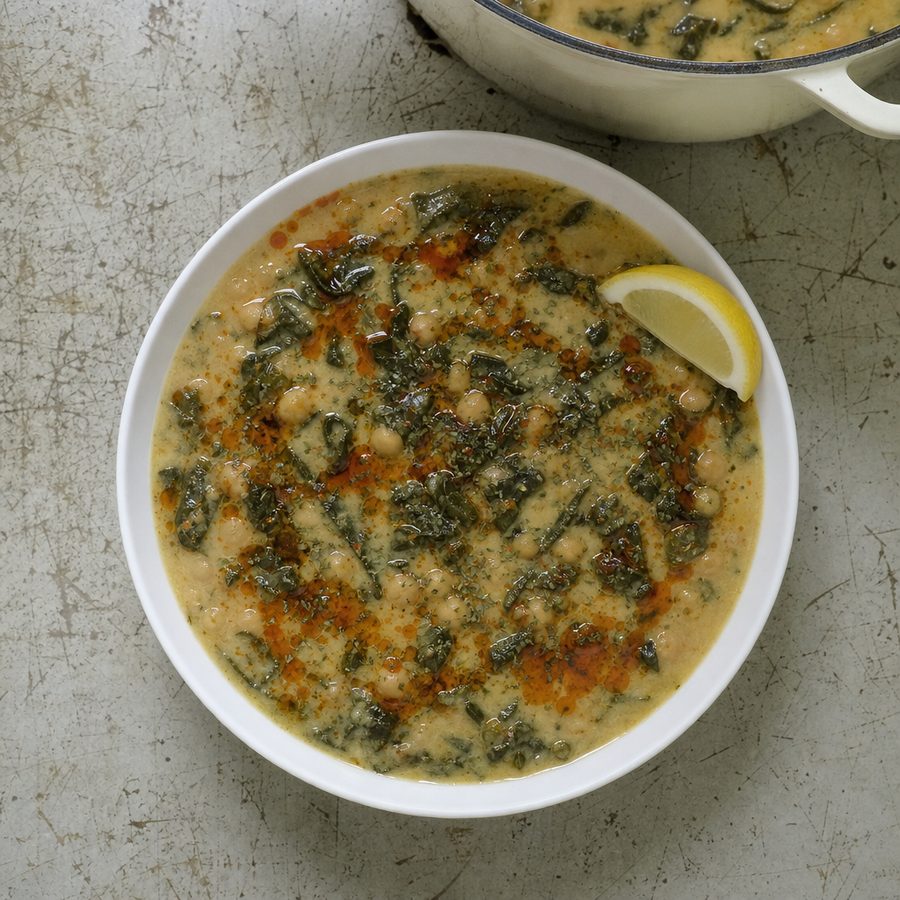
A pot of chickpeas and bulgur simmered with collard ribbons, finished off the heat with tempered yogurt and a spoonful of paprika and dried mint sizzled in olive oil.
Why You'll Love This Recipe
A gray weekday, soup the only thing that sounds right, and twenty five minutes to give it. It is built on the Turkish habit of finishing a pot with yogurt rather than cream, which gives you a soup that tastes rich and tastes sour at the same time, and the sourness is what keeps you eating. Half the chickpeas get crushed against the side of the pot before the yogurt goes in, and that starch is what holds everything together. The rest stay whole so there is something to chew.
It eats like a bowl of two textures. The broth is thick and velvety and coats the spoon, and then you hit a collard ribbon that has kept its bite or a chickpea that has not given up its shape. The dried mint is not a garnish here. Bloomed in hot oil with paprika and poured over at the table, it smells like a spice shop and tastes cooler and greener than fresh mint would, which is the whole reason Turkish cooks reach for the dried leaf in soup. Lemon at the end sharpens the edges of all of it.
Lunch keeps getting away from some weeks, and this is the answer to that. It reheats without splitting as long as you keep the pot gentle, it packs into a jar cleanly, and a bowl of it holds me straight through an afternoon of appointments. I make it on Sunday most weeks and eat it Monday and Tuesday, and by the second day the bulgur has drunk up the broth and it wants a splash of water to come back. I also make it in high summer, oddly, because a sour yogurt soup eaten warm rather than hot is a real thing in Turkey, and on a day too warm to want soup at all it turns out to be exactly what you want.
Ingredients
- 2 1/2 cups plain Greek yogurt, left out on the counter while you cook
- 1 can (15 oz) chickpeas, drained and rinsed
- 1 1/4 cups cooked coarse bulgur
- 1 bunch collard greens (about 8 oz of leaves), stems stripped and leaves sliced into thin ribbons
- 3 cups vegetable broth
- 1 medium yellow onion, finely chopped
- 4 garlic cloves, minced
- 2 tsp ground cumin
- 4 tsp sweet paprika, divided
- 2 tbsp dried mint, divided
- 2 tbsp olive oil, divided
- 2 tbsp lemon juice, from 1 lemon, plus wedges for the table
- 1/2 tsp coarsely ground black pepper
- a scant 1/4 tsp fine sea salt
Instructions
- Get the yogurt out first: Measure the yogurt into a bowl and leave it on the counter while everything else cooks. Cold yogurt hitting a hot pot is what turns this soup grainy, and ten minutes out of the refrigerator takes most of that risk away. Whisk it smooth with a fork before you need it.
- Soften the onion and bloom the spices: Warm 1 tbsp of the olive oil in a large saucepan over medium heat. Add the onion with the salt and cook for four to five minutes, stirring, until it is translucent and just beginning to color at the edges. Add the garlic, the cumin, 2 tsp of the paprika, and the black pepper, and stir for thirty seconds, until the pan smells toasted and the spices darken slightly.
- Build the pot and crush half the chickpeas: Pour in the broth and bring it to a simmer. Add the chickpeas and the bulgur, then press about half the chickpeas against the side of the pan with the back of a wooden spoon until they break open. That crushed starch is what holds the yogurt in suspension later. Simmer for five minutes, until the broth has thickened enough to leave a trail behind the spoon.
- Wilt the collards: Stir in the collard ribbons a handful at a time, letting each addition collapse before the next goes in. Simmer for four to five minutes, until the leaves are tender but still distinctly green and still hold their shape on the spoon. Taste the broth now and decide about lemon and pepper, since after the yogurt goes in you want to stir as little as possible.
- Temper the yogurt in off the heat: Take the pan off the burner and wait a minute for the bubbles to stop. Ladle about a cup of the hot broth into the yogurt in a thin stream, whisking the whole time, until the yogurt is loose and warm to the touch. Pour that back into the pan and stir once or twice, no more. The soup should turn ivory and thicken slightly. Do not let it boil again.
- Sizzle the mint and paprika oil: In a small skillet, warm the remaining 1 tbsp olive oil over medium heat until it shimmers, then pull it off the burner and stir in the remaining 2 tsp paprika and the dried mint. It will foam and go deep red in about five seconds. Stir the lemon juice into the soup, ladle it out, and spoon the red oil over each bowl.
Variations
- Rice rather than bulgur: Swap in 1 1/4 cups cooked short grain rice, which makes the pot softer and rounder and is the more traditional grain in a Turkish yogurt soup.
- With shredded chicken: Stir in two cups of shredded cooked chicken breast with the collards for a heavier bowl that eats like a full supper.
- Aleppo pepper finish: Use Aleppo pepper in place of half the paprika in the sizzled oil for a fruitier, gently hot version.
- Spinach and dill: Trade the collards for spinach wilted in at the very end and add a handful of chopped dill with the lemon.
- Thicker, closer to a stew: Hold back a cup of the broth and crush all the chickpeas rather than half, which gives you something you eat with a fork as much as a spoon.
Storage & Leftovers
This keeps four days in a sealed container in the refrigerator and thickens noticeably overnight as the bulgur drinks up broth. That is not a problem, it is closer to how it is eaten in Turkey, but if you want it looser stir in a splash of broth or water when you reheat.
Reheat it gently, over medium-low, stirring now and then, and pull it as soon as steam rises. A yogurt soup brought back to a hard boil will separate into grains and watery broth, and there is no coming back from that. The microwave works at half power in one-minute bursts with a stir between.
I do not freeze this one. Yogurt survives a freezer badly and comes out of it curdled no matter how carefully you thaw. If you want a batch for the freezer, make the pot through the collard stage, freeze it that way for up to three months, and stir the yogurt in fresh after you reheat.
Notes & Tips
- Room temperature yogurt, every time: The single step that decides whether this soup is silky or grainy. Ten minutes on the counter while the onion cooks is enough.
- Stir the collards in by the handful: A whole bunch dropped in at once cools the pot and steams into a khaki tangle. Adding them in stages keeps the color and the bite.
- Crush the chickpeas against the pan: The back of a wooden spoon and about twenty seconds. That released starch is doing the same job cream would do in another soup.
- Pull the oil off the heat before the paprika: Paprika scorches in about three seconds in a hot pan and goes bitter. Off the burner, the residual heat is exactly enough to bloom it red.
- Taste before the yogurt, not after: Once the yogurt is in you want to stir as little as possible, so make your decisions about salt, pepper, and lemon while the pot is still on the stove.
- Strip the collard stems properly: Fold each leaf in half along the rib and run a knife down it. The stems are too tough for a soup this quick, though they are good sliced thin and cooked with the onion.
Nutrition & Mindful Eating
- The yogurt, the chickpeas, and the collards are the three things holding this bowl up. The yogurt brings the body and the sourness along with most of the calcium, the chickpeas bring the fiber and something to chew, and the collards fold in more calcium on top of what the dairy already gave.
- Greek yogurt strained thick carries a lot of protein for how mild it tastes, and stirring it in off the heat keeps it smooth while it does the work cream would otherwise do in a soup this silky.
- Chickpeas crushed against the pan release starch that thickens the broth, and left whole they hold their shape and their fiber, which is the kind that makes a bowl of soup sit like a meal rather than a starter.
- Collard greens are sturdy enough to keep their shape in a simmering pot, and they are one of the few greens whose calcium your body takes up easily, so a bunch of them in the pot is not just color.
- Paprika and cumin bloomed in hot oil are where the smell of this soup comes from, and both are dried and ground so concentrated that a few teaspoons carry real iron along with the color, which the lemon at the end helps you absorb.
- As you eat, notice how the sour edge of the yogurt keeps changing as the paprika oil works its way through the bowl, and let the soup cool enough that you are tasting it rather than racing it.
Frequently Asked Questions
My soup went grainy. What went wrong?
Heat, almost always. Either the yogurt went in cold and straight from the container, or the pot came back to a boil afterward. Warming the yogurt with a ladle of hot broth first and keeping the pan off the burner from then on fixes it. Crushing half the chickpeas helps as well, since that starch physically holds the yogurt together.
Can I use skyr rather than Greek yogurt?
Yes, and it makes a thicker, tangier pot. Skyr is stiffer, so whisk it with a little extra broth before you temper it, and expect the finished soup to need a bit more liquid. Plain unsweetened is the only kind that works here, since anything vanilla will fight the cumin.
What if I only have dry bulgur?
Use 1/2 cup of coarse bulgur and add it with the broth rather than after, then give the pot ten minutes at a simmer before the collards go in. That adds about five minutes to the recipe. Cooked bulgur from the refrigerator or a pouch is what keeps this under half an hour.
Is dried mint really better than fresh here?
In this soup, yes. Dried mint is what Turkish cooks use in yogurt soups, and hot oil brings out a cool, almost menthol note that fresh mint loses the moment it hits heat. If you only have fresh, tear it over the finished bowls rather than frying it, and it will still be good, only different.