
Turmeric Chicken Thighs with Blistered Green Beans and Walnut Gremolata
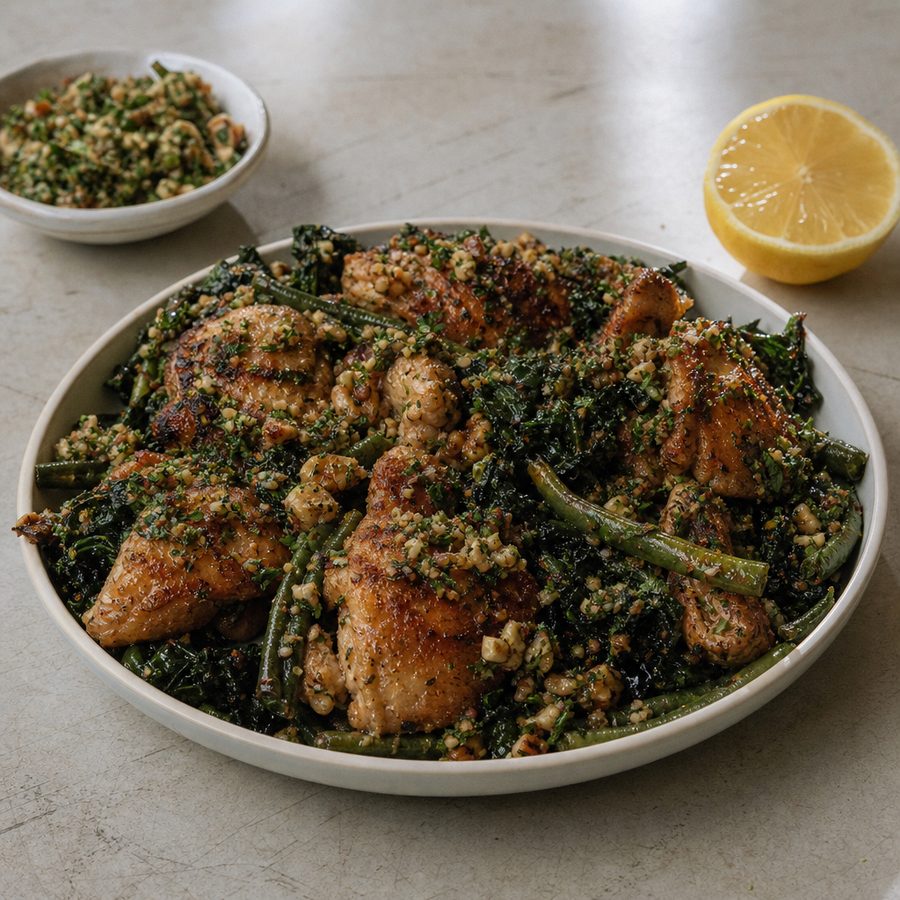
Boneless chicken thighs rubbed with turmeric, cumin, and cracked pepper and seared until the edges catch, with green beans blistered in the same pan and a raw gremolata of walnuts, parsley, garlic, and lemon over the top.
Why You'll Love This Recipe
Chicken thighs are the cut I reach for on a weeknight and the reason is forgiveness. Breast meat gives you a two-minute window before it turns chalky, while a thigh sits happily in a hot pan for eight or nine minutes and comes out better for it. Turmeric is the other half of this dish and it needs contact with fat and heat to do anything. Rubbed on dry it tastes dusty. Pressed into oiled meat and left in a hot skillet it turns nutty and deep, and the color it leaves behind is the reason the vegetables come out looking the way they do.
The green beans go into the same pan and take on everything the chicken left behind. Dry beans and a hot dry-ish pan are what give you blisters rather than steam, so I dry them properly and put them in without crowding. Four minutes of near-stillness and they wrinkle, char in patches, and stay squeaky in the middle. The kale goes in after and only needs a minute, wilting into the fat and the turmeric. Everything to that point is cooked. Then the gremolata, which never sees heat, goes on top: chopped walnuts, parsley, raw garlic, and lemon juice, coarse and loud and completely different in character from the pan.
The gremolata is what makes this dinner worth repeating. A cooked pan of chicken and vegetables is a good dinner and a slightly monotonous one, and a raw sharp thing spooned over it changes the whole plate. Make more than you need. It keeps three days and it improves a bowl of anything, from eggs to a plain roasted vegetable. This is my Tuesday dinner in the depths of winter and my July dinner when the beans are good, and it takes half an hour either way, most of that spent standing next to a pan and not touching what is in it. The only thing I would not skip is resting the thighs long enough to slice them cleanly.
Ingredients
- 1 1/3 lb boneless, skinless chicken thighs, trimmed and patted dry
- 1 lb green beans, topped and dried thoroughly
- 1 small bunch lacinato kale (about 7 oz), stems removed and leaves torn
- 1/2 cup walnut halves, chopped fine
- 1/2 cup flat-leaf parsley, chopped fine
- 5 garlic cloves, 4 sliced and 1 minced for the gremolata
- 2 tbsp olive oil, divided
- 2 1/2 tbsp lemon juice, from 1 large lemon
- 1 1/2 tsp ground turmeric
- 1 tsp ground cumin
- 1 tsp coarsely cracked black pepper
- 1/2 tsp fine sea salt
Instructions
- Make the gremolata: Chop the walnuts fine, mince one garlic clove, and chop the parsley. Stir them together in a small bowl with two tablespoons of the lemon juice and a pinch of the salt. Leave it on the counter. It will get better while you cook, because the lemon takes the raw edge off the garlic.
- Rub and sear the chicken: Mix the turmeric, cumin, black pepper, and remaining salt and rub it over the thighs on both sides. Heat one tablespoon of the oil in a large heavy skillet over medium-high until it shimmers, then lay the thighs in smooth side down. Leave them alone for five minutes, until the underside is a deep orange-brown and releases from the pan without sticking. Turn and cook four to five minutes more, until an instant-read thermometer reads 175°F at the thickest part. Move them to a board.
- Blister the beans: Add the remaining oil and the green beans to the pan, spread them out, and leave them for two minutes without stirring, since contact with the hot metal is what blisters the skins and stirring breaks that contact. Toss once and leave them two minutes more. You want wrinkled skins and dark spots on most of them, and a squeaky bite when you try one.
- Add the garlic and greens: Push the beans to one side, add the sliced garlic to the empty half, and cook for forty seconds until fragrant. Add the kale in handfuls, turning it through the beans, and cook for one to two minutes until the leaves have gone dark green and glossy and reduced by half.
- Rest, slice, and finish: Slice the thighs thickly across the grain and return them to the pan with any juices from the board. Add the remaining lemon juice and toss once off the heat. Spoon the gremolata over everything just before it goes to the table, so the walnuts stay crisp and the parsley stays bright.
Variations
- Almond and mint: Swap the walnuts for chopped almonds and the parsley for mint, which makes the gremolata cooler and sweeter against the turmeric.
- Asparagus in spring: Use a pound of asparagus cut into two-inch lengths in place of the green beans, blistered for three minutes rather than four.
- More heat: Add a teaspoon of chile flakes to the rub, or scatter thin rings of fresh chile over the pan with the gremolata.
- Yogurt underneath: Spread a thick layer of plain yogurt on each plate and build the chicken and vegetables on top, so the pan juices run into it.
Storage & Leftovers
This keeps four days in a sealed container in the refrigerator and is a genuinely good lunch cold, sliced over more greens. Store the gremolata separately if you can, since the walnuts soften once they sit in the pan juices and half the point of them is the crunch.
Reheat the chicken and vegetables in a skillet over medium-high for three minutes, spread flat and left alone for the first two so the beans pick up a little char again. The kale will be softer the second day and there is nothing to be done about that, but the beans come back well.
The cooked chicken and beans freeze for up to three months in flat sealed portions, though the kale does not, so pull it out before you freeze if you are planning ahead. Thaw overnight in the refrigerator and reheat in a pan rather than from frozen. Make the gremolata fresh, since it takes four minutes and is entirely raw.
Notes & Tips
- Bloom turmeric in fat: Its flavor compounds are fat-soluble and its color follows the oil. A dry rub on dry meat tastes like powder, while the same rub pressed into an oiled thigh in a hot pan turns savory.
- Crack the pepper coarsely: Fine ground pepper disappears into the rub. Coarse cracked pepper stays as distinct bites and is the flavor that reads first when you cut into a thigh.
- Let the chicken release itself: A seared thigh sticks until the crust is formed and then lifts cleanly. If it is fighting you at four minutes, it needs another thirty seconds.
- Dry the beans on a towel: Straight from a rinse they carry enough water to steam the whole pan. Spread them out while you rub the chicken and they will be ready when you need them.
- Keep the gremolata off the heat: Its whole job is to be raw and sharp against everything that has been cooked. Spooned into a hot pan it goes drab within a minute.
Nutrition & Mindful Eating
- Chicken thighs, green beans, and walnuts split the work three ways. The thighs bring the protein that makes this a full dinner, the beans and kale bring the fiber and the volume, and the walnuts add the fat that carries the turmeric and the lemon across the plate.
- Chicken thigh is a darker, more forgiving cut than breast because of its higher myoglobin content, and it carries a lot of protein along with iron and zinc. It also stays juicy through a hard sear, which is why it suits a fast pan.
- Turmeric owes its color and most of its interest to curcumin, which is fat-soluble and has been studied for its effect on inflammation. Bloomed in oil with black pepper alongside it, which improves how much of it the body takes up, it tastes nutty rather than dusty.
- Walnuts are one of the few nuts that carry alpha-linolenic acid, a plant form of omega-3 fat, and chopping them fine in the gremolata spreads that fat over the whole plate rather than leaving it in a corner.
- Kale and green beans together give this pan its bulk, and the fiber they carry alongside vitamin K and vitamin C is a good part of why a plate this size eats as substantially as it does.
- As you eat, notice where the gremolata has landed and where it has not, and how different a forkful tastes with the raw lemon and garlic on it, then take the meal at the pace of that difference rather than at the pace of your evening.
Frequently Asked Questions
Can I use chicken breast?
Yes, with a change in timing. Cut breasts horizontally into cutlets no thicker than three quarters of an inch and give them three minutes a side to 165°F. The turmeric rub behaves the same way. Thighs stay juicier through a hard sear, which is why I default to them.
Will turmeric stain my pan?
It will stain a wooden spoon, a plastic cutting board, and your fingers, but cast iron and stainless steel are fine. Rub a stained board with a little oil and leave it in the sun for an hour, and use a metal or silicone spoon while you cook if it bothers you.
My green beans went limp instead of blistering.
Two usual causes. Wet beans, which steam themselves before the pan can char them, so dry them on a towel. Or a crowded pan, since a pound of beans needs a twelve-inch skillet to sit in something close to a single layer. Cooking them in two batches is faster than waiting for a crowded pan to catch up.
Can I make the gremolata ahead?
Up to a day, kept covered in the refrigerator. The raw garlic gets stronger overnight rather than weaker, so if you are making it well ahead, use half a clove. Adding the walnuts only at the last minute keeps them at their crispest.