
Turmeric Coconut Chicken with Roasted Cauliflower and Lime
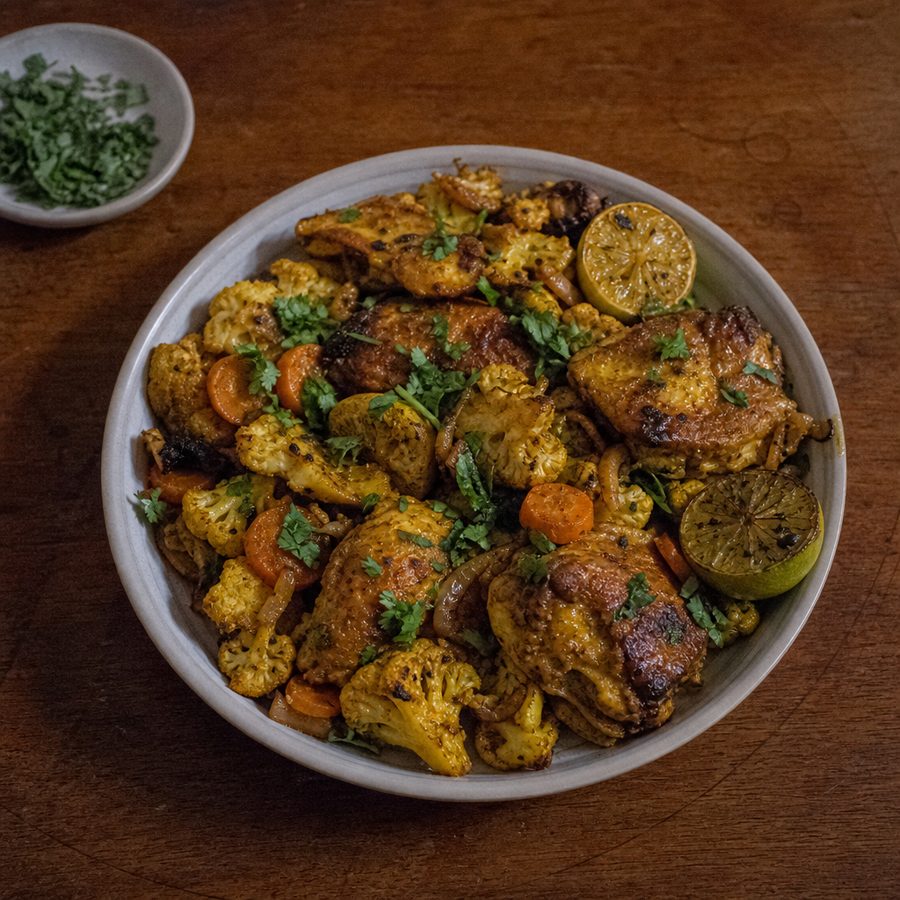
Chicken thighs and cauliflower florets tossed in coconut milk with turmeric, ginger, and garlic, roasted hot on one tray until the coating dries down and browns, then finished with lime and cilantro.
Why You'll Love This Recipe
Ten minutes of work, and then the oven takes it from there. Everything gets tossed in one bowl with coconut milk, turmeric, ginger, and garlic, goes onto a single hot tray, and comes out twenty minutes later brown at the edges and smelling like a curry house. The coconut milk is the trick. It is thick enough to coat rather than run off, and as the water in it evaporates the fat and the spice are left behind as an actual crust on the chicken and the cauliflower.
The eating is sweet and savory at once, and much less soupy than most turmeric and coconut cooking. Cauliflower roasted this hard tastes nutty and almost popcorn-like where the florets touched the metal. The thigh meat stays juicy because thighs forgive a hot oven in a way breast never does, and the shallot wedges collapse into something jammy. Then lime goes over everything, and a great deal of cilantro, and the whole tray lifts. That last squeeze is not a garnish. Without it the coconut sits heavy and the turmeric tastes flat and dusty.
This belongs on a Tuesday, when dinner has to happen and nobody has the patience for a second pan. It scales up easily to two trays if you are feeding more people, though the trays want swapping shelves halfway. I also make it deliberately for leftovers, because cold roasted cauliflower with lime on it is one of my favorite things to eat standing at the refrigerator. If you want it to stretch further, a bowl of steamed cabbage or some plantain crisped in a pan alongside does the job.
Ingredients
- 1 1/2 lb boneless, skinless chicken thighs, each cut in half crosswise
- 1 medium head cauliflower (about 1 1/4 lb trimmed), cut into small florets
- 2 medium carrots, sliced into thin coins on a sharp angle
- 2 shallots, peeled and cut into thin wedges
- 1/2 cup full-fat canned coconut milk, stirred smooth
- 2 tsp ground turmeric
- 1 tbsp finely grated fresh ginger
- 4 garlic cloves, grated or finely minced
- 1 tbsp coconut oil, melted
- 2 tbsp lime juice, plus 1 lime cut into wedges for the table
- 4 scallions, cut into 2-inch lengths
- 3/4 cup cilantro leaves and tender stems, roughly chopped
- 3/4 tsp fine sea salt
Instructions
- Heat the oven and the tray: Put a large rimmed sheet pan on the middle shelf and heat the oven to 450°F with the pan inside. A tray that is already screaming hot when the food lands is what gives you browning in twenty minutes rather than forty, and it is the whole reason this works as a fast dinner.
- Mix the coating: In a large bowl, stir together the coconut milk, turmeric, ginger, garlic, melted coconut oil, and salt until it is a smooth, deep yellow cream. Add the halved chicken thighs, the cauliflower florets, the carrot coins, and the shallot wedges, then turn everything over with your hands until every piece is coated.
- Load the hot pan: Pull the tray out and tip everything onto it, spreading it into one layer with space between the pieces. Set the chicken thighs smooth side down against the metal. It will hiss the moment it lands, which is the sound you want. Anything piled on top of anything else will steam instead of brown.
- Roast hard: Roast for 20 minutes without stirring. The cauliflower should be brown and blistered at the edges, the coating should look dry and burnished rather than wet, and the thickest thigh should read 175°F on an instant-read thermometer. If the pan still looks pale and creamy at 20 minutes, give it three or four minutes more.
- Finish with lime and herbs: Scatter the scallion lengths over the hot tray and let them soften in the residual heat for a minute. Squeeze the lime juice over everything, then add the cilantro and toss once, right on the pan, so the leaves half wilt. Serve straight from the tray with the lime wedges.
Variations
- Lemongrass: Bruise a stalk of lemongrass with the back of a knife, mince the tender lower third, and stir it into the coating. It gives the tray a bright, resinous edge that suits the coconut.
- Broccoli and cauliflower together: Swap half the cauliflower for broccoli florets. The broccoli chars faster and goes almost crisp, so you get two textures out of the same tray.
- Sweet potato: Add a peeled sweet potato cut into half-inch cubes with the carrots for a rounder, sweeter tray. Cut them small or they will not be tender in twenty minutes.
- Thai basil finish: Use torn Thai basil in place of the cilantro, added off the heat. It goes anise-scented and soft against the hot coconut coating.
- More heat from ginger: Double the fresh ginger and grate a little more over the finished tray. It comes through sharp and warming without changing the character of the dish.
Storage & Leftovers
Leftovers keep three to four days in a sealed container in the refrigerator. The coating tightens as it cools and the cauliflower firms up, which makes this one of the better cold lunches to find in there. Squeeze a little more lime over it before you eat it cold, since the acid fades overnight while the turmeric does not.
To reheat, spread it on a tray in a 425°F oven for six to eight minutes. That brings the browned edges back and drives off any moisture the refrigerator put into it. A skillet over medium-high works just as well for a single portion. The microwave heats it through, but the crisp edges soften and those edges are most of the pleasure.
It freezes for up to three months, though the cauliflower comes out softer than it went in. Freeze it flat in sealed portions, thaw overnight in the refrigerator, and reheat in a hot oven rather than from frozen. Fresh cilantro and a new squeeze of lime at the end make thawed leftovers taste close to the first night.
Notes & Tips
- Preheat the pan, not just the oven: Food landing on hot metal starts browning immediately. On a cold tray the first five minutes go into heating the pan, and in a twenty-minute roast you cannot spare them.
- Cut the cauliflower small: Florets about an inch across cook through in the same time the chicken needs. Big ones are still squeaky in the middle when the thighs are done.
- Grate the garlic and ginger: A microplane turns both into a paste that disappears into the coconut milk. Chopped pieces sit on the surface and scorch in a 450°F oven.
- Do not stir: Every turn of the spatula interrupts the browning. Leave the tray alone for the full twenty minutes and let the underside develop.
- Turmeric stains: It marks wooden boards, plastic spoons, and light countertops. Mix the coating in a metal or glass bowl and wipe up splashes while they are still wet.
- Save the lime for last: Acid added before roasting cooks off and leaves nothing behind. Squeezed over the hot tray at the end, it stays bright and does the work it is there for.
Nutrition & Mindful Eating
- Chicken thighs, cauliflower, and coconut milk are doing three separate jobs on one tray. The thighs carry the protein and stay juicy under hard heat, the cauliflower brings the bulk and the fiber, and the coconut milk supplies the fat that turns spice into a coating instead of a dusting.
- Cauliflower roasted at a high temperature tastes nutty and sweet rather than cabbagey, because the sugars in it caramelize before the sulfur compounds have time to assert themselves. It holds vitamin C and a useful amount of fiber, and it takes on flavor better than almost any vegetable I cook this way.
- Turmeric is the spice this tray is built on, and curcumin is the yellow pigment behind both its color and the research interest in it. Fat helps carry it, which is one more reason the coconut milk belongs here rather than a splash of water.
- Carrots go sweet and slightly chewy in a hot oven as their water cooks off and their sugars concentrate, and the deep orange is beta-carotene, which your body converts to vitamin A.
- Ginger, garlic, lime, and cilantro are the finish, and they are what keep something this rich from tasting heavy. The lime goes on off the heat so it stays sharp, and the cilantro half wilts against the hot pan and releases its smell all at once.
- As you eat, notice how differently the browned outside of a floret tastes from its soft middle, and let the lime and the cilantro slow you down enough to register when you have had enough.
Frequently Asked Questions
Can I use chicken breast?
You can, and it wants a shorter cook. Cut breasts into large chunks, add them to the tray after the vegetables have had eight minutes on their own, and pull everything when the chicken reads 165°F. Thighs are what I reach for here because twenty minutes at 450°F is a hard, dry heat and thigh meat stays juicy through it.
The coating looks pale and wet at the end. What went wrong?
Usually a crowded tray, sometimes a cold one. Coconut milk has a lot of water in it, and that water has to evaporate before anything can brown. Give the food room, use the largest pan you own or split it across two, and always preheat the tray with the oven.
Is light coconut milk fine?
It works, but it browns less. The fat in full-fat coconut milk is what carries the turmeric onto the food and turns into a crust. If light is what you have, shake the can well, use the same amount, and expect a thinner coating and a slightly longer roast.
Can I prepare it ahead?
Yes. Toss everything in the coating up to a day ahead and keep it covered in the refrigerator, then tip it onto the hot tray straight from the bowl. The ginger and garlic get further into the meat overnight, which is a small improvement. Add three minutes to the roast since the food goes in cold.