
Twice-Baked Acorn Squash with Ricotta, Sage, and Walnuts
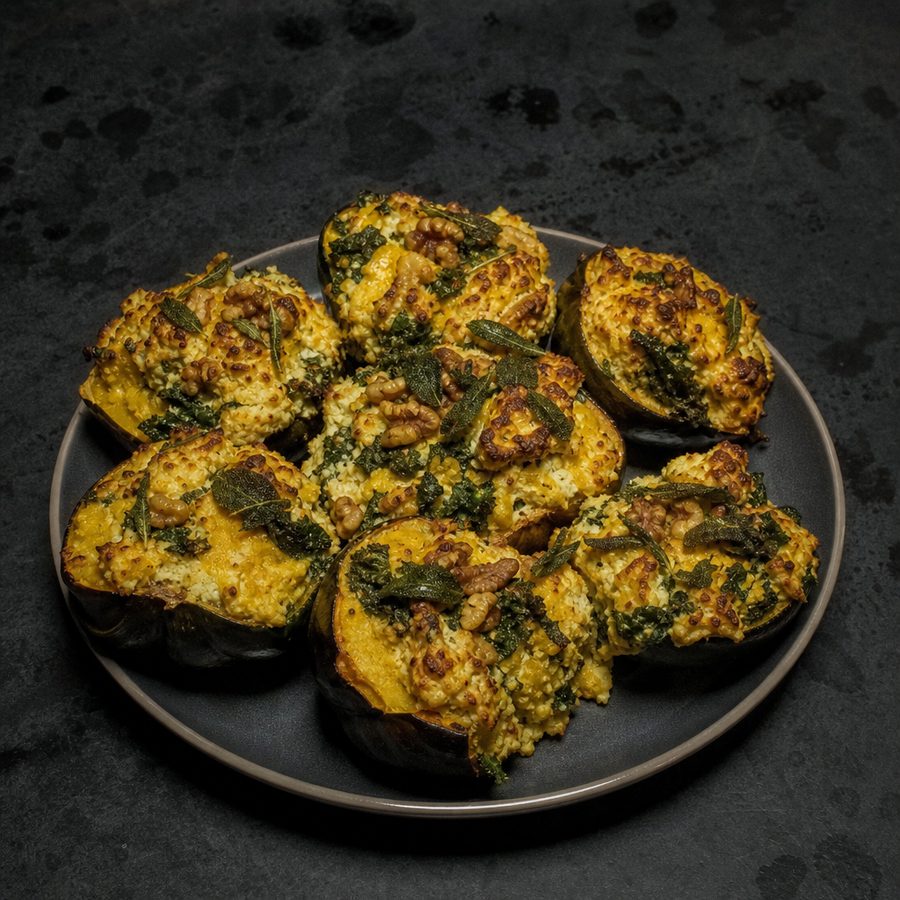
Acorn squash roasted until collapsing, the flesh scooped out and folded with ricotta, fried sage, and wilted kale, piled back into the shells and browned a second time under toasted walnuts.
Why You'll Love This Recipe
Twice-baking sounds like twice the work and it is really one long roast and one short one, with ten minutes of mixing between them. The first bake gets the squash properly soft, sweet, and a little caramelized where the cut face met the pan. Then you scoop the flesh out and leave the shells, which have gone firm enough to act as bowls, and fold everything together off the heat. What goes back in is looser and creamier than any stuffing you could pack in raw, and the second bake sets the top and blisters it in patches.
The ricotta is what makes it a dinner instead of a side. Folded into hot squash it goes creamy and slightly grainy in a way I like, and it takes the sweetness of the squash down into savory territory. Kale wilted in the onion pan brings something dark and slightly bitter through the middle of it, and the sage is doing two jobs: sliced thin into the onions for a base note, and left whole and fried crisp for the top. Walnuts go on last so they stay crunchy and never soften into the filling.
Late October, when the squash pile at the market gets serious, is when I want the oven on for an hour, and this is what goes in it. Each person gets a whole half, which looks generous on the plate and eats like a full meal. It is also a good dish for company, because both bakes can be staggered around whatever else you are doing, and the filled shells can sit on the counter for an hour before the second bake without suffering at all.
Ingredients
- 2 large acorn squash (about 3 lb total), halved through the stem and seeded
- 1 1/4 cups ricotta
- 1 small bunch lacinato kale (about 5 oz), stems stripped and leaves sliced into ribbons
- 1 medium yellow onion, diced fine
- 1/2 cup walnut halves, roughly broken
- 1 1/2 tbsp olive oil
- 12 fresh sage leaves, half left whole and half sliced thin
- 4 cloves garlic, minced
- 1 tbsp lemon juice
- 1 tsp coarsely ground black pepper
- 1/2 tsp fine sea salt
Instructions
- Roast the squash halves: Heat the oven to 400°F (200°C). Halve the squash through the stem end and scrape out the seeds and strings with a spoon. Rub the cut faces with a third of the olive oil and half the salt, lay them cut side down on a baking sheet, and roast 35 to 40 minutes, until a knife slides into the flesh with no resistance and the edges touching the pan are dark brown.
- Fry the sage: Warm the rest of the olive oil in a skillet over medium heat and add the whole sage leaves. They will bubble hard, then quiet down after 20 to 30 seconds, which is the moment to lift them out onto paper towel. They crisp as they cool. Leave the sage-scented oil in the pan.
- Build the base: Add the onion to that oil and cook over medium heat for 6 to 7 minutes, until soft and translucent at the edges. Stir in the garlic, the sliced sage, the black pepper, and the rest of the salt and cook one minute more, until you can smell the garlic but before it colors.
- Wilt the kale: Add the kale ribbons with a splash of water and cook 3 to 4 minutes, tossing, until they have collapsed to a third of their volume and turned deep green. Take the pan off the heat and stir in the lemon juice, scraping the bottom.
- Scoop, fold, and refill: Turn the roasted squash halves over and let them cool for 5 minutes. Scoop the flesh into a bowl, leaving a shell about a quarter inch thick so it holds its shape. Mash the flesh roughly with a fork, fold in the ricotta and the kale mixture, and leave it streaky rather than uniform. Pile it back into the four shells, mounding it high.
- Brown the tops: Return the filled halves to the oven at 400°F (200°C) for 15 minutes, until the tops are set and blistered brown in patches. Scatter the walnuts over in the last 5 minutes so they toast without burning. Crumble the fried sage leaves over each half just before serving.
Variations
- Rosemary and orange: Trade the sage for chopped rosemary and add a strip of orange peel to the onions, which turns the filling brighter and more resinous.
- Mushroom and thyme: Brown 8 oz of sliced mushrooms with the onions and use thyme in place of sage for a deeper, woodsier filling.
- Pepper and heat: Add a big pinch of cayenne to the onions and finish with extra cracked black pepper for a version with real warmth behind the sweetness.
- Herbed ricotta top: Hold back a third of the ricotta, beat it with lemon and chopped parsley, and spoon it cold over the hot squash as it goes to the table.
Storage & Leftovers
The filled halves keep four days covered in the refrigerator, and they are sturdier than they look because the shell holds everything together. Store the walnuts and the fried sage separately in a jar on the counter and add them fresh, since both go soft overnight and the crunch is half of what makes this dish work.
Reheat uncovered in a 375°F (190°C) oven for 12 to 15 minutes, which dries the surface again and brings back some of the blistering. Covering them or using the microwave will heat them through perfectly well but the top goes damp and pale, so if you go that way, run them under the broiler for two minutes at the end.
You can freeze the filled shells for up to two months, wrapped individually. Thaw overnight in the refrigerator before baking, since the ricotta weeps if you take it straight from frozen to a hot oven. Bake from thawed at 375°F (190°C) for about 25 minutes and add the walnuts at the end as usual.
Notes & Tips
- Cut the squash safely: Acorn squash rolls and the skin is hard. Slice a thin strip off one side to give it a flat base, then halve it through the stem with the tip of a heavy knife, rocking rather than pushing.
- Roast cut side down: Face down, the cut surface sits against hot metal and caramelizes. Face up, it dries out and goes leathery. This is the single step that decides how sweet the finished dish tastes.
- Watch the sage closely: Fried sage goes from bright to bitter in about ten seconds. Pull the leaves when the bubbling around them slows, not when they look dark.
- Keep the filling streaky: Fold rather than beat. Pockets of plain ricotta against sweet squash and dark kale eat far better than a smooth uniform mixture.
Nutrition & Mindful Eating
- Squash, ricotta, kale, and walnuts each pull the plate in a different direction. The squash brings sweetness and soft bulk, the ricotta gives it creaminess and most of the protein, the kale cuts through with something dark and mineral, and the walnuts add fat and crunch at the very end.
- Ricotta is fresh cheese made from the whey left over after other cheeses are drained, which is why it stays soft and mild rather than sharp. It carries calcium in real quantity, and folded into hot squash it turns the whole filling creamy without anything else being added.
- Acorn squash has dense orange flesh that goes sweet and almost custardy with a long roast, and that color is carotenoids your body turns into vitamin A. The skin softens enough to eat, and the fiber that comes with it is why a half feels like a full plate.
- Kale wilted in the onion pan keeps more of its color and its vitamin K than boiled greens would, and its faint bitterness is doing real work here, keeping a sweet squash filling from tipping over into dessert.
- Walnuts are the one nut that carries a meaningful amount of plant omega-3 fat, and toasted for a few minutes on top they bring the bitterness and the crunch that this dish would miss if you left them out.
- As you eat, take a moment with the first spoonful where the crisp sage, the creamy filling, and the sweet edge of the shell all arrive together, and let the plate be the reason you are sitting down rather than an interruption.
Frequently Asked Questions
My squash shells collapsed when I filled them. What happened?
You scooped too deep. Leave a good quarter inch of flesh against the skin, which sounds like a lot when you are digging and turns out to be exactly what keeps the shell rigid. If one does slump, set it in a muffin tin or a small baking dish for the second bake and nobody will know.
Can I use a different squash?
Delicata is the best swap and does not need peeling either, though the halves are smaller so plan on two per person. Butternut works if you halve it lengthwise and scoop the neck as well as the seed cavity. Spaghetti squash is the one to avoid here, since the flesh pulls into strands and never goes creamy.
Can I make it ahead for a dinner party?
Yes, and it is one of the better make-ahead dishes I know. Do the first bake and the filling in the morning, refrigerate the filled shells, and pull them out an hour before you want to eat. Add 5 minutes to the second bake if they go in cold.
Is there enough here for a main course?
A whole half per person is a substantial plate, and the ricotta and walnuts give it enough richness to stand on its own. If you are feeding people with big appetites, a pot of barley or farro alongside soaks up the browned bits from the pan nicely.