
Twice-Cooked Beef Chuck with Egg Yolk Butter Sauce
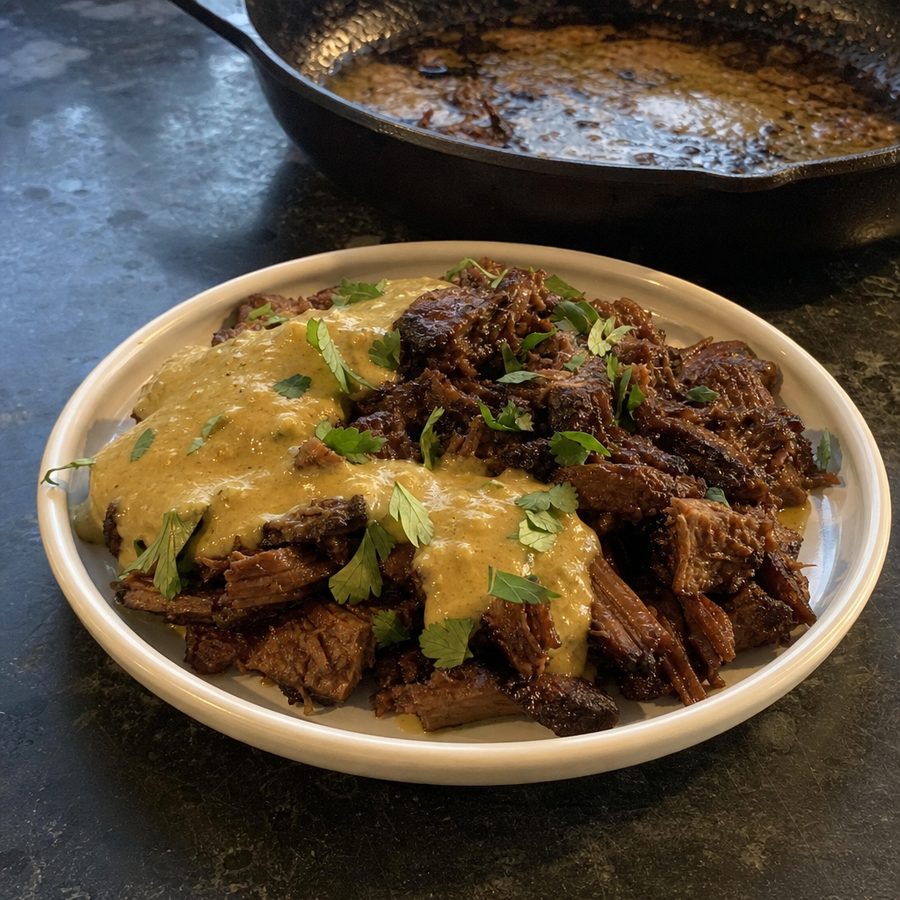
Boneless chuck salted and braised until it pulls into strands, crisped hard in ghee, and finished with a warm sauce of egg yolks whisked into melted butter.
Why You'll Love This Recipe
I make this on a Sunday, when I want the oven doing the work and the good part to happen at the very end. Chuck is the cut I reach for whenever a piece of beef needs hours, because it is threaded with connective tissue that turns to gelatin somewhere around the third hour, and that gelatin is what makes the meat taste round and full rather than dry and stringy. The braise itself is close to unattended. You salt the beef, put it in a covered pot in a low oven, and walk away. What takes attention is the ten minutes afterward, when the strands go into hot fat.
Two heats are what make this dish. The long, wet, quiet one breaks the meat down until it falls apart under a fork. The short, dry, loud one puts a crust back onto the strands, so every forkful has a soft center and a brown, chewy edge. Meat that has only been braised goes tender all the way through and starts to taste the same in every bite, and the second pan is what fixes that. Press the beef flat into the ghee and leave it completely alone for two full minutes, and you will hear the sound change from a steady steam to a sharper crackle.
The sauce is the part people remember. Yolks whisked into warm butter with a spoonful of the braising juices thicken into something between a hollandaise and a gravy, glossy enough to coat the back of a spoon and rich enough that a couple of tablespoons per plate is plenty. Beef this concentrated eats slowly, and it is the kind of plate you finish and then sit at the table a while longer. I serve it on warm plates, because the sauce stiffens on a cold one, and I leave the last crisped bits in the pan for whoever gets to the stove first.
Ingredients
- 1 1/2 lb boneless beef chuck roast, cut into 4 large pieces
- 1 1/2 tbsp ghee, divided
- 3 1/2 tbsp butter
- 3 large egg yolks
- 3/4 tsp fine sea salt, divided
Instructions
- Salt the beef and let it sit: Cut the chuck into four large pieces and pat every side dry with paper towel. Rub about half the salt over them and set them on a rack at room temperature for forty minutes, or salted and uncovered in the refrigerator overnight if you have the time. The surface should feel dry and slightly tacky when you pick a piece up, which is what lets it brown instead of steam.
- Sear, then braise low: Set a Dutch oven over medium-high heat until a drop of water skitters across it. Add 2 teaspoons of the ghee and brown the pieces hard on two sides, about four minutes a side, working in two batches so the pot stays hot. Pour in 1/2 cup water, cover, and put the pot into a 300°F oven for three hours. It is done when a fork pushed into the middle of a piece twists with no resistance at all.
- Shred it and save the liquid: Lift the meat onto a board and pour the pot liquid into a heatproof cup. Pull the beef into thick strands with two forks, following the grain and keeping the pieces fairly large, since they shrink again in the skillet. Let the liquid settle for five minutes, then spoon the clear fat off the top. Keep both the fat and the juices underneath it.
- Crisp the strands: Heat the remaining ghee in a wide skillet over medium-high until it shimmers and thins out. Add the beef in one layer, press it flat with a spatula, and leave it alone for two minutes. Listen for the steam to give way to a drier crackle, then turn it over in sections and give it one minute more. The edges should be dark and brittle and the middles still juicy. Slide the pan off the heat.
- Whisk the yolk butter: Melt the butter in a small pan and take it off the burner. Whisk the yolks with 2 tablespoons of the reserved braising juices in a bowl until they lighten, then pour the warm butter in slowly, a thread at a time, whisking without stopping. Set the bowl over a pan of barely steaming water and keep whisking until the sauce thickens to the consistency of heavy cream and reads 160°F, about two minutes. Whisk in the rest of the salt.
- Serve it hot on warm plates: Warm four plates under hot tap water and dry them. Divide the crisped beef among them, spoon the sauce over one side of each portion while it is still loose, and scrape any browned bits from the skillet over the top. If the sauce tightens while you plate, whisk in a teaspoon of the warm braising juices to bring it back.
Variations
- Bone-in short rib: Swap in bone-in short ribs, add thirty minutes to the braise, and pull the meat off the bones before crisping.
- Lamb shoulder: Boneless lamb shoulder braises on the same schedule and crisps beautifully, with a deeper, sweeter flavor under the crust.
- Crisped in bacon fat: Render four slices of chopped bacon in the skillet, crisp the beef in that fat, and scatter the bacon back over the top.
- Parmesan in the sauce: Whisk 2 tablespoons of finely grated parmesan into the finished yolk butter for a sharper, saltier sauce that clings more.
- A fried egg on top: Fry an egg per person in the beef fat until the white is lacy and set it over the strands so the yolk runs into them.
Storage & Leftovers
The braised, shredded beef keeps four days in a sealed container in the refrigerator, and it is worth storing it in some of its own juices so the strands stay supple. Do the crisping fresh each time. Beef that was crisped, chilled, and reheated goes tough at the edges rather than brittle.
The yolk butter sauce does not keep. It is an emulsion held together by warmth, and it separates in the cold with no reliable way back. Make only as much as you will use, which takes about three minutes, and whisk a fresh batch when you reheat the beef.
Braised beef freezes well for three months in flat sealed portions with a little of its liquid. Thaw it overnight in the refrigerator, drain it, pat it dry, and crisp it in hot ghee exactly as you would on the first day. Wet strands will steam instead of browning, so the drying step matters.
Notes & Tips
- Salt it early: Salt put on forty minutes ahead, or the night before, draws moisture out and then pulls it back in seasoned, which is why the meat tastes seasoned through instead of only on the surface.
- Keep the braise barely bubbling: At 300°F under a lid the liquid should tick along, not boil. A hard boil squeezes the muscle fibers tight and gives you dry meat sitting in good gravy.
- Shred in big pieces: Strands the width of your finger keep a soft interior after they crisp. Shred too finely and the whole pan turns to brittle threads.
- Do not stir the crisping pan: Contact time with hot metal is what makes the crust. Every stir resets the clock and drops the pan temperature, and you end up with gray, steamed beef.
- Warm butter, not hot: Butter poured in still sizzling will scramble the yolks on contact. Let it sit off the burner for a minute so it is warm to a fingertip before it goes in.
- Save the braising juices: That cup of dark liquid is concentrated beef and gelatin. It thins the sauce, it moistens leftovers, and it is far too good to pour down the drain.
Nutrition & Mindful Eating
- The chuck, the butter, and the yolks are each doing a separate job here. The beef brings the body and the chew, the browned edges bring the flavor, and the yolks and butter turn a few spoonfuls of braising liquid into a sauce that coats every strand.
- Chuck is what makes this dish work. Its connective tissue melts into gelatin over three hours, which is where the silky mouthfeel comes from, and the meat itself carries iron in the form your body takes up most readily along with the B12 that red meat is one of the few sources of.
- Egg yolks thicken the sauce and give it that pale gold color, and they are also where the choline sits, along with the vitamins A and D that ride in the fat rather than in the white.
- Salting the beef the night before is the small step that changes the eating. The salt draws moisture to the surface, dissolves, and travels back into the muscle, so the meat tastes seasoned all the way through and the dried surface can brown properly in the pan.
- Beef this concentrated holds you for a long stretch, and the protein is doing most of that work while the fat in the sauce slows the whole meal down. It is a plate you eat at a table rather than standing at the counter.
- As you eat, look for the contrast between the brittle browned edges and the soft strands underneath, notice how the sauce thins as it warms on the plate, and put the fork down between bites of something this rich.
Frequently Asked Questions
Can I use a different cut?
Boneless short rib and brisket both work and give you a richer result, though short rib needs an extra half hour. Stay with cuts that are worked hard and full of connective tissue. A quick-cooking steak cut will simply go dry and firm over three hours, and no amount of sauce fixes that.
My sauce broke and went greasy. Can I save it?
Usually, yes. Pull it off the heat, whisk in a tablespoon of cold water, and beat hard. If that fails, whisk a fresh yolk in a clean bowl and dribble the broken sauce into it a little at a time. Breaking almost always means the butter went in too fast or the bowl got too hot.
Can I braise it the day before?
That is how I usually do it. Cook the beef, cool it in its liquid, and refrigerate the whole pot. The fat sets into a firm cap you can lift straight off, and the meat sits in seasoned jelly overnight. Shred it cold, then bring it to room temperature before it goes into the skillet.
What can I use if I do not have ghee?
The fat you skimmed off the braising liquid is the best answer, since it is already beef fat and it takes high heat without burning. Butter works too, but it browns fast at the temperature the strands need, so watch it closely and pull the pan a shade earlier than you think.