
Venison and Acorn Squash Breakfast Hash
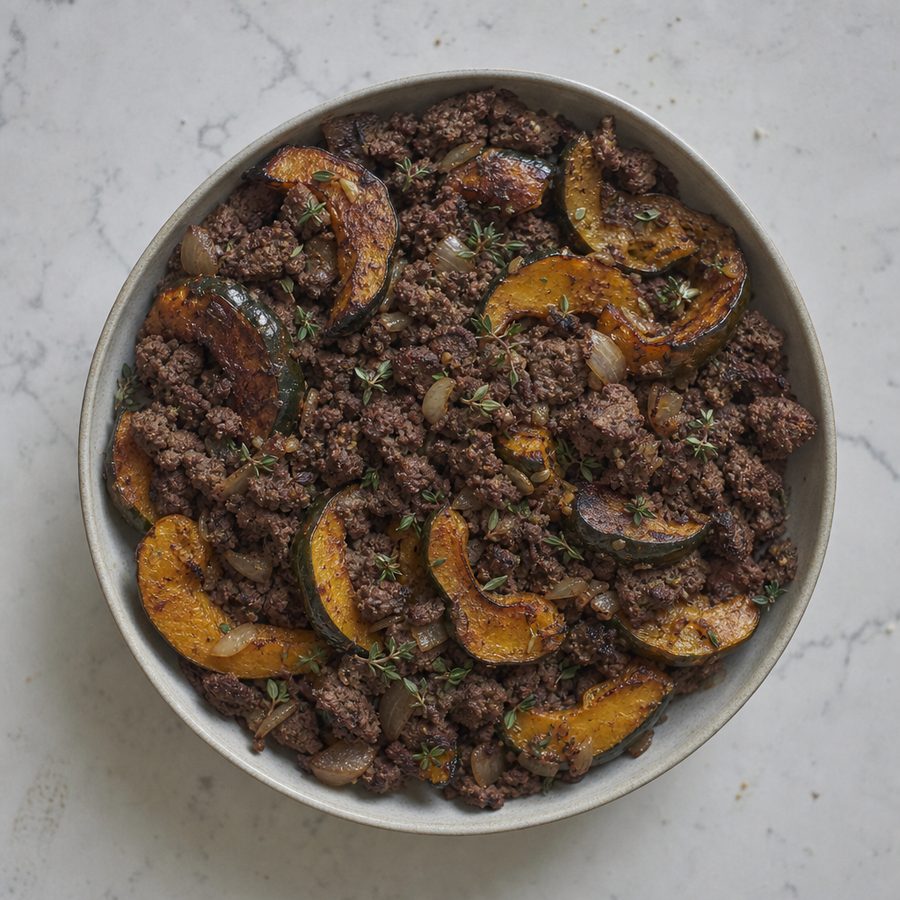
Ground venison browned hard and tossed with caramelized acorn squash half-moons, sweet onion, thyme, and a splash of cider vinegar at the end.
Why You'll Love This Recipe
Venison turns up in a lot of freezers in the fall and then sits there because nobody is sure what to do with it beyond a stew. Ground venison is the easiest way in, and breakfast is the best time for it, since a hash forgives everything. This is the plate I make on a cold Saturday when I want the kitchen to smell like thyme and browned meat by half past eight. If you do not hunt and do not know anyone who does, most butchers and a fair number of supermarkets now carry it frozen, and one pound goes a long way in a pan like this.
The two things in this skillet want opposite treatment, which is why they cook separately. Acorn squash needs time and patience: half-moons laid flat in hot oil and left alone until the cut faces go deep gold, at which point the flesh turns silky and the dark green skin softens enough to eat. Venison wants the opposite. It has very little fat to protect it, so it browns fast and then dries out fast, and the whole trick is pulling it off the heat the moment the last of the pink disappears. Bring them back together at the end with cider vinegar to lift the fond off the bottom of the pan.
What makes this taste like more than the sum of its parts is the sweetness of the squash against the mineral, slightly wild flavor of the meat, with thyme running through both. A tablespoon of vinegar at the end sounds like nothing and does an enormous amount, cutting the richness and waking up the onion. Venison holds a serious amount of protein for how light it eats, so a plate of this sits comfortably rather than heavily and still keeps you going through a long morning outdoors. Make it once and the venison in the freezer stops being a problem to solve.
Ingredients
- 1 1/4 lb ground venison
- 1 medium acorn squash (about 1 1/2 lb), halved, seeded, and cut into 1/2-inch half-moons
- 1 medium onion, sliced into thin half-moons
- 3 cloves garlic, minced
- 1 tbsp fresh thyme leaves
- 2 tbsp olive oil, divided
- 1 tbsp apple cider vinegar
- 1 tsp fine sea salt, divided
Instructions
- Prep the squash: Halve the acorn squash from stem to tip, scoop out the seeds with a spoon, and cut each half into half-inch half-moons. Leave the skin on. It is thin enough to eat once cooked and it is what holds each piece together in the pan.
- Caramelize the squash: Heat one tablespoon of the olive oil in a large skillet over medium-high until it shimmers. Lay the half-moons flat in one layer with half the salt and cook for four to five minutes a side, undisturbed, until both faces are deep gold and a knife slides through the flesh. Move them to a plate and work in two batches if the pan is crowded.
- Brown the venison: Add the remaining oil and raise the heat. Put the venison in as rough chunks and leave it undisturbed for three minutes so a crust forms, then break it up and cook for two to three minutes more, just until the last of the pink is gone. Venison has little fat to protect it, so stop here rather than cooking it further.
- Soften the onion and garlic: Push the meat to one side, add the onion, and cook for four minutes until it turns limp and gold at the edges. Stir in the garlic and the thyme leaves and cook for another 30 seconds, until the pan smells sweet and herbal.
- Bring it back together: Return the squash to the skillet with the remaining salt and pour in the cider vinegar, scraping the browned bits off the bottom as it hisses. Toss everything gently so the half-moons stay whole, cook for one more minute, and taste for salt before serving.
Variations
- Delicata or butternut: Swap in delicata half-moons, skin and all, or cubed butternut, which both caramelize the same way and cook a couple of minutes faster.
- Apple and sage: Add a diced apple with the onion and trade the thyme for chopped sage, which turns this into something closer to a Thanksgiving plate.
- Greens folded in: Wilt a large handful of kale or mustard greens into the pan at the end for bitterness against the sweet squash.
- Steak instead of ground: Use venison loin, seared whole for three minutes a side to 130°F, rested and sliced over the squash, when you want a plate rather than a hash.
- Sheet pan version: Roast the squash and onion at 425°F for 25 minutes while the venison browns in a skillet, which frees up your attention and gives more caramelized surface.
Storage & Leftovers
Keep leftovers in a sealed container in the fridge for up to four days. The squash softens further overnight and takes on more of the thyme and the vinegar, so day two eats sweeter and more unified, though the half-moons will not hold their shape as well.
Reheat in a skillet over medium-high with a teaspoon of oil for three or four minutes. Venison reheated in the microwave turns tight and dry very quickly, since there is little fat in it to buffer the heat, and a pan gets you back some of the browning instead.
This freezes well for up to three months. Freeze it flat in portions, thaw overnight in the fridge, and reheat in a pan. Expect the squash to arrive softer than it went in, which is fine in a hash and would not be in a side dish.
Notes & Tips
- Cut the squash evenly: Half-moons of different thicknesses give you scorched thin pieces beside raw thick ones. Half an inch is the size that hits tender at the same moment the faces go gold.
- Do not crowd the pan: Squash stacked on squash steams and stays pale. Two batches cost you five minutes and are the difference between caramelized and merely cooked.
- Pull the venison early: There is almost no fat in it to forgive you. The moment the pink is gone, stop, because another two minutes turns it into gravel.
- Use the vinegar to clean the pan: All the flavor you built is stuck to the bottom of the skillet. The vinegar goes in specifically to lift it, so scrape while it steams.
- Season in stages: Salt the squash as it browns and again at the end. Squash absorbs salt slowly, and salting only at the table leaves the inside of every piece tasting flat.
- Strip the thyme properly: Hold the sprig at the top and run your fingers down against the grain and the leaves come away in one go. Whole sprigs in a hash are unpleasant to find.
Nutrition & Mindful Eating
- Wild game and winter squash suit each other on the plate and balance each other in the body. The venison brings dense protein and very little else, while the squash brings the fiber and the slow carbohydrate that keeps a plate of pure meat from feeling one-note.
- Venison is close grained and mineral-tasting, and it is one of the richest sources of heme iron and vitamin B12 you can cook, both of which your red blood cells depend on. Little fat is carried along with it, which is exactly why it needs a hot fast pan.
- Acorn squash caramelizes to something almost buttery and brings vitamin C, magnesium, and a good amount of fiber with it, most of that fiber sitting in the dark green skin that softens as it cooks.
- Thyme goes in at the end and is the smell that fills the kitchen. Its thymol is what gives the herb that clean medicinal edge, and a tablespoon of the fresh leaves seasons a whole skillet with barely any salt behind it.
- Cider vinegar poured into the hot pan lifts the browned bits off the bottom and threads acidity through the whole hash. That sharpness against the sweet squash is what makes a plate this savory still taste good first thing in the morning.
- As you eat, pay attention to how differently the two halves of the plate taste, the sweet squash and the savory meat, and let the alternation set the pace of the meal.
Frequently Asked Questions
What if I cannot find venison?
Ground bison, elk, or beef all go straight in at the same weight. Bison is the closest match for how quickly it cooks and how little fat it carries, so treat it the same way and pull it early. With beef you will have more fat in the pan, which is not a problem, just spoon some off before the onion goes in.
My venison tasted gamey. Can I fix that?
Gaminess comes mostly from fat and connective tissue left on the meat, so buy well-trimmed ground venison if you can. Beyond that, acid helps more than anything: use the full tablespoon of cider vinegar, and a squeeze of lemon at the table is not out of place either.
Do I really eat the squash skin?
You do, and it is one of the reasons acorn squash suits a hash. The skin is thin and softens completely once the faces have caramelized, so it holds each half-moon together instead of letting it collapse. Scrub the outside well before you cut it.
Does this fit an AIP elimination phase?
It does. Venison, acorn squash, onion, garlic, thyme, olive oil, cider vinegar, and salt are all allowed in the elimination phase. Buy plain ground venison rather than a game sausage blend, since those are almost always seasoned with pepper.